Thor Love and Thunder Review
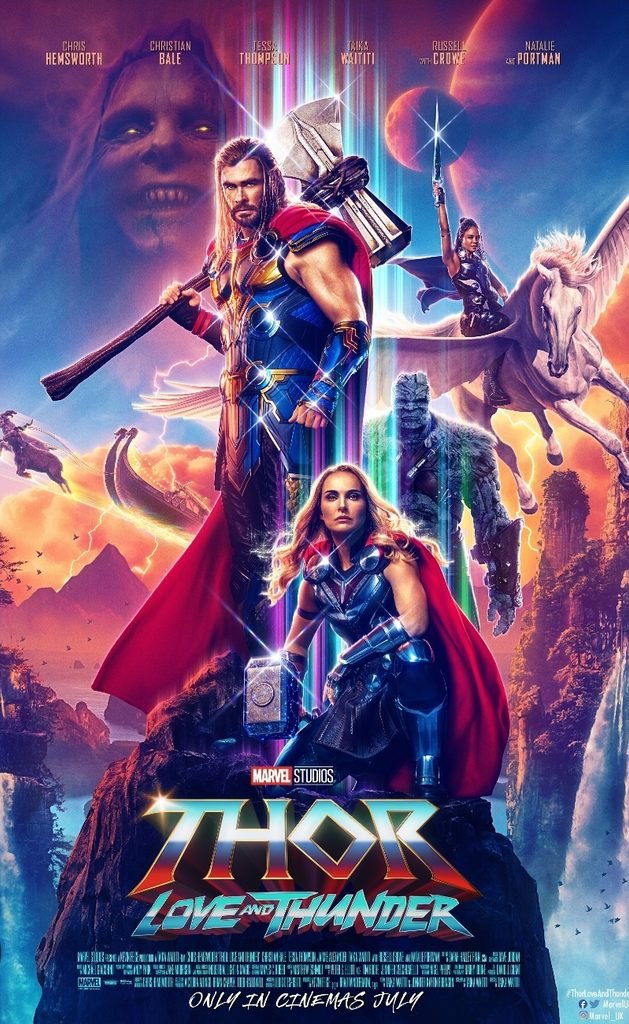
(© Marvel Studios / Disney)
Introduction (Warning Contains Spoilers)
As we continue our chronological rewatch of the Marvel Cinematic Universe, we’re getting closer to Avengers: Doomsday next month.
We are revisiting the films in order, looking back at the characters and stories that brought us here.
Our journey now brings us to Thor: Love and Thunder, the fourth solo Thor adventure. Directed by Taika Waititi, this 2022 sequel followed the enormous success of Thor: Ragnarok.
As a fan of Thor, I went into this film hoping for another exciting chapter in his journey. Unfortunately, I came away disappointed.
There are some genuinely brilliant ideas buried beneath the comedy. Jane Foster’s illness, Gorr’s grief, and Thor’s search for purpose could have created a powerful story.
Instead, the film struggles to balance its humour with its darker themes. The result is a frustrating sequel that never quite reaches its potential.
A God Searching for Purpose
© Marvel Studios/Disney 2022. All Rights Reserved
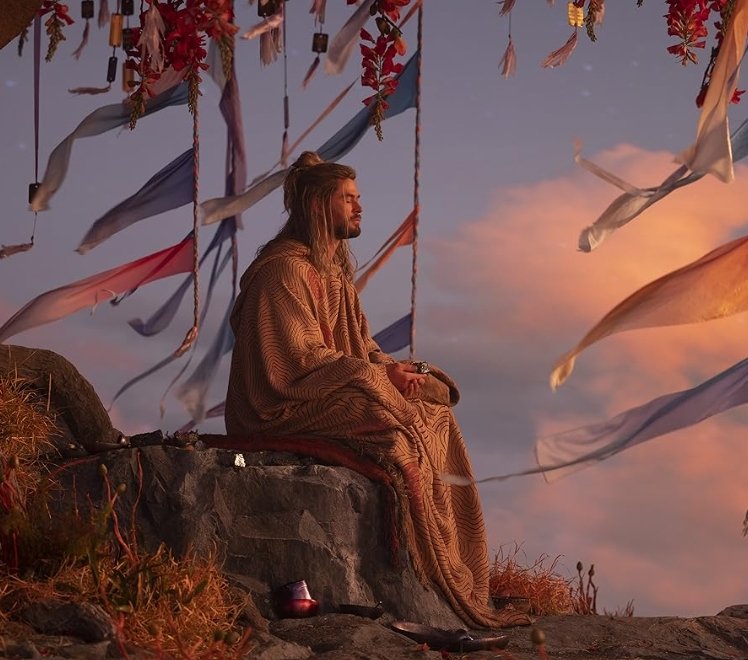
Following the events of Avengers: Endgame, Thor is travelling through space with the Guardians of the Galaxy. He’s searching for inner peace while attempting to rediscover his purpose.
Unfortunately, Thor’s journey is interrupted by Gorr the God Butcher. Played by Christian Bale, Gorr is a grieving father who loses everything after encountering the gods.
His hatred develops into a mission to eliminate every god in existence. Thor must therefore return to action before Gorr’s destruction spreads further.
Meanwhile, Jane Foster (Natalie Portman) unexpectedly returns to Thor’s life. She’s now battling cancer, but something extraordinary happens when Mjolnir responds to her.
Jane becomes the Mighty Thor, wielding the reconstructed hammer and joining Thor’s fight against Gorr.
It’s an intriguing premise with plenty of emotional potential. Unfortunately, the film struggles to balance its different storylines.
Thor Becomes the Punchline
© Marvel Studios/Disney 2022. All Rights Reserved
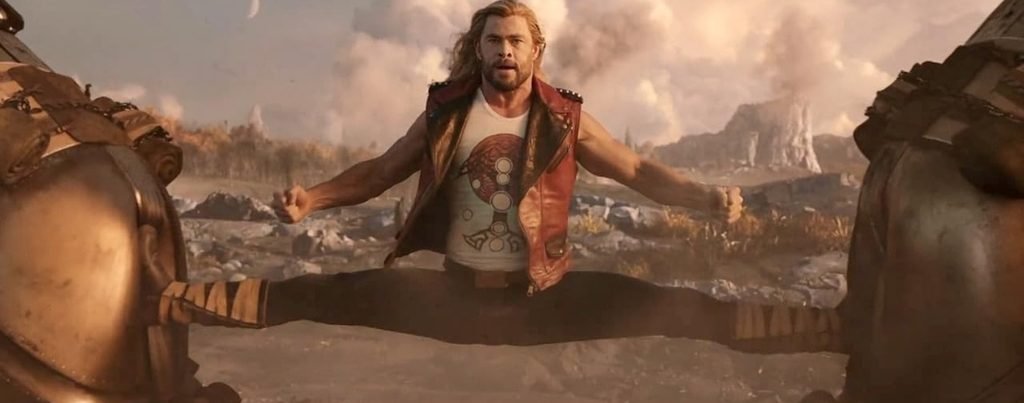
One of my biggest problems with Love and Thunder is its treatment of Thor himself.
There’s nothing wrong with making Thor funny. Thor: Ragnarok demonstrated how effectively humour could refresh the character.
However, there’s an important difference between a funny character and a character who becomes the joke.
In Kenneth Branagh‘s original Thor, Chris Hemsworth portrayed a regal, Shakespearean warrior. His humour came naturally from being a noble warrior navigating unfamiliar surroundings.
Throughout Avengers: Infinity War and Endgame, the Russo brothers manage to find a good balance between comedic and emotional.
Endgame in particular is very significant. Throughout the humor, within Thor we see a character suffering from a great deal of trauma and failure.
Problem with Love and Thunder
Thor is often portrayed as a caricature of himself in this movie. He makes foolish decisions, and finds it difficult to have serious conversations. Even his weapons get into arguments with him.
Stormbreaker has a very petty personality causing the comedy in this film to become repetitive.
Although Chris Hemsworth does a great job of being funny, the script causes him to do too much clumsy slapstick comedy.
It feels less like a heroic character, and more like a foolish one. As there is not enough serious depth in the character, the comedy overpowers the identity of Thor.
As a long time follower of Thor in the MCU, this was a disappointment.
A Tragic Story Buried Beneath the Comedy
© Marvel Studios/Disney 2022. All Rights Reserved
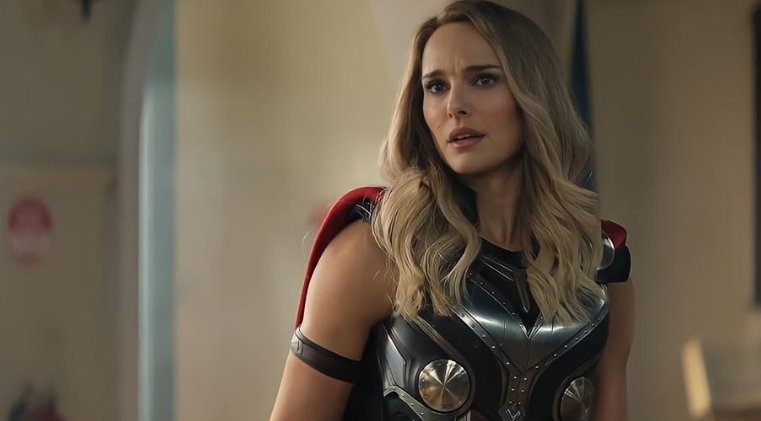
Perhaps the biggest disappointment is the treatment of Jane Foster’s storyline.
Natalie Portman returns as Jane, now facing a terminal cancer diagnosis. Her transformation into the Mighty Thor provides an interesting new direction for the character.
There’s real tragedy in the idea that becoming a superhero makes her increasingly vulnerable.
Every transformation into the Mighty Thor comes with a devastating consequence. Mjolnir’s power interferes with her cancer treatment, making her condition progressively worse.
It’s a heartbreaking concept that could have provided the film’s emotional foundation.
Portman gives the storyline considerable sincerity. She brings warmth, determination, and vulnerability to Jane’s struggle.
Her physical transformation and chemistry with Hemsworth are also highlights. However, the screenplay rarely gives her enough time to explore those emotions.
Just as a dramatic moment begins developing, another joke frequently interrupts it.
The relationship between Jane and Thor has moments of genuine warmth. Their shared history gives the film something meaningful beneath its comedy.
However, their reunion deserved more emotional development.
The reported omission of Jane’s first transformation into the Mighty Thor is particularly frustrating. That moment could have added another important layer to her journey.
The film wants audiences to care deeply about Jane’s fate. Unfortunately, it does not always allow those feelings enough room to develop.
Christian Bale Deserves a Better Villain
© Marvel Studios 2022. All Rights Reserved.
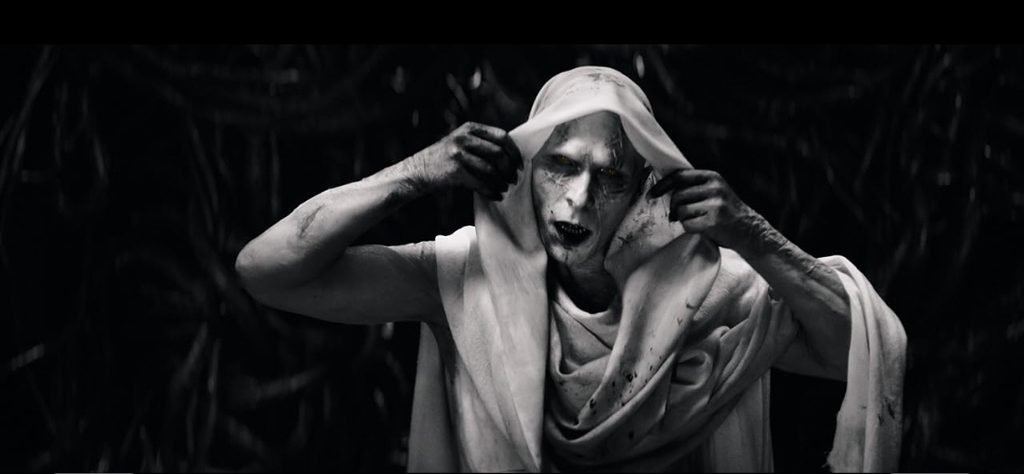
Christian Bale is easily one of the film’s biggest assets.
His portrayal of Gorr brings genuine menace and sadness to the character. Unlike many Marvel antagonists, Gorr’s motivations are rooted in personal suffering.
His journey begins with the loss of his daughter and his disillusionment with the gods. His anger eventually transforms into an obsession with destroying them.
Bale plays these moments with remarkable intensity. His opening scenes establish a frightening character whose grief has become something deeply destructive.
His unsettling physical performance and makeup also help distinguish Gorr from other Marvel villains.
Unfortunately, Gorr feels seriously underused.
For a character called the God Butcher, we rarely witness enough of his actual god-killing activities. Much of his reputation develops through dialogue rather than substantial encounters.
His storyline could have benefited from considerably more screen time.
The film also misses opportunities to explore his religious devotion and the devastating loss of his faith.
Bale reportedly filmed darker material that did not make the final cut. Those additional character moments might have made Gorr considerably more compelling.
The contrast between Bale’s performance and the film’s broader comedic approach is particularly noticeable.
He sometimes feels like he’s starring in a completely different movie. That’s not a criticism of his performance, but of the film’s inconsistent tone.
The Visual Style: Colour Without Much Depth
One of the most noticeable differences between Love and Thunder and earlier Thor films is its visual presentation.
The original Thor presented Asgard as a grand, almost Shakespearean kingdom. Its richer colours, dramatic shadows, and physical environments created a sense of mythology.
The Dark World continued that darker visual approach. Although less successful overall, it maintained a relatively grounded atmosphere.
Then came Ragnarok, which introduced vibrant colours inspired by Jack Kirby’s distinctive comic-book artwork.
That change worked because the visual style complemented the film’s adventurous spirit. Despite its colourful presentation, the cinematography still provided a sense of scale and atmosphere.
Love and Thunder pushes that approach considerably further.
Cinematographer Barry Baz Idoine creates a world filled with bright colours, golden sunlight, vivid turquoise, and striking pinks.
Omnipotence City is particularly colourful. Its appearance resembles an extravagant fantasy painting.
The intention is understandable. The film embraces an exaggerated, almost 1980s fantasy aesthetic that complements its Guns N’ Roses soundtrack.
However, the constant brightness sometimes makes the environments feel artificial.
There is not always enough contrast between the characters and their surroundings. The images can consequently feel flatter than those in previous instalments.
Interestingly, the Shadow Realm provides one of the film’s strongest visual sequences.
Its black-and-white presentation creates a striking contrast with the surrounding colour. Thor and Jane’s weapons provide bursts of colour against the darkness.
It’s an imaginative visual idea that demonstrates what the film could achieve with greater restraint.
The Problem With the Visual Effects
The visual effects are another significant weakness.
Marvel films have always relied heavily on digital environments and computer-generated characters. That’s hardly surprising when their stories involve gods, monsters, and distant galaxies.
However, Love and Thunder sometimes struggles to make its digital world feel convincing.
The film reportedly contains around 2,500 visual effects shots. That’s an enormous amount of digital work for a relatively short runtime.
Several backgrounds appear overly artificial, while certain costumes and character movements lack physical weight.
Some action sequences also feel cluttered. The constant digital spectacle occasionally makes it difficult to appreciate the choreography.
The digital helmets worn by Thor and Jane are particularly noticeable. They sometimes look weightless and disconnected from the actors.
Even when the film presents impressive creatures and environments, the effects are not consistently polished.
The production also relies heavily on digital environments rather than allowing physical locations and sets to provide more texture.
As a result, some scenes have an artificial appearance that reinforces the film’s theme-park atmosphere.
For a production of this scale, the inconsistent visual effects are difficult to overlook.
Zeus, Valkyrie and the Supporting Cast
© Marvel Studios/Disney 2022. All Rights Reserved
Tessa Thompson returns as Valkyrie, now ruling New Asgard. She remains an entertaining presence, although the story doesn’t always give her enough to do.
In Ragnarok, Valkyrie felt like a genuine co-lead with her own personal journey. Here, she often serves as a dependable supporting character.
Thompson brings effortless charisma and provides some much-needed grounding. However, her character deserved a stronger storyline.
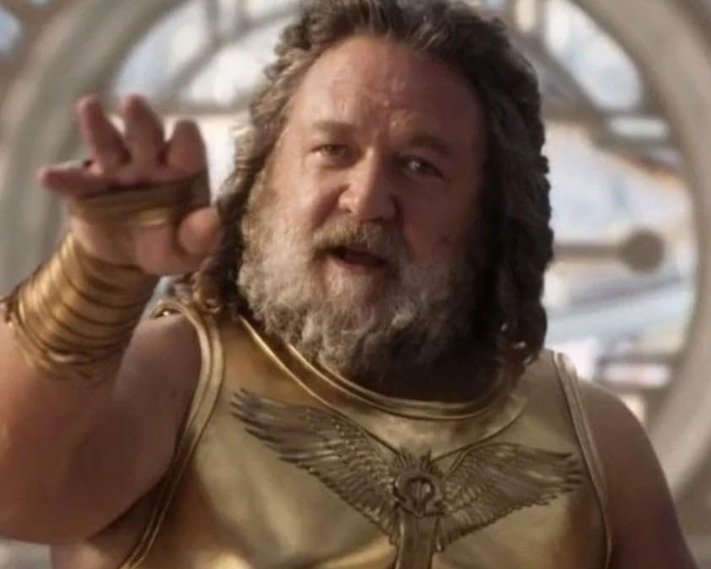
Russell Crowe appears as Zeus, introducing another opportunity for the film’s broader comedy.
Casting an actor of Crowe’s dramatic ability as the king of the Olympian gods creates exciting possibilities.
Unfortunately, Zeus becomes a theatrical caricature rather than a genuinely intimidating figure.
His performance is deliberately exaggerated, but the character’s presentation undermines the threat of the gods.
There’s an interesting idea behind this approach. Thor and Gorr represent very different responses to the behaviour of supposedly powerful gods.
However, the execution sometimes makes the mythology feel less meaningful.
Taika Waititi also returns as Korg, providing narration and plenty of comedic moments.
Korg was a highlight of Ragnarok, but his constant presence here becomes slightly exhausting.
The character’s humour works best in smaller doses. Unfortunately, the film rarely seems interested in restraint.
What Worked
Despite its problems, Love and Thunder has several genuinely strong elements.
Christian Bale delivers an excellent performance as Gorr. His portrayal gives the film a compelling antagonist with understandable motivations.
Natalie Portman also makes Jane Foster’s return worthwhile. Her transformation into the Mighty Thor is exciting, and her illness provides the story’s strongest emotional foundation.
The relationship between Thor and Jane has moments of genuine warmth. Their shared history gives the film something more meaningful beneath its comedy.
The opening Guardians of the Galaxy team-up also works well. Their contrasting personalities create an entertaining dynamic without completely sacrificing Thor’s heroic identity.
The Shadow Realm sequence is another highlight. Its striking black-and-white cinematography creates one of the MCU’s most distinctive visual moments.
The Guns N’ Roses soundtrack also suits the film’s energetic personality. Its use of classic rock adds plenty of personality to the action.
Most importantly, the emotional ending finally allows the story to breathe.
At Eternity’s altar, Thor chooses to comfort Jane rather than continue fighting Gorr. It’s a genuinely touching moment that brings the film’s themes of love and sacrifice together.
These ideas are genuinely powerful. Unfortunately, the film does not always give them enough space.
What Did Not Work
The biggest problem is the excessive comedy.
Waititi takes the humour established in Ragnarok and pushes it beyond its natural limits. Thor increasingly becomes a parody rather than the powerful warrior audiences originally embraced.
The tonal inconsistency is particularly frustrating. Jane’s cancer diagnosis and Gorr’s grief deserve serious treatment.
Instead, emotional scenes repeatedly compete with jokes that undermine their impact.
Gorr is also disappointingly underused. Bale delivers an outstanding performance, but the character deserved more development and screen time.
Jane’s illness similarly needed more attention. Her emotional journey becomes overshadowed by action and comedy.
The supporting gods also suffer from the film’s excessive camp. Russell Crowe’s Zeus is entertaining in isolation, but his portrayal damages the tension surrounding Omnipotence City.
The visual effects are inconsistent, while the bright cinematography occasionally lacks depth.
The film also feels crowded with competing ideas. A tighter screenplay and more disciplined editing could have made a considerable difference.
Final Verdict
Thor: Love and Thunder is a frustrating sequel because its potential is obvious.
The story contains some genuinely moving ideas about grief, mortality, and the importance of love. Jane Foster’s journey and Gorr’s tragic motivations could have supported a much stronger film.
Christian Bale and Natalie Portman deliver excellent performances. The Shadow Realm also provides a striking visual highlight.
However, Taika Waititi’s comedy frequently overwhelms the emotional storytelling. Thor becomes increasingly ridiculous, while important dramatic moments struggle to breathe.
The film also suffers from inconsistent visual effects and an overly bright aesthetic.
Thor: Ragnarok successfully reinvented the character without completely abandoning his identity. Unfortunately, Love and Thunder takes that reinvention several steps too far.
As a fan of Thor, I found this particularly disappointing. We have followed his journey from a proud, arrogant prince to a hero who has experienced unimaginable loss.
There was so much potential to explore what came next. Instead, the film often reduces him to a source of jokes.
There is a good film hiding somewhere beneath all the noise. Sadly, the final result never quite finds the right balance.