Tornado (2025) – Review
Tornado: Introduction
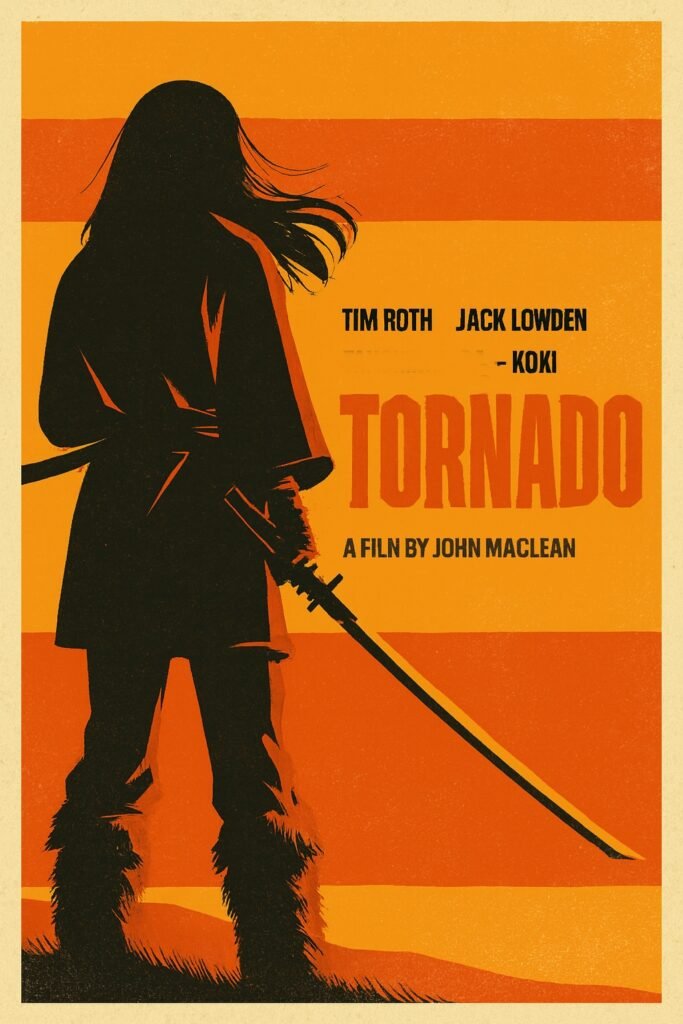
John Maclean (Slow West) wrote and directed Tornado, a 2025 British period action drama. Starring Kōki (Touch), Jack Lowden (Slow Horses), Takehiro Hira (Gran Turismo), and Tim Roth (Rob Roy). On paper, it sounds like an inspired genre mash‑up. Samurai cinema colliding with a grimy Scottish western, all set against one of the most cinematic landscapes in the world. After watching it, though, I walked away feeling frustrated rather than exhilarated.
Setting the Scene: A Strong Premise That Hooks You Early
The filmmakers set the film in the late 1790s, deep in the Scottish Highlands. Tornado (Kōki) is a young Japanese woman travelling with her father as part of a roaming samurai puppet show. A violent criminal gang led by Sugarman (Tim Roth) shatters their fragile, nomadic existence when they cross paths.And his volatile son, Little Sugar (Jack Lowden).
When Tornado steals gold from the gang’s latest robbery in an attempt to escape and start a new life, everything spirals out of control. Sugarman’s gang murders her father, and Tornado becomes a hunted woman. And the film positions itself as a revenge story fuelled by grief, survival, and inherited samurai training. From that setup alone, it’s easy to imagine a tense, emotionally driven thriller unfolding.
Unfortunately, while the ingredients are all there, the execution never quite comes together.
Expectations Going In: Why This Felt Like a Sure Thing
Going into Tornado, I genuinely expected to enjoy it. John Maclean’s Slow West showed he could handle period settings, violence, and off‑kilter tone with confidence. The idea of him applying that sensibility to a Scottish samurai revenge story felt bold in the best way.
The trailers leaned heavily into striking imagery, brooding standoffs, and a sense of mythic inevitability. The cast including proven talent made me more than ready to be pulled into this world. I wasn’t expecting a conventional action film, but I was hoping for something atmospheric, focused, and emotionally grounded.
Instead, the film left me constantly adjusting my expectations as it struggled to decide what it wanted to be.
A Story That Never Finds Its Footing
The biggest issue for me is the narrative itself. What should have been a lean, propulsive revenge tale feels oddly scattered and unfocused. The story jumps between ideas without fully committing to any of them, which makes it surprisingly hard to stay invested.
At times, the film feels almost whimsical. It leans into the novelty of the puppet show and the cultural clash of a Japanese family travelling through Scotland. Then, without much warning, it lurches into brutal violence and grim revenge‑movie territory. These shifts aren’t gradual or purposeful—they’re abrupt, and they undercut any sense of momentum.
Rather than building tension as Tornado is hunted and pushed toward vengeance, the film frequently stalls. It presents scenes that feel disconnected and loses its emotional through-line. By the time the story reaches its later confrontations. I found myself more aware of the film’s structural problems than invested in the outcome.
An Identity Crisis: Western, Samurai Film, or Something Else?
One of Tornado’s most persistent problems is its inability to settle on a clear tone. It wants to be a gritty historical drama, a stylised samurai revenge film, and a revisionist western all at once. In theory, that combination could work. In practice, it feels like the film is constantly pulling itself in different directions.
The grounded depiction of criminal life in 18th‑century Britain clashes with the heightened, almost mythic elements of Tornado’s revenge arc. The result is a film that never fully embraces realism or stylisation. When it hints at pulpy genre fun, it pulls back. When it gestures toward something more serious and brutal, it undercuts itself with uneven pacing and tone.
I kept wishing Maclean would fully commit one way or the other. Either lean hard into the operatic, blood‑soaked revenge fantasy or strip things back into a raw, character‑driven survival story. Sitting in the middle just doesn’t work.
Characters Without Depth or Emotional Weight
For a revenge film to land, the characters need to feel vivid and emotionally real. That’s where Tornado struggles the most. Nearly everyone in the film feels underwritten, including the protagonist.
The film tells us that Tornado loved her father and trained under him, but it rarely shows enough of their relationship to make us feel that loss in our bones. There’s little sense of who Tornado was before tragedy struck. Her hopes, her fears, or what kind of life she wanted beyond survival. As a result, her revenge quest feels more mechanical than emotional.
The villains fare no better. The film defines Sugarman and Little Sugar almost entirely through their cruelty. With very little insight into what drives them beyond greed and violence. Without deeper characterization, their presence never feels as threatening as it should.
Dialogue That Lets the Cast Down
The dialogue does the film no favors. Much of it feels flat, repetitive, or overly familiar, relying on genre clichés rather than sharp character moments. This is especially frustrating given the talent involved.
There are very few lines that linger or reveal something meaningful about the people speaking them. Instead, conversations often exist solely to move the plot along. Which further contributes to the sense that the characters are sketches rather than fully formed individuals.
Performances: Talent Held Back by the Material
Tim Roth is usually a commanding presence, but here he feels oddly disengaged. His Sugarman never quite becomes the terrifying force the film needs him to be. He delivers the role competently, but without the intensity or unpredictability that define his best performances.
Jack Lowden, as Little Sugar, goes in the opposite direction. His performance often feels exaggerated, as if he’s pushing too hard to distance himself from more sympathetic roles. While I admire the willingness to take risks, the result frequently pulled me out of the film rather than drawing me in.
Kōki has the hardest job, carrying the film almost entirely on her shoulders. Unfortunately, her performance feels stiff and emotionally muted. Inexperience may explain part of it, but the script gives her very little to work with, which creates the bigger problem. Tornado as a character lacks texture, making it difficult for any actor—let alone a newcomer—to fully bring her to life.
Where the Film Succeeds: Visuals and Musical Ambition
If there’s one area where Tornado consistently delivers, it’s in its presentation. The Scottish Highlands are shot beautifully. With sweeping landscapes and harsh natural light that give the film a strong sense of place. These moments are often the most immersive parts of the experience.
The score is another highlight. Blending elements of spaghetti western music with traditional samurai influences. It creates a soundscape that reflects the film’s ambitions more successfully than the story itself. In certain scenes, the combination of music and imagery hints at a far better version of this film. One that fully understands and embraces its identity.
Final Thoughts: A Film That Never Becomes What It Promises
By the time the credits rolled, I felt more disappointed than angry. Tornado isn’t a total failure. It’s a film full of interesting ideas and striking moments—but it never coheres into something satisfying.
Weak execution undermines what could have been a great concept. The script lacks focus, the tone is inconsistent. The characters never develop enough to carry the emotional weight the story demands. The filmmakers create a film that looks and sounds impressive but feels hollow at its core.
For fans of John Maclean, this feels like a step back from Slow West. For anyone hoping for a gripping revenge thriller or a bold genre hybrid, there are stronger, more confident examples elsewhere. Tornado had the potential to be memorable, but instead it fades quickly once the spectacle wears off.