
Widow’s Bay Review
Introduction: A Charming Island With a Dark Secret
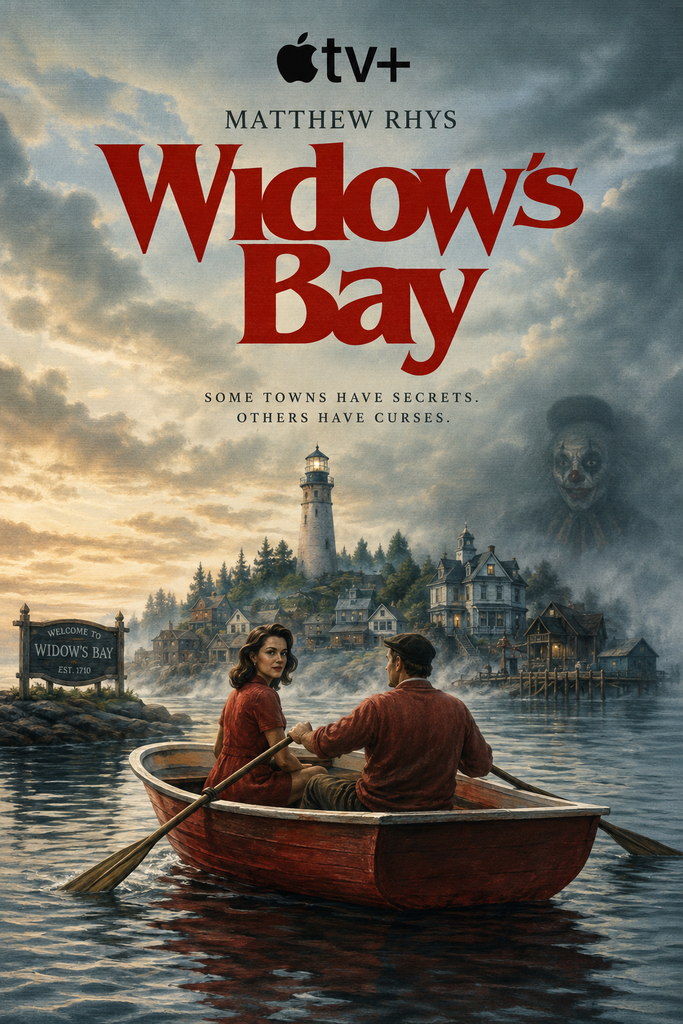
Widow’s Bay immediately has something interesting to offer its audience. It seems to be a cosy, funny and, to some extent, innocuous show.
Its beautiful location promises a gentle story about community and tourism. Nonetheless, the seemingly innocent plot conceals something sinister behind its beauty.
The series was created by Katie Dippold and is a combination of comedy and supernatural horror genre.
The plot revolves around Tom Loftis who is a widow and the mayor of the island with ambitious plans for his community.
Tom wants to bring tourists to the island and change the image of the community into something chic and fancy.
It is obvious why Tom wants to do so. The island lacks money, visitors and opportunities for its residents. Nonetheless, the community knows something Tom doesn’t really realize.
Namely, the community believes that the island is cursed and that something strange happens on it each time it is disturbed. Tom finds it hard to believe in such things.
The end result is a series that frequently swings from the humorous to the unsettling. One minute, there could be an absurd gag for comic relief. Another could be some really disturbing stuff.
This blend ends up making the series all the more effective. Widow’s Bay knows that humor works better when the horror is treated seriously. It knows that horror could benefit from a realistic reaction.
The series therefore avoids taking its paranormal components as a source of jokes. Most of the time, the characters act like humans do in reality. Fear, confusion and exasperation drive a lot of the comedy.
This ends up making the series unique. It is funny without being another sitcom. At the same time, it is dark without being relentlessly bleak.
Direction That Understands Both Genres
The direction is the most influential factor in the creation of the style of Widow’s Bay. It is Hiro Murai who sets the tone of the show.
Instead of indicating when something is supposed to be funny, the directors leave it up to the story to unfold. The characters rarely understand that they are in the middle of a horror-comedy.
This aspect plays a crucial role. As mentioned above, the supernatural elements are presented in an utterly serious manner. Comedy comes into the scene where the characters try to cope with them.
Tom is especially successful in this sense. He does not behave as any other horror protagonist would have. His expressions are usually either confused or terrified by what is happening around him.
It results in humour without diminishing the atmosphere of fear. The viewer can laugh at Tom’s situation and be sure that he is really scared.
Silence also works effectively here. Some scenes are given the opportunity to unfold without any jokes. It gives the chance for the supernatural elements to become frightening.
The island itself serves as the setting for the directions. Despite seeming serene, there is something odd happening beneath the surface.
The contrast between peace and oddness contributes to the visual irony. The beautiful scenery can accompany the scene of a disappearance or even some kind of threat from the supernatural.
This creates a paradoxical effect of an inviting and menacing environment at the same time.
The directors also create a unique identity for each episode. While some stories may lean towards classical horror, some of them emphasize the relationships between the characters and include some bizarre comedy.
For instance, the second episode is a good illustration of that approach. Tom looks into the haunted Breakwater Inn at night, and his attempt to film some proof with a camcorder creates a certain visual layer.
At the same time, the situation becomes increasingly absurd but still disturbing. The encounter with the strange clown takes the episode to the level of surrealism, but the direction still does not abandon the horror genre.
The third episode employs yet another approach. In it, the Sea Hag is introduced, and the audience can be misled about who the murderer is.
This process lends the series its sense of scale, which turns a series of bizarre events into a bigger story.
The end of the series merges all of these parts. Relationships, mythology, and dark comedy are beginning to come together.
The direction is successful because it does justice to both sides of the show’s split personality. The horror aspect has the respect to make it frightening, while the comedy element has more impact because it comes from that fear.
Cinematography That Makes the Ordinary Unsettling
The cinematography is the other significant strength that allows the TV show to stand out. Christian Sprenger is responsible for most of the visuals used in the series, along with Cody Jacobs.
The TV series does not depend on darkness to evoke fear in the viewers. There are many bright and somewhat open pictures.
It means that the show is quite unusual compared to traditional horror movies. Everything that happens takes place in front of the viewers’ eyes.
It may make certain scenes even scarier since the danger is not hidden in dark corners but rather located in a usual setting.
The visuals are somewhat reminiscent of old-school films since the series features carefully framed images and camera work in many scenes.
The slow pace of the camera shots is noticeable here. There are moments when the shot remains static, showing characters discussing their regular problems.
This creates an opportunity for creating tension in a gradual way. The viewer starts paying attention to the background just as much as to the characters.
The island is no longer just a place. It becomes a place with a history and personality.
The cinematography helps create the nostalgic atmosphere of the show. Some aspects of cinematography remind one of classic movies and traditional television dramas.
But this show does not only copy that style. It reinterprets the atmosphere in a new comedy-horror context.
What is particularly interesting about cinematographic aspects of this show is the way the sixth episode is filmed.
Ti West directs the episode, which explores the island’s past during the eighteenth century. Betty Gilpin plays an important role within this historical storyline.
A larger format camera and a 1.43:1 aspect ratio have been utilized in this particular episode. They change the scale of the story.
Moreover, there is increased texture and theatricality of the images. Wider lenses and close camera work make for a greater involvement into the action and its characters.
The episode seems like yet another production, belonging to the series. The use of such an approach helps to highlight the significance of the historical subject.
There are lots of practical effects used in the show. Digital effects are being used only when there is need for environmental or any other type of alterations.
In this way, one may maintain the realism of the images. Odd creatures and magical events become more tangible.
The whole philosophy of the visual approach is very simple. Cinematography makes familiar locations seem odd.
This works well for the whole series. The island appears to be such a place where people would like to travel. The audience gradually discovers why visiting it might be a terrible idea.
Storytelling, Pacing, and Character Development
While the development of the story of Widow’s Bay is slow, it does not necessarily mean that the story goes without a reason.
The early scenes present the island first and then reveal the supernatural aspect of its past. It allows the characters to get used to it.
First of all, Tom’s idea for tourism is a narrative engine in the beginning of the series. It attracts outsiders and causes a pressure on the residents.
Secondly, it symbolizes something bigger. Tom thinks that the development can solve the problems of the island.
The islanders understand what development means differently. For them it means awakening of something terrible if they will disrupt their traditions.
This contradiction provides the story of the curse with themes. Also, there are some personal reasons that make Tom want a new life. Being a widower influences his actions throughout the season.
While he tries to get rid of his problems, Tom realizes that grief does not leave just because he wants it to. This personal conflict reflects the island’s inability to move away from its past.
Another emotional aspect appears in form of father-son relationships between Tom and Evan. Evan becomes more and more involved in the supernatural mystery.
It prevents the mythology from becoming too abstract since there is a family which suffers from the supernatural story.
Moreover, Patricia grows into a character that has nothing to do with the comedy she started as. She becomes an emotional core of the season.
Her relationship with Tom adds more heart to the plot. Additionally, her character gets more attention with time.
The sixth episode marks the change in structure. Rather than moving on with the present-day story, it goes back to the island’s history.
This flash-back episode reveals the information about the curse. It also changes the way we see the past events.
This delay can be considered quite risky since some people may become frustrated because of unanswered questions.
On the other hand, the question creates curiosity. The audience needs to find out what causes such unusual behavior.
Therefore, everything depends on the delay of answers. In some cases, this technique works very well.
In other cases, the mythology may become more exciting than the personal story of the main characters. This means that there are some episodes which are a little bit slow.
The comedy is helpful since it does not let the problem become too big. There are funny episodes to take breaks before some dark events.
Moreover, the episodic format gives an opportunity to pay attention to other characters. This way the series becomes a little bit bigger than its basic plot.
In the best episodes, supernatural events are connected with character development. In other cases, there is a lot of mythology without any emotional impact.
Despite all the problems, this format can be considered quite ambitious.
Performances That Keep the Story Grounded
The performances are essential to the success of Widow’s Bay. The actors understand that the comedy should not become overly exaggerated.
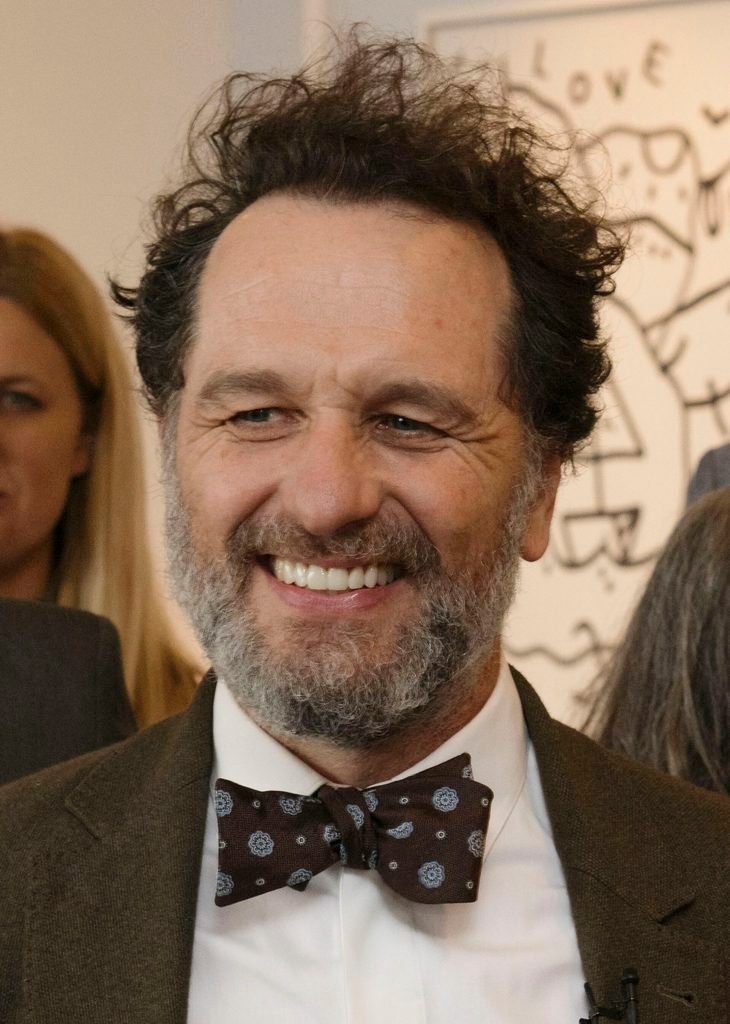
Matthew Rhys portrays Tom. His style is cautious, nervous, and even amusing. Tom is no regular heroic mayor. He has good intentions but is often hesitant.
Rhys does not hide any of these flaws in Tom. Tom can make mistakes without being a despicable character.
His seriousness increases the effect of horror. When Tom gets scared, the viewer understands that he truly does.
That understanding creates humor from watching how Tom responds to the situation. His humorous responses are created through viewing how an ordinary person deals with unusual situations.
Rhys also makes Tom a character with real emotions. The grieving side of him plays an essential part of the character.
Thus, the character does not become only a funny character in the movie. There are real emotions involved in Tom’s case.
This performance of Matthew Rhys got an Emmy award for comedic acting.
Kate O’Flynn is equally important as Patricia. Her character initially appears awkward and blunt.
As the series progresses, Patricia’s complexity grows. Her vulnerability slowly starts to come to light.
O’Flynn relies on subtle responses instead of overacting. This method works well with the overall performance style of the series.
Eventually, Patricia becomes an emotional foil to Tom. Her connection with Tom makes the series warm in its more disturbing episodes.
Stephen Root is equally compelling as Wyck. Wyck is portrayed as eccentric and extremely dedicated to local customs.
Initially, the character of Wyck seems very much like an exaggeration of a small town’s person. But the story eventually shows that Wyck’s fears are worthy of consideration.
Root has successfully managed to create a balance between eccentricity and dedication of Wyck. That makes the character of Wyck both amusing and realistic.
Another point of view comes from Kingston Rumi Southwick via Evan, who links the supernatural storyline with the story about Tom’s family.
The cast members deserve appreciation too since they contribute a lot to the development of the world where the story takes place. The characters form a feeling of community with their own history.
The reactions of the inhabitants help create the sense of reality of the inhabited island. The supporting characters usually contribute the most unexpected humour to the programme.
A good example is Jeff Hiller’s Dale who turned into a major character due to the work of the ensemble and the chemistry between its members.
Betty Gilpin adds to the ensemble with her historical plotline; her acting gives unique emotional atmosphere to the sixth episode.
All the actors create a unified mood. It seems like none of them is struggling with the genre mix of the show.
The Horror and Comedy Balance
Horror and comedy are key aspects of Widow’s Bay that have been handled very well.
A major problem in horror comedies is that one of the genres will inevitably overshadow the other. Comedy gets lost when it goes too far.
Horror can also overshadow comedy if it is too scary. Widow’s Bay has managed to do well avoiding this problem.
The core of the programme is a fairly simple one. The characters need to believe in the danger.
The programme does not stop to remind the viewers that a certain supernatural event is meant to be funny.
This is how a certain type of humor is achieved. A mayor who is scared by a monster that he cannot handle can be humorous even without jokes.
Humor is also created through personality traits. Tom’s fears create humor because they are specific to Tom. Wyck’s confidence creates a different kind of humor.
This character-driven comedy seems more natural than non-stop one-liners.
Horror also profits from such an approach. Since the series does not mock the monsters all the time, there is still some fear in them.
Thus, viewers can laugh in one scene and be on the edge of their seats in the next one. Such an emotional roller-coaster is what makes the show truly remarkable.
What Works Best
What works best in Widow’s Bay is that it has tremendous confidence. It knows what kind of weird tale it needs to weave.
It has an interesting look which doesn’t detract from the story. Its acting is well-grounded even if the situations get crazy.
The setting on the island also adds to this show’s uniqueness. The importance of the community in the story comes through clearly.
Character growth makes up for one of the main strengths of the show. Patricia, Tom, and Evan all become more complex.
The way the mythology is developed in the show is also very impressive. The answers to all questions aren’t shown right away.
This approach adds to the intrigue factor of the show. Every new revelation changes the whole plot as it was before.
Even the individual plots of episodes add to the diversity. There is a haunted inn, Sea Hag, and historical plot among the many other horror stories.
Such approach saves the premise from repetition. It can explore different supernatural ideas within the mythology.
The awards that the show won also indicate its high quality in several departments. The acting, writing, directing, and production itself were acknowledged.
However, awards alone do not explain the show’s appeal. Its greatest achievement is tonal consistency.
The series understands that strange does not have to mean careless. Its absurd ideas are supported by serious filmmaking.
What Could Have Been Better
Despite its strengths, Widow’s Bay is not completely flawless. There are moments when the mythology becomes too intricate. Some revelations are delayed so much that the process of waiting becomes very annoying.
Moreover, some parts of the middle part of the series are less exciting compared to the episodes at the beginning. Some plot twists do not deliver enough emotional satisfaction until the end.
Furthermore, the amount of supernatural data can become too overwhelming compared to the characters. The best episodes in the series balance those elements.
There are also some differences between individual episodes. Some episodes seem to be more coherent and memorable than others.
Finally, the unusual humor in the series may turn out to be boring for some viewers. Some characters and plots defy realism intentionally.
However, this approach will be fresh for some people, while others may find it too repetitive after some time.
Another potential weakness of the series is the ending. Although there are important revelations in the finale, there are also some unanswered questions.
Undoubtedly, this means that the story is prepared for another season. However, this ending will not satisfy everyone since many viewers expect some kind of closure.
Fortunately, the performances help compensate for these structural weaknesses. The characters remain compelling even when the mythology becomes complicated.
Final Verdict
Widow’s Bay is an ingenious blend of horror-comedy with a rather unexpected emotional undertone.
Its main merit lies in the fact that it does not have to pick between fear and laughter. Both are allowed to coexist without constant explanation of the relationship.
The direction gives the series its distinctive voice. The visuals make the island gorgeous, familiar, and scary.
The script steadily builds the mysterious world. However, at the same time, it creates characters that matter more than the mystery.
Matthew Rhys gives the series a fantastic centre. He makes his character funny, fragile, and real.
Kate O’Flynn provides Patricia with an equally engaging arc. Stephen Root is excellent at portraying Wyck without making him look like a parody.
The rest of the cast does not disappoint either; adding to the rich world of this fictional community.
The flaws of this show come from pacing and mythology. Some secrets could be divulged faster.
Some episodes could have better momentum or even emotional value. The ending could provide more closure.
But these flaws are not enough to overshadow the strong points of this show. Widow’s Bay stands out by its confidence.
Widow’s Bay understands that horror is funniest when people treat it seriously. And it understands that comedy works best when there are some stakes in play.
This combination elevates this show to something bigger than just a supernatural joke. This show is about grief, history, development, and inability to move forward.
The curse on the island, thus, serves a symbolic role. It symbolizes the impossibility of moving past the problems of the past.
And Tom’s attempt to bring modernization to the island is the reflection of that desire. Supernatural plot line opposes this desire on a very personal level.
That alone ensures that the series is far from lacking content despite its odd premise.
In the end, what makes Widow’s Bay succeed is that contradiction is integral to its very nature. It can be both comfortable and uncomfortable at the same time.
It can be ridiculous and still have a point, and it can be scary without being overly serious.
For fans of genre TV with character and style, the show has much to offer. Its unique tone, memorable characters and confident visuals set it apart.
Widow’s Bay turns out to be something familiar yet novel. The series combines the look of classic horror with its own comedic take on things.
While the first season might not answer every question posed by the series, it certainly leaves the viewer wanting to know more.
In terms of an editorial verdict, Widow’s Bay is an ambitious, entertaining success. It does have its flaws, but these are rarely overwhelming its positives.
What the series achieves is showing how horror doesn’t have to give up tension for comedy. What it also shows is how comedy can be taken seriously.
This is a tough thing to accomplish. Widow’s Bay manages to do it often enough to make it truly memorable.
That’s why this Widow’s Bay editorial review thinks the series is definitely worth viewing. It is strange, stylish, funny, disturbing, and totally unique.
But most important of all, it knows why its two genres go together.


Pingback: Emmys 2026 Winners: Historic Night of Shocks