
You Can See Everything Movie Review
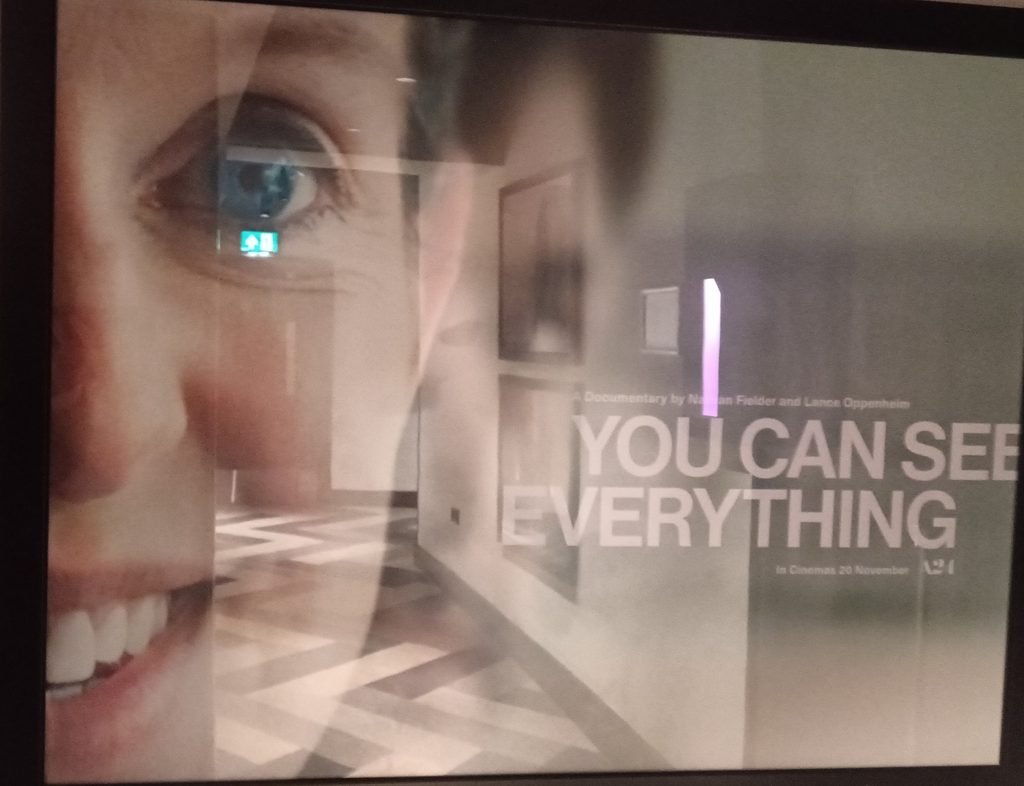
What occurs when a documentary maker is granted full access to one of America’s most well known convicted fraudsters? And can film truly expose the whole truth about somebody who is keen to manage their own narrative?
Such issues are explored within the remarkable docu-fiction created by Nathan Fielder and Lance Oppenheim. It centres on the disgraced Theranos chief Elizabeth Holmes and considers themes of lying and delusion as well as the growing fusion of reality and acting.
Just 34 days prior to entering federal prison, Holmes allows a doubtful film team into her house in San Diego. She grants them access to both her personal life and that of her spouse, Billy Evans.
But as the documentary progresses, it soon morphs into even more bizarre territory. Once Holmes is incarcerated and is no longer able to be filmed, Fielder adds dramatised scenes starring Amanda Seyfried and Christopher Abbott.
An intriguing – and often uneasy – analysis of the art of documentary making is therefore provided. Clocking in at 174 minutes, You Can See Everything is intentionally confusing, whilst simultaneously being both darkly humorous and at times exasperating.
Furthermore, it prompts viewers to wonder whether they have just viewed reality or yet another highly orchestrated act.
Inside the World of Elizabeth Holmes

Following her conviction for defrauding Theranos’ investors the documentary shows Holmes preparing to be incarcerated.
Rather than showing details of Holmes’ trial, Fielder and Oppenheim explore the period straight before she goes into federal prison.
Holmes shares a house with Evans and the production team are granted unusual levels of access to this. They film both private and everyday aspects of Holmes’ life.
However, Evans often steps in to define the extent of the team’s access. His role is to regulate and control what is filmed.
This immediately creates queries about who is in charge of the documentary. Even if Holmes has consented to take part in it, this does not automatically mean that the production team can film whatever they wish.
Fielder throws himself into the centre of this uneasy dynamic. He moves away from being a passive observer and adopts a progressively central role in the narrative.
His interviews with Holmes result in several highly discomforting scenes. Occasionally it seems that Fielder is performing a complex psychological test, yet is unsure exactly what he is hoping to learn in the process.
Whilst the film is not so concerned with debating whether or not Holmes was guilty of fraud (an issue which has already been resolved), it does explore her comprehension of her behaviour and her sincerity in relating her experiences.
Thus, in comparison to a typical true crime documentary, this work possesses a much greater level of psychological depth.
The Uncomfortable Art of Observation
Fielder uses his knowledge of bad comedy and social games to investigate Holmes in a highly analytical manner.
Whilst questioning Holmes, he often identifies inconsistencies in her accounts, although she rarely seems to acknowledge these.
Despite being presented with unpleasant information, Holmes remains extremely confident in her interpretation of what has occurred.
Sometimes the situations shown are very bizarre. An endeavour to analyse the Abbott and Costello sketch ‘Who’s on First?’ is used comically to illustrate Holmes and Evans’ struggles in understanding each other. Clearly neither of them are very adept at grasping this analogy.
Whilst often amusing, there is usually a sense of unease associated with these sections. Moreover, Fielder begins to be more intrigued by Holmes’ apparent delusion than by his role as investigator.
Furthermore, the film does not attempt to hide that it is being filmed. Not only are people aware that they are being recorded, but so too are the cameras and the filming techniques.
Significantly, Fielder is also shown within the film – thus ensuring that his involvement cannot be overlooked.
This raises an intriguing issue. Can objective truth ever truly be conveyed in a documentary given that all parties are conscious that they are under observation?
It would appear that the filmmakers are equally fascinated by their own level of involvement. Undeniably, their participation affects those that they are filming.
Consequently, the recording can be viewed as further performance – deliberately or otherwise.
A Remarkable Visual Approach
David Bolen’s cinematography gives the film much of its distinctive psychological atmosphere. The near-square 4:3 composition, natural lighting and static tripod shots create an unusually claustrophobic environment.
Often a doorframe or even solid objects act as screens and allow the camera to discreetly watch people.
Individuals tend to feel secluded in their environment. Furthermore, lengthy close angle shots emphasise both the tension and micro-expressions of those involved.
As well as producing a feeling of being watched, the triple camera system also makes one progressively conscious of the technology utilised to generate the footage.
At times the visual style is reminiscent of a psychological drama. Although generally low key, everyday environments are given an unusually sinister feel.
In fact, some of the film’s most compelling scenes stem from commonplace exchanges, silences and even awkward dialogues – all of which can often prove more engaging that typical fictional dramatic scenarios.
The Amanda Seyfried Twist

One of the film’s most fascinating developments arrives when Holmes enters prison and the filmmakers must reconsider their approach.
Amanda Seyfried, who previously portrayed Holmes in The Dropout, becomes involved in staged reenactments alongside Christopher Abbott.
These sequences recreate conversations and situations that the filmmakers can no longer document directly.
The Limits of Sympathy
Whilst being highly innovative, You Can See Everything can also be accused of failing to sufficiently recognise the moral issues which may arise from its curiosity.
Although Holmes is certainly an intriguing figure to analyse, there is often insufficient coverage within the film of those who were impacted by Theranos’ fraud. Investors, patients and indeed other victims are under-represented.
This is an important issue. It is interesting to investigate Holmes’ mind and behaviour but it is crucial to assess the impact of her behaviour too.
Furthermore, at times the film becomes too wrapped up in its own ingenuity. Particularly since it is 174 minutes long, the meta aspects such as irony and acting can become unnecessarily self-centred.
Whilst the film-makers do at times seem similarly transfixed by their investigation as they are by Holmes, this arguably accords with the film’s key themes.
The finale of the film continues to challenge the conventions of the documentary genre. The persistent motif of building memorials to love adds a new, emotive layer.
Indeed, Seyfried’s comment that ‘everything is complex’ is extremely fitting. Up to this point, the film has intentionally sought to considerably merge passive and active roles.
The final scenes are highly evocative. Fielder’s choice to swim in the sea with Holmes is again highly illustrative. This is notable as previously he had been hesitant to swim in cold water.
The final shot prompts reflection on Holmes’ connection with her fictional character. As this is a film which explores self-narratives, I believe that this suitably open-ended ending is fitting.
Final Verdict
‘You Can See Everything’ is bold, disturbing and original. It is engaging due to its visual style, narrative innovation and acting.
Whilst the relationship between Holmes and the film is interesting, at times this can overshadow the impact that Theranos had on others.
Additionally, the films length and meta-narrative could prove challenging for some people to engage with.
Unlike a standard docudrama, this film does not present a conclusive version of Theranos. Rather it explores the complex interplay between fact, theatre and what is accepted as reality.
Overall Fielder and Oppenheim have made a pioneering film which continues to encourage reflection even after its conclusion.