Zootopia 2 (2025) Review – A Smart, Ambitious Return to a Modern Classic
Introduction
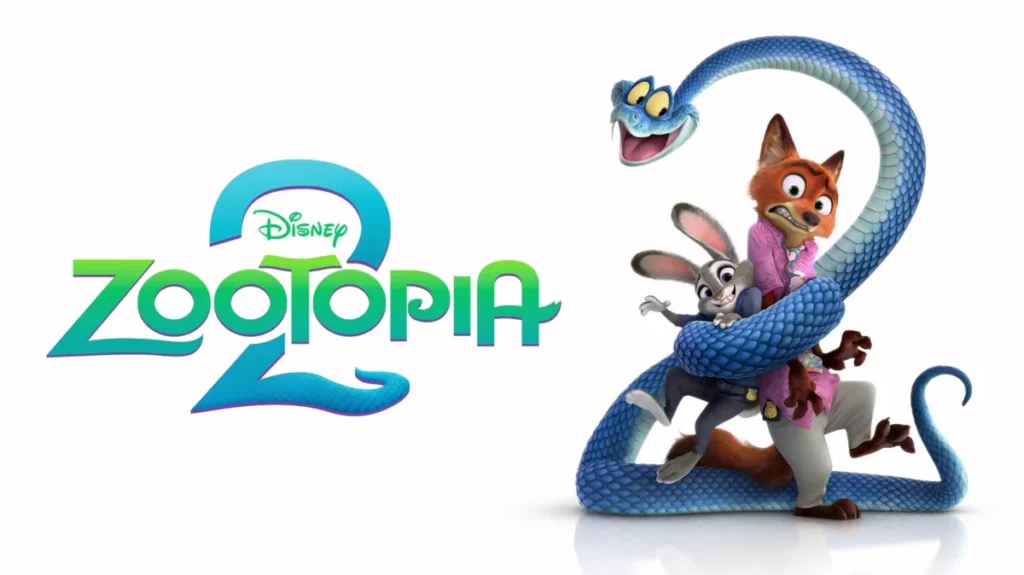
Zootopia 2 arrives nearly a decade after Zootopia reshaped modern animated storytelling. The original blended sharp social commentary with heartfelt character work. Therefore, expectations for this sequel ran high. With Jared Bush and Byron Howard returning to direct, the foundation feels reassuring. Bush also handles the screenplay again. Consequently, the creative continuity shows immediately. Walking into this sequel felt nostalgic yet cautious. Fortunately, real care and ambition shape this return to the animal metropolis.
Reuniting with Familiar Voices and Fresh Energy
From the opening scenes, the familiar voices restore comfort. Ginnifer Goodwin and Jason Bateman slip effortlessly back into Judy Hopps and Nick Wilde. Their chemistry feels natural and lived-in. Supporting performances from Shakira, Idris Elba, Jenny Slate, and Bonnie Hunt reinforce continuity. As a result, the world feels instantly familiar.
However, the sequel also introduces compelling new faces. Ke Huy Quan voices Gary De’Snake, a reptile navigating a mammal-dominated city. Meanwhile, Andy Samberg, Fortune Feimster, Quinta Brunson, and Danny Trejo join the ensemble. Importantly, none feel like stunt casting. Each character fits organically into Zootopia’s rhythm.
A Mystery That Expands the City’s Social Landscape
This time, Judy and Nick operate as established partners within the Zootopia Police Department. That shift changes the dynamic immediately. Instead of proving themselves, they now maintain trust under pressure. The central case begins when Gary De’Snake becomes entangled in a conspiracy. As a reptile in a city designed primarily for mammals, his presence exposes structural tensions. Consequently, the mystery expands beyond crime into systemic imbalance.
Judy and Nick go undercover in districts we have never explored. These new environments reveal hidden corners of the city, both physically and politically. Therefore, the sequel deepens the world rather than repeating it. Unlike the original, this story focuses equally on partnership friction. The honeymoon phase has ended. Now, communication gaps and clashing instincts test their bond.
A Mature and Honest Evolution of Judy and Nick
The strongest element of Zootopia 2 lies in its character work. Instead of recycling trust issues, the film explores long-term collaboration. Surprisingly, the story places Judy and Nick in couples therapy. While that concept sounds comedic, the execution feels sincere. The sessions allow reflection without mockery.
Goodwin and Bateman deliver layered performances. Their banter feels effortless. Moreover, their emotional confrontations carry believable weight. Importantly, the film avoids romantic clichés. This narrative centers on partnership growth, not romance. Consequently, the emotional arc feels mature and grounded.
Humor That Balances Wit and Accessibility
Comedy remains a core strength. Yes, some obvious animal puns surface. However, much of the humor emerges through visual detail and situational irony. Background jokes reward attentive viewers. Additionally, the script avoids dated pop-culture references. As a result, the comedy feels more timeless. Children will enjoy the surface-level gags. Meanwhile, adults will appreciate the sharper observations. This layered humor reflects confidence in the audience.
Bigger Themes with Greater Complexity
Zootopia 2 broadens its thematic scope. While the original focused on predator-prey prejudice, this sequel explores historical exclusion and systemic design. The film addresses who benefits from power structures. It examines how cities quietly marginalize those who do not fit the blueprint. Admittedly, some messages land bluntly. A few plot threads feel crowded. Nevertheless, ambition outweighs occasional clumsiness. The film aims high rather than settling for safety.
A Visual Leap Forward
Technically, the sequel dazzles. Animation quality surpasses the original in texture and lighting. New districts, especially Marsh Market, burst with atmosphere. Environmental details enhance immersion. Transportation systems accommodate aquatic animals. Architectural variations reflect species diversity. Consequently, Zootopia feels like a functioning metropolis rather than themed zones. These refinements demonstrate growth in Disney Animation’s technical craft.
Momentum That Wavers but Recovers
As a buddy-cop mystery, the film delivers engaging stakes. Action sequences use size differences creatively. Chase scenes feel dynamic and inventive. However, pacing falters mid-film. Exposition occasionally slows momentum. Scenes explain ideas instead of dramatizing them.
Ironically, after a dense buildup, the final act moves too quickly. Emotional resolution arrives slightly rushed. A more balanced structure would have strengthened the payoff. Additionally, the narrative mirrors the original’s structure too closely. Underdog officers uncover corruption and save the city. While effective, the formula feels familiar.
Final Verdict – Thoughtful, Ambitious, and Worth the Return
Despite structural flaws, Zootopia 2 succeeds where it matters most. It respects its audience, furthermore it deepens its characters and expands its world. The sequel does not surpass the original. However, it justifies its existence through sincerity and ambition.
Strong performances anchor the emotional arc. Visual upgrades enrich immersion. Thematically, the film tackles complexity with admirable confidence. In conclusion, Zootopia 2 stands as one of Disney’s stronger animated sequels in recent years. It proves that thoughtful storytelling still matters. Moreover, it reminds audiences why Zootopia remains such a compelling world to revisit.