Rose of Nevada Film Review: A Stunning Mystery Uncovered
Introduction (Warning Contains Spoilers)
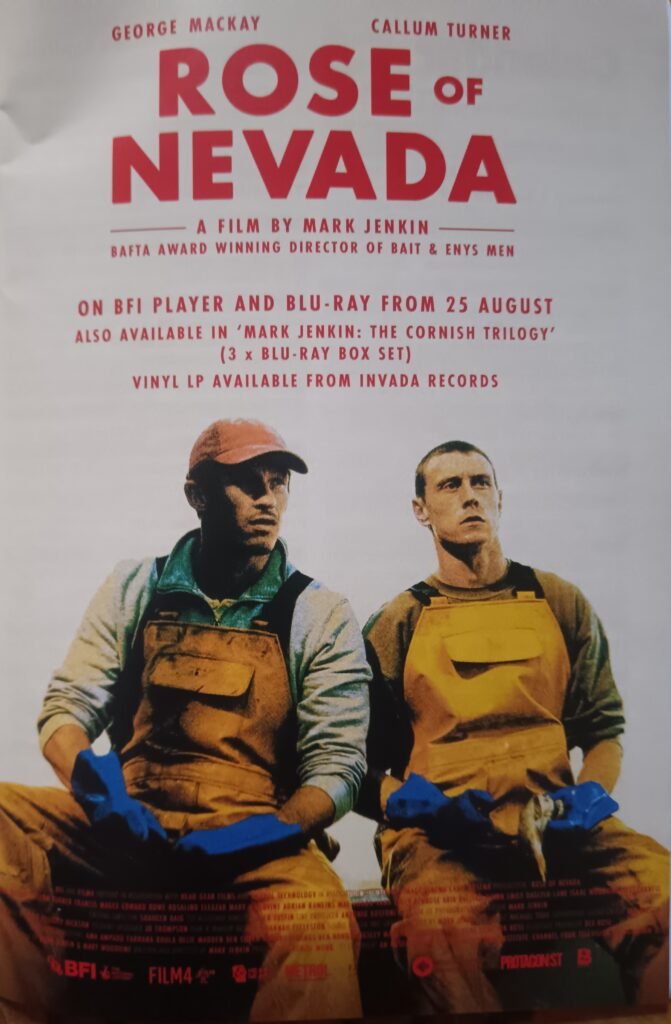
Mark Jenkin is well known for making films that have a recognizable style. Realism, mysticism, and unique storylines are common themes in Jenkin’s movies. His previous movies such as Bait are good examples of this. The new movie by Jenkin called “Rose of Nevada” keeps with this style.
The 2025 movie is written, directed, edited, and composed by Jenkin himself. He is also the cinematographer in the movie, which makes it extremely personal to him.
Rose of Nevada, which features George MacKay and Callum Turner, is about an intriguing mystery. A fishing boat arrives in a small coastal town after being lost for three decades.
Jenkin does not offer his audience a conventional sci-fi narrative in Rose of Nevada. Instead, he offers a more introspective movie that deals with issues of loss, time, memory, and unresolved emotions. Still, the peculiar way in which Jenkin tells his story might not appeal to all viewers.
The Rose of Nevada is a movie which requires patience and careful observation. The movie does not offer easy-to-grasp ideas or answers to questions. What it does is that it makes the viewers look for the answers themselves.
Some people might find such a movie really exciting and captivating. Others might be frustrated with it. The movie’s main advantage and disadvantage lies in one and the same feature.
Uncertainty is Jenkin’s goal for the viewer. Nevertheless, at times this technique makes a gap between the viewers and the story. What we get is a great movie with some good and confusing scenes.
Mark Jenkin’s Directorial Vision and Cinematography
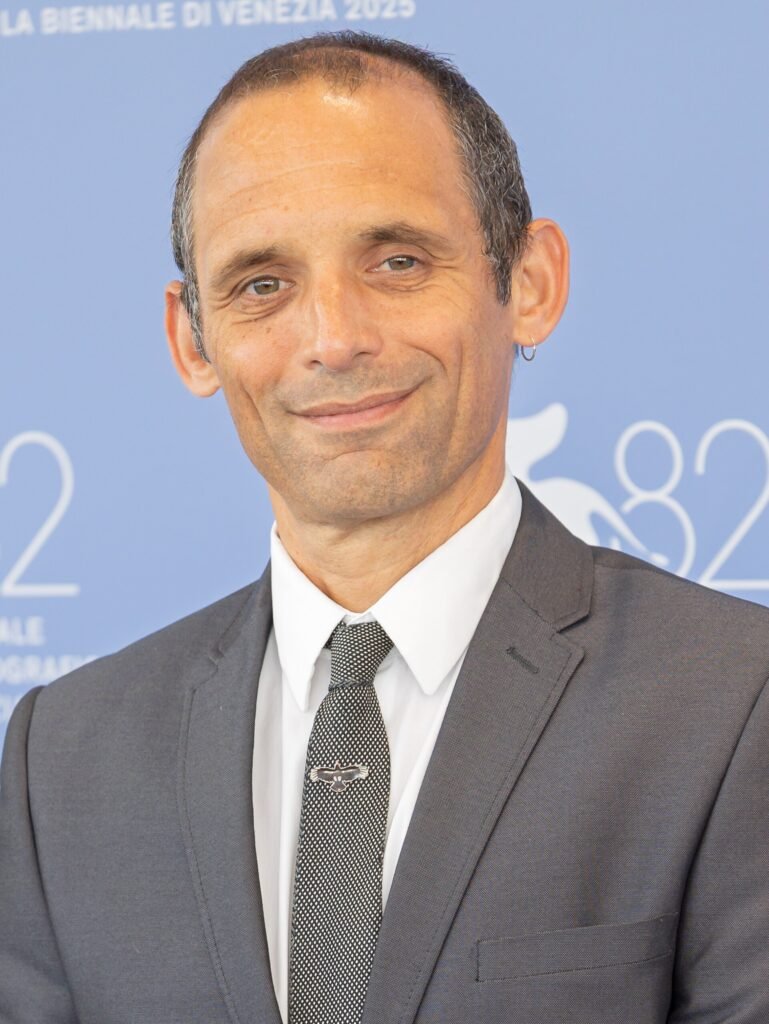
Mark Jenkin’s association with Cornwall is an important factor that contributes to his unique style of filmmaking. Jenkin was born and grew up in Cornwall; hence he tends to incorporate the landscape of Cornwall in his work beyond using it as just a setting. His films tend to focus on life at the coast.
The Rose of Nevada movie also carries on with this trend planned by Jenkin in a Cornish trilogy. Similar to his earlier films, the Rose of Nevada depicts Cornwall as a place of rich heritage, isolation and close relation with the sea.
More than its beauty, the relevance of Cornwall lies in its symbolism of memory, uncertainty and the flow of time. The ocean here becomes a metaphor for possibility and loss, uniting the inhabitants of Cornwall but at the same time taking them away from the place they come from. It becomes the focal point of Jenkin’s narrative.
Using such a setting allows Jenkin to create a narrative that is inherently tied to one particular place. The enigmatic arrival of the boat becomes more significant, since it is related to the inhabitants of a certain place with their own cultural background and traditions.
The visual style
One of the best parts of Rose of Nevada is how it is filmed. Mark Jenkin manages to make a world that is utterly detached from other movies. Everything in this movie visually and audibly is designed to fit into the world of Rose of Nevada.
Contrary to other science fiction movies of our days, Rose of Nevada is not based on the use of computer graphics. The movie was filmed with an analog 16 mm Bolex camera.
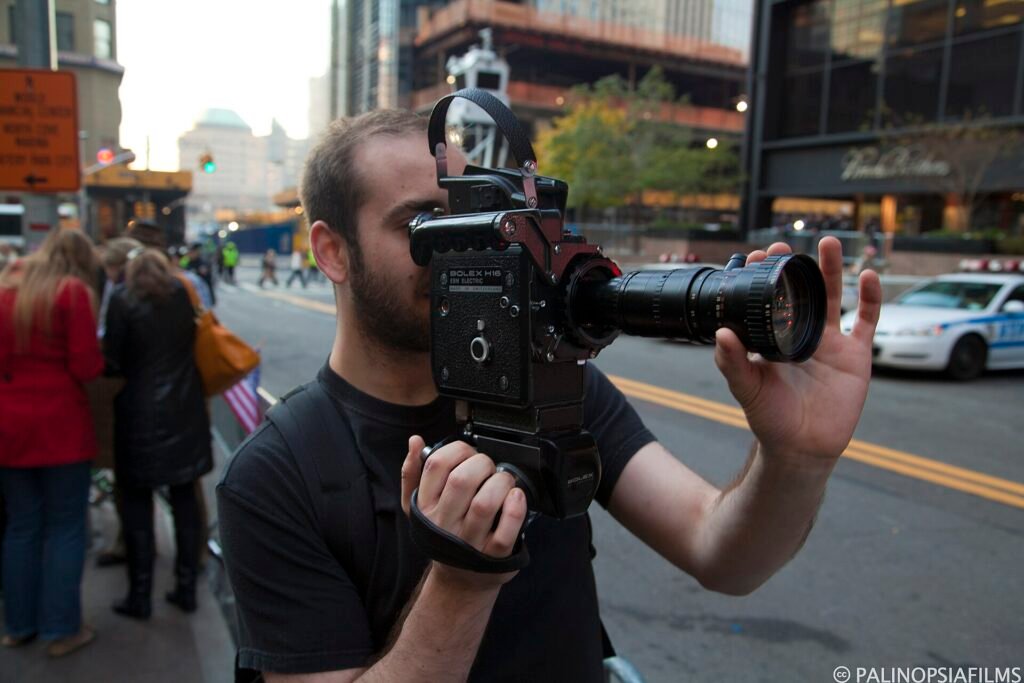
This automatically creates a unique look for the film. The film grain that is visible in the film makes it appear to be old and nostalgic. At times, the images appear as if they were footage found in another era.
This technique of film making is highly relevant to the themes of the film. In the film, the plot revolves around an object that turns up after many years. The aged appearance of the footage supports the feeling that time has become uncertain.
The use of 16mm photography further emphasizes the documentary style of the movie. The coastal setting looks natural. The viewers get a feeling that they are witnessing actual occurrences, instead of an artificially constructed story.
Not everyone may enjoy the technique used here. Viewers who expect a sophisticated sci-fi movie would be disappointed. The makers have avoided using a cinematic approach in the movie.
Instead, Jenkin makes his film more like a TV show from the 1980s or 1990s. The use of muted colors and rough texture helps create a typical British atmosphere. This stylistic device is appropriate for both the location and plot of the movie.
The style of the film is determined by the remoteness of the community that is shown in it. Rough coast, old houses, and empty landscapes fit together perfectly and become a part of the plot of the film.
Also, Jenkin uses cinematography to guide the viewer’s gaze. The stillness of his camera is characteristic of the director’s work.
Many shots concentrate on small objects instead of exciting situations. A trivial object in the room may have an emotional significance. This gives the impression that memories are stored in tangible places.
The director has realized how significant it is to hint at something. Not everything is shown explicitly; the viewer has to guess what he sees. Thus, this method adds mystery to the film but also demands attention.
The film’s visual language is minimalistic. The characters are usually enclosed by the surrounding emptiness.
The extensive coast lines become symbols. Sea is a symbol of unity and separation. It is a place where memories fade away and new discoveries happen.
Silence is used efficiently by Jenkin as well. Numerous scenes feature natural sounds in their prominence. No permanent dialogue makes the viewer feel a more meditative experience.
Sound design is another creative aspect of the movie. Dialogue and many sounds were created after production. It gives the film a certain unique touch.
Sometimes there is a certain divide between the images and sounds that are presented. This produces a dream-like atmosphere which prompts the audience to question reality of everything that happens in the story.
Although this method might sound odd at first, it actually helps develop the main concepts of the movie. The characters experience uncertainty, which the audience feels as well.
Moreover, Jenkin’s method of editing also helps in defining the uniqueness of the film. Everything is done slowly and steadily without any rush towards plot twists and dramatic moments.
It allows for periods when atmosphere takes precedence over action. The movie requires its audience to value mood and emotion. It does not concern itself too much with giving constant narrative thrust.
The editing also represents the temporal exploration done by the film. Its structure sometimes appears to be disjointed, which mirrors the uncertain nature of the returning ship.
As a director, Jenkin seems fully in command of his artistic vision. Everything about the film seems to be in line with it, from the cinematography to sound, editing and acting.
Nevertheless, such a high degree of artistic freedom can bring certain problems. Sometimes, the film seems to care more about providing an experience rather than telling a story.
For those viewers who enjoy experimental films, the approach is sure to pay off. There is a lot to be discussed and analyzed in the movie. It is worth watching several times since the details can provide new meaning every time.
For other viewers, the approach may prove to be an obstacle. The slow pace and unusual form of presenting information need patience.
Ultimately, it is through Jenkin’s directing that Rose of Nevada is distinguished. Without such a distinctive style, the film could not be the same. The film’s flaws are an intrinsic part of the work.
What it comes down to is whether this style adds to the story or takes away from it. This will depend on the audience member’s expectations about films.
Storyline and Themes
At the very heart of Rose of Nevada lies a mysterious phenomenon that will make the viewer question their perception of time and memory. A fishing boat sails into the harbour having gone missing for the last thirty years. What did these people see? What did they experience?
Nevertheless, Mark Jenkin does not tell his story in a way usually seen in the sci-fi genre. There is no need to reveal the technology and mechanism behind the miracle; what really matters is its effect upon people’s lives.
In this respect, the arrival of the boat becomes a vehicle through which to explore the themes of loss and grief that is not fully dealt with.
The characters are confronted with something that should not even be possible from the past. There are implications within the movie that one’s memories and past experiences may continue to affect individuals.
The coastal fishing community within the movie makes this theme more personal. The sea has been a source of both livelihood and danger for coastal societies.
This relationship between humans and the ocean is utilized in the movie by Jenkin. The ocean is not merely a setting; it symbolizes uncertainties and division, as well as those elements of life that human beings cannot manage.
Time is another element used in this movie. The appearance of the returning ship implies that time is not as certain as it may seem for us. The past merges with the present, which creates uncertainty for both the characters and the viewer.
Here comes the difficult part of Rose of Nevada – the movie contains numerous interesting aspects, but fails to state its priorities clearly. In some sense, the movie seems to be about grief and recovery.
In other cases, it seems that the movie is trying to explore science fiction ideas in connection with time and reality. They are interesting in their ways, but they do not always match properly.
It is unclear where the movie tries to get, and it is not clear whether there is some kind of message behind the film.
Is the mysterious object used in the movie something that represents feelings left unexplored? Or is it something more related to the science fiction genre?
Jenkin is not very eager to give any answers to those questions. It can be regarded as a creative choice made by the director.
This is an approach that can prove to be worthwhile for certain groups of people. Sometimes when movies allow room for interpretations, such movies tend to stick in the memory for much longer. This is because they open up more doors of conversation.
Rose of Nevada is definitely one such movie that would do well to be watched a second time around. The way the movie is made means that many of the significant moments are likely to go unnoticed.
At the same time, however, it is possible for this very ambiguity to become frustrating. It is possible for something to be ambiguous without it being incomprehensible. In this respect, at times Rose of Nevada seems to have trouble achieving this.
The pace of the story is slow enough to allow atmosphere and mood to prevail over story-telling. While this leads to a dreamlike effect, it makes the film more difficult to understand.
There are instances where it is necessary to question just what is happening as opposed to what it means.
This is especially evident as the movie has such a strong premise. The concept of a ship that disappeared for thirty years being found is always interesting. People need to figure out what happened.
However, Jenkin prefers uncertainty over explanation. Some people will be interested in it, while others will think that this movie tries to avoid the answers.
In addition to that, the pace of the movie is quite significant for the audience. Rose of Nevada is a slow-paced movie that needs time to get into.
The slow rhythm helps the atmosphere build up. It helps the scenes breathe, and it makes them much more immersive. On the other hand, it may be a bit too slow for some parts.
The movie requires the viewer to feel emotionally connected to the events taking place on screen as well as think about them. This is quite an ambitious strategy, and it results in the movie being quite difficult to watch.
In the end, the themes of Rose of Nevada are better than the plot. The movie explores important subjects of memory, loss, and time. Unfortunately, it manages to mix these up.
This movie is an open-ended movie, however, not all questions are equally intriguing. Some questions stimulate curiosity, whereas others can make viewers feel alienated.
This movie will most likely appeal only to some spectators. Those who love the slow cinema will enjoy this film because of its openness and ambiguity.
Rose of Nevada is not one of those movies which tell viewers what to think. On the contrary, it is one of those movies which makes viewers reflect. Whether or not this succeeds is up to the viewers themselves.
Performances
The acting in Rose of Nevada represents the overall approach of Mark Jenkin to filmmaking. It is restrained and silent and highly reliant on facial expressions. Rather than delivering an emotionally charged speech, the film relies mostly on silence.
It results in a style that reminds one of 1980s and 1990s British TV dramas. However, this does not have much to do with the actors in the film. Instead, it mostly depends on how Jenkin directs his actors.
The camera lingers over the faces of people and objects in the scenes. In addition, communication between the characters takes place not verbally, but through reactions to the events taking place around them. Often a simple look is worth much more than a long dialogue.
The minimalist nature of the film works well for its theme. The film talks about memories, uncertainty, and feelings hard to articulate.
Yet this method also poses several difficulties. As a result of the high degree of control in performance, some emotionally charged scenes might lack the desired effect. The barrier established by the acting method can make it difficult to relate to the characters.
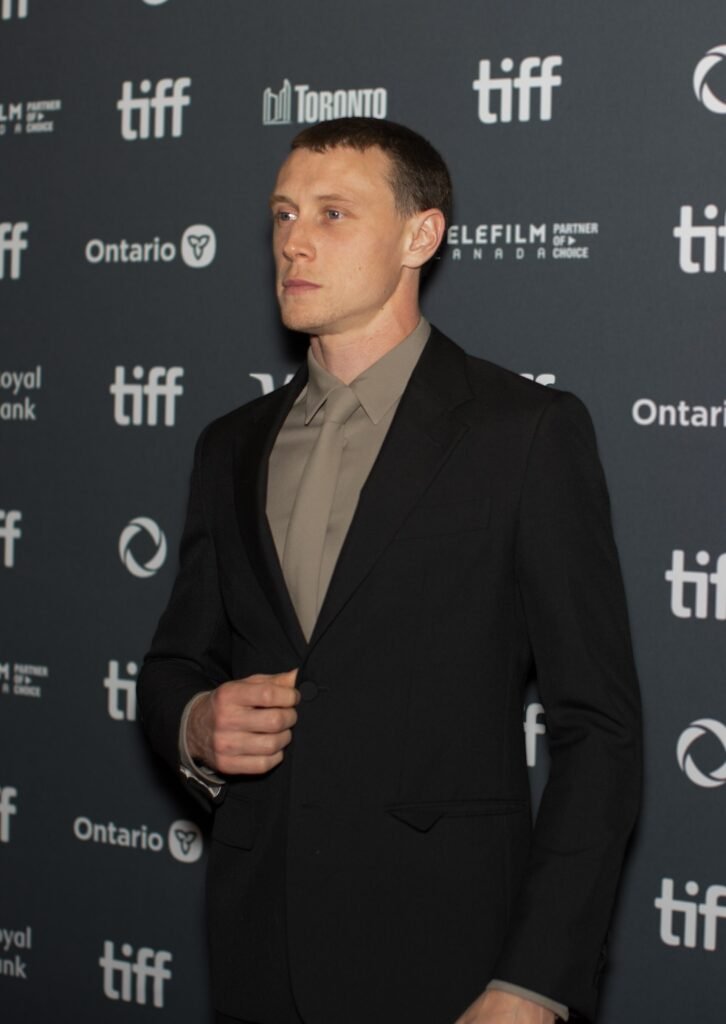
George MacKay gives the best performance of the movie. His performance forms the emotional core which helps to hold the interest of the audience till the end.
MacKay excels in this aspect as he knows that subtlety plays an important role in acting. MacKay never goes for any big actions or reactions and expresses himself in subtle ways.
MacKay succeeds in giving a sense of vulnerability without making his character look passive or weak.
This is particularly vital due to the fact that the movie itself raises numerous questions. The plot of the movie may be somewhat detached at times, but it is precisely MacKay who helps to establish that human link which makes one stay engaged with the story.
It is precisely his acting that makes one pay attention and stay interested in the story despite its complexity.

The role of Callum Turner proves to be more difficult to assess in comparison. At many points in time, his character is very detached from his surroundings, regardless of how strange they may be.
Sometimes, Callum’s apparent absence of emotions tends to create a barrier between the character and the viewer. In light of what is happening, viewers might wish to see some sort of reaction.
Still, it could be that Jenkin intentionally decided to make his character this way. Overall, the director seems to prefer subtleness over emotional expressions.
This kind of restrained performance is appropriate for the style. Emotional detachment of his character may mean that this is a person who tries to cope with something incredible instead of indifferent person.
The problem is that the film is not always providing enough emotional context for it. Without understanding what goes through the mind of the character, it is not always clear.
Thus, the interesting dilemma arises regarding performance and directing. Emotional detachment of the character was a result of Turner’s interpretation, or was it an intention of Jenkin?
However, there is no single answer here. Much like other elements of the movie Rose of Nevada, the performance style invites interpretation.
The additional actors also do an effective job in building up the mood in the movie. Rosalind Eleazar, Francis Magee, Mary Woodvine, Edward Rowe and Adrian Rawlins are part of the believable community.
Their acting is believable in the seaside environment. These are the representatives of a community that shares common experience and history.
Though not developed to their fullest potential, these minor characters assist in developing the sense of place within the movie.
With the use of these characters, the village is made to seem like a living community and not just a backdrop for the story.
This ensemble helps in driving home one of the best concepts in this movie. Though the ship comes back to take away an individual, it affects the whole community.
They function best when they make it possible for the audience to view these connections. In the film, there is less emphasis on confrontation and more emphasis on reaction.
This again is another example of the philosophy that Jenkin upholds. He believes in the capability of the audience to feel emotion.
This approach might alienate some audiences because not all people would enjoy such distance from the characters.
Another drama movie might create more clear emotional scenes, but in this case, Rose of Nevada wants viewers to find the meaning through small details.
On the whole, the acting style corresponds to the concept of the film. It is not aimed at creating any great emotional scenes, but at creating an appropriate atmosphere around the story.
George MacKay appears to be the best actor of the film. His capability of expressing the most complex emotions through silence is very important for the film.
The rest of the cast add to the authenticity of the film, and complement Jenkin’s depiction of a coastal community. Though some viewers may find the acting style off putting, it is well suited to the strange nature of the film.
What Worked and What Did Not
Rose of Nevada is a movie that has been formed under a very precise artistic vision. There is nothing usual about this science fiction drama made by Mark Jenkin, as the major success of this movie lies in its atmosphere and style.
The strongest feature of the movie can be considered its sense of place. Cornwall is not merely a backdrop for the story but becomes an integral part of the movie’s emotional atmosphere.
Jenkins’ knowledge of the region adds realism to the film. This fishing village has been portrayed as an actual place with a rich history. The connection between the characters and the sea looks very natural.
This association with Cornwall adds meaning to the themes of the movie. The landscape speaks about isolation, memory, and uncertainty. The coast symbolizes both the loss and the discovery.
Analogue cinematography is also one of the great accomplishments of this movie. Filming in 16mm makes Rose of Nevada stand out from other productions.
The rough picture creates a feeling of the past. The movie looks like an old recording from a different era. This is especially relevant for a movie about time and a ship coming back after many years.
The director’s sound work is also worthy of praise. The reconstituted dialogue and sound design make for an extraordinary atmosphere. The disjunction between visual and audio elements further contributes to the mysterious nature of the film.
Complete mastery of his cinematic tools is evident in the director. All of the film elements seem well-thought-out and consistent.
Another strong point of the movie is its atmosphere. Even when the plot becomes unclear, some pictures linger in the memory of the viewer. They include the coast, the ship and the silence of the film.
A strong performance from George MacKay is yet another example. He supplies the movie with the necessary emotional anchor.
His understated acting allows keeping the viewer interested throughout some of the less interesting moments.
A good supporting cast also lends credibility to the sense of community depicted in the movie. Their understated acting style fits perfectly with the overall style of the movie.
Still, the same elements which made Rose of Nevada stand out so much make the movie suffer from its greatest shortcomings.
The greatest problem here is the ambiguity of the plot. Clearly, Jenkin intended that this movie should stay an open book. Nevertheless, there is sometimes a difficulty in maintaining the balance between ambiguity and ambiguity.
Ambiguity is a great literary device which allows viewers to go beyond the limits of a particular movie and develop their own interpretations. At the same time, too many questions might impair the emotional power of the story.
Occasionally, one wonders what Rose of Nevada really tells us. The themes of death and sorrow are fascinating enough. The science fiction elements are fascinating as well.
Unfortunately, sometimes there is no cohesion between them. The film presents interesting theories and sometimes fails to develop them properly.
It can make some viewers wonder what they should pay attention to. Is it about a community suffering from loss? Is it about time and reality? Or is it about the emotional burden of the past?
Maybe the truth is that it is about all of them. Yet, the film does not always manage to integrate them properly.
In addition, the pacing can sometimes make some audience members find it hard to watch. Rose of Nevada is a thoughtful movie which develops the plot slowly
Those interested in slow cinema will definitely benefit from such filmmaking style.
However, some viewers will find that their patience is tested by this style of storytelling. Without rapid narrative development, the movie feels too long to watch.
It demands great concentration. Otherwise, one might miss a lot of important things happening on screen.
It poses a challenge to a filmmaker, because it is hard to find the right measure. While a good film must keep one engaged, it must also require concentration. This is sometimes a case with the Rose of Nevada.
A further weakness could be the lack of emotional connection due to the restrained approach. The actors give subdued performances. The camerawork has an observational, not a dramatic, approach.
This gives a very authentic feel to the film. Nevertheless, it also has the effect of lessening the emotional intensity of key scenes.
Often the movie requires its audience to analyze rather than feel the emotions. It will work for some people, but not everyone.
The success of this film lies in the expectations of the viewer regarding movies in general. This movie cannot be described as a traditional science fiction mystery that provides explanations.
It can only be viewed as a contemplative work that puts more emphasis on mood, interpretation, and artistry. For viewers who can enjoy not knowing everything, the film has many interesting features. It is well made and looks beautiful.
On the other hand, it might be hard to follow for those who seek a clear story. Sometimes the lack of clarity in the movie might be exciting while at other times it may be disappointing.
Overall, the movie is good yet flawed. Its flaws and virtues go hand in hand. What makes it remarkable also makes it complicated.
Despite Rose of Nevada not always giving answers to what the audience may ask, it succeeds in creating something unusual. It is a film designed to be discussed, analysed and reconsidered.
Conclusion
Rose of Nevada provides a great example of a filmmaker who has a recognizable and distinct creative style. Mark Jenkin’s use of analog filmmaking, as well as his attention to atmosphere and identity of Cornwall, helps him create a film that is different from many other modern films.
What makes this film great is its visual aesthetics, cinematography, and the atmosphere created by all of these elements combined together. With the help of 16mm photography, sound design, and acting, Mark Jenkin is able to create a special atmosphere.
But at the same time, the intentional ambiguity of the movie will be a subject of division. Even though the numerous questions raised by the movie provoke discussions and interpretations, they also might make the plot too ambiguous for many spectators. Moreover, the slow rhythm and vague combination of sci-fi elements and emotional story might cause some difficulties while enjoying the movie.
In conclusion, Rose of Nevada is not a movie that provides ready answers to the viewers. This is an intriguing and sometimes irritating movie that requires time to watch and think about. Even though the movie might not be suitable for all people, it shows that Mark Jenkin is an experienced filmmaker.