The Odyssey IMAX Experience: A Journey Into The Future Of Cinema
Introduction
There are films that are simply meant to be seen on the biggest screen possible. Christopher Nolan‘s The Odyssey is one of those films. Seeing it in 70mm IMAX at the BFI IMAX in London Waterloo felt like a true cinematic event.
This was not just another visit to the cinema. It was an opportunity to experience filmmaking at its most ambitious. The Odyssey represents a major moment in cinema history. It is the first feature film shot entirely using IMAX cameras.
Watching this film in 70mm IMAX format is virtually a must for all movie enthusiasts because the format gives the viewers a chance to see the movie in its fullest size and quality possible. This explains why Nolan always insists on the importance of going to the theater.
There have been unprecedented demands for such showings. BFI IMAX cinema tickets were among the most coveted movie tickets ever. The cinema has sold out all showings up until September.
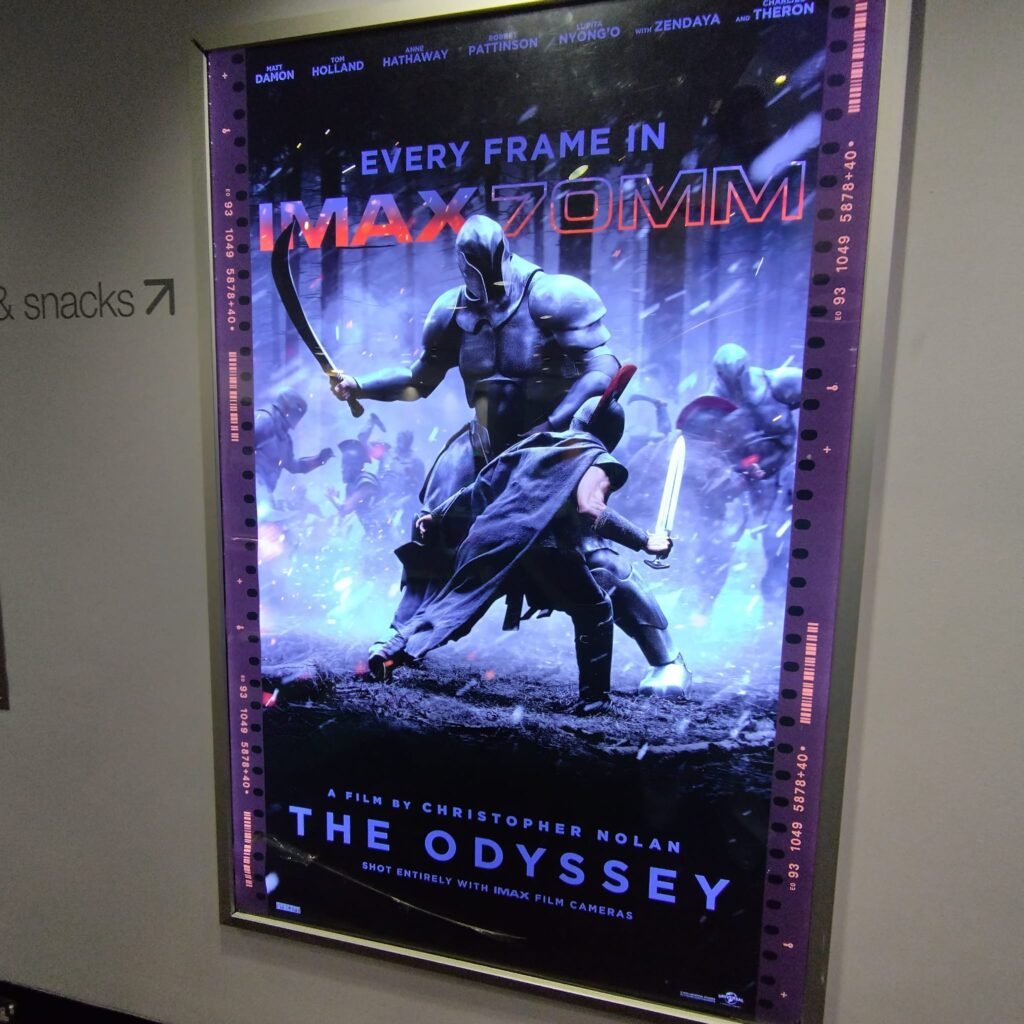
I was extremely fortunate to secure a seat for this screening. From the moment I entered the auditorium, it was clear this was going to be
IMAX Returns To The Spotlight
The hype around The Odyssey is more than just another film. It reflects the renewed interest in cinema experience as premium.
Streaming has brought new viewing opportunities for movies to many viewers. Still, this experience proves that cinema experience is truly one of a kind.
When filmmakers create something designed specifically for the big screen, audiences respond. People are willing to travel, wait and pay more for something unforgettable.
IMAX is now part of that future. IMAX makes people come back to cinema halls. IMAX is something that simply can not be replicated at home.
As seen from the success of The Odyssey, there is still room for premium formats to play a role. The difference between watching and experiencing a movie lies here.
The History And Evolution Of IMAX
The history of IMAX started in Canada in the late 1960s. The invention was designed to project an even bigger immersive image.
It was impossible to achieve the same effect using traditional film formats. IMAX provided an entirely new concept of shooting movies.
The format uses 70mm film that runs horizontally through the camera. This creates a much larger image area than standard 35mm film.
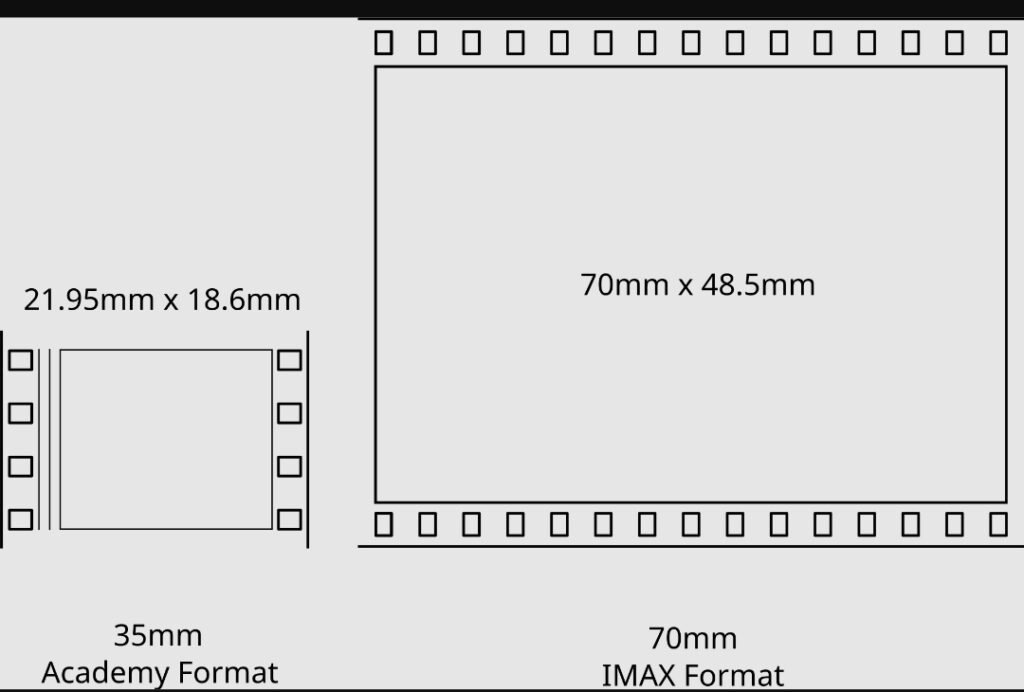
The end result is an image that is extremely clear and deep. More information is packed into every single frame. People get to see more details in the images.
Of course, shooting the whole film using IMAX technology was not an easy task. The initial IMAX cameras were really amazing, but they were very hard to work with.
They were bulky, heavy, and noisy. And the noise issue was one of the major obstacles in making films using IMAX cameras.
That is why film directors generally chose to use IMAX cameras only for specific sequences of their movies. Scenes featuring large action or amazing landscapes have been quite popular.
Christopher Nolan has never stopped pushing boundaries of this film format. The director included IMAX sequences in his movies starting from The Dark Knight.
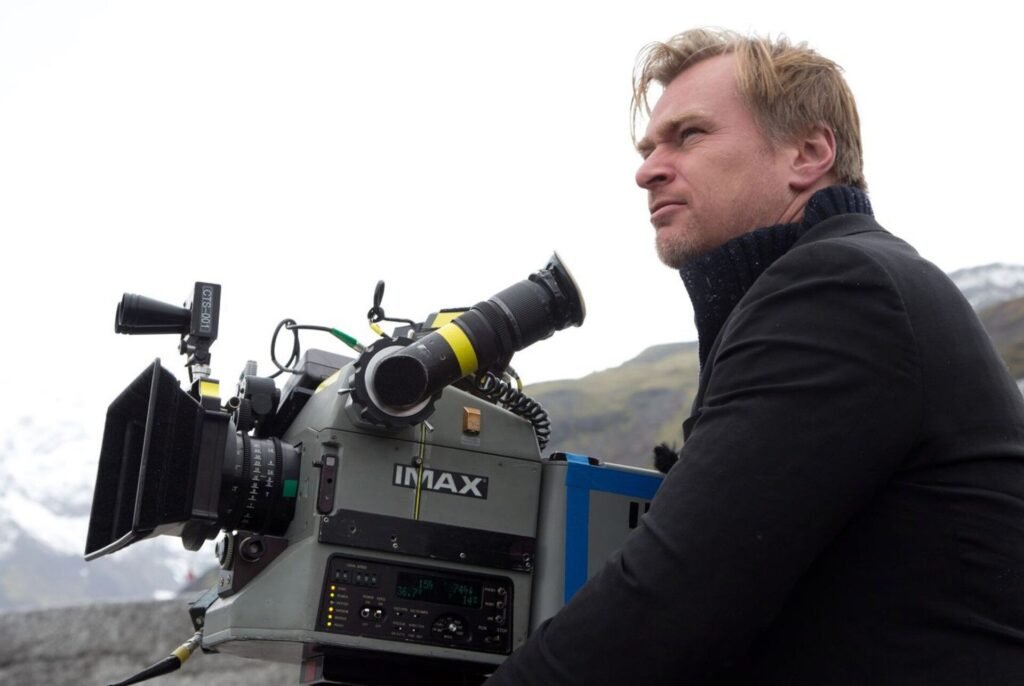
This trend kept up with his other movies such as Interstellar, Dunkirk, Tenet and Oppenheimer. But still, making a full movie on IMAX cameras was a real task to complete.
Nolan And The New Generation Of IMAX Cameras
For The Odyssey, Nolan collaborated with IMAX technicians. They aimed at making full IMAX filmmaking more practical.
The creation of the next generation of IMAX cameras helped overcome the existing limitations. These cameras were more silent, lightweight, and flexible. They were called the IMAX Blimp.
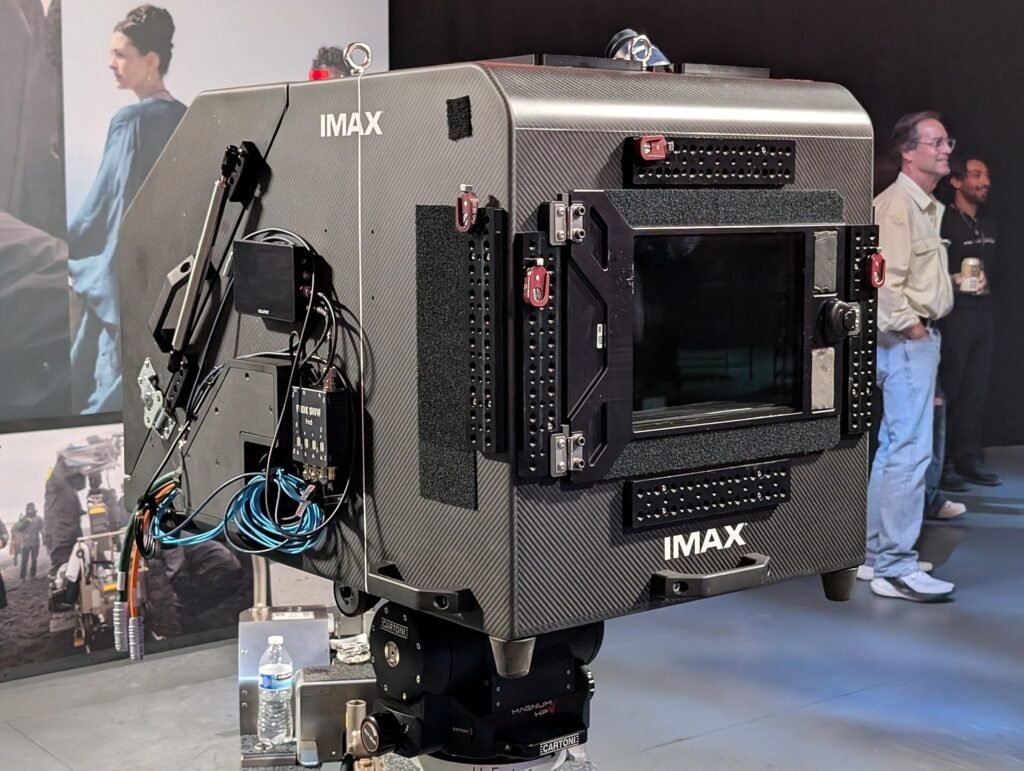
It was a great success because now IMAX cameras could be used throughout the entire production process.
The significance of this development cannot be overestimated. Each shot could now utilize the unique characteristics of the format.
The end result was a uniform visual experience. There is no switching between formats throughout the film for the viewers.
Every shot had the same degree of detail and scope. This enabled Nolan to present his vision as he intended.
The BFI IMAX Experience
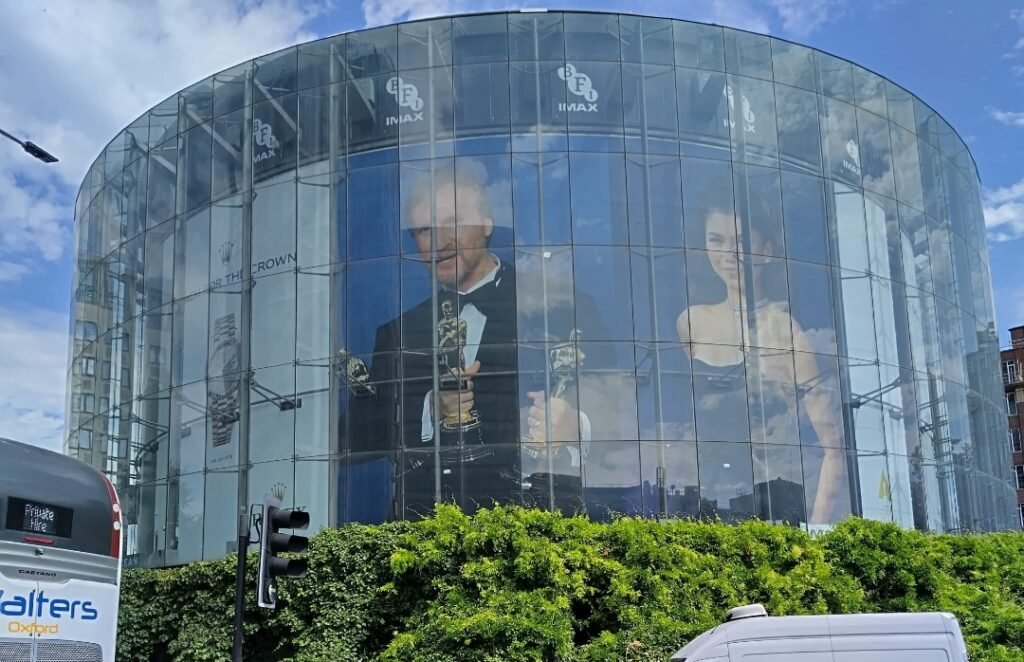
The BFI IMAX in London Waterloo is one of the most well-known cinemas in the whole world. People from all around the globe come here for watching films.
It is an amazing building, and as soon as you look at its round shape, you cannot help but wonder what it has inside.
This amazing architecture seems to conceal the grandeur of what is going on inside the auditorium.
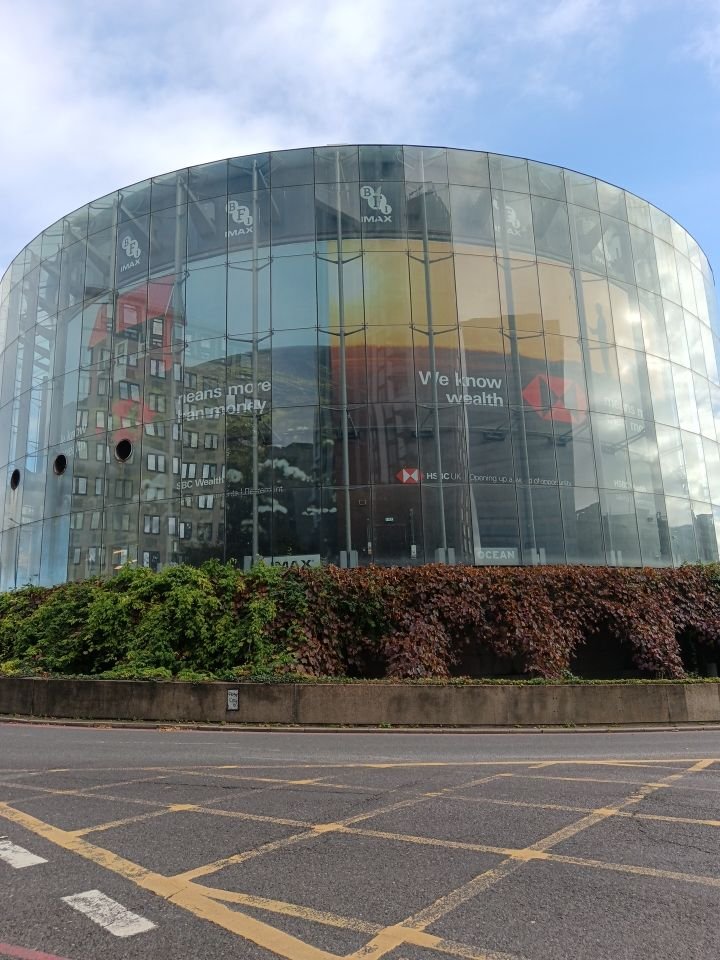
The BFI IMAX screen is about 26 meters wide and 20 meters high and it has the largest cinema screen in the United Kingdom.
This makes the viewing experience one that is almost unique among movie theaters. The images take over your vision when the movie starts showing.
The theater has gained fame for its special screenings. Fans of movies from all around the world come to view new releases here.
Films such as Oppenheimer and The Odyssey have turned the BFI IMAX into a destination of pilgrimage for people.
My first time at the BFI IMAX made me curious about how a screen of such magnitude can fit into the premises.
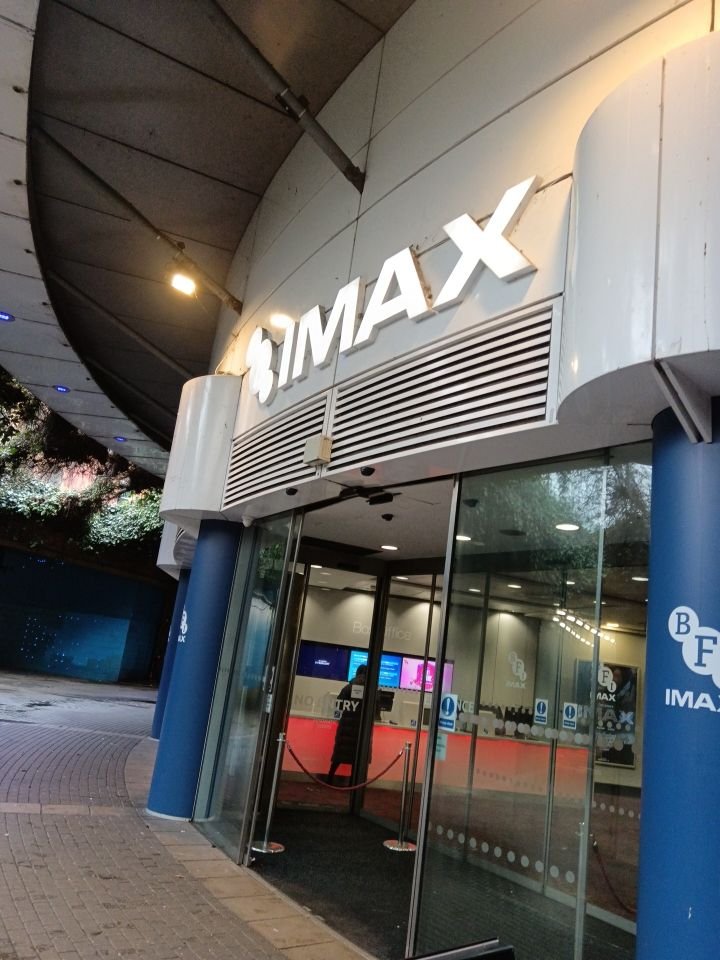
The second time I went back for The Odyssey, however, the experience was different. It marked the first time for me where an audience was absolutely packed in an IMAX theater.
The anticipation in the air could be sensed by all. All were there for the same reason. The build-up for the movie had definitely done its part.
A Visual Experience Like No Other
Immediately from the opening shots, the immersion is total. It is hard to take your eyes off the screen with the huge proportions of the BFI IMAX screen.
It completely fills your whole field of vision. The viewing is no longer about watching a movie; rather, it surrounds you.
It transforms the way you view each shot due to its size. You are often viewing the picture upwards.
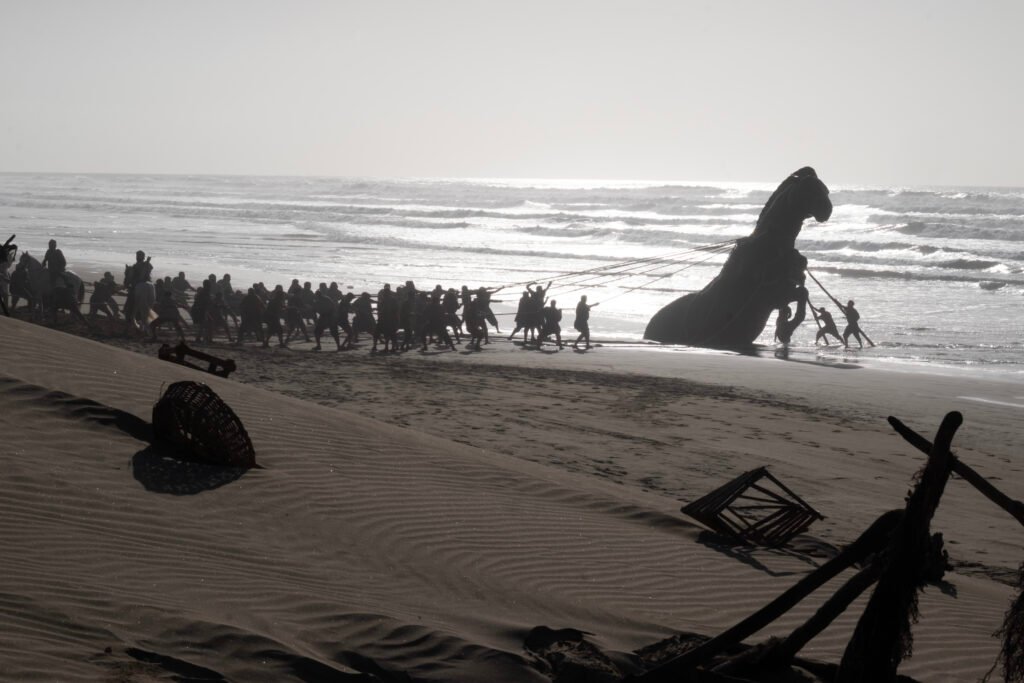
It gives the impression of scale that small screen sizes cannot give. Everything looks grander and larger than life.
The actors’ facial expressions are easier to understand. Small details become visible that may not have been visible on other screen sizes.
Even smaller IMAX screens cannot deliver that kind of impact. Every minute detail created in the movie becomes apparent on the BFI IMAX screens.
Christopher Nolan’s attention to detail becomes much clearer in this environment. Every frame feels carefully considered.
The 70mm IMAX image captures an incredible amount of information. It rewards audiences who choose the correct presentation.
The Cinematography Of Hoyte Van Hoytema
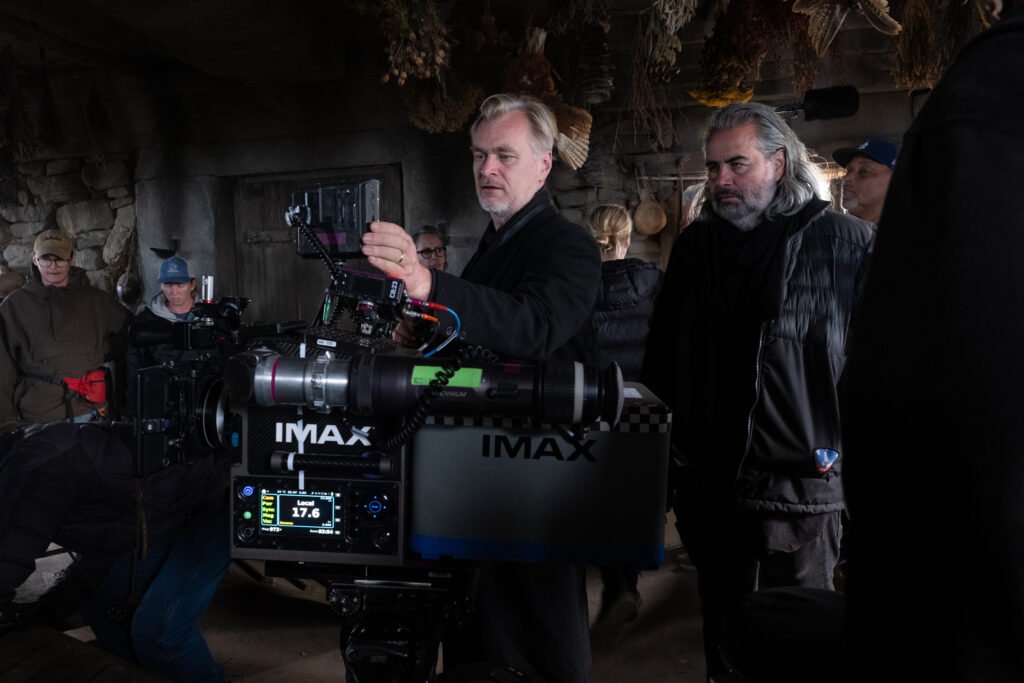
A huge part of the experience comes from the cinematography of Hoyte van Hoytema. His work with Nolan has consistently pushed large-format filmmaking forward. The Odyssey continues that tradition.
Daylight scenes were particularly striking. This created an experience that was hard to put into words. It was not just about the visual beauty of the scenes. There was a sense of realism.
The use of natural lighting, realistic settings, and IMAX frame brought together a unique depth. You could actually feel the ambiance of each scene. It felt like you were seeing into the landscape.
Van Hoytema has an amazing talent for making images that are both realistic and very well constructed.
IMAX gives room for everything to breathe. The textures, colors and surroundings become more immersive.
It demonstrates why Nolan and van Hoytema have so much faith in large format movies. The format is not just about showing more. It is about feeling more.
Practical Effects And Filmmaking Craft
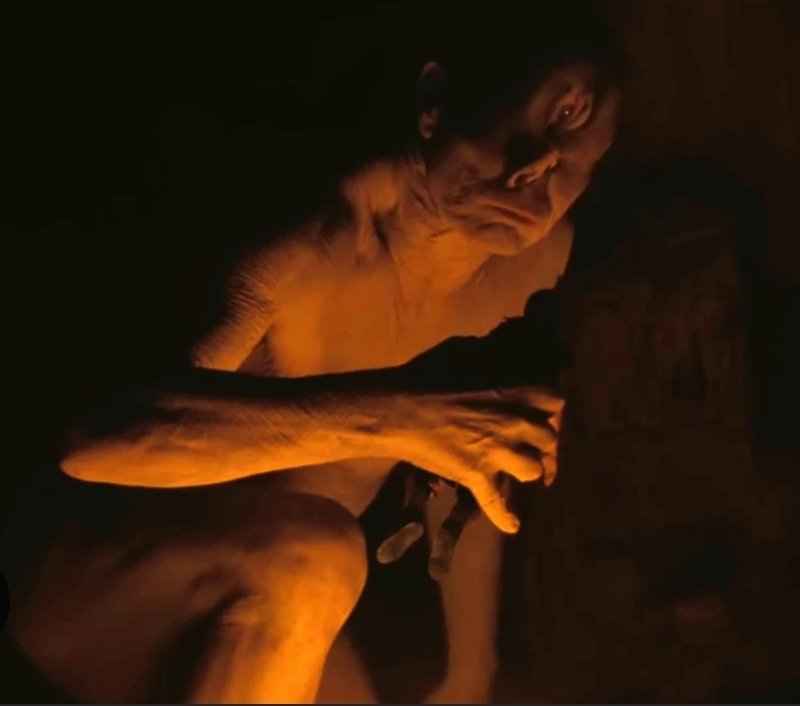
Christopher Nolan always has had an appreciation for practical filming. He likes to make real things where he can.
This philosophy shows itself through the entire movie of The Odyssey. There is a sense of physical construction to the whole film.
One of the best examples is the Cyclops. Seeing him on the big BFI IMAX screen brings out all the effort put into making him.
You can enjoy the design, building, and creativity put into this. You get the feeling that it has been created by artists instead of being created using digital effects.
The same holds true for the Trojan horse and the massive battle scenes. The pragmatic aspects add authenticity to these scenes. This helps make the world seem credible.
Sometimes, the clarity provided by IMAX lets you observe these details better. But this doesn’t affect the experience in any way.
Instead, it increases appreciation for the filmmakers. You begin to understand the effort behind every decision. You realise how much creativity went into solving these enormous filmmaking challenges.
The Power Of IMAX Sound
There are other things that make this film unique besides its visual elements. Its sound quality is also impressive.
The IMAX sound system provides a physical sensation. You are not only listening to the movie; you are also feeling the sound.
The sea sequences were especially impressive. The crashing waves created a genuine feeling of being present.
The power and movement of the ocean felt almost overwhelming. The sound design placed you inside the scene.
The music also benefited from the IMAX presentation. Ludwig Göransson‘s score felt richer and more detailed.
Individual instruments became easier to appreciate. The music had a stronger emotional impact. This is true of the important emotional scenes and battle ones.
The combination of image and sound created complete immersion.
Why Cinema Still Matters
Viewing The Odyssey in the BFI IMAX helped to understand how everything comes together in a film. The cinematography, visual effects, sound, and technology all blend into one.
Moreover, it became clear that filmmaking is still a collective art. There are thousands of decisions made that go into making the final product.
Sometimes, thanks to the high quality of the picture in IMAX, you become aware of certain elements in scenes that you usually would not pay attention to.
But this only helps you appreciate the artistry even more.
Of course, IMAX won’t be enjoyed by all people. The tickets for premium seats cost more than normal cinema tickets.
Some viewers would prefer to see movies at home. Some may feel overwhelmed with the sheer size of IMAX.
Nevertheless, for people who really enjoy visiting the movies, it is still unique. The success of The Odyssey shows that IMAX will have a place in the future of cinema.
This film shows that people are eager to have an unforgettable movie experience. It is still possible to make going to the movies an event.
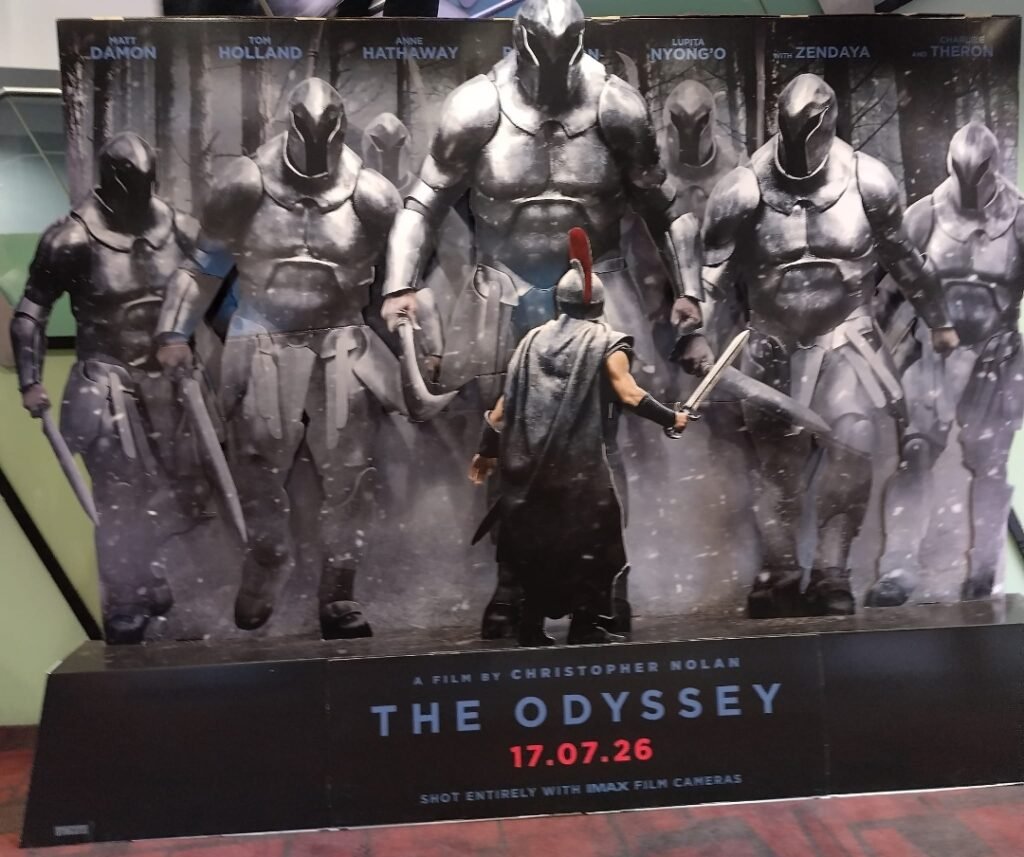
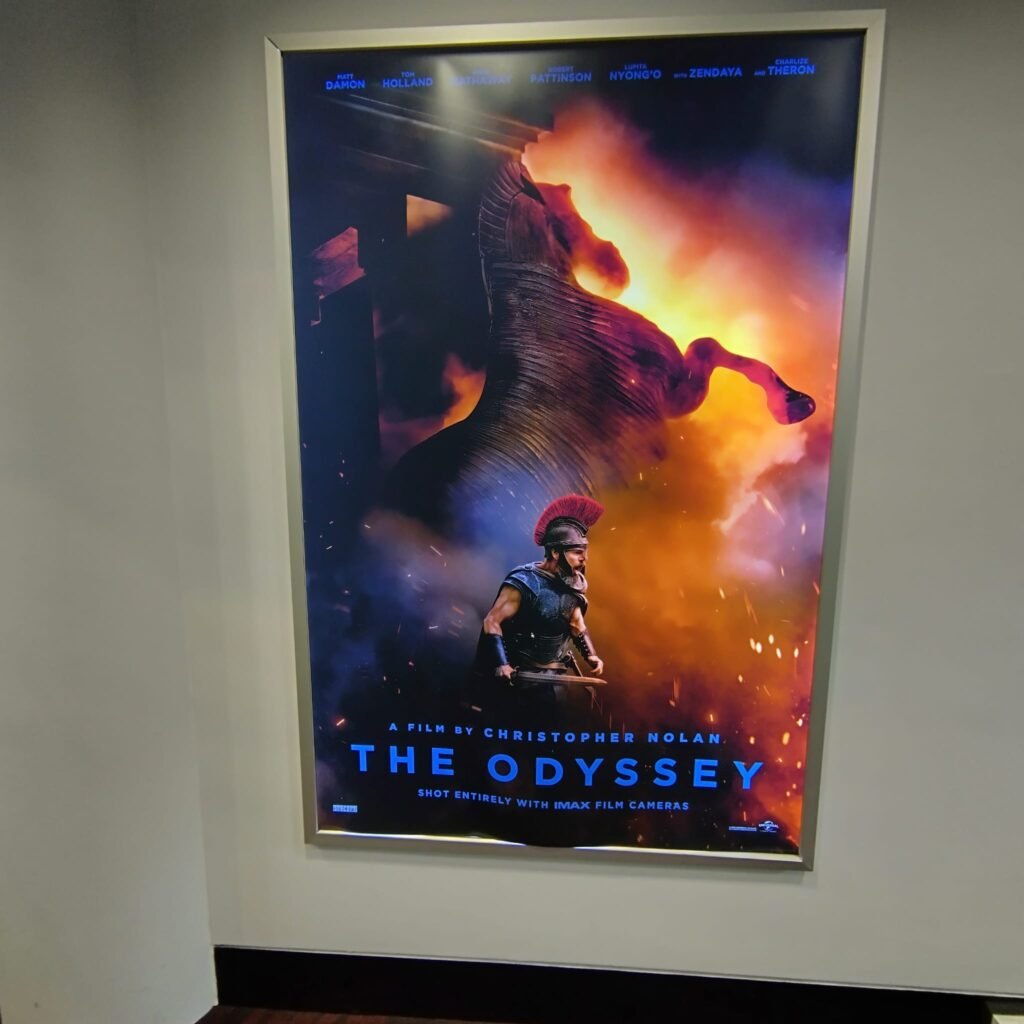
During my visit, the BFI IMAX also had artwork from an exhibit that was made up of several officially licensed, limited-edition art prints from the “Defy the Gods” exhibition collection Historiart. They were made to promote the epic action fantasy movie by Christopher Nolan, The Odyssey (2026).

I have included these images in this review.
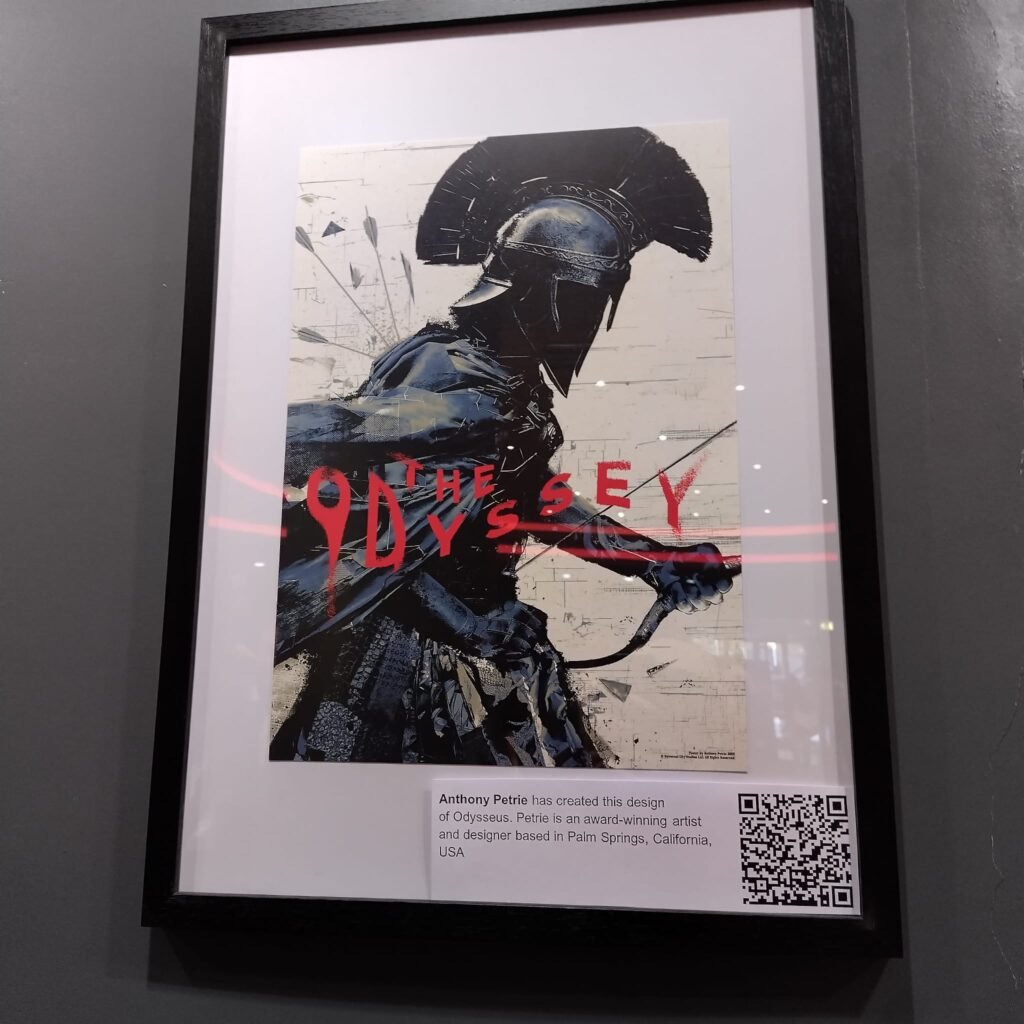

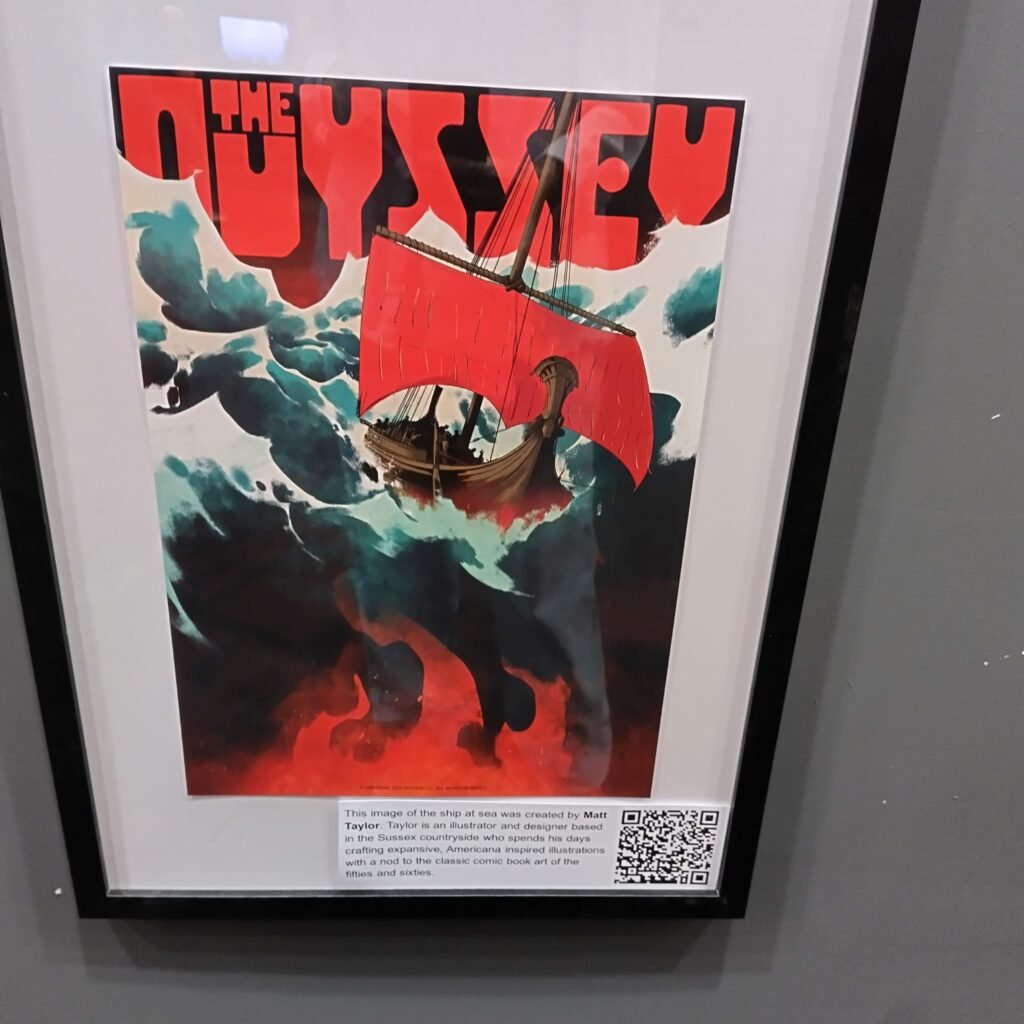
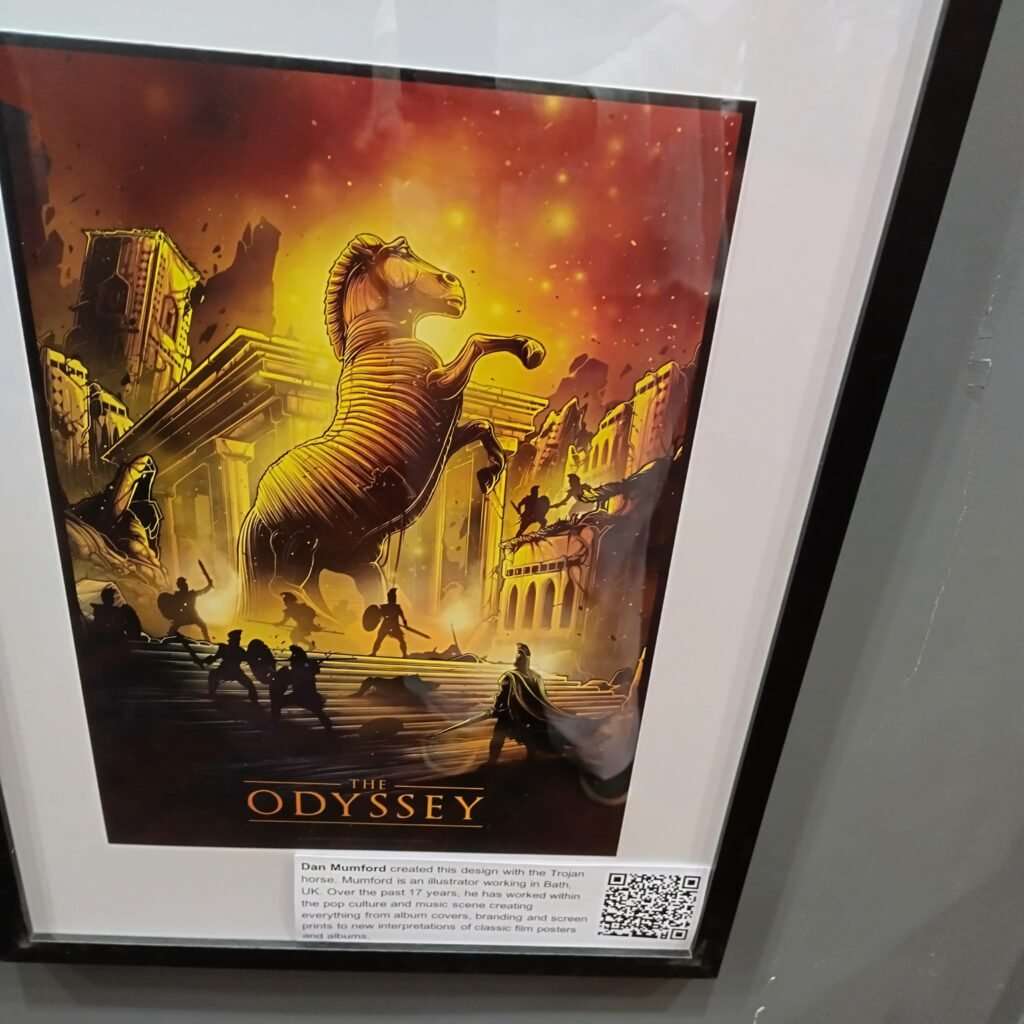

This experience also connects with my upcoming feature on premium cinema formats. The future of cinema will continue to change. However, experiences like this prove there is still magic in the big screen.
Final Thoughts
Overall, The Odyssey goes beyond being a movie. This film serves as an ode to cinema itself. Witnessing it at the BFI IMAX made it clear why it is important how something is shown.
The giant screen, the strong sound effects and amazing attention to detail gave rise to something truly unforgettable.
It is true that the convenience of having films accessible at home takes away from the uniqueness of going to a movie theatre.
However, there is something about watching a film along with hundreds of other people that cannot be replicated anywhere else.
The Odyssey proves that when you aim high, your viewers will respond just as enthusiastically.