Chickenhare And The Secret Of The Groundhog Honest Review
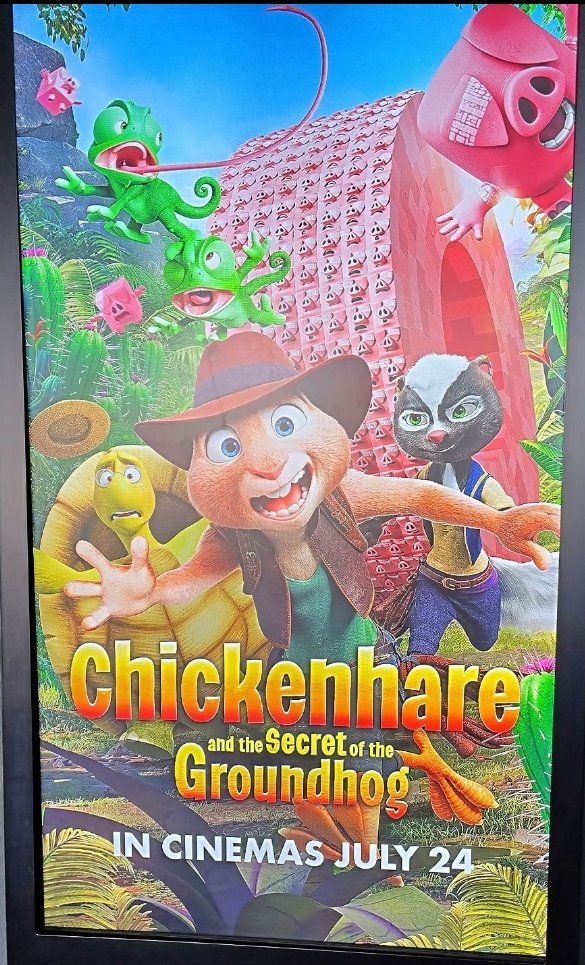
Chickenhare and the Secret of the Groundhog comes with a tough challenge. It needs to entertain children, as well as providing a different element to the returning audience. Could it be a successful sequel to the 2022 movie Chickenhare and the Hamster of Darkness
In addition, it has to make sure it does not repeat what the previous adventure film did, since it has already been very successful. Luckily for us, the sequel realizes most of those challenges.
Director Benjamin Mousquet is back again, and unlike the original film, he doesn’t share directing duties with Ben Stassen. It was the first time for Mousquet to direct a feature film, and prior to that, he had been working as an animator for nWave.
The original movie was a co-direction between Mousquet and Stassen. Thus, it gives us an even better chance to analyze his personal growth.
The movie tells the story of Chickenhare and his two friends Meg and Abe going on a perilous journey. In this case, the three aim at meeting a mythological groundhog that has the ability to alter the past.
This becomes even more difficult when Chickenhare discovers Gina, who happens to be his own sister whom he never knew before. There is also another character by the name Crolloq who is seeking the Groundhog too.
A Director Finding His Confidence
Benjamin Mousquet appears much more sure-handed in directing compared to the first movie. It does not mean that the style of the previous movie is disregarded. On the contrary, Mousquet knows what things have to stay the same.
Such things as the colorful locations, expressive characters, and adventurous atmosphere all come back in the new movie. And Chickenhare still looks exactly like Chickenhare.
It happens because of better control over the directing process. The action happens quickly but it does not become chaotic. It is usually quite clear where the characters are despite the hectic moments.
Moreover, the virtual camera gives a much better sense of the size of the locations. First, there are wide shots establishing the settings and only then close-ups give the space for comedy and emotional scenes.
The previous film clearly liked classic adventure movies. The sequel keeps this tradition with pleasure. It starts with an adventure which looks like a serial of animated films with the treasure hunt.
It uses danger, slapstick and obstacles to keep up the momentum. This approach works for Chickenhare since he is an adventurer by nature.
Mousquet also appears more relaxed in his use of characters during action. Chickenhare’s strange physique becomes a part of his physical humor.
Besides his large ears being just a visual gag, they can be put to good use when moving and flying. Meg’s martial arts skills bring a different tempo into the action. Abe’s cautious nature brings another level of comedy into play.
This makes the action more related to character than mere decoration. Characters do not just go through the actions.
It is their character that helps them get through the action sequence. This small but significant difference makes the sequel superior to the first film in this respect.
The sequel also develops its visual language. The majority of the movie continues with colorful three-dimensional animation.
Nevertheless, some historical scenes move into a completely different mode of two-dimensional animation.
They represent the history and mythology of the Chickenhare people and the Groundhog. This change in style visually distinguishes the past from the present action.
It is one of the most clever decisions from the artistic point of view. This shift does not seem like a way to make the movie look modern. Rather, the animation style contributes to understanding of the plot.
The past appears in another visual style since it represents another layer of the story. It adds some diversity to the movie without breaking its integrity.
2D visuals are used as an addition to the 3D world of the film. It creates a unique visual representation for the mythology.
Animation, Colour and Visual Style
Animation is still one of the most approachable aspects of this movie. It is characterized by simple and expressive character design which is recognizable enough.
Besides, the colorful environments fit the young target audience perfectly well. There is nothing that looks too dark or realistic here.
This visual homogeneity is crucial for a sequel. In other words, Mousquet had an option to create something darker and more mature in the second film.
Instead, he decided to broaden the scope of the existing visual design. The environments get bigger while the characters stay visually recognizable.
There is also an appealing sense of motion in the movie. There are lots of sweeping environments and dynamic shots in the scenes of action.
Adventure in the movie is rarely depicted in the same place. This continuous motion will be especially attractive for the young audience.
The animation may not always be as complex as in the biggest Hollywood movies. But such a comparison will ignore the advantages of the movie.
The visuals are unique and fit perfectly for comedy. The characters are expressive, yet not too detailed. This will help a lot when the plot gets complicated.
The 2D segments of the movie are the most adventurous in terms of visuals. The hand-made quality of these segments is the contrast to the rest of the movie and gives the mythology of the film some depth and significance.
Themes That Matter
There are some recurring themes in the sequel, such as identity and belonging. Chickenhare is still a character that belongs to several worlds at once.
His mixed race used to make him wonder where his place was. In the sequel, the concept will be expanded by introducing Gina.
Gina will help Chickenhare to realize something about himself, about his origins. Also, she represents another take on identity.
Gina comes from the same place as Chickenhare, but she is not another clone of him. This is an important point since family relations do not always determine one’s identity.
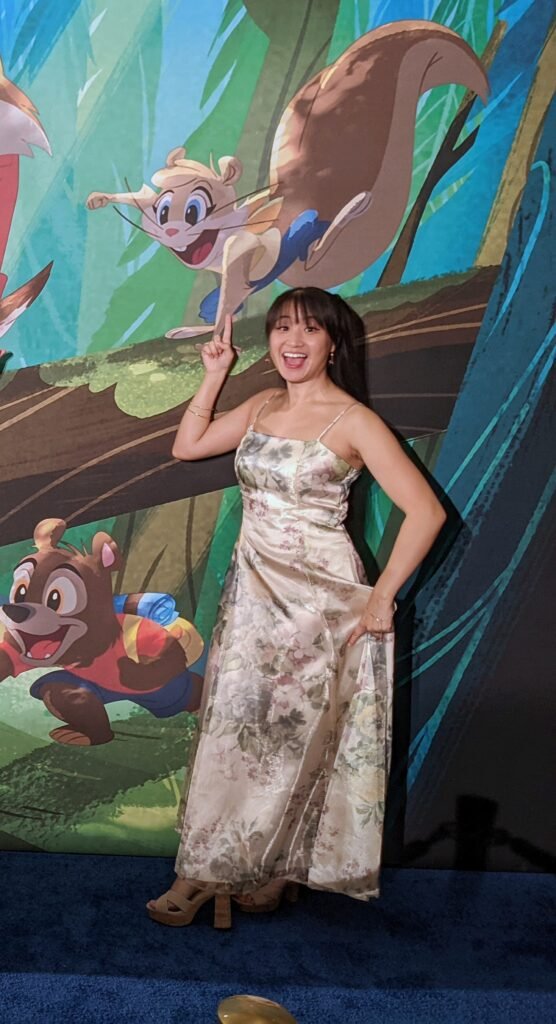
Xanthe Huynh makes Gina a fully realized character. She doesn’t seem like just another character included for the purposes of advancing the story.
Her connection with Chickenhare presents possibilities for character development, as well as further developing the themes of the film.
Another theme in the film is the theme of forgiveness. The characters have backgrounds that affect their current relationships.
There are some conflicts in the film that arise out of past pain and not because of pure evilness.
This makes the film a lot warmer emotionally, and the theme is one that young children can grasp without having to be explained too much.
Another interesting idea brought forth by the film is the idea of the Groundhog. It appears that the Groundhog can alter things that have already taken place.
This raises questions concerning regret and getting a chance to do things differently. Would altering the past fix the problems caused by the past?
The questions are more mature than the direct approach of the movie makes them seem. However, the movie does not examine them as well as it should have done.
The Power of the Groundhog largely dominates the movie’s plot. It turns into an adventure goal rather than a philosophy that can be thought about deeply.
It seems that the movie misses one of its most valuable opportunities. The theme was able to give much more emotion to the movie. It would make Chickenhare and his companions think about their past regrets.
Nevertheless, the movie takes another course, trying to use the theme for creating excitement but not reflection.
It can be easily explained by the movie’s targeted audience. Children do not need all the themes to be discussed on an adult level. However the movie is able to pass some good message to its viewers.
A Story Made for Younger Viewers
The movie is aware of who its target audience will be. This is shown in the use of colour animation and clear goals for characters for younger audiences.
Furthermore, there is always physical comedy and adventure taking place. There are few quiet moments in the movie.
Such pacing is crucial for the movie’s target audience. Adventure is continuous and presents yet another problem or discovery to make.
The Groundhog represents a simple goal for the young viewers to comprehend. Crolloq represents an understandable threat. Chickenhare, Meg and Abe represent a recognizable cast of characters.
Moreover, the movie makes great use of humor that is readily understood by younger audiences. Such humor involves slapstick moments, funny situations, and ridiculous characters’ features. The movie knows that sometimes broad humor is not a negative element.
The British Board of Film Classification mentions slapstick, stylized violence and some crude humor. There is also a small amount of distressing scenes and death references in the movie.
The emotional messages are equally accessible. Kids will easily recognize friendship, forgiving people and embracing differences.
They will also understand the idea of losing somebody close. All these concepts are presented through the characters without the necessity of giving lengthy moral lessons.
This aspect is not ideal about the plot, though. There is quite a lot going on during the eighty-eight-minute run time of the movie.
This fact gives the movie its momentum, but at the same time does not provide enough room for thorough characterization of all the characters.
The plotline of the movie is too overloaded sometimes due to these reasons. Chickenhare needs to come to terms with his family revelations.
Meg has to cope with her own past experiences with Crolloq. The Groundhog has a mythological background. The team also has a life-threatening quest to accomplish.
It might have been a challenge for the younger viewers to comprehend. Luckily, the visuals of the movie make it easier. Every character has a unique design and personality.
Also, there is always an easy-to-understand goal in every scene. Young children may not understand every single link in the story, but they can certainly follow the story.
The Voice Performances
Having the actors reprising their parts in the sequel gives the sequel a sense of continuity with its predecessor.
Jordan Tartakow is back voicing Chickenhare, Laila Berzins as Meg, and Joe Ochman as Abe. It’s good for all of the actors that have reprised their roles.
Tartakow is significant since Chickenhare is the character that drives the narrative, and Tartakow’s portrayal is full of the character’s excitement without being irritating.
The actor may also add uncertainty even into those moments which require calmness. It is important in making Chickenhare more of a young and imperfect hero.
The character’s development would not be so deep if Gina was not in his life. In this case, Tartakow does not have just adventures to portray.
The character has to deal with surprises and uncertainty concerning his family, which makes him more developed.
Berzins portrays Meg as a confident and dynamic girl who is still one of the best of the group. Her character traits serve as a good contrast to those of Chickenhare, which makes their friendship more interesting.
On the other hand, Joe Ochman’s Abe provides a unique rhythm to the comedy of the story.
His more conservative character complements Chickenhare’s excitement very well, and his sarcastic humor provides the company with a bit of reality check which prevents all characters from becoming equally excitable.
Odessa Lurlean provides an element of sharpness to the character of Crolloq.
This villain is not only a challenge to the heroes; she is also Meg’s relative, and Odessa Lurlean contributes greatly to this aspect of the character which makes this relationship somewhat complex.
Voice chemistry may be even more important than a single actor’s performance. The trio definitely sounds like a true team who knows each other well.
They easily switch between banter, frustration and support in their talks which helps the audience get to know about their friendship better.
Gina, voiced by Xanthe Huynh, adds another layer to the emotional element of the ensemble. She presents Chickenhare with a relationship which shakes his perception of what a family should be like.
Moreover, she is an integral part of the film because she ensures that the story does not become overly focused on the friends’ circle of Chickenhare.
There is, however, one weakness in the performance. At some point in the screenplay, the story moves on too fast for the emotions to fully materialize.
While the actors may hint at something else going on in the background, the story continues regardless.
This does not mean that the performance of the actors is bad. On the contrary, it proves just how much the performance is dependent upon the screenplay. The actors manage to infuse their characters with warmth and personality.
What Works and What Does Not
The biggest success is the combination of familiarity and development in the film. While it is still the same world, it is not just the same story. Mousquet has enlarged the scale of it while preserving its identity.
The friendship of Chickenhare, Meg and Abe is the other big advantage of the film. Their differing personalities make the dialogue and action more entertaining.
Gina adds the emotional aspect that could not be provided by the first film. Crolloq also helps Meg have her own issues.
The visual storytelling in the film is another definite success. The 3D animation is still colorful and approachable.
The 2D scenes prove that the studio was willing to experiment. The action is dynamic and fairly comprehensible. All these aspects make the film perfect for young children.
This is also the case because they relate to the characters. Identity is related to Chickenhare’s revelation about his family origin. Forgiveness is related to broken relationships.
Friendship influences the decision-making of the main group. They thus relate to the plot and do not seem like additional moral lessons.
The most significant weakness in the plot is that it is too crowded. There are just too many ideas trying to find their place in one adventure.
There were some relationships that deserved more development. There were also some emotional outcomes that needed more attention. The powers of the Groundhog definitely deserved a closer analysis.
The movie may also be predictable to adults. The adventure plot and the structure are predictable and conventional. Most of its moral lessons are known long before the characters make them.
It does not mean that the movie fails. It only means that adults will not see the depth that they get in other animated movies.
This movie is for children, not only for them. Adults will like it, but they will not see the complexity which they usually see in the best family animation movies.
Final Verdict
Chickenhare and the Secret of the Groundhog is an energetic and charming sequel. It recognizes its young target audience and keeps in mind its demands throughout.
The movie is vivid, comprehensible and dynamic. Moreover, the positive message about family values and friendship of all people is delivered by the movie well.
In addition, it shows the progress Benjamin Mousquet makes as a director. This development does not consist in making any revolutionary changes in the style of the series.
It consists in better controlling of action, pace of the movie and visual narrative. Use of 2D animation is the best evidence of the progress made by Benjamin Mousquet.
Despite these advantages, the film also has some weaknesses. There are too many issues to be discussed in the story which results in neglecting of some of them. In addition, adults can find the plot and humor predictable.
Nonetheless, the sequel delivers well on its promise. For kids, it provides an engaging story filled with understandable characters.
In addition, it presents families with issues that will prompt conversations even after the credits. There are warm vocals and appealing animation in the world.
It certainly does not recreate Chickenhare, but it may be for the best. It develops the ideas already established before. In this way, it becomes a solid family adventure experience.
While it might not be enough for every adult craving for quality animation, young viewers might find a lot to like in the film.
In my view, the most impressive feature about the movie is its confidence. It shows clear understanding of how Chickenhare looks and his world should feel like. In addition, it gets that the characters are more important than the special effects.
The Chickenhare and the Secret of the Groundhog is probably not the perfect adventure movie, but it is definitely an interesting and entertaining sequel.
It provides its viewers with entertainment, comedy and positive messages without taking itself too seriously. For families in search of a fun animated adventure movie, it is all they need.