Thor: The Dark World Review
Introduction (Warning Contains Spoilers)
With an extended version of Avengers: Endgame arriving in cinemas this September, Marvel is attracting renewed attention.
Avengers: Doomsday is also scheduled for December, making this a perfect time for another MCU rewatch.
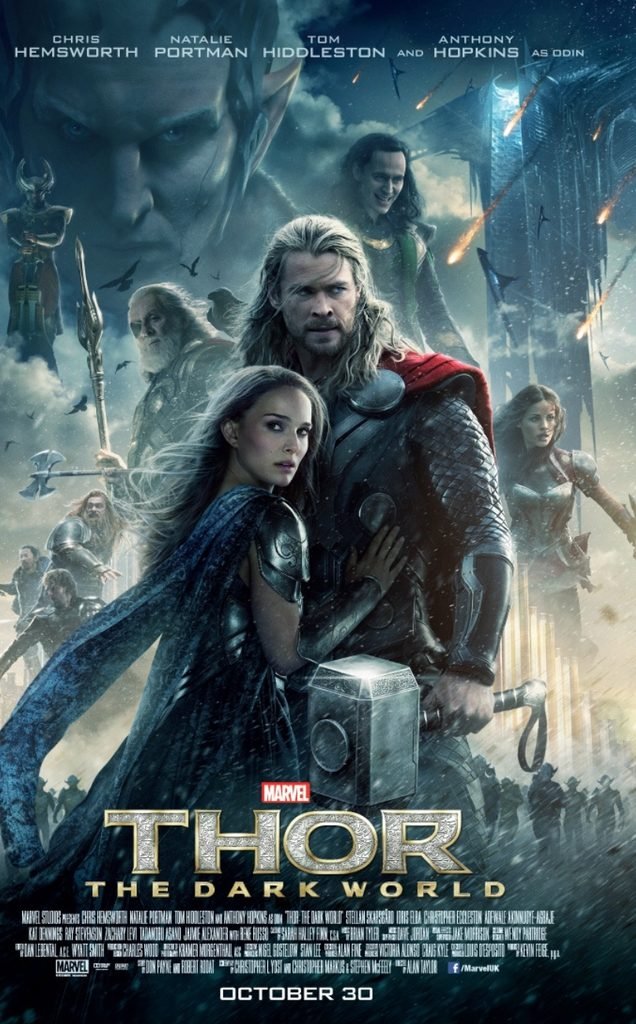
We have decided to revisit the Marvel films in chronological order. Our journey now continues with Thor: The Dark World, released in 2013.
It also follows the events of The Avengers and the Battle of New York. Chris Hemsworth reprises his role as Thor with Natalie Portman and Tom Hiddleston.
Anthony Hopkins, Idris Elba and Stellan Skarsgård also make comebacks. Christopher Eccleston joins the cast as the film’s main villain, Malekith.
The film will also introduce the Dark Elves as a threat to the Nine Realms. The movie starts a few thousand years prior to the events.
The Dark Elves try to utilize an energy known as the Aether. They have plans to restore the universe back to its dark form.
Aether ends up being associated with Jane Foster. Thor realizes that she carries the dangerous element and takes her to Asgard for her own safety.
On the other hand, Malekith and his allies return to pursue their mission. This is why Thor finds himself caught up in a situation that endangers Asgard and the entire universe.
He ends up requiring aid from an unlikely source as well. Loki gets captured at the end of The Avengers. Thor finally seeks his brother’s help.
This leads to one of the most intriguing concepts in the film. Two brothers who don’t trust each other have to work together.
Thor: The Dark World also represents a major shift in terms of the filmmaking process. Kenneth Branagh directed the first Thor movie.
This time, Alan Taylor takes over directing duties. That change is immediately noticeable.
Branagh brought a theatrical and Shakespearean quality to the original. Taylor approaches the world from a darker and more grounded perspective.
His experience directing Game of Thrones is particularly relevant. The result is a sequel that expands the mythology while changing its visual identity.
The question is whether Taylor successfully builds on Branagh’s work. Does he bring something valuable to the franchise?
Or does the sequel lose some of the qualities that made the original distinctive?
Direction
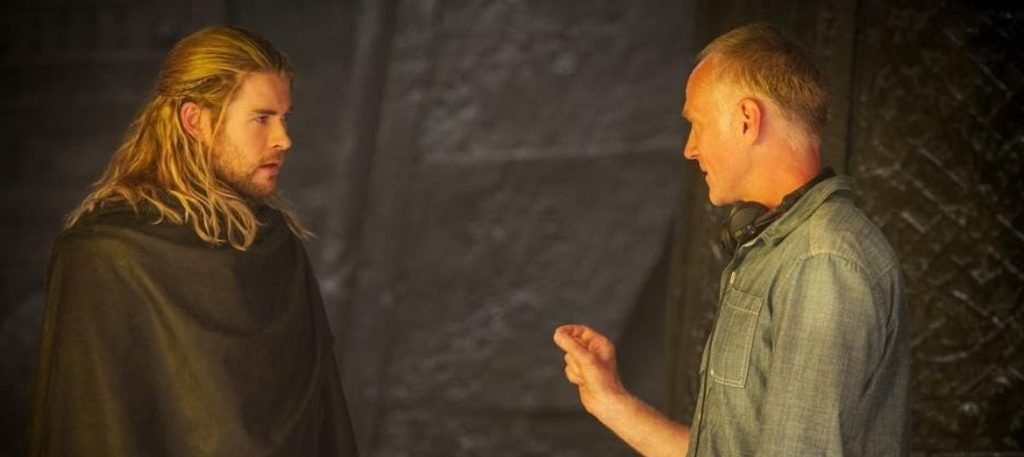
Alan Taylor had the hard job of coming after Kenneth Branagh. The first film got much of its character from Branagh’s stage experience.
This was an approach that focussed on familial rivalry, performance and royalty. However, Taylor goes down a totally different path.
Asgard becomes more of a living, breathing world. The set design made the city go past just its royal buildings.
It now has streets, markets and commoners. That is how Asgard appears as a real civilization.
Taylor’s method has been inspired by his experiences on television. That experience in Game of Thrones is especially evident.
There is political intrigue, family conflicts, and great battles in the movie. In addition to that, there is the war-stricken world of Asgard.
This adds to its physical realism. That is why the distinction from Branagh was purposeful.
Branagh’s Asgard seems almost like an elaborate theater set. Taylor’s Asgard seems more like a working kingdom.
Neither one is inherently better. Each one just creates its own interpretation of the same universe.
Taylor also puts much more emphasis on the action sequences. There are a number of massive battle sequences in the movie.
The battle against the Dark Elves at the start sets the stage for the danger. The attack on Asgard itself later serves as another major sequence.
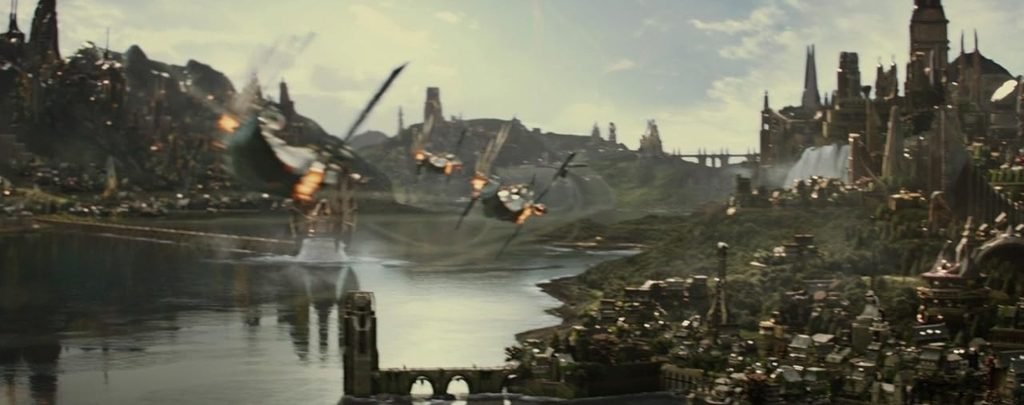
The climactic battle scene is equally impressive. Taylor pulls off the scenes with great confidence.
The scenes mostly have great flow. The camera moves with the characters and not entirely away from them.
The climactic battle scene also makes good use of the idea of portals from the film. The characters move from one place to another when fighting.
It makes room for visual surprises. But for Taylor, the biggest hurdle is the emotional scenes. There are a number of potential power relationships in the movie.
The two most intriguing ones are between Thor and Loki. Between Odin and Thor there is also a lot of unresolved conflict.
Jane and Thor spend much of the movie apart from each other. It is in this area that Taylor fails to keep up with Branagh.
In the original movie, more importance was placed on Thor’s development emotionally. The Dark World is more focused on developing the mythology.
This makes the sequel bigger. But it may not always make it more emotionally satisfying.
More comedy is also added by Taylor. Sometimes the jokes come across really well. The scenes involving Loki and Thor are especially funny.
But there are some scenes that are somewhat out of place in relation to the darker tone of the film.
Inconsistent tone is one of the problems of the movie. Taylor also has to cope with a lot of interference from the studio.
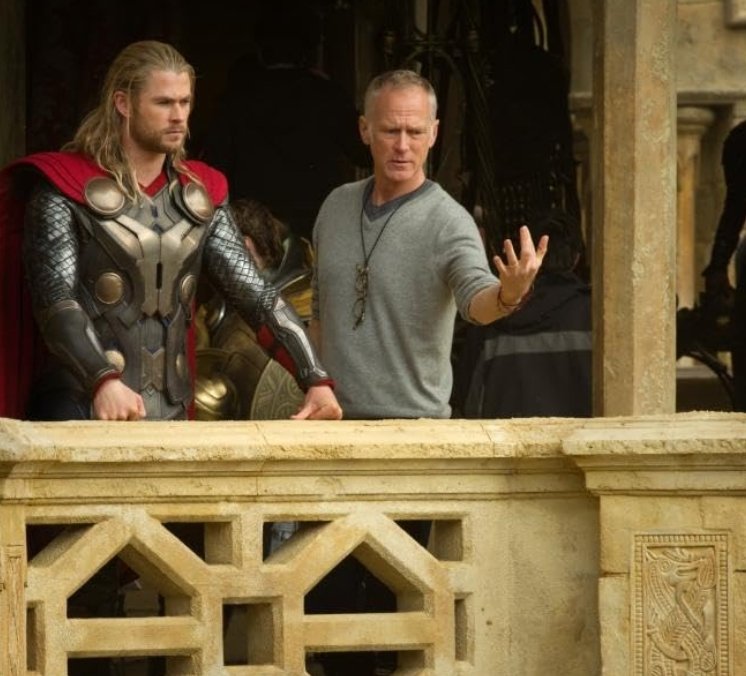
The movie had reshoots and major changes in production. Taylor revealed later that his original version was child-like in wonderment.
This explains some aspects of the film’s inconsistency. There are times when it seems like there are two styles clashing within the same film.
The first one is a darker fantasy adventure. The second is a lighter Marvel comedy.
Even with that, Taylor manages to put in his own twist. He does not just copy Branagh. Instead, he makes Asgard grungier, extends its universe, and ups the action.
I would not say that he succeeds as much as Branagh, though. Branagh gave Thor a stronger overall personality.
Taylor makes a solid sequel, but the direction is less distinctive.
Cinematography
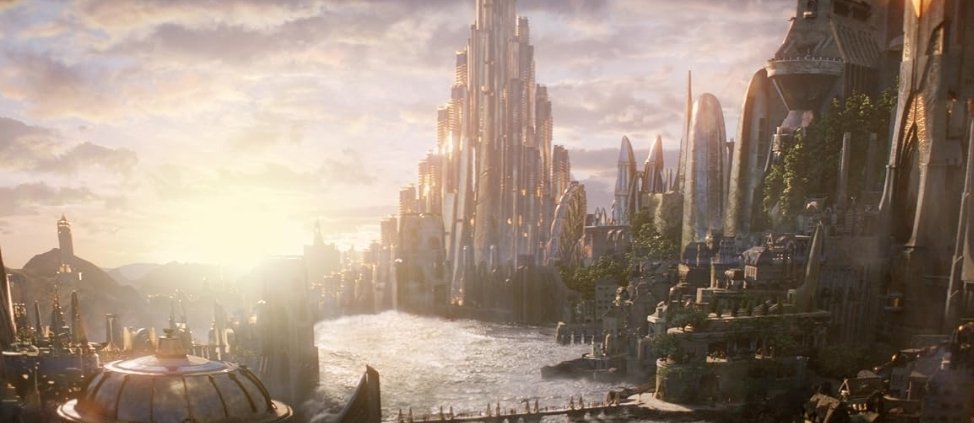
Kramer Morgenthau takes up cinematography for The Dark World. His contribution helps Taylor in making the world more realistic.
The visual tone of the movie is darker than that of the first one. There are more earth tones with less bright and shining visuals.
There is a more serious tone with such visuals. Morgenthau also felt that the worlds should be more realistic.
The production team utilized the natural landscapes during the creation of visual effects. Asgard is thus portrayed differently than in the first movie.
It continues to look amazing. Yet, it now also seems more practical and populated. This is especially true in the streets sequences.
The viewers get a better feel of how normal Asgardians live. The design also blends fantasy with sci-fi.
There are swords and shields alongside the futuristic space ships. This combination works well with the mythology of Thor.
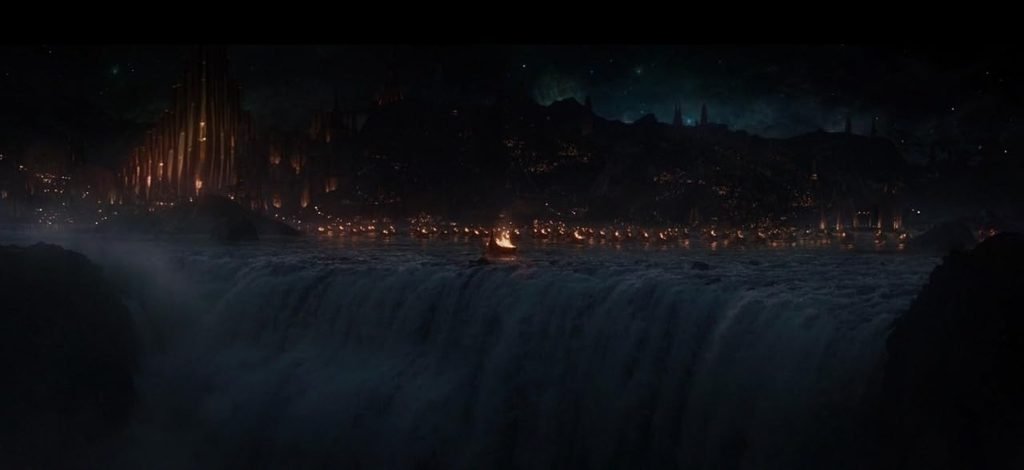
It does not attempt to make the world of Asgard medieval. On the contrary, the film portrays an advanced civilization that has ancient traditions.
The scenes taking place on earth have their advantages in the new setting. The first Thor featured a lot of New Mexico.
In the sequel, a greater share of the story on Earth takes place in London. It allows making an interesting visual comparison between modern Earth and Asgard.
The setting becomes relevant at the end of the movie when the battle takes place.
The combination of ordinary places with fantastical events leads to some interesting visual moments.
It is especially true for the cinematography of the battle scenes. The camera work gives the scene space to breathe.
At the same time, it emphasizes the size of the Dark Elf army. The choice of the color palette matches the title.
The film looks like a darker continuation of Thor’s story. Still, some scenes take place in entirely digital environments.
Overall, Morgenthau delivers strong work. The cinematography successfully supports Taylor’s darker approach.
It also helps make the Nine Realms feel larger and more connected.
Visual Effects
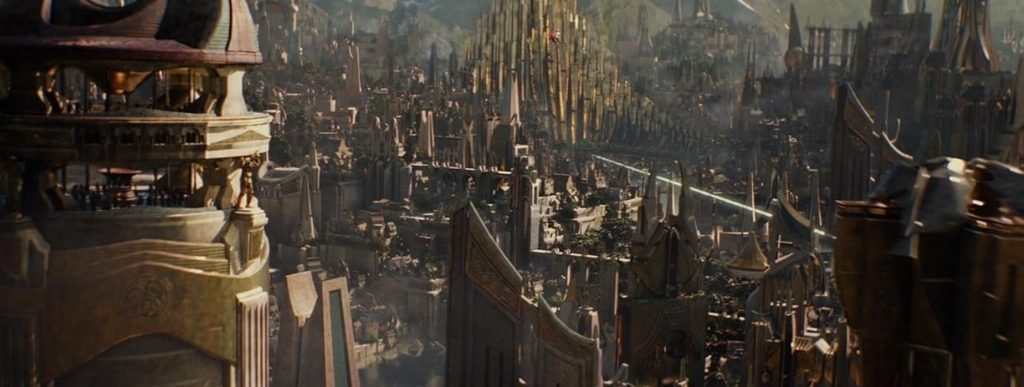
The visual effects in the movie are quite impressive. Thor: The Dark World adds greatly to the cosmology of the MCU.
It was necessary to create different realms. Dark elves had also to be created. Aether is yet another important visual effect.
This red energy helps make the movie unique in its visuals. Bifröst also makes an appearance. Its colorful nature brings about continuity from the previous film.
The visual effects stand out especially in the case of expanding Asgard. The production team used actual landscapes as the basis for the digital sets.
The Dark Elves’ technology looks unique too. Their ships look ancient and futuristic at the same time.
That fits well with the unusual combination of the fantasy and science fiction genres. Kurse is yet another visually impressive character creation.
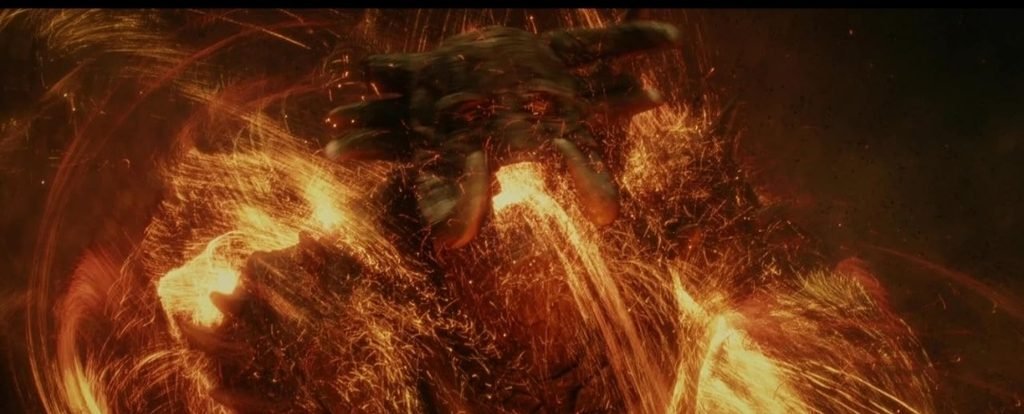
The character evolves from Algrim to a giant creature. The visual effects help to combine the actor’s portrayal with the creature.
As a result, it looks believable enough for its time. The final battle might be the most difficult visual element to create.
Thor battles Malekith through multiple realms. Portals appear and disappear. Characters are transferred between locations during the action.
That provides several imaginative visual effects moments. But it also gives an opportunity to move the battle away from one set.
At the same time, that sequence may become visually cluttered. There are lots of effects going on simultaneously.
Some elements look old-fashioned. It is especially visible when characters interact with the fully digital set.
The film uses plenty of visual effects. But I would not call it excessive. The plot needs visual effects a lot.
It would be impossible to create Asgard and the Nine Realms without digital cinematography.
What matters the most is how believable effects are.
For the most part, they are. The inclusion of actual landscapes and locations makes a difference.
The actors also have actual surroundings to deal with. It stops the movie from being too insubstantial.
So the effects work are nicely balanced. There are some parts that no longer seem realistic. But the visuals are nonetheless impressive.
Themes and Storyline
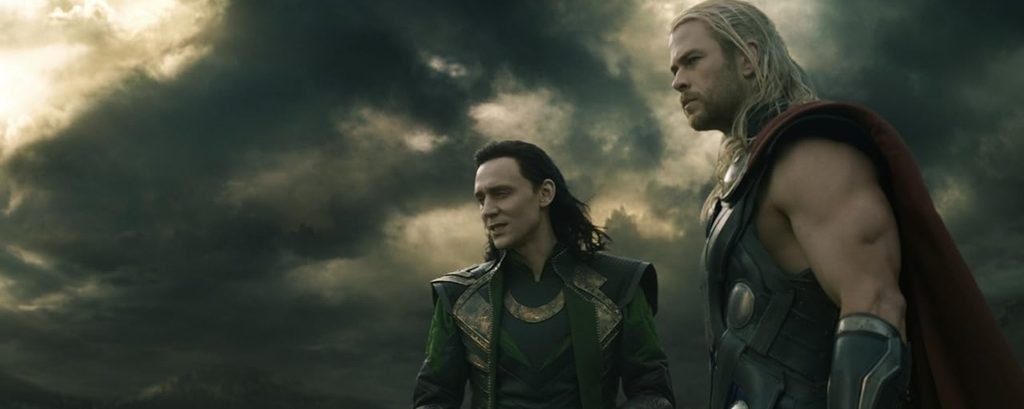
Family and sacrifice is the primary theme of The Dark World. The bond between Thor and Loki will be the emotional crux of the story.
Thor and Loki have been spending their whole lives in rivalry. The bond got further strained after The Avengers movie.
Loki is now imprisoned in Asgard. Yet Thor cares for him regardless of what has passed.
It adds a lot of emotional complexity to the situation. Thor eventually concludes that Loki might be the only one who can help.
There is a lot of risk involved in making such a choice. Thor knows that Loki is not to be trusted.
But he also knows his brother more than anybody else. This is definitely one of the best concepts in the movie.
It works thanks to the performances of Tom Hiddleston and Chris Hemsworth. Their chemistry contributes greatly to the emotional power of the movie.
Sacrifice is another concept featured in the story. Thor is forced to make hard choices concerning the safety of Asgard.
He finds himself having to think about the needs of other people. This is another aspect of character development from the first movie.
Unfortunately, the theme has not been developed fully enough. Thor as a future king is touched upon in the movie.
But there is much more which could have been done here. There are also Odin’s expectations, which provide another angle of drama within the family.
Once again, the story rapidly heads to the next action scene.
Villain story line is another weak point of the movie.
Malekith has vast amounts of potential. Christopher Eccleston is a skilled actor. Unfortunately, the character gets very little development.
His motives are laid out. However, his personality remains undeveloped. As a result, he becomes less interesting than Loki.
The Aether causes some confusion as well. The item is incredibly powerful and important. However, the rules surrounding it are often unclear.
The Concept of Convergence is just as complex. A great deal of the movie is devoted to explaining it.
However, the mythology may also be confusing. Here lies the source of the overcomplicated storyline.
There are plenty of characters, realms, and old rivalries. The viewer needs to get a lot of information.
But the emotional storyline is surprisingly simple. Thor wants to save Jane. Thor wants to save his family
He would like to stop Malekith. Also, he wants to learn about Loki. Those elements are easier to follow.
The movie’s runtime is fine. It does not seem too long at any point. But the pacing can be uneven.
The beginning part of the movie is slow. The middle has more characters in it. The end is action-packed.
So, the storyline has its pros. It expands Thor’s world considerably. It also develops Loki in interesting ways.
However, it lacks the emotional focus of the first film.
Performances
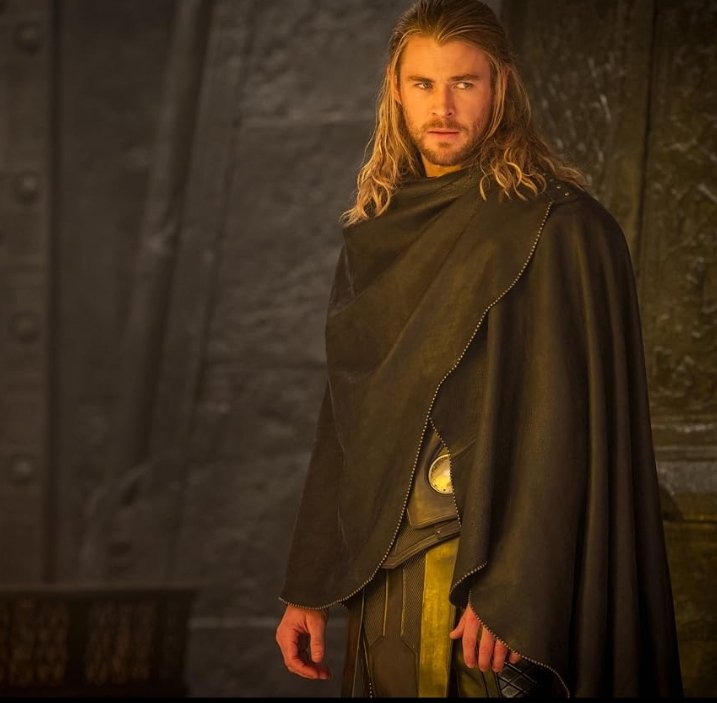
Chris Hemsworth’s portrayal of Thor is maturing. He is more at ease with the character than he was in the first movie.
Thor has become more assured and seasoned. Chris Hemsworth is also able to pull off the humor of Thor.
His chemistry with Tom Hiddleston is superb. These two actors provide the best relationship of the film.
Loki is a better foil for Thor than the primary villain of the film. Hemsworth also brings genuine emotion to Thor’s family scenes.
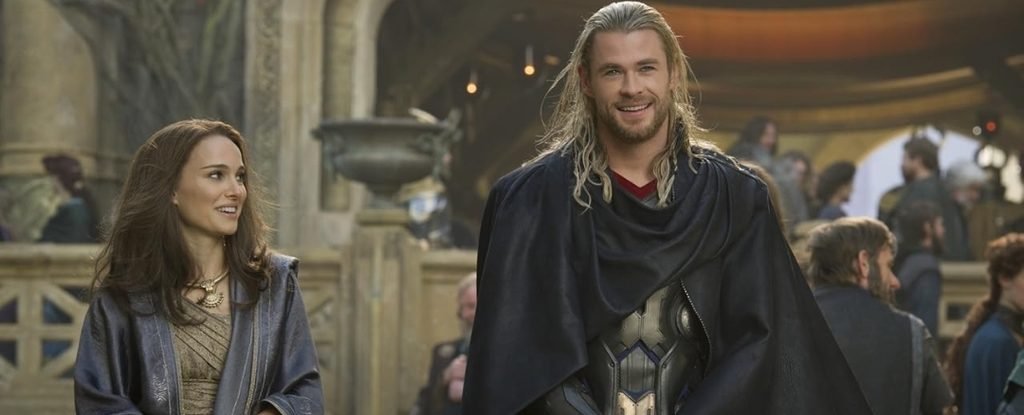
Natalie Portman reprises her role as Jane Foster. Jane plays a crucial part due to the Aether. Portman delivers the lines in a convincing manner.
But Jane’s character lacks proper depth. Her expertise as a scientist can be better utilized.
The relationship between Jane and Thor progresses rapidly. This makes for an emotional limitation.
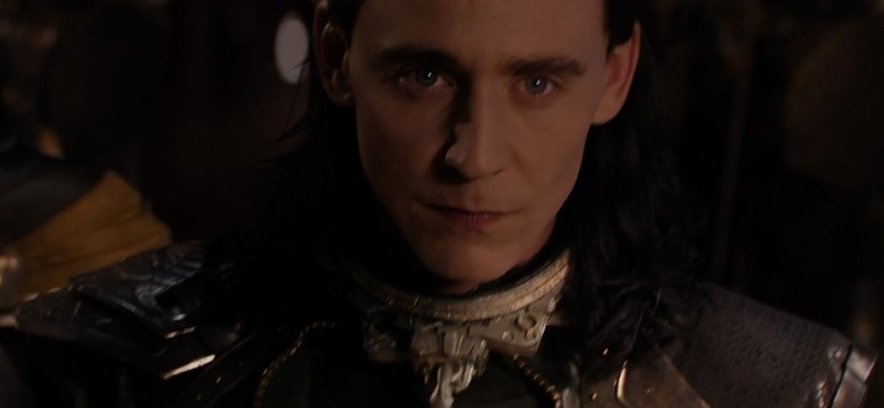
Tom Hiddleston plays Loki yet again in brilliant fashion. He shows humour, vulnerability and menace in the role.
Loki is still unreliable. Audiences cannot really trust him. This makes his relationship with Thor very intriguing.
Anthony Hopkins plays Odin once again. His acting is just as commanding. But the character of Odin is less likable now.
His relationship with Thor becomes increasingly complicated. Hopkins brings emotional weight to those scenes.
Elba still impresses as Heimdall. Elba makes Heimdall strong and noble.
Stellan Skarsgård brings much of the Earth comedy to life. He acts his part of Erik Selvig in an eccentric manner.
Kat Dennings reprises her role as Darcy Lewis. She performs well on screen. Nonetheless, humor revolving around Selvig and Darcy can be quite over-the-top.
Christopher Eccleston makes Malekith intimidating. He looks good. Unfortunately, the character is not developed enough.
Eccleston therefore has limited opportunities to create a truly memorable villain.
Overall, the performances are strong. Hemsworth and Hiddleston are the clear standouts. Their relationship carries much of the film emotionally.
What Worked and What Did Not
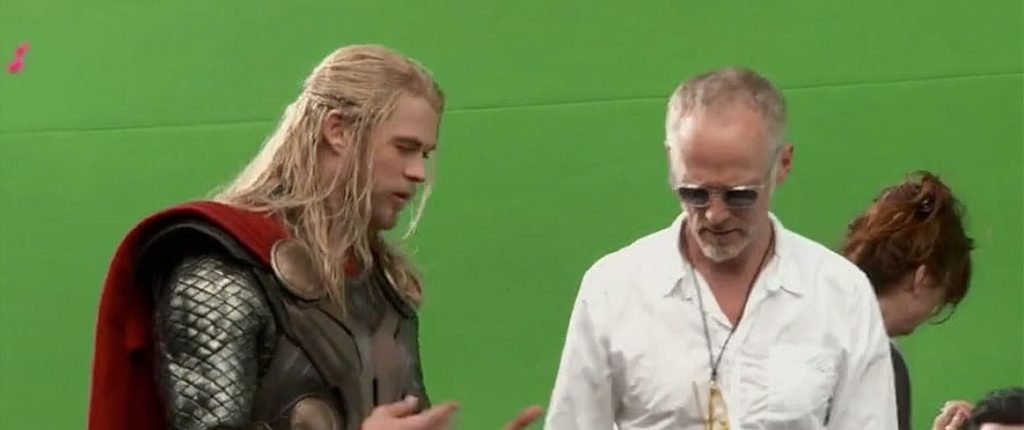
There are definitely a lot of good things about The Dark World. Probably the best part is the brotherhood of Thor and Loki.
It works very well thanks to great chemistry between Hemsworth and Hiddleston. Their temporary partnership generates one of the most exciting parts of the movie.
Expanding the world of Asgard works well too. Taylor makes the kingdom look bigger and more believable.
The darkened look gives the movie its own identity as well. Another key factor that works really well is the action.
There are a number of amazing battle scenes throughout the movie. The ending itself is quite grand.
The portal theme brings about some interesting action scenes. Visual effects play an important role in developing the world of MCU.
The presence of Dark Elves adds another dimension to the Marvel universe. It also marks the growth of Thor into a mature character.
Thor is no longer the arrogant warrior we saw in the previous movie. He knows his responsibility better now.
The humor fits quite well too. The relationship between Loki and Thor is especially successful.
Nonetheless, there are obvious flaws in the movie.
One of the MCU’s forgettable villains is Malekith. Christopher Eccleston plays his part successfully. But the script lacks sufficient development for him.
Jane Foster is not exploited to her full potential. Natalie Portman is an accomplished actress. She could have played a much more significant role.
There is also the problem with mythology. The Aether and the Convergence deserve special clarification.
But sometimes their rules aren’t always that clear.
Another important feature of the movie is its extensive use of CGI. A lot of it works well. However there are a few digital environments that have gotten old.
The problem with the movie, though, is its lack of emotion. Branagh’s movie had more dramatic flair to it. Whereas Taylor’s sequel is grander and darker.
It also focuses more on the action aspect. This doesn’t make it inferior in all aspects. It only makes it less unique.
Taylor manages to create his own interpretation of Thor. He doesn’t just mimic Branagh. It’s a good thing.
The difficulty is that Branagh made the original more interesting through his stage-style direction. Taylor’s way of doing things seems a little too conventional.
It may be the best criticism to make of the movie. Taylor makes a good sequel to Marvel’s work. However, it’s not as good a character fantasy drama.
Overall Verdict
Thor: The Dark World is a fun but rather inconsistent Marvel sequel. First of all, Alan Taylor successfully continues on the darker tone set by Kenneth Branagh.
Moreover, he expands Asgard and develops the setting of the Nine Realms. His work on the TV series Game of Thrones is reflected in the movie.
In addition, Kramer Morgenthau’s cinematography works in line with the aforementioned atmosphere.
As for the visual effects, they work well enough in order to expand the movie’s cosmic scale.
Still, this sequel fails to be equal to its predecessor made by Branagh. The latter managed to give Thor its theatricality that helped it find its voice.
Instead, Taylor chooses grittier and more action-oriented style. While it works well enough in many respects, the emotional depth seems to be slightly lacking here.
The biggest flaw of this movie is its villain, Malekith. Moreover, Jane Foster needs to be developed more thoroughly.
The mythology can be overly complicated at times. CGI effects work well but sometimes look outdated.
Despite these flaws, there is still much to enjoy about this movie. Chris Hemsworth continues being excellent as Thor.
Tom Hiddleston continues impressing us as Loki. Their rivalry gives the film some emotional depth.
Moreover, it successfully expands MCU’s mythology and cosmic aspects. Therefore, the movie is an important part of this big picture.
I do not consider this film to be one of the MCU’s best, as it is a rather inconsistent sequel.
At the same time, it has some good moments in it. Alan Taylor successfully infuses his style into it.
He just cannot create theatrical magic like Branagh.