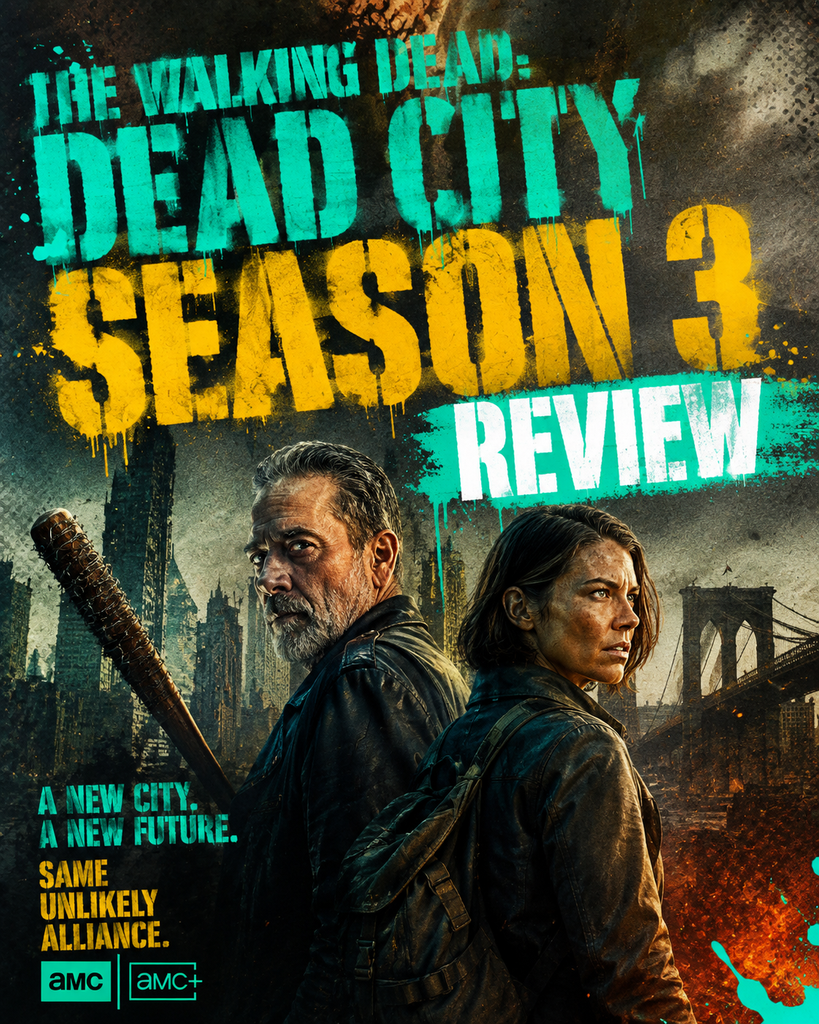
The Walking Dead: Dead City Season 3 Review
Introduction (Warning Contains Spoilers)
After my disappointment with Season 2 of The Walking Dead: Dead City, I approached Season 3 with considerably more apprehension than excitement.
I found the concept of Dead City interesting, but for me Season 2 was rather trying. The pacing often felt sluggish, while several storylines seemed to struggle for direction.
So, I was not sure if season 3 would be able to recapture my interest. However, Season 3 managed to surprise me.
There has clearly been a marked change in the creative approach of the show thanks to the showrunner Seth Hoffman.
The show still revolves around Maggie Greene and Negan Smith, but much has changed since then.
The focus is no longer just on vengeance and the continuation of the conflict but rather on the rebuilding of Manhattan.
This adds to the purpose of drama in the show. This gives Dead City scope to explore things other than mere survival and revenge and battles with walkers.
Direction and Visual Style
Season 3 feels considerably more confident in its willingness to experiment. The earlier seasons established Manhattan as a dangerous and visually striking survival environment.
Season 3 keeps that atmosphere but brings a new mission to it. Manhattan becomes a place where you can live and not just survive there anymore.
That is what makes the settings more meaningful for the story. All those deserted buildings and streets still create the same post-apocalyptic feel.
But more attention is paid to communities, relationships and rebuilding. The new season also gets a big boost because of the change in relations between Maggie and Negan.
Their rivalry is an important part of the story, but now their collaboration became much more complicated.
In contrast, quiet moments enable their performances and body language to express the changing dynamics between them.
This is effective because both actors have an excellent understanding of these characters. Season 3 also makes some surprising stylistic choices.
The alternate reality scene featuring Beth Greene is one of the most unconventional elements of the season.
The sitcom-like fantasy scene is more daring, taking the decision to abandon the tone of the franchise.
These choices will not be for everybody. However, I enjoyed the risk taking rather than sticking to the formula.
Storylines and Themes
The stories are definitely the part where I have noticed the greatest progress compared to Season 2.
The season progressed at a much better pace. Every episode served its purpose and showed some development.
Some episodes may be slower, but not that frustrating as some parts of Season 2 were. The plots also seem to be better connected.
The community plot offers the greater meaning for the group than just surviving the next challenge.
It questions whether those who survived all these years are able to learn how to live again. This becomes one of the major themes of the season.
Both Maggie and Negan have to deal with their past and consider their future. Their relationship stays complicated and complex.
Yet, this complication gives it a lot of interest. Grief of Maggie stays relevant for the plot, yet it is no longer controlling her.
Negan also occupies the very interesting position of a villain, survivor and potential ally at once. The season does not instantly make him innocent.
Rather, it enables him to show how different he has become while still retaining his past.
Hershel is also allowed to develop much more in this season.
His encounters make him realize the harshness of living in this world.
He adds another angle of looking at the implications of the decisions made by Maggie and Negan for the future.
The Performances
Another aspect in which season 3 seems to be an obvious improvement is the performances. And there is one major factor behind that: the scripts.
It makes all the difference when the characters have more purpose in their story arcs and the choices they make are in accordance with their personalities because this leaves more space for acting instead of being there just to further the plot.
This especially applies to Maggie and Negan, whose portrayals seem closer to what people have come to know about them.
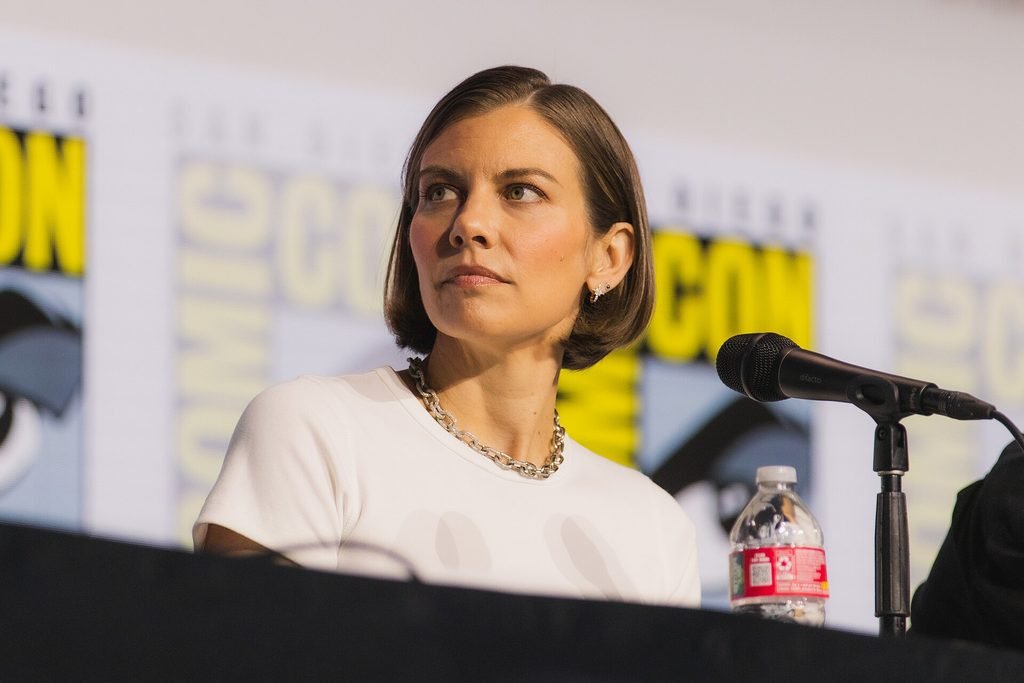
Lauren Cohan still manages to imbue the character of Maggie with the emotional weight she needs. In Season 3, it is possible for Maggie to go beyond her rage and bitterness toward Negan, with more focus being placed on her ability to move on after the death of Glenn.
Maggie is still very much resolute and able to make hard choices, but there is some fragility beneath all this strength.
This turns out to be crucial when we get to the end of the season, as she realizes that she will be able to move past her hatred of Negan without having to pretend she forgave him.

By Kevin Paul ©Creative Commons Attribution 4.0
Jeffrey Dean Morgan‘s portrayal of Negan is no less compelling. It’s especially interesting that in this season, they do not strive to make him entirely soft and kind.
Negan can be proud, sarcastic, aggressive, and unpredictable, yet he has become much more weary and experienced under his usual facade.
It’s thanks to his relationship with Maggie that he has the chance to show these traits less and to display more reserved and restrained sides of his character in a more powerful way.
They’ve come very far since the first season, yet both actors never forget about their past. It’s not only that there is still an uncomfortable history between them; it is even that there is a certain level of trust and dependence.
The finale proves that very well since Maggie tells us that Negan became her family aside from Hershel.
The new additions to the cast also give the season some much-needed energy, with Aimee Garcia, Raúl Castillo and Jimmi Simpson joining the regular ensemble. Of those new faces, Simpson makes perhaps the biggest impression as Mason Dillard.
At first glance, Dillard seems odd, amusing, and disturbing.
But eventually, Simpson shows the loneliness and emotional pain hidden behind such an unconventional facade.
Being involved in relationships with the walkers, he becomes one of the oddest characters brought into the show.
This gives Simpson the chance to alternate between being funny, vulnerable, and scary.
The scenes between Simpson and Negan are particularly amusing since their personalities clash so well.
Aimee Garcia and Raúl Castillo also help expand the world beyond Maggie and Negan.
Their presence makes Manhattan feel more like an evolving community.
Emily Kinney‘s return as Beth Greene in an alternative reality episode provides another emotional highlight.
Her appearance also gives Maggie an opportunity to confront a part of her past that remains deeply important.
What Worked
The main advantage of Season 3 is its increased sense of direction. This season finally feels like it knows what it wants to be about.
The pacing is better, the characterisation is more coherent and the storylines advance in general.
Characters seem more natural than before, which makes it easier to understand their motives, even when they are wrong.
The fact that this season experiments should be praised. The alternate reality could have seemed pointless, but it really offers something unique.
And the sitcom-like part also proves to be quite unique, showing great confidence from the creators.
But most of all, this season gives Maggie and Negan new direction. Their relationship seems to move past the stage of constant quarrelling.
There is finally some kind of progression.
What Did Not Work
Even with all of its progress, there are some issues with Season 3. A few episodes falter in terms of narrative control.
Some of the secondary storylines also vie for attention while not receiving sufficient development.
The worst of the flaws becomes apparent during the season’s finale. After a rather easygoing pace is maintained, the finale all of sudden feels crowded.
Several important character developments and storylines need to be addressed in a very limited amount of time.
Consequently, some pivotal scenes lack necessary space for realization. One such storyline belongs to Dillard.
The arc of his character is fascinating and tragic in its nature. Nevertheless, the finale arrives too fast and could have been more emotional.
The finale offers several important developments to the characters of Maggie, Negan and Hershel.
However, there was something in the air that another episode could have improved the season.
That would have allowed the season’s various threads to reach their conclusions more naturally.
Final Verdict
With the experience of watching Season 2, I went into Season 3 with low expectations.
Instead, I found a season that genuinely renewed my interest in Dead City. It is not a perfect season; there are some things which keep the season from being at its best.
This includes slower episodes which seem to throw a wrench into an otherwise good pace. The finale is also rushed, despite a season of good pacing.
But these issues cannot mask the positive changes seen elsewhere. The characters have more realistic portrayals; the better writing helps the performances.
The storylines are more driven, and Manhattan is no longer just a location where people try to survive.
The writers should also be commended for taking chances on the established format of the show.
Perhaps most significantly, Season 3 is the first to give Maggie and Negan’s relationship some real direction.
Despite entering the season skeptical after Season 2, I found myself much more engaged this time around.
The Walking Dead: Dead City still has room for improvement. However, Season 3 proves that this spin-off is far from creatively exhausted.
It may not completely reinvent the series, but it gives it a much-needed sense of direction. For me, that makes Season 3 a welcome improvement and a promising step forward.