De Gaulle: Liberté Review
Introduction: The Story Continues
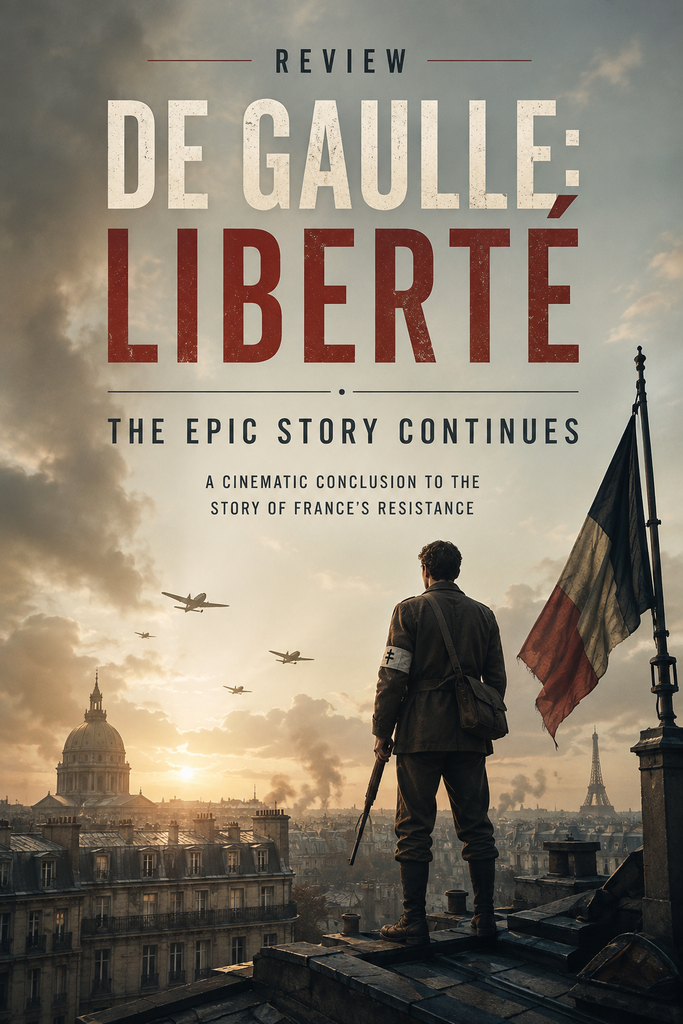
Antonin Baudry‘s De Gaulle: Liberté concludes his ambitious two-part historical epic. In this movie, we witness the continuation of the voyage that had started in De Gaulle: Résistance.
It narrates how Charles de Gaulle evolves from exile days to the liberation of France.
The first part had shown us a general convincing people that the fight of France was not over yet. But now we see how this conviction turns into political power.
De Gaulle no longer fights for recognition. It is now a struggle to decide what free France will be. It changes the nature of Liberté dramatically from the former one.
It contained elements of survival and resistance. Here it becomes a matter of sovereignty, legitimacy and power politics.
This makes the struggle take place on a battlefield that is both military and diplomatic. De Gaulle has to face not only the Germans but also his own allies.
Churchill still plays an important role. Franklin D. Roosevelt becomes a much more significant opponent.
While, in North Africa, General Philippe Leclerc carries on the fight militarily, In France, Jean Moulin tries to unite the resistance factions.
This creates a lot of scope for the sequel.
It creates one of the greatest challenges to the sequel.
There is so much history to deal with.
However, Baudry seems to manage it better this time around.
A Different Kind of Conflict
Resistance stemmed from the crisis in which France found itself. It had been defeated, and de Gaulle was trying to sustain its spirit.
Liberté starts from a better starting point. De Gaulle already has a movement backing him up. In addition, he already has gained some international recognition.
This, however, does not mean political autonomy. And that is what the main issue of the sequel is about.
De Gaulle needs to ensure that France does not become an occupied country once it has been liberated.
It follows then that the diplomatic conflict takes almost equal precedence as the military conflict.
It provides an interesting contrast in terms of the film’s theme.
In other words, the opponent is no longer found only on the battlefield. Sometimes there are conflicts at the conference table.
Other times there are conflicts within the confines of a hotel room. At others there are conflicts that are veiled in the guise of diplomatic niceties.
They provide some of the most compelling scenes in the movie. It is difficult to describe the relationship between De Gaulle and Churchill.
It involves great respect mixed with a lot of political disagreement. It is Roosevelt who brings in an additional level of conflict.
He is seen in the film as being highly skeptical of de Gaulle’s ambitions. The history is told with clear bias towards the French point of view.
The film is clearly interested in French sovereignty. That perspective gives Liberté its identity. It also occasionally makes the political argument feel more emphatic than subtle.
De Gaulle and the Fight for Sovereignty
Simon Abkarian reprises de Gaulle’s role with amazing consistency. He sticks to the image that has been created in Resistance.
Nevertheless, there is some change to be noticed. The indecisiveness of the previous de Gaulle has been largely overcome.
Now he realizes the significance of his role. Also, he is aware of the influence he has gained. This gives him much more weight.
It also gives him a political perspective. Abkarian manages to demonstrate this transformation without changing the character entirely.
The same stubbornness is kept. The same huge self-confidence is kept. Nevertheless, they take on new dimensions now.
De Gaulle is not just trying to get heard. He wants to make a difference in the future of France. This brings a unique change to the character.
His decisions impact governments, not just him personally. Abkarian knows that distinction. His acting gets subtler in certain scenes.
He usually shows his suspicion with a glance, not an address. That adds power to his character. He no longer has to prove that he should be there.
It’s understood. That makes this one of the best elements of the film. The first film showed the creation of a leader.
The second shows the consequences of becoming one.
Does Abkarian Still Command the Film?
Abkarian is still the emotional centre of the film. Nonetheless, Liberté provides room for its supporting cast.
This makes all the difference. In particular, Niels Schneider’s Philippe Leclerc takes on great significance.
The military subplot gains a lot more dramatic focus. Schneider lends his performance physical energy and determination. He also serves as an interesting foil to Abkarian.
De Gaulle wages war politically. Leclerc wages war militarily. Thus, they are two different representations of the same national movement.
Schneider is one of the finest action sequences in the sequel. It lends emotional significance to those scenes.
The action is not merely for show. It is the representation of the need for restoring France’s military freedom.
This is why Schneider is one of the finest actors in the film. The sequel gives him more opportunity to command the screen. That strengthens the overall ensemble
Niels Schneider and the Military Campaign
The storyline related to military action may be considered the most cinematic part of the movie. Leclerc’s troops are grossly outnumbered.
Their action against German troops includes a few exciting parts. Baudry approaches those parts rather confidently. The desert is turned into a huge visual space.
Cars drive on an open terrain. Dust covers the screen. Shots are fired. That contrast greatly with the constrained diplomatic talks.
This works well for contrast. It also provides an opportunity for Schneider to show character development through action.
His character doesn’t require lengthy dialogue to show his dedication. His actions on the battlefield reveal what is important to him.
The actions thus become character development. This is one way that Liberté succeeds in ways that its predecessor did not.
The first film’s major military sequences established Baudry’s visual ambitions. The second develops them with greater confidence.
The result is a more fluid connection between character and spectacle.
Jean Moulin and the Home Front
The addition of Jean Moulin expands the film’s definition of resistance. De Gaulle may stand for the Free French in international affairs.
Moulin stands for the efforts made in order to unify resistance inside of France. This is significant. The resistance wasn’t a unified organization.
Different groups had their own politics. Different personalities had their own agendas. Thus, the work of Moulin is tremendously difficult.
The filmmakers use his story as another example of leadership. As opposite to de Gaulle, Moulin is active in occupied France.
Danger comes close and personal to him. There is very little that protects him from occupying forces.
As a result, his parts are quite personal. The political questions of the movie turn into personal ones in him.
Unity becomes an issue of survival. Leadership becomes an issue of trust.
Resistance becomes an issue of endurance. This adds more depth to the film. At the same time, the story of Moulin shows the most significant problem of the sequel.
There are just too many important characters. The film constantly has to abandon one story in favor of another one.
But most of these transitions are done rather efficiently. Yet the structure occasionally feels like a historical tapestry rather than one continuous drama.
The Runtime: Is Shorter Actually Better?
A difference that can easily be seen between the two movies is the running time. The movie Liberté is only slightly less long than Resistance. According to current data, it is 157-159 minutes.
On an operational note, however, this remains a long historical epic. This is not always the case with Liberté.
It is certainly not due to its being much shorter. The point is that there is organization in the storytelling.
The sequel has more momentum to it. Its political confrontations always progress to a military one. The military part in turn affects the political part.
Thus, there is a more easily recognisable rhythm in the drama. The first movie seemed to be a collection of a few historical episodes.
While the second one is more consciously linked together. In this way, the short running time appears more meaningful than it really is.
Though, the film is still filled with a lot of exposition. The film has many characters and historical events happening.
However, the connections seem more meaningful. There are fewer moments where the audience wonders why a particular scene is included.
That gives Liberté greater momentum. It does not make the film fast. It makes the length feel more justified.
Has Baudry Kept the Same Style?
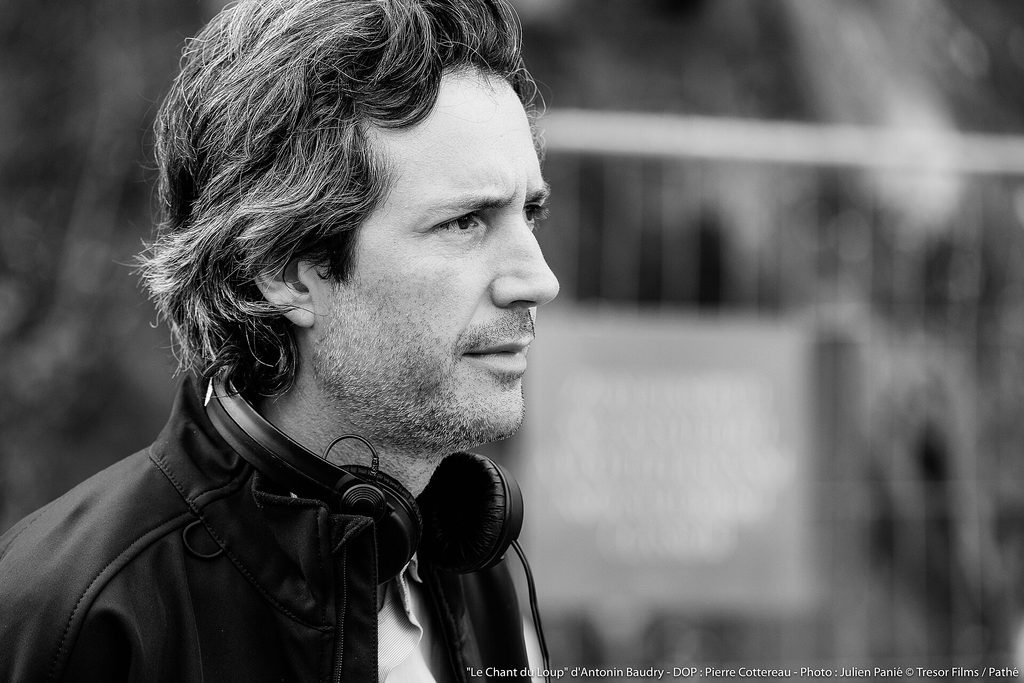
Indeed, and it is the continuity that is one of the strong points of the film. Baudry does not radically transform the style that was created for Résistance.
On the contrary, he builds upon it. The same combination of personal character story and grand spectacle is preserved.
The same period setting is kept. The same political clash is also retained. Consistency is vital for both films as they make one huge narrative.
Otherwise, any shift in visual style would make the split arbitrary. In that way, Liberté seems to be a follow-up.
First, the color scheme stays loyal to the earth tones of war time. Also, the production design still focuses on realism.
War settings stay physical instead of being polished too much. Finally, cinematography still captures intimate interiors and vast battlefields.
This contrast was always vital for Baudry’s visual technique. The result feels coherent with the first film.
It also allows the audience to move directly from one chapter to another.
The direction therefore prioritises continuity over reinvention.
That is exactly what this project needs.
Cinematography and Scale
Cinematography is still among the most effective parts of the production. The movie knows that the history of war has to be on a large scale as well as personal.
The scenes shot in the desert give us big pictures. Political discussions usually take place in enclosed rooms.
The scenes with resistance bring the camera closer to people. It creates an interesting rhythm for the film.
The movie can go from a large military unit to the face of a person. It helps emphasize the main idea of the movie. History is vast.
But people make history their own. Baudry’s use of imagery highlights the paradox well.
The combat scenes are also more assured than some of the previous action footage. The camera creates motion while not entirely losing its sense of geography.
The physical setting is still significant. Machinery, uniforms, and landscapes all help create the atmosphere.
The end result is a movie that is made for the big screen. It does not simply illustrate historical events.
It tries to make those events physically overwhelming.
The Continuity Between Both Films
Perhaps the biggest success of the two-part film is consistency. The movies seem to be parts of one big story.
There is an easy transition of the performances. Production design preserves visual continuity. There is musical continuity between the two stories.
Moreover, there is continuity of the characters’ development. It is especially significant in case of Abkarian.
Abkarian’s de Gaulle in Liberté looks the same as before. His adversaries have changed. His duties have been increased.
Such development allows the two films to develop logically. In the first film, the question is posed whether de Gaulle can be a leader.
In the second, whether he does anything with such leadership. Such development is natural for drama. This makes the whole project more meaningful.
Performances Beyond Abkarian
The secondary characters have more to gain from the scope of the sequel. The actor Niels Schneider has been given more chances to flesh out Leclerc.
He seizes those opportunities. His acting is full of energy, yet he does not overdo it. The actor Thierry Lhermitte has been brought back into the role of Henri Giraud.
This character stands for an alternate view of the French military command. His interaction with de Gaulle still carries political weight. The tension between them adds another layer to the sovereignty debate.
Once again, Simon Russell Beale adds a lot of character to Churchill. While his portrayal is still energetic, it does not turn into a parody.
The tension between Churchill and de Gaulle is still a combination of irritation and respect.
Campbell Scott’s Roosevelt introduces an interesting dynamic into the film. Roosevelt is portrayed not as an antagonist, but as a shrewd politician.
This adds a great deal of nuance to the political storyline.
Anamaria Vartolomei is significant for the resistance storyline as well. Her presence gives the film another perspective on the war.
She helps bring the danger of occupied France closer to the audience. The larger ensemble therefore receives more attention than before.
That is both a strength and a structural challenge.
Does the Film Give History Enough Attention?
This is where the film takes on its greatest challenge. Clearly, there is a great deal of history that needs to be told.
The film seeks to incorporate diplomacy, resistance, and war. The film also seeks to trace the development of de Gaulle politically.
This represents a great deal of content in one film. As such, some elements are more dramatically emphasized than others.
The primary political showdowns get a lot of focus. Leclerc’s war efforts receive plenty of visual emphasis.
The resistance plotline offers an intimate contrast. Other historical events pass by much more rapidly.
It certainly doesn’t have to mean that history is disregarded in the movie. On the contrary, it means that it opts for particular events to base its drama on.
This is a rational thing to do in a feature film. The history cannot be fully told in such format.
However, those viewers who expect a full historical coverage may be disappointed with the film.
The film prioritises dramatic coherence over historical detail. That choice generally works. It allows the film to remain a drama rather than becoming a filmed textbook.
Yet the sheer quantity of material occasionally makes the narrative feel compressed. Some events arrive with limited preparation.
Others receive considerably more attention. The imbalance is noticeable. Still, the filmmakers largely manage to make the important developments understandable.
The Liberation of Paris
The climax of the movie comes with the film’s last movement. Finally, after all the political disputes, war, and sacrifices made, freedom is attained.
The arrival of the scene gets some amount of solemnity from Baudry. Everything becomes massive.
Crowds line the streets. French icons fill the screen. The music swells. The event is shown as an amalgam of politics and emotion. There is certainly a danger of being sentimental here.
But this sequence works due to the emotions generated by both films. The idea of liberation carries more weight since we have seen the hard fight.
Also, it completes de Gaulle’s character development. He starts off as an isolated general. He ends up as the epitome of a returning France.
This is the overall theme of the entire piece.
What Works Best
One of the best things about Liberté is the momentum that it provides. It has a better destination compared to the previous film.
Everything seems geared towards the liberation of people. The political plot line has an objective. The military plot line has an objective.
The resistance plot line has an objective. All these eventually lead to the liberation of France. This structure adds dramatic satisfaction to the film.
Action scenes are yet another strength of the movie. They are big but not entirely anonymous.
Characters stay visible amidst the spectacle. The political scenes are more dynamic than historical exposition. De Gaulle’s clashes make for real dramatic conflict.
Consistency of images is another strength of the film. The film’s visual consistency is another achievement.
It feels like a genuine continuation of Résistance. The performances also benefit from having established characters.
The audience already understands their personalities. That allows the sequel to spend more time developing their conflicts.
What Does Not Work
Some of the flaws that were present in the first installment remain in the movie. Ambition often turns out to be the main flaw of the film.
There are many characters. There are several countries. There are different military operations.
There are also political processes involved. Balancing all those factors is not an easy task. Sometimes the film seems overloaded.
Sometimes the scene runs too fast because of the historical chronology of events. In other cases, things slow down for political talk.
It is not always balanced, this dichotomy. At times, it will come off as being too obvious in terms of patriotism.
The French national identity is clearly embraced in the movie. This is at the very heart of the matter.
Nevertheless, at times, the emotional weight is almost overwhelming. There are times when there is little room left for ambiguity.
This is especially true in regard to French sovereignty.
The political argument is compelling. Its presentation can sometimes feel more forceful than exploratory.
That does not invalidate the perspective. It simply makes the film’s position very clear.
Final Verdict
De Gaulle: Liberté is a triumphant end to an extraordinarily bold film project. It keeps the visual identity and direction set in Résistance.
A marginally smaller runtime contributes to a more streamlined film. But the differences are subtle.
The stronger sense of drive the film has is largely due to its structure rather than its length. The three storylines tend to work well together.
They also provide more scope to the film compared to its predecessor. Simon Abkarian is still terrific as de Gaulle.
Niels Schneider is exceptional as Leclerc. Simon Russell Beale keeps making Churchill entertaining and unpredictable.
Campbell Scott also gives some much-needed tension as Roosevelt. More than that, the whole ensemble gets more time to shine.
Above all, there is good continuity in this movie across both parts. This is definitely a proper continuation rather than a sequel.
Its weaknesses remain familiar. The historical range sometimes overpowers the narrative.
There is an overemphasis on some of the political debates. A number of the transitions appear rushed.
The patriotic style will also alienate some viewers. However, Liberté knows what its predecessor had achieved.
It continues to build on the groundwork laid. The first film was about rebellion. The second one is about the meaning of victory.
The first one illustrated the rise of de Gaulle as an icon. The second film depicts him struggling for mastery over the meaning of the symbol.
This gives both films an excellent dramatic arc.
De Gaulle: Liberté may not be able to avoid the extremes of its great ambitions.
But it ends the story on an appropriate high note.
It is beautifully shot, politically relevant and performance-driven.
Above all, it achieves the transition of de Gaulle from a solitary officer to a national leader.
Overall, De Gaulle: Liberté is a strong and cinematic conclusion, with greater momentum than Part One.
Its greatest achievement is making the two films feel like one continuous historical epic.