How to Train Your Dragon (2025)

How To Train Your Dragon (2025): Revisiting Berk in Live Action
The original 2010 animated version of How To Train Your Dragon is still one of DreamWorks’ most emotionally resonant achievements. Seeing it translated into live action seemed like the next step. Directed once again by Dean DeBlois. How To Train Your Dragon (2025), clearly comes from a place of deep affection and protectiveness over the source material. And that reverence is felt throughout the entire runtime.
This version closely follows the story of Hiccup, a scrawny, inventive Viking boy who doesn’t fit into Berk’s hyper-masculine warrior culture. And his unlikely bond with Toothless, a feared Night Fury dragon. While the bones of the story remain largely unchanged, the shift to live action dramatically alters how the world feels. Everything heavier, harsher, and more grounded.
Why This Story, Was Brought to Live Action
In my opinion, this remake exists for several overlapping reasons, and most of them are visible on screen. Dean DeBlois has openly talked about wanting to revisit ideas that had to be trimmed or simplified in the animated version due to time constraints. The live-action format gives him room to slow things down and explore emotional nuance.
There’s also a clear technological motivation. With modern visual effects now capable of near-photoreal creatures. The filmmakers leaned hard into making the dragons feel dangerous, physical, and alive in a way animation naturally abstracts. The influence of shows like Game of Thrones is obvious. From the muted color palette to the way large creatures are framed as awe-inspiring but genuinely threatening.
At the same time, it’s hard to ignore the business side of the decision. Universal’s Epic Universe theme park expansion and the industry’s ongoing reliance on familiar IP make this film feel strategically timed. Still, what surprised me is how personal the execution feels. This doesn’t come across as a soulless cash-grab — it feels like a director revisiting his own work with more tools and a slightly older perspective.
Filming Locations and a Tangible World
One of How To Train Your Dragon’s, biggest strengths is how real Berk feels. Filmed largely in Northern Ireland, with locations like Dunseverick Castle and Tollymore Forest standing in for the Isle of Berk. The environment has a raw, windswept quality that animation could only suggest. You can feel the cold air, the jagged cliffs, and the isolation of a village that’s been shaped by generations of fear and survival.
This grounded approach extends to the production design. Sets are textured, weathered, and imperfect. Armor looks heavy and uncomfortable. Homes feel cramped and lived-in. In my opinion, this physicality goes a long way toward justifying the live-action format — Berk finally feels like a place people have bled and died to protect.
Visual Style and Cinematography
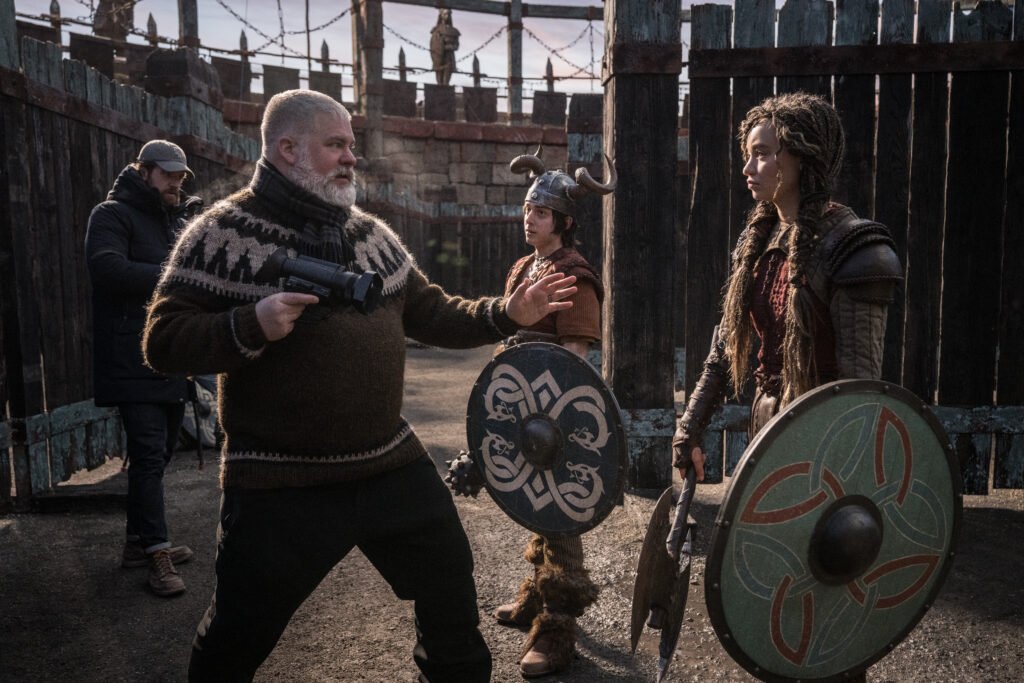
Visually, How To Train Your Dragon, aims for what DeBlois has described as “visceral photorealism,” and for the most part, it succeeds. Shot by Bill Pope using IMAX-certified Arri Alexa cameras. The movie frequently opens up its aspect ratio during flight and battle sequences. This emphasizes scale and height in a way that’s genuinely breathtaking on a large screen.
I noticed that the filmmakers intentionally avoided overly clean or polished imagery. Some long-distance shots feel as though a helicopter captured them rather than a perfectly placed digital camera, which strengthens the illusion that these events are truly happening. However, this realism comes at a cost. The filmmakers use a noticeably darker and more muted color palette than the animated film, which fits the tone, but some nighttime scenes are so dim that they obscure important details.
Still, certain moments — especially the flying sequences — are absolutely stunning. Seeing Hiccup and Toothless soar through clouds and skim across the ocean in live action gave those scenes a new sense of danger and exhilaration that I didn’t expect.
Dragons: Practical Effects and CGI Working Together
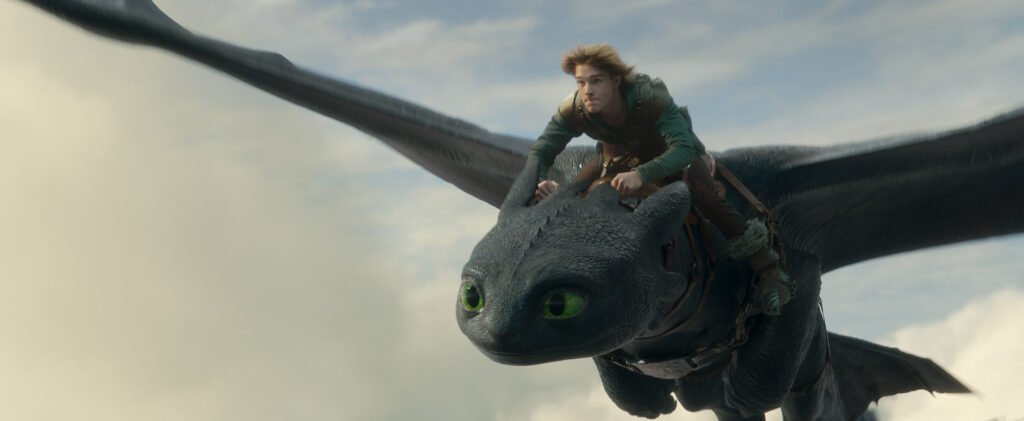
One of the most impressive aspects of the How To Train Your Dragon (2025) is how seamlessly it blends practical effects with CGI. Instead of relying entirely on green screens, the production used full-scale foam dragon heads and partial bodies on set. These acted as scene partners for the cast, giving them something real to touch, lean against, and react to.
The crew placed the actors on complex eight-axis gimbals for the flight scenes and programmed each one with unique movement patterns based on the dragon species.
In my opinion, this commitment to physical performance shows. The flying feels weighty and disorienting rather than floaty or artificial.
The filmmakers beautifully realize the dragons. Toothless, in particular, retains his iconic silhouette while the designers give him more realistic proportions. They let his skin reflect light subtly instead of leaving it pitch-black, and they base his movements on animals like panthers and bats.
He feels less like a cartoon character and more like a wild animal that just happens to form a b hiond with a human.
Character Depth and Expanded Themes
With a runtime of around 125 minutes, this version has more room to breathe. I appreciated how the filmmakers used that time to deepen the characters’ motivations.
Hiccup’s (Mason Thames) vulnerability feels more pronounced here. He isn’t just awkward — he feels genuinely isolated, unsure of his place in a culture that values brute strength above all else.
The relationship between Hiccup and Stoick is also more emotionally intense. Gerard Butler brings a quiet grief to Stoick that I found really effective, especially with the added emphasis on the loss of Valka. In this version, Stoick’s hatred of dragons feels less like blind rage and more like unresolved trauma passed down through generations.
Astrid is given more agency and complexity as well. Instead of immediately warming to Hiccup, she initially views him as benefiting from his father’s status, and that resentment adds tension to their dynamic. Snotlout, surprisingly, gets one of the more meaningful expansions. With his arrogance framed as a response to emotional neglect rather than pure comic relief.
The film continues the franchise’s thoughtful approach to disability. It presents physical limitations not as weaknesses but as challenges that intelligence, teamwork, and creativity can overcome.
What Worked for Me
The emotional core of How to Train Your Dragon remains intact. The bond between Hiccup and Toothless still works, and moments like their first interaction or initial flight together retain their power, even when recreated almost shot-for-shot.
I also appreciated the more mature tone. The stakes feel higher, the violence feels more consequential, and the Viking-dragon conflict carries real emotional weight. Gerard Butler’s performance is easily the standout, grounding the film with a sense of authority and regret that elevates every scene he’s in.
Where the Film Struggles
That said, the film’s greatest strength — its loyalty to the original — is also where it stumbles. In my view, it plays things far too safe. Because it adheres so closely to the animated version. It rarely surprises, and at times it feels like a high-budget reenactment rather than a reinterpretation.
The adaptation loses some of the animated film’s lighter humor and warmth in translation. The grounded realism occasionally flattens moments that once felt playful or magical. I also felt the pacing drag in certain sections, with extended scenes that didn’t always add new insight.
Additionally, a few key narrative beats from the original were either shorter or removed, particularly moments where Hiccup learns specific dragon behaviors. Without that buildup, parts of the final battle feel less earned and more convenient than they should.
Performances Across the Cast
Gerard Butler (Stoick) delivers a powerful, emotionally layered performance that anchors the film.
Mason Thames (Hiccup) brings sincerity and vulnerability, though I missed some of the animated version’s dry humor.
Nico Parker (Astrid) offers a more reserved but compelling take on the character. Portraying her as a future leader rather than just a warrior.
Nick Frost (Gobber) provides warmth and stability, even if his performance is less eccentric than before. The rest of the teen cast is more uneven, with some characters feeling less defined than their animated counterparts.
Final Thoughts
In the end, How to Train Your Dragon (2025) is a technically impressive and emotionally sincere remake that clearly respects its source material. In my opinion, it succeeds most when it leans into realism, physicality, and character drama. It struggles when it feels afraid to stray too far from what already worked.
While it doesn’t replace the magic of the 2010 original, it offers a different way to experience the story. One that’s heavier, moodier, and more grounded. For longtime fans, it works best as a companion piece rather than a definitive version. It reminds us that some stories endure not because they’re retold perfectly. But because their themes — empathy, understanding, and finding where you belong — remain timeless.