Wildwood Movie Review
A Magical Adventure Years in the Making
While some movies engage your imagination with their narratives, there are those that simply leave you awe-inspired because of the effort put into the production of such movies.
In this case, Wildwood has managed to do both, despite its highly ambitious nature sometimes getting in the way of the narrative.
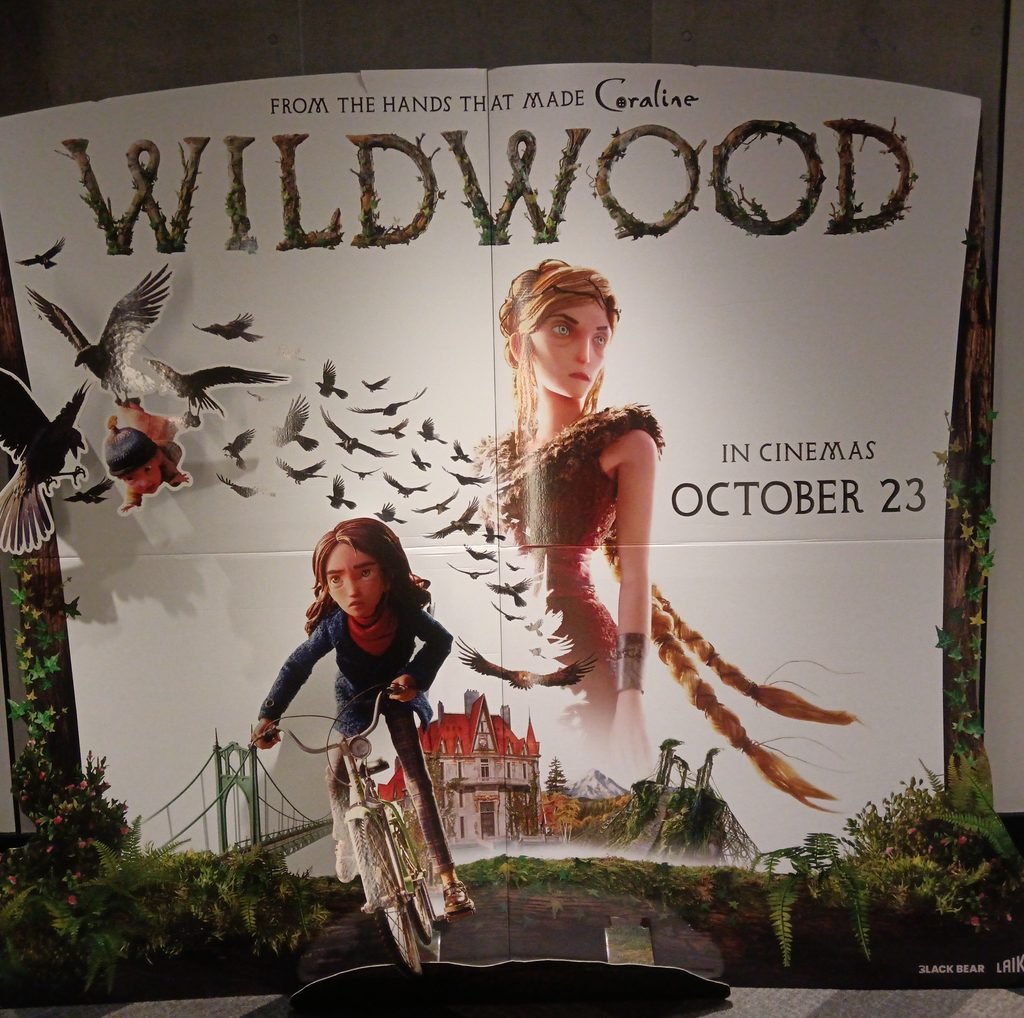
Directed by Travis Knight, the movie is an incredible achievement from LAIKA studios, an animation film studio.
LAIKA studios have made their name through their exceptional use of stop motion animation technique and the creation of fascinating worlds.
Previous productions like Coraline and Kubo and the Two Strings demonstrated its ability to create extraordinary cinematic experiences.
But Wildwood is even more ambitious still. Derived from Colin Meloy and Carson Ellis‘s award-winning children’s fantasy novel, the movie plunges into a vast and wonderfully weird world populated by strange beasts, rival groups, and enchanted scenery.
It can often be overwhelming in its scope, regardless of how much it struggles to pull everything together.
It was my good fortune to attend the red carpet premiere of the movie at the BFI Film Festival earlier this year. You can check out my experience here BFI London Film Festival Experience
This made me all the more keen to see the finished movie, with all the anticipation that entails for a long-awaited and laboriously crafted production.
Fortunately, Wildwood provides a spectacular visual treat on the silver screen. The outstanding models, characters, and environments of this movie reflect the efforts put into each frame of this work.
The true awe can be experienced watching such a complex world being brought to life through physical animation.
On the other hand, not all flaws of the story may be covered by the visual splendor of the movie. Sometimes the plot is slow, the number of characters in it is rather large, and some plot twists are not well explained.
Despite these frustrations, Wildwood remains a remarkable cinematic experience. It is a film that deserves to be seen on the biggest screen possible.
A Journey Into the Impassable Wilderness
The plot follows Prue McKeel (Peyton Elizabeth Lee), an assertive teenage girl who lives in Portland, Oregon.
When her life is turned upside down by the kidnapping of her baby brother Mac by a malevolent murder of crows, she rejects the idea that he is gone forever.
The protagonist finds herself in the Impassable Wilderness, which is the enchanting forest located outside of the regular world.
She travels there with her awkward classmate Curtis (Jacob Tremblay) for the sake of their rescue mission. The teenagers have no idea of the dangers that await them in the forest.
As they discover the amazing world populated by talking creatures, criminals, warriors, and other inhabitants of the woods, the private mission starts growing into something bigger and more significant.
At the heart of the conflict is Alexandra, the Dowager Governess (Carey Mulligan), whose mourning of a terrible personal loss has turned her into a formidable and increasingly deadly ruler. Her ambition is putting everyone who resides in the forest at risk.
For Prue and Curtis, the complexity of this political situation becomes a challenge when they are trying to find Mac.
For them, the quest involves meeting many dangers along the way, forming unexpected alliances, and rethinking their definition of bravery.
The simple concept of the story serves as a great basis for a fantasy adventure tale. Siblings’ quest for their missing brother brings immediate emotion to the story. And the magic forest gives many options for imagination.
This situation, however, gets complicated when more characters and conflicts arise. The movie introduces many groups, political disagreements, backstories, and conflicting motives.
While some events get sufficient screen time to highlight their importance, other events occur too fast.
The upshot is an adventure that feels more concerned with broadening its world rather than its core characters. The plot stays entertaining; it just gets confusing at times.
A Visual Triumph for Stop-Motion Animation
Without doubt, the main success of Wildwood is its visuals. Right from the first scenes of the film, it sets an amazingly detailed physicality.
LAIKA has managed to create a world that seems very real. The characters feature expressive faces, beautiful costumes and unique physicality.
The surroundings seem to be handmade too with their multiple levels of plants, buildings and landscapes.
This physicality makes the film really unique. Everything seems to be textured; from the ground up to the complex constructions that are concealed by the forest.
The production was claimed to be made from 233 puppets and 132 practical sets. These numbers show just how massive the project has been.
Filmmakers have used classic methods together with modern ones to bring their ambitious idea into reality.
One of the most impressive characters is called The General – it is a giant eagle voiced by Angela Bassett. His large wingspan and detailed feathers show just how much attention has been paid to each character.
Also, the mechanism inside the puppet helps him move convincingly despite his size.
While traditional computer animation needs digital rendering in order to animate images, stop-motion involves manually moving physical objects for each frame. This technique requires a lot of patience, accuracy, and coordination.
This becomes evident in Wildwood. Its characters are heavy and tangible; at the same time, its settings inspire people to explore all its corners.
In many cases, the animation makes any minor gesture appear meaningful.
The forest in the movie looks particularly stunning. Its tangles, shadows, and intriguing trails contribute to the atmosphere of constant discoveries.
Some places look comfortable, but some hint that something threatening hides behind their borders.
Visual storytelling allows differentiating various communities by their costumes, architecture, and settings.
However, the film’s most impressive quality is not simply its detail. It is the way those details combine into a coherent cinematic world.
A Handcrafted World Built for the Big Screen
Watching Wildwood in the theater is definitely one way to enjoy it more. In addition to the complexity of the scenes created by the director, they also need to be seen on a big screen to appreciate their intricate details.
The depth in the scenery is quite remarkable. The characters interact in environments that have been physically built, as opposed to having been digitally constructed. This makes the whole action feel more tactile.
The filming of the forests happens from many angles. It shows its scale in wide-angle shots and the complexity of the scenes in close-up shots.
In the longer sequences, it is evident how successfully the filmmakers can blend physical animation and modern movie-making techniques together. Large-scale battles between huge beasts and opposing armies present spectacular action.
The most unforgettable sequences are those that involve the General. The majesty of its image endows the whole world around with some mythological splendor. This is definitely not just an ordinary animated beast, but some legendary creature.
The movie also knows the importance of atmosphere. Shadows, mist, and well-manipulated lighting create an eerie atmosphere, adding to its fantasy elements without making them dark and without reducing their visual appeal.
Sometimes, there are scenes where the visuals become too much. There is too much going on visually that the eye fails to find a point of focus.
However, the craft involved is remarkable. The film is a good demonstration of what happens when animators treat animation like a physical art.
Its visual achievement alone makes the film worth experiencing theatrically.
Travis Knight’s Ambitious Direction

Travis Knight has proven himself to be a filmmaker who is highly appreciative of the potential of animation. His previous effort, Kubo and the Two Strings, showed his mastery of blending emotions with experiments.
With Wildwood, Knight takes this technique further by creating a massive project. It mixes elements of dark fantasy, adventure, politics, humor, and coming-of-age story into one movie. All of these things make for a setting that is unusually vast for a stop-motion movie.
Knight makes sure that viewers feel that the wilderness is a fully-fledged environment. Various communities living in it have their own culture, conflicts, and politics. This suggests the existence of a much bigger world than what we see in the movie.
The idea itself is a good one, but there are problems as well. There are so many characters and conflicting ideas in this movie that sometimes it seems like a scene exists merely to provide context for the plot itself.
Sometimes the events take place too quickly before viewers have had time to understand the previous ones.
Sometimes the explanations of those events seem insufficient, and audiences must put things together on their own.
This technique can make the movie exciting, but it also may make it unnecessarily complicated. This film sometimes mistakes complexity for profundity.
Knight knows how to direct the visuals of an action movie. He knows how to make scenes dramatic and action scenes thrilling. The bad parts usually come from the script, not from the visuals.
Chris Butler’s adaptation faces an enormous challenge in condensing a substantial fantasy novel into a feature-length film.
It is no surprise that this was a difficult feat to achieve. Nevertheless, a little bit more self-control would have helped the final product.
Some narrower scope could have permitted the main characters to gain some breathing room as, at times, the movie jumps from one faction and one storyline to another without giving enough weight to their emotions
Peyton Elizabeth Lee and Jacob Tremblay Lead the Adventure
Peyton Elizabeth Lee provides the emotional centre of the film as Prue McKeel. Her performance captures the character’s determination, vulnerability, and protective instincts.
Prue is an appealing protagonist because her courage never feels entirely effortless. She faces dangers that would frighten almost anyone, yet her concern for Mac keeps her moving forward.
Lee gives the character enough emotional range to make that determination believable. Prue can be stubborn and impatient, but those qualities emerge from genuine fear and desperation.
Her journey also provides the film with its clearest coming-of-age storyline. She must learn to trust others while discovering strengths she did not realise she possessed.
However, the surrounding narrative sometimes distracts from that development. Prue remains the story’s emotional anchor, but her personal journey occasionally gets lost among the forest’s competing political conflicts.
As for Curtis Mehlberg, Jacob Tremblay offers an efficient foil. He plays a shy classmate, but the boy ends up getting involved in an unusual quest.
Tremblay succeeds in playing his character with nervousness and endearing awkwardness. At first, Curtis does not appear as confident or determined as Prue, and therefore their cooperation is somewhat uneven.
Moreover, he adds necessary elements of fun to the film. The presence of Curtis prevents the story from being too serious and gives the audience opportunities to enjoy some moments of humor without compromising the threat.
However, the teenagers’ relationship is formed due to difficult situations in which they find themselves. They have to collaborate despite all their differences and attitudes towards danger.
It turns out to be useful, as the two teenagers’ different temperaments offer an interesting dynamic. Thus, Prue’s determination pushes the adventure forward, while Curtis’s doubt makes it more realistic.
Such performances keep the movie emotionally close even when the storyline gets complicated.
Carey Mulligan Creates a Compelling Antagonist
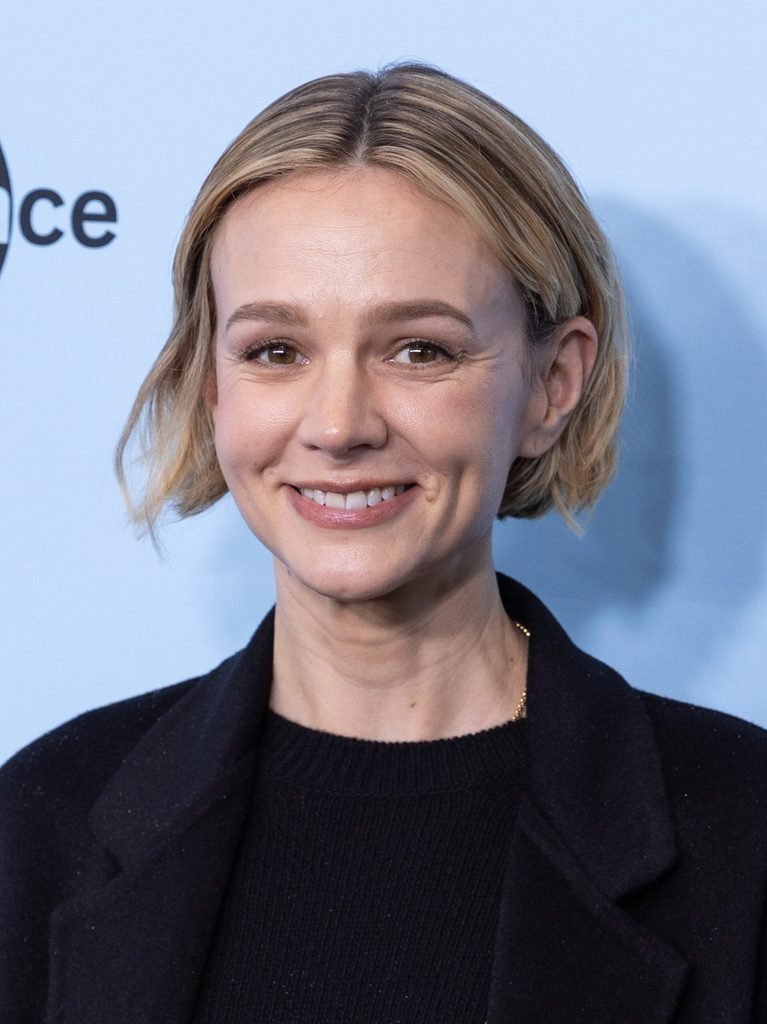
By Everwest ©Creative Commons Attribution 4.0
One of the most captivating vocal performances in the film comes from Carey Mulligan as Alexandra, the Dowager Governess.
Alexandra is a ruler whose sorrow has turned into something destructive. The personal tragedy of the woman contributes to understanding her actions but doesn’t make them justified.
Carey Mulligan brings into the performance an amazing combination of elegance, power, and emotional instability. The actress can be soothing at one point and intimidating at another one.
This contrast makes the character more complex rather than a simple fantasy evil woman. She is capable of experiencing true emotional pain; however, her reaction to this pain is becoming more worrying.
The tragedy of the character must be one of the most effective elements in the story. Nevertheless, the script isn’t always able to provide enough information about her motives.
We know that the woman experienced a terrible tragedy. We also can see how her experiences influence her obsession with control.
Sometimes, however, the relationships between her grief, her choices, and her larger ambitions appear somewhat underexplored.
It seems that certain events are created only for furthering the plot, and not for fitting into the character Alexandra as she was already constructed.
It makes the character of Alexandra less complex than one would expect from such a good performance. Though the actress brings complexity into her character, the screenplay lacks material for it.
Nevertheless, Alexandra is still an outstanding character. She gives to the movie the figure of a truly disturbing enemy whose emotional problems make her more complex than an average villain.
A Supporting Cast Full of Personality
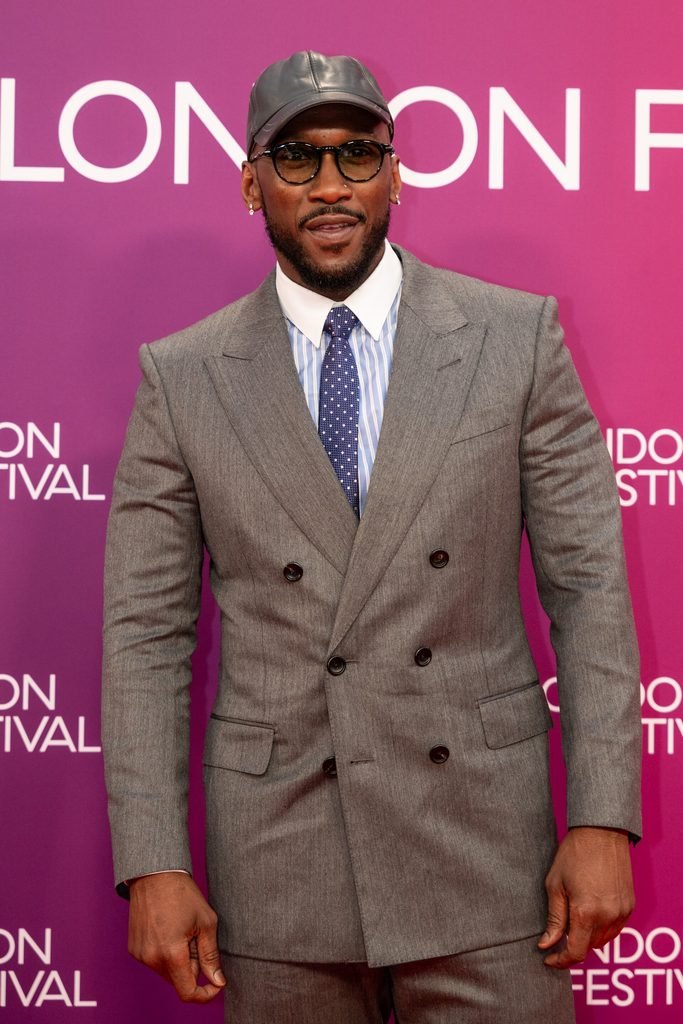
©Creative Commons Attribution-Share Alike 4.0
Much of Wildwood’s color and personality comes from the supporting voice cast. Mahershala Ali voices Brendan, the captivating leader of the Wildwood Bandits.
Brendan has a quiet sort of authority and an air of confident roguery about him. Brendan is competent enough to lead his group even as the larger fight grows more perilous.
This lends yet another layer of politics to the story. The bandits are not just adversaries or comic relief characters but players in the battle for control of the forest.
Angela Bassett is equally impressive as the General. Her commanding voice establishes the eagle as a figure of honour, wisdom, and formidable strength.
The character’s physical design makes her visually striking, while Bassett gives her an appropriately dignified presence. Together, the animation and performance create one of the film’s most memorable figures.
Awkwafina brings lively comic energy to Septima, the resourceful talking rat. Her performance provides welcome humour amid the increasingly serious conflicts.
Richard E. Grant makes the character of Owl Rex interesting, adding to the already eccentric set of creatures who inhabit the forest in this film. Tom Waits contributes his unique voice to the eccentric characters of this film.
Thanks to the supporting actors, each character receives an individual vocal signature, despite the brief screen appearance of each character.
The main difficulty here is that too many people participate in this picture. Some characters have great potential at the beginning, but the filmmakers do not give them much space for development.
Some characters play an important role in the overall conflict, yet they never become close to the audience.
The voice actors make their best efforts, but the screenplay is written in a way that allows some actors to get more space than others.
When Ambition Becomes Overwhelming
The major drawback of Wildwood is that it overreaches. It attempts to tell a family story, an epic fantasy tale, a political fight, and an adventure about growing up.
All these goals are compatible, yet there is a need to balance them, especially in such a long animated film.
Sometimes, the movie tries to introduce yet another character, group, place, or historical fact before fully exploring what has been introduced previously. Such density may create an overcrowded plot.
Sometimes, some characters get a detailed introduction without getting further developed, while some others just come and go, as if belonging to some extended version of the movie.
Sometimes, the main rescue mission gets overshadowed by the broader fight against politics, which diminishes the emotional weight created by the disappearance of Mac.
The movie also has trouble with answering some questions about the decisions made by some characters.
For instance, the parents of Prue do not seem to be deeply concerned with the recovery of their son.
This minor contribution provokes some legitimate queries. In such conditions, it is reasonable to ask why they do not do much to help.
The plot could have solved the problem in a better manner. Their lack of participation in the major rescue mission may seem like a way to push Prue into the lead role.
Characterization of Alexandra creates another issue. The grief is a natural starting point for her actions; however, the screenplay fails to establish the connection between her emotional past and actions.
This does not make the plot confusing for the viewer from the very beginning. However, it makes the viewer put some extra effort into understanding the motives of the characters.
A more concise screenplay would allow preserving the epic scope of the film without ruining its emotional coherence.
Pacing and Runtime
As an animated adventure, Wildwood is quite a lengthy undertaking at around two hours and twelve minutes. Its length stems from the vastness of the world and the many storylines that take place within.
Most of the time, however, the length of the movie is well-justified due to the amazing attention to detail. One can appreciate the work done in the film only because it allows enough room for it.
There are also some very exciting action scenes that serve to extend the adventure even further through chases, fights, and unusual creatures.
Nevertheless, the pace of the film is somewhat uneven. Sometimes it proceeds rather quickly and sometimes it is dragged out through unnecessary explanations and transitions.
The second part in particular slows down the movie because of the lack of connection between various groups and conflicts. There is too much going on, and new events happen before previous ones have been sorted out.
Even so, the pacing rarely destroys the overall experience. The visual spectacle repeatedly renews interest, while the central rescue mission provides a continuing source of emotional tension.
A more disciplined structure could have made Wildwood considerably stronger. As it stands, the film’s ambition is both its greatest strength and one of its most persistent weaknesses.
Final Verdict
Wildwood is an extraordinary stop-motion fantasy adventure that occasionally struggles to match its visual ambition with equally focused storytelling.
Seeing its red-carpet premiere at the BFI Film Festival made me especially eager to experience the finished film. Happily, the cinematic spectacle largely lives up to that anticipation.
Ultimately, Wildwood may be overambitious, but it never lacks imagination. It delivers a visually stunning adventure that celebrates the possibilities of stop-motion animation.