
Kokuho: Art, Sacrifice, And The Weight Of Legacy
Introduction
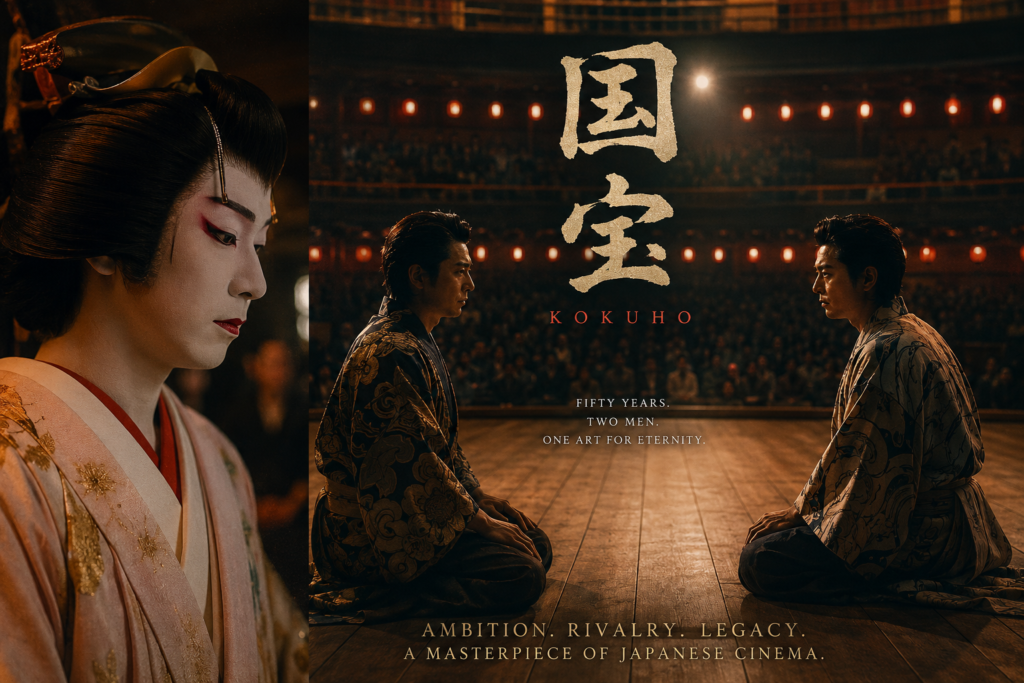
Kokuho is a portrait of fifty years of passion, sacrifice, and obsession. With this movie Lee Sang-il, achieves an intensely personal and painful level of emotions. The film charts the life of Kikuo through his violent and performing nature. The journey begins after a tragic event makes him part of the prestigious kabuki family. He matures alongside Shunsuke, his friend and also a rival.
The friendship forms the backbone of the entire story. In the process, the two become artists who perform as onnagata. Their relationship experiences fluctuations in love, admiration, envy, and contempt. It influences almost all decisions made in the fifty-year span of the film. Ultimately, Kokuho questions what survives when one identifies with a performance.
From its early scenes, the film seems like a monumental work. But the focus of the movie remains intensely personal. Major historic events occur subtly, through characters and practices. This adds a unique emotional depth to the film.
It portrays a realistic experience of the time, and not a recreated one.
Every performance and artistic accomplishment comes with personal stakes. No achievement is ever painless. Thus, the film manages to avoid the feeling of distance through spectacle. It creates an intensely human story instead. Humanity becomes the greatest strength of the film.
Directorial Style and Decisions
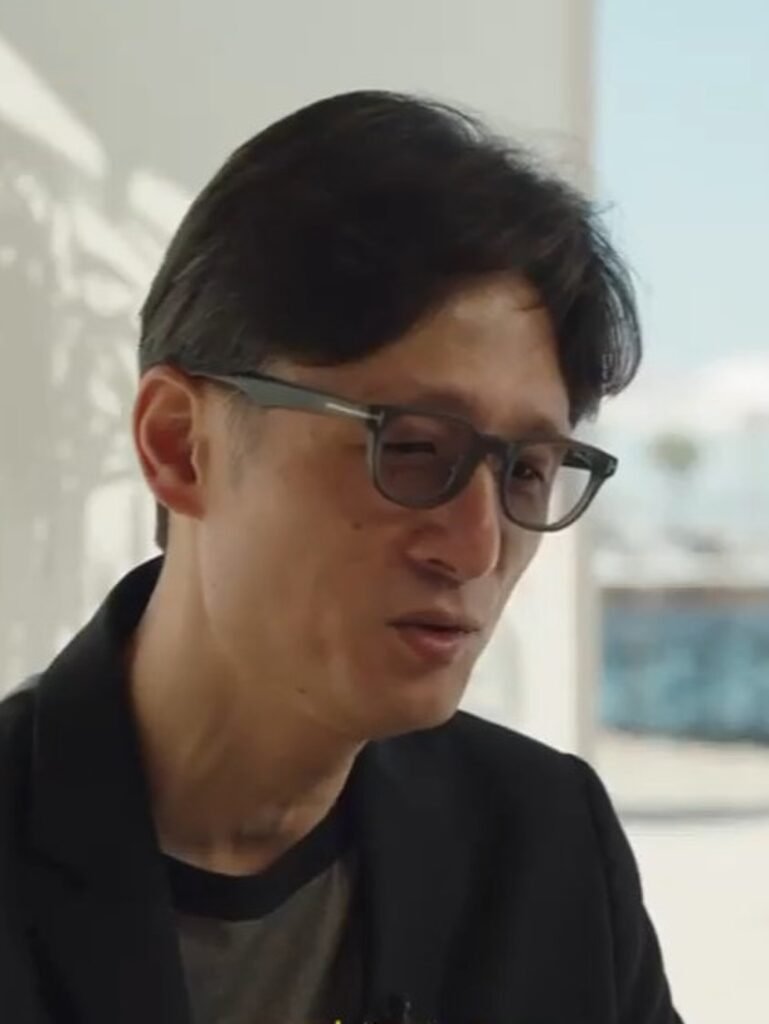
Lee Sang-il directs with impressive patience and control. His approach favours observation rather than constant dramatic escalation. Scenes often linger longer than expected. That decision allows emotional tension to accumulate naturally. Nothing feels rushed despite the narrative scope. Characters grow gradually across decades of changing circumstances. Their transformations feel earned because the film gives them space.
Lee gives a special focus to the performance scenes. Kabuki scenes serve as emotional vehicles in storytelling. They are never disconnected from the process of character building. The stage performances show inner turmoil without too much exposition.
Backstage preparations are equally significant. Preparation scenes often seem more personal than the actual performances. Such scenes stress discipline and repetition. Great art seems exhausting rather than glamorous.
Lee also manages the passage of time well. Half a century goes by without seeming disjointed. The transitions are measured and emotionally motivated. People’s relationships grow from experience, not shortcuts.
This may be difficult for some audiences to follow. But it helps to emphasize important film themes. In this case, greatness demands perseverance.
And so does an appreciation of those striving for it.
Cinematography and Visual Language
Cinematography of Sofian El Fani contributes to establishing the mood of the movie. It manages to combine visual magnitude with intimacy. The lens is always capable of catching the extraordinary without drowning the characters. Each frame seems meticulously chosen. However, the visuals are never synthetic.
The performance venues have a distinct visual focus..The stage looks majestic and at the same time threatening. Backstage hallways look tranquil but vulnerable. The dressing room becomes an arena of change. Mirrors and preparations are frequently depicted by the camera. These visual images contribute to the identity and performance themes.
Lighting techniques produce vivid contrasts between moods. Warming colors and theatrical settings imply legacy and recognition. Cool interior scenes signify solitude and personal sacrifice.
These differences in lighting technique evoke emotional reaction. However, direct explanations of emotions rarely take place. On the contrary, the filming evokes the sensation of emotional distance and closeness.
El Fani also grasps that movement plays a key role. The camera is focused on observation not intervention. The use of long shots helps viewers to appreciate the performances. It produces trust in the filmmaker-audience relationship. The visual spectacle gains its significance in relation to the character. Ultimately, the cinematography serves as a link between reality and theater.
Themes and Storytelling
Central to Kokuho is inheritance and identity. Expectations precede opportunity within the characters. Names carry great significance. Art forms carry greater significance. The film consistently asks whether people are in charge of their identities.
Performance goes beyond the theater. The characters are constantly performing themselves. They alter themselves to suit family tradition and career. The public persona contrasts with their private wants. This creates ongoing psychological trauma. It makes good drama.
The relationship between Kikuo and Shunsuke pushes the plot. The nature of their relationship is not easily defined. They are both brothers and enemies and partners and competitors. Each success brings them closer and further apart.
The relationship is inherently unstable. Inherent instability drives the plot.
Ambition is another key component of the film. The film does not sentimentalise achievement in art. A price is always paid in emotions and personal sacrifice. Characters are willing to forsake relationships for skill. Occasionally, characters give up themselves. Kokuho hints at how devotion can be dangerous. Nonetheless, devotion can be beautiful.
Cultural Context and Historical Meaning
The art form of Kabuki is more than just a decorative addition to the scene. It forms the basis for the entire cultural and emotional framework of the movie. This knowledge gives greater insight into the story being told. The traditions associated with Kabuki are ones of discipline and hierarchy. These principles govern all relationships in the film.
Onnagata performers create even more complication in terms of this topic. It is based on transformation and creation of an identity. It fits perfectly into the main theme of the movie. Gender performance transforms into art. Art transforms into individual identity.
The setting for the story takes place amidst changes in Japanese society. These changes impact arts institutions and public perceptions slowly but surely. There are always negotiations between traditions and reality. They occur to characters personally. These problems mirror those of the culture as a whole.
The important point is that this movie does not focus on transforming kabuki performances into a spectacle only. Labor and repetition get stressed. People watch both preparation and performance. This makes the movie humanize culture. Moreover, the price paid for preserving such culture gets highlighted. Culture exists since people sacrifice for it. And Kokuho reminds us of this all the time.
Performances
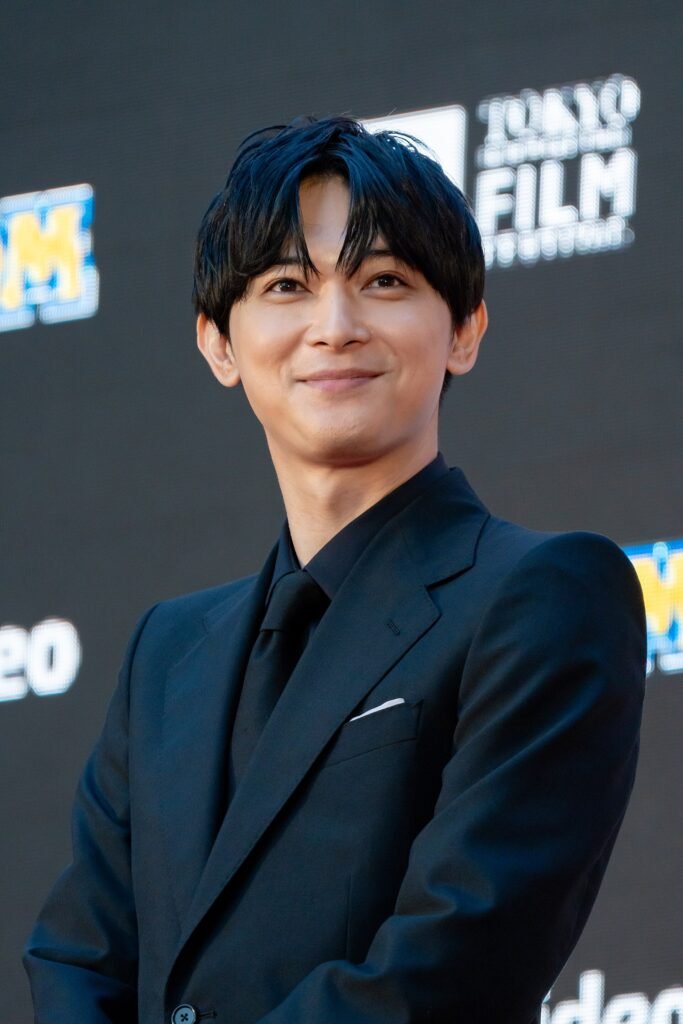
Kokuho historical drama film reviewbears a heavy burden in his role as Kikuo. His acting is highly controlled and emotionally accurate. His conflicts are portrayed by actions and silences. Sometimes actions convey more meaning than words. His development throughout many years appears to be credible and realistic.
These scenes are notable for their own reasons. It is clear that Yoshizawa portrays technique without compromising on emotionality. There is a clear difference between Yoshizawa on stage and off stage.
Ryusei Yokohama is a great foil to the character of Shunsuke. He seems much more expressive in his acting. Such difference makes the tension between the two main characters very obvious. It also keeps the viewer interested due to constant development of their interaction.
Performances help enhance the world around them. The veteran performers, like ken Watanabe and Min Tanaka, give weight to their institutional characters. They add to the themes that deal with legacy and expectation. No one feels unneeded even with such a large cast. All performances provide a certain emotional weight. Together, they make the world believable.
What Works and What Does Not
Kokuho succeeds through emotional commitment and technical craftsmanship. Its greatest strength remains character relationships. The rivalry between Kikuo and Shunsuke feels deeply affecting. Their emotional conflicts sustain audience investment. Without them, the film would feel much colder.
The use of visual storytelling is highly effective too. Cinematography and directing are always relevant to themes. There is purpose behind the performance scenes. The movie knows what parts are supposed to be spectacular. What is even more important, it knows what parts need intimacy.
Nevertheless, the length of the movie creates problems. A three-hour run time requires some patience on the part of the viewer. Some scenes proceed at a leisurely pace..For that reason, not everyone can keep up with the plot. Sometimes the rhythm of the latter is uneven.
The secondary characters do not get enough focus either. The story should pay much more attention to their interactions. Considering the scope of the project, it was difficult to cover all angles. This drawback somewhat diminishes the overall emotional response.
In spite of that, the weaknesses cannot undermine the merits of the film. It stays engaging regardless of the technical drawbacks of the movie. The ambitious scale justifies itself..This aspect only adds to its strengths.
Final Verdict
Kokuho is a very ambitious and emotional piece of historical drama. The movie manages to combine spectacle and intimate acting beautifully. One of the director Lee Sang-il’s best films. Each and every department works in an impressive manner. None is not relevant to the main theme.
This movie requires some degree of patience. A rather deliberate pace throughout the whole movie. But the deliberate way suits the movie. There is no quick way in artistry. Kokuho knows it all too well.
And above all, Kokuho knows about sacrifices. The film shows the price to pay for greatness. Sacrifices rarely seem glamorous. Instead, they appear tiring and human. The realism gives it credibility.
Kokuho is a visually pleasing movie and an emotional movie. It succeeds in conveying both the pleasure and burden of art. Specificity does not weaken the message but only emphasizes it. Even long after the final show, it lingers. How much we should sacrifice in order to become immortal. The question goes unanswered by Kokuho. Which is perhaps its greatest asset.