Father Mother Sister Brother Review
Introduction
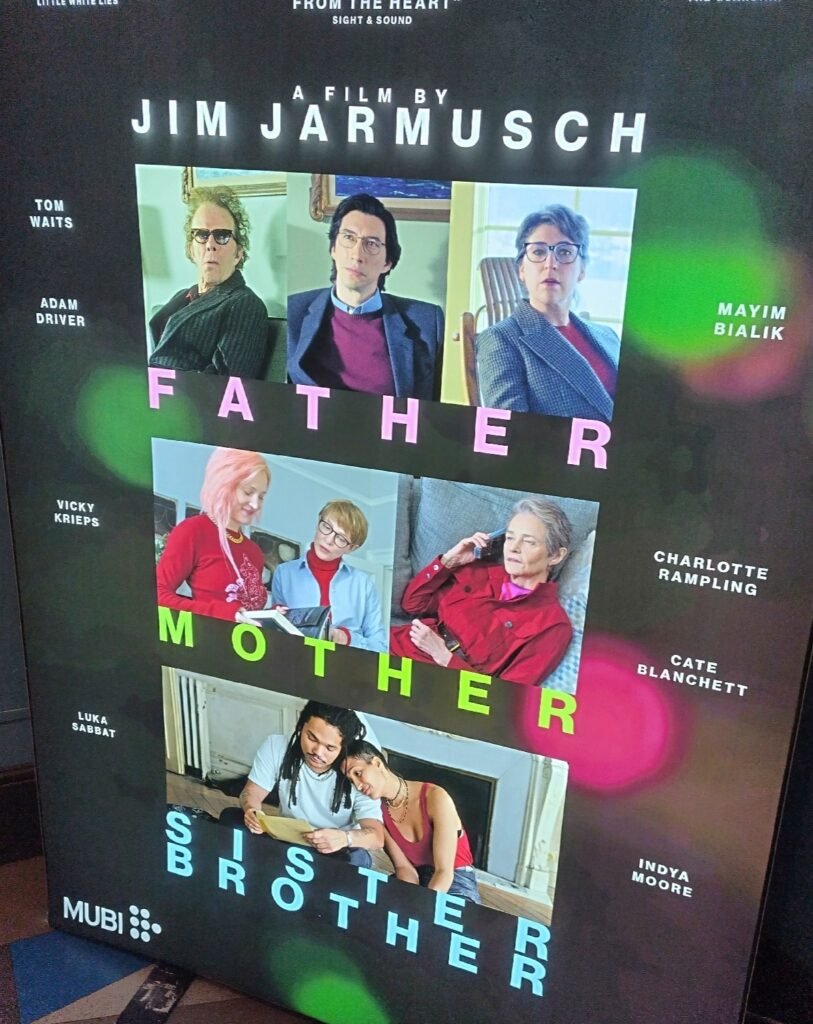
Family relationships rarely follow simple paths. They are often shaped by distance, conflict, and missed opportunities. Father Mother Sister Brother explores these ideas through an anthology format. The film presents three separate stories across different countries. Each story focuses on fractured family relationships.
Written and directed by Jim Jarmusch, the film combines comedy with emotional drama. It also features an impressive ensemble cast. Familiar faces appear throughout the different narratives. The cast includes Tom Waits, Adam Driver, Cate Blanchett, and Charlotte Rampling.
Anthology films often struggle with consistency. Multiple stories can divide audience attention. Emotional investment can become uneven. However, anthology structures also create opportunities. Different stories allow broader thematic exploration.
The movie analyzes relationships in terms of cultural and emotional distance. There are many challenging issues regarding the questions of belonging and reunion. The influence of distance on the development of people’s characters is also a topic of discussion throughout the movie.
Instead of concentrating on dramatic effects, Jarmusch prefers to observe carefully. The author’s technique appreciates emotions expressed not through action but through conversation. That is why his movies become very personal.
Jim Jarmusch’s Directorial Approach
Undoubtedly, Jim Jarmusch is an advocate of subtlety in his movies. His films usually lack traditional plot structures, but instead focus on atmosphere and interaction of characters. Such tendencies can be traced in this particular film as well.
First of all, the pace is quite slow and calculated. Scenes tend to last longer than you would expect. Thus, the viewer gains enough time for emotions to mature. Humour can be easily found in every episode of the film. However, it is mostly subtle humour that relies on awkwardness and silence.
The anthology format suits the style of Jarmusch perfectly since each story is unique emotionally. Yet, there is a common denominator that connects all episodes – family conflicts.
He does not rely on obvious manipulation of audience emotions in his work. Emotions are difficult to provoke through music. Even the most dramatic scenes seem reserved. It makes the direction credible but might be problematic for some viewers.
The director gives full control over emotions to the viewer. It makes the film more realistic, although sometimes provokes emotional detachment of the viewer. Nevertheless, the approach is convincing. The director knows the atmosphere he wants to create. All his decisions follow that goal consistently.
Cinematography and Visual Identity
What makes the cinematography special is its uniqueness in the sense that there were two cinematographers on the project. These were Frederick Elmes and Yorick Le Saux.
Having two different cinematographers is particularly useful for the anthology nature of the film. Each tale needs to have its own distinctive visual tone and style, and having separate cinematographers for them helps bring those out more organically.
Locations play an integral part of the visuals. The choice of scenery and settings seems to be particularly well-thought-out. The geography itself becomes a significant part of the narrative.
Framing often draws attention to the physical distance between characters. There are moments of space in their conversation scenes.
Lighting is used very successfully to set moods. There are times when the film is warm and personal. At other times, there is something cold and impersonal about the lighting. This affects viewers in an indirect way.
The camera work is minimal throughout most parts of the film. There are many static shots that give a thoughtful air to the movie. It never appears to be a hurried effort.
Cinematography does not get in the way of actors. It enhances their interaction with each other through visual story telling that is done alongside dialogue.
Two cinematographers have been used effectively in the film. This gives it variety without compromising unity. A film that has maintained individuality in its stories should be complimented for its achievement.
Themes and Storytelling
Family ties are at the center of the film. More precisely, it is about broken family ties. The estrangement of characters turns out to be the most central emotional theme.
Each one considers families in his own way. Different kinds of family relations exist among stories. Yet, there are some similarities between them when it comes to their emotional experiences.
There is an idea of distance from each other among characters. The physical distance matters a lot. In addition, an emotional distance appears to be rather relevant too.
The nature of the anthology brings opportunities as well as challenges. The division into separate stories provides a wider range of topics. Perspectives in many stories add diversity of emotions. There are also several limitations inherent in the form.
Different stories can have different impact on viewers. Some stories can be more engaging than others. Maintaining interest level is always challenging.
In this case, the absence of obvious solutions is deliberate. The relationships do not become clear until the end. Issues do not tend to be solved easily. It is an effective way to build realistic plot.
Comedy contrasts with the weightier aspects of the story effectively. Scenes that make people laugh bring lightness in between serious parts. Comedic scenes seem quite natural here.
There are certain expectations when one decides to watch the movie. They should be considered. Emotional reward takes time and requires patience.
In summary, the topics are quite relevant to each other. The family is a source of happiness and sorrow at once. Relationships in the movie are fragile yet important.
Performances and Ensemble Cast
Working with big casts offers specific challenges. Short screen time makes room for less character development. The cast members must develop their characters rapidly. To achieve this, they need to deliver powerful acting.
However, it is fair to say that the actors do well with this challenge. Many of them make a lasting impression. Small scenes take on deeper meaning. Such subtle acting works well with the movie’s style.
Adam Driver provides emotional intensity effortlessly. Adam seems believable. Adam is skilled at providing restrained performances. Such an attribute matches the director’s style for this movie.
Cate Blanchett brings emotional depth to her performance. Cate’s screen presence stays powerful all throughout the performance. Even less intense scenes can provide impact due to her acting.
Tom Waits contributes emotional unpredictability. Tom’s performances usually surprise the viewers. Such an advantage proves helpful for the film.
Charlotte Rampling provides emotional restraint efficiently. Charlotte’s performance utilizes minimalism skillfully. Such an attribute fits the movie well.
Nevertheless, the cast members have their problems. Less screen time makes some characters underdeveloped. Stories differ from each other as far as emotional potential goes.
Nonetheless, all actors fit well into the picture. Performances stay consistent. Emotional coherence is not difficult to achieve thanks to the actors’ efforts.
What Worked
The film’s ambition deserves recognition immediately. Three international stories create broad thematic possibilities. The scope feels impressive without becoming overwhelming.
Its emotional subtlety works particularly well. Characters rarely explain everything directly. Audiences interpret emotions independently. This creates stronger engagement.
Visual storytelling remains consistently effective. Cinematography supports themes carefully. Framing choices reinforce emotional distance repeatedly. Those details strengthen immersion.
The performances also succeed overall. Experienced actors understand restraint. Their work feels natural rather than performative. That authenticity matters greatly here.
Jarmusch’s direction creates a clear identity. The film never feels generic. Every creative decision supports thematic goals. Consistency strengthens the final result.
Comedy integration works surprisingly well. Humour appears naturally during emotional moments. This prevents tonal imbalance. The film avoids excessive seriousness successfully.
What Did Not Work
Anthology structures always create risks. Emotional investment becomes inconsistent sometimes. Certain stories naturally receive stronger reactions. Others struggle for equal impact.
Pacing may challenge some audiences. Scenes often unfold slowly. Patience becomes necessary throughout. Faster storytelling fans may disengage.
Character development occasionally feels limited. Shorter segments reduce narrative depth. Some relationships deserve additional exploration. Screen time restrictions become noticeable.
Emotional distance can create problems too. Understated storytelling supports realism. However, it sometimes limits emotional immediacy. Stronger dramatic moments feel rare.
The lack of resolution may frustrate viewers. Open endings create interpretation opportunities. Yet some audiences prefer clearer conclusions. Expectations influence enjoyment heavily.
These weaknesses do not ruin the experience. However, they shape audience responses significantly. Personal preference matters strongly here.
Overall Verdict
The movie Father Mother Sister Brother tells us about family relationships truthfully and reservedly. It does not give simple solutions. Instead, it acknowledges emotional depth.
Atmosphere and acting help make the movie successful. Visually, the movie is very good all through. Themes are universal although culturally diverse. All that adds to the movie’s power.
There are, indeed, some obvious disadvantages to the movie as well. Sometimes, the rhythm is inconsistent. Some parts of the movie work better than other parts. Limitations of anthologies can be easily seen here as well.
But what is important is that this movie knows what it means. Jarmusch does not sacrifice anything in terms of personal style. This is an achievement worth praising.
This movie does not belong to the genre of family movies. There are no spectacles here but reflections only. Emotional subtlety dominates in this movie instead of emotional excess.
This is why viewers who like characters can like this movie very much. But others will find it difficult to understand. Both reactions can be easily explained, of course.
What is important, this movie is successful insofar as it is honest about people and families and relationships.