Pressure Movie 2026 Review
Introduction
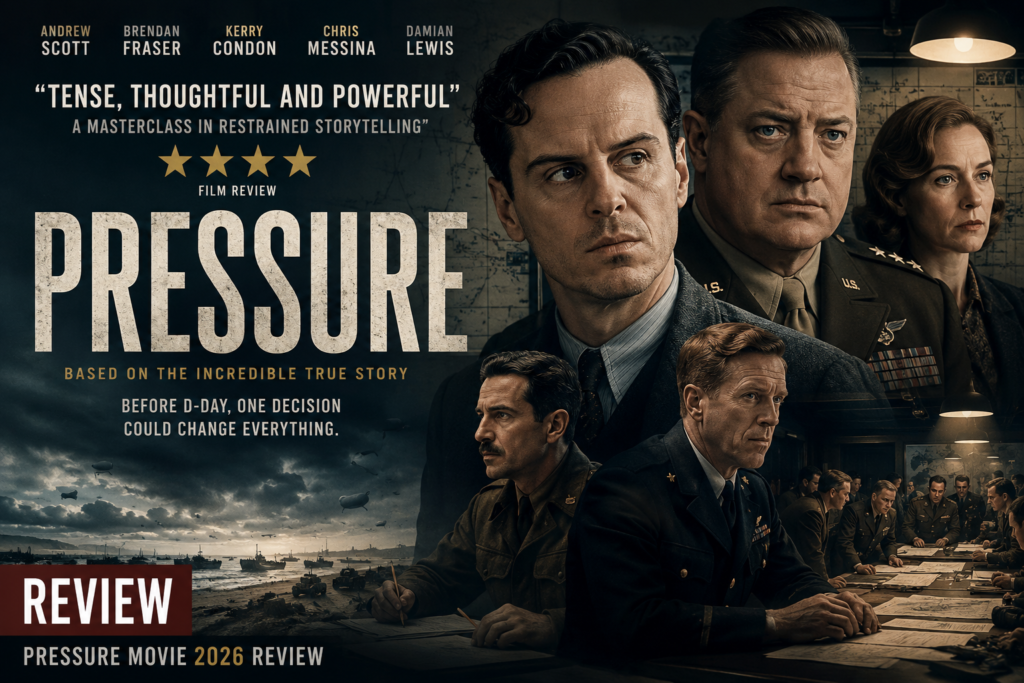
This Pressure movie 2026 review discusses a historical drama which centers on making decisions under high pressure. The movie is based on incidents that happened prior to the D-Day landings in World War II. The movie does not use battlefield action scenes but instead emphasizes planning rooms and decision making. Anthony Maras is the director of the movie.
This story is derived from a stage play scripted by David Haig. It transforms its source material to make an entire movie experience. The movie features a meteorologist James Stagg along with Dwight D. Eisenhower‘s military command. They make all their moves on the basis of weather forecast and invasion time.
A good combination of actors like Andrew Scott and Brendan Fraser star in the film. The team behind the movie the Darkest Hour makes the film. That connection sets expectations for political and historical drama. The film ultimately focuses on human cost rather than battlefield action.
Directorial Approach and Style

Anthony Maras employs a directed approach that is quite restrained. He does not like to make excessive use of visuals. On the contrary, he focuses more on emotions than anything else.
Close-ups are frequently used while the characters are talking. In addition, decisions rather than action are the focus of the direction. Silence can be as powerful as words in the film.
The scenes are constructed to emphasize disagreement and uncertainty. Maras creates suspense by means of pacing rather than action. The war is distant yet its effects seem very close.
The director’s decision focuses attention on the leadership but not on the battle. This approach reflects the significance of historical accountability. Every scene seems well thought out and calculated.
The tone is consistent throughout the whole duration of the film.
Cinematography and Visual Language
Cinematographer Jamie D. Ramsay offers realistic and down-to-earth cinematography. The visual language favors character emotions rather than visual grandeur. Compositions in interior shots are highly controlled and organized. This is due to the discipline that prevails in command rooms. Cameras do not move during heated debates.
This silence adds tension to scenes filled with dialogue. Outdoor scenes clash with erratic weather patterns. Weather serves as a visual metaphor for uncertainty and danger.
The use of natural lighting prevails in most scenes of the film. It helps to build a greater sense of realism. Pale colors emphasize the gravity of the topic. There is no distracting or excessive use of color.
Camera movements that aren’t too obvious create suspense without making the viewers feel overwhelmed. The cinematography always serves the story and does not take over. This provides a balanced and engaging experience. Allowing the viewers to feel the tension
Stage Adaptation to Screen
The movie proves successful in the transition from stage to screen narratives. The structure of the original play is based on dialogues and conflicts. The adaptation uses new locations while maintaining narrative closeness. Filmic techniques compensate for the lack of theater quite well. Visualized settings introduce a new level to the narrative.
However, characters’ importance remains significant for the entire film. The dialogue scenes continue to elicit certain emotions. It is never seen to be irrelevant or artificial. In place of the theater frame, there is the cinema frame.
The film looks finished and not filmed stage. Such realization is difficult in an adaptation. The adaptation maintains the essence of the play but enhances it visually. This way, the film gains emotional and historical value.
Themes and Narrative Focus
This movie depicts leadership and responsibility on the highest hierarchical level. The plot analyses the effect of making decisions on historical events. Uncertainty becomes an integral part of the narrative. Weather forecasts symbolize science and hazard. Weather forecasts symbolize the limitations of people’s power.
The plot emphasizes the pressure experienced by leaders when making decisions. Each decision influences the fate of thousands of people. Leadership is shown as burden rather than privilege.
Even the most powerful individuals have their doubts. There is no simplification of the heroic theme. It rather emphasizes humanity and uncertainty. It makes the themes of the movie more profound. In the film, history is depicted as frail and doubtful. Its themes do not apply only to the historical setting. It can easily be applied to modern leadership.
Pacing and Structure
The pacing of the movie can be slow. Such a structure corresponds to the preparation process that is demonstrated in the movie. The tension arises slowly, through discussion and information. There are not many action scenes in the movie. However, anticipation drives the plot.
Anticipation drives the story forward. It could be that this slower pace proves hard for certain audiences to follow. But on the other hand, this heightens the sense of realism. With each passing moment, the level of tension rises. Every choice made adds to the level of drama.
The pace also works towards developing the characters. Some of the procedural conversations have repetition. This repetition shows the nature of real decision making. The format favors realism over entertainment pace. Making it very effective
Performances
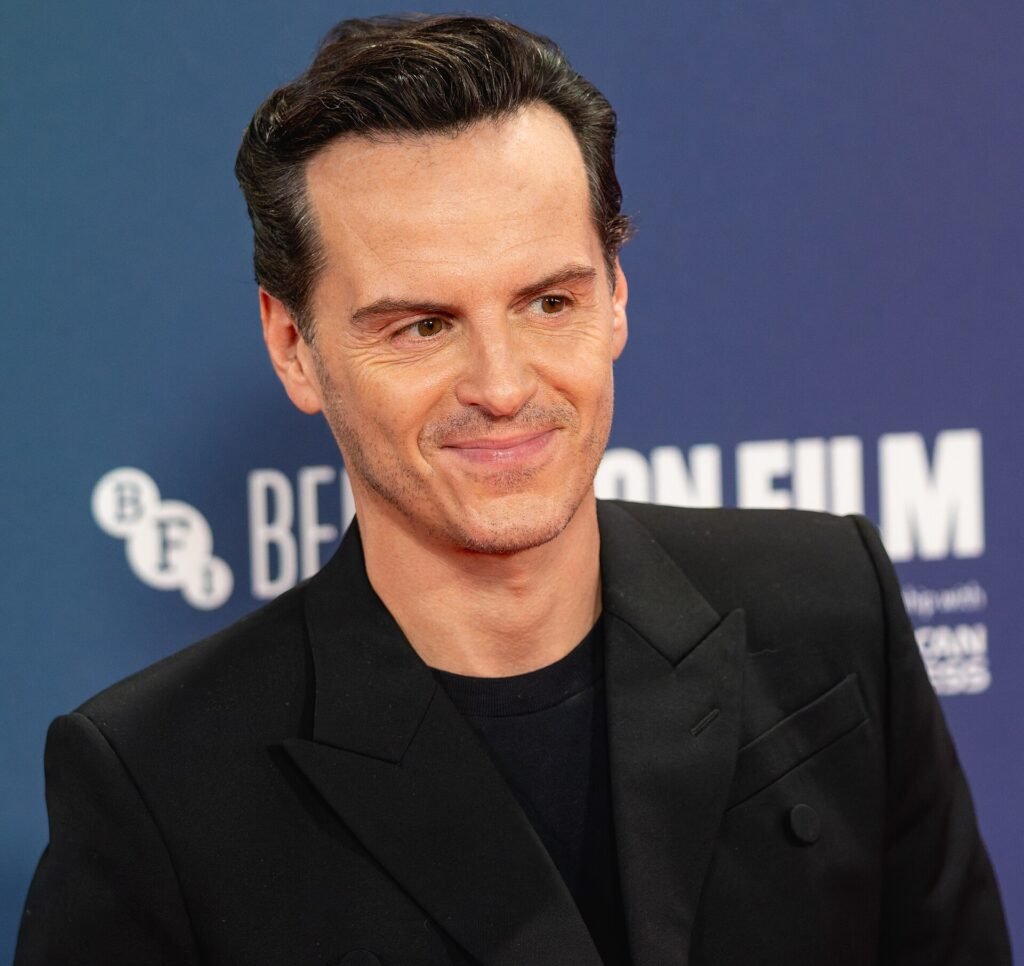
By Raph_PH ©Creative Commons Attribution 4.0
Andrew Scott delivers a deeply restrained performance as James Stagg. He portrays intelligence combined with emotional vulnerability. His character carries the weight of scientific responsibility.
Subtle expressions communicate internal conflict effectively. Scott avoids exaggerated emotional delivery throughout the film. This restraint strengthens the realism of his role.
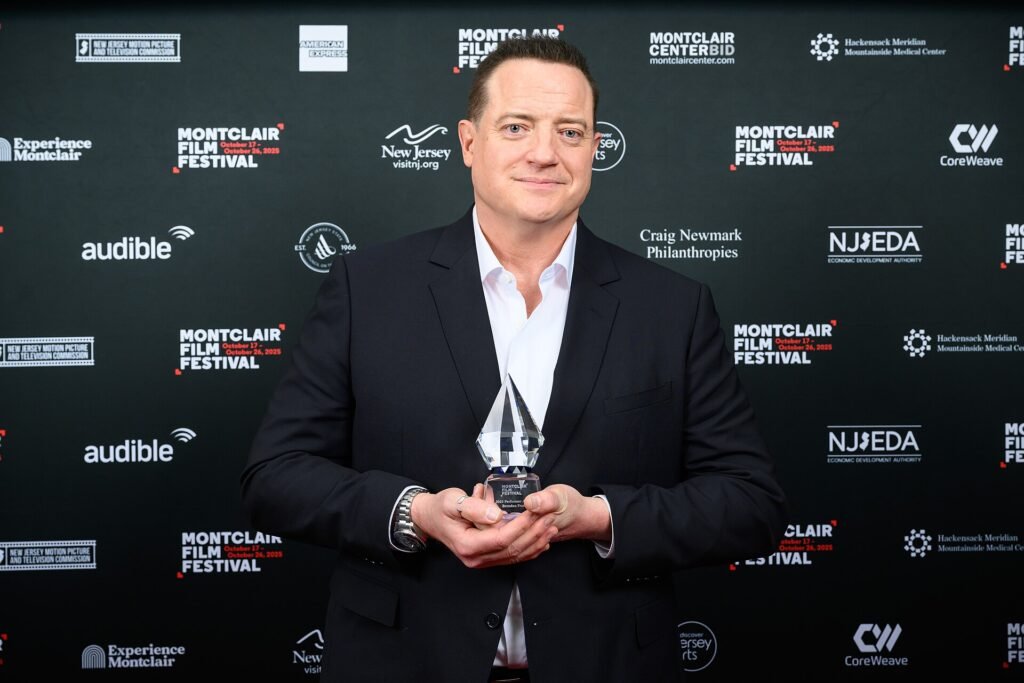
In the portrayal of Dwight D. Eisenhower, Brendan Fraser gives a brilliant performance. Fraser does not treat Eisenhower as a mythical person from history; rather, he depicts Eisenhower as a leader facing tough choices.
The actor has brilliantly managed to balance the elements of strength and vulnerability in order to make people realize that even a powerful person may have to take decisions in uncertain situations.
Brendan Fraser manages to impress with his performance in each scene he plays in the film. His voice and body language make sure that Eisenhower’s aura of authority comes through. However, it is the element of humanity in the actor’s portrayal which truly makes the performance stand out.
The dialogue scenes between Fraser and Scott are among the best in the movie. This dialogue is at the heart of the story’s themes and emotions. Scott embodies science and evidence-based approach.
Fraser embodies the military side of things, strategy and responsibility. The struggle between the two approaches makes the story more interesting. The actors know how important these dialogues are and portray them masterfully.
Supporting Cast

The role played by Kerry Condon is quite helpful on an emotional level in the context of the story. Being a movie that is predominantly full of military strategies and discussions, the acting of Kerry Condon helps to add a human touch to the story. In all scenes in which she is involved, Kerry Condon manages to bring emotion and intelligence to the screen.
The acting of Kerry Condon is significant since she never tries to play the role in an exaggerated manner and does not use it as an instrument for showing off emotions. The actress helps to make a complete character that will be useful in the story.

Chris Messina also makes a great contribution with his supporting role by bringing some urgency and dynamics to the ensemble. He is a character who can embody the feelings of frustration and impatience of the people who want the surgery to be performed. Chris Messina is capable of expressing this state of mind without distracting from the subdued atmosphere of the movie.
His acting also helps to keep the momentum going during the scenes filled with dialogues. Messina knows how to put some drama into his scenes. Even if the scene does not revolve around him, he manages to stay interesting to watch.
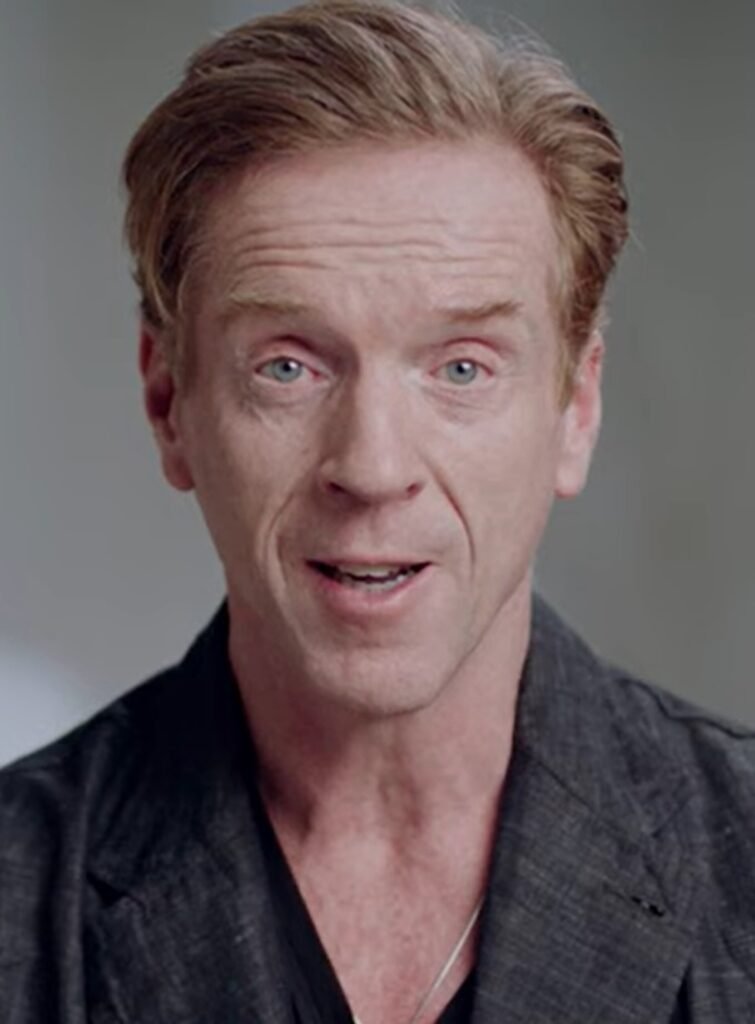
Damian Lewis also deserves credit for his secondary part. It seems that Damian has been known as an actor who takes up complicated authoritative roles, which allows him to perform in the movie effectively.
He demonstrates intelligence, coolness, and believability in the performance. At first sight, the character created by the actor looks like a person full of confidence and certainty.
At the same time, through his acting skills, Lewis shows how his character has doubts. This idea becomes one of the key ones in the film. As it is obvious from the performance, even experienced people have some uncertainties in case of difficult decisions that may change their lives significantly.
It is the relationship that exists between the actors which makes the ensemble work well. All exchanges seem real and meaningful. The actors create an atmosphere of shared accountability and mutual conflict. It becomes clear to the viewer that all characters strive for the same thing but do so in their own unique way.
In addition, the actors’ performances suit perfectly the style of Anthony Maras. The film is realistic, and the actors adhere to it fully. There are no overacting actors who seek to control the story with their emotions. Rather, each of them adds to the atmosphere of realism, which leads to the emergence of a drama out of the situation.
What Worked
The film succeeds in character-driven storytelling. It presents war through planning rather than combat. Performances are consistently strong across the cast. Cinematography supports atmosphere and emotional tone effectively. The adaptation from stage to screen is seamless. Themes are clear and consistently developed.
There is natural build-up of tension through dialogues and pacing. The movie creates a good immersion in history. Its moderation results in creating realism. Direction stays concentrated and disciplined. It does not create any distractions. Emotional quotient is delivered subtly. Ensemble cast makes the narrative engaging.
What Did Not Work
Slow paces may not appeal to everybody.
A few parts may prove boring. Parts with dialogue might be stretched out a bit. Absence of action will probably lessen accessibility. High points emotionally remain toned down deliberately.
This will obviously limit drama. There is something about the structure that repeats itself. The movie values realism over entertainment value. Expectations from war movies will be disappointed.
Overall Verdict
Pressure is a carefully crafted and intelligent historical drama. It deals with themes of leadership and decision making. The film subverts the typical war movie conventions. Instead, it delves into human accountability and doubt.
Excellent performances help to enhance the emotions in the movie. The cinematography and direction ensure an even tone throughout. The film manages to do justice to its roots on the stage.
The themes are current and thought-provoking. The pacing may alienate different audiences. But still, the movie is cohesive in terms of concept and delivery. It provides an authentic reflection of the pressures of history.
The effect is subtle but meaningful. It appeals to people who love slow burn. The movie can be considered as a character study of history.