A Talent for Murder Movie Review
Introduction (Warning Contains Spoilers)
Anton Corbijn returns to narrative filmmaking with A Talent for Murder, a psychological thriller built around literary deception.
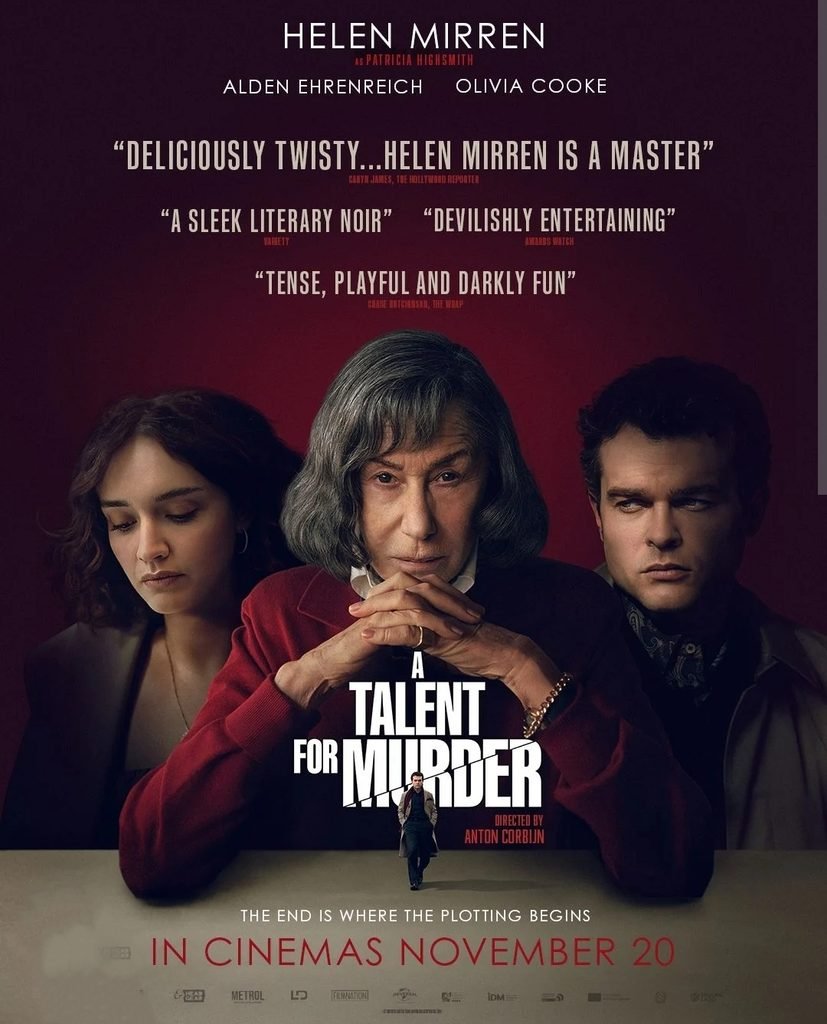
Helen Mirren stars as Patricia Highsmith, the celebrated crime novelist behind Tom Ripley. Set in 1995, the film imagines a final encounter between the dying author and a mysterious young editor.
What begins as a publishing negotiation gradually becomes a dangerous game involving murder, identity and imagination.
Adapted by Joanna Murray-Smith from her stage play Switzerland, the film faces an interesting challenge.
It must turn a largely two-person theatrical confrontation into something cinematic. Corbijn succeeds through striking visual choices and strong performances.
However, his expanded approach occasionally weakens the claustrophobic tension that makes the central relationship so compelling.
Helen Mirren Is a Fearsome Patricia Highsmith
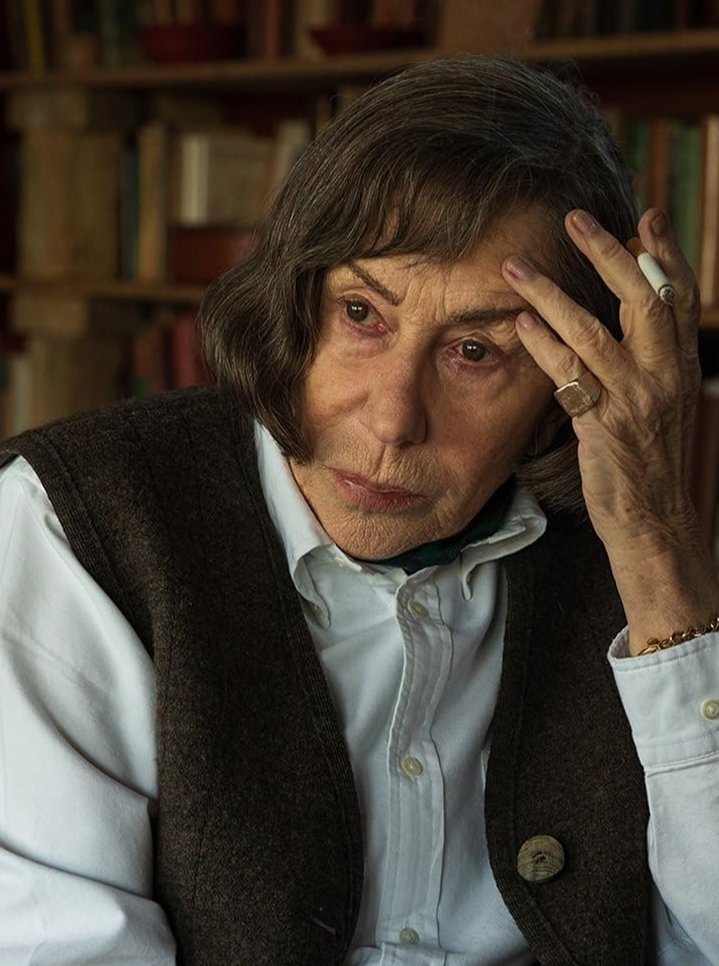
Helen Mirren is simply brilliant in the film, creating a complex and compelling character. Her portrayal of Highsmith is harsh and cynical.
However, she is also clever, sensitive and increasingly aware of her mortality.
Although we do not necessarily find Highsmith very likeable in this film, Mirren captures every harsh and prejudicial trait of her character.
Combined with her smoking, drinking and physical decline, Mirren creates a discomforting portrayal of someone coming to terms with her mortality.
However, Mirren’s best acting comes through in the dialogue. As Highsmith’s relationship with Edward Ridgeway develops, the dialogue becomes increasingly combative.
It contains many literary allusions, psychological elements and insightful comments. Mirren manages to create the impression that every shift in relationship is very meaningful.
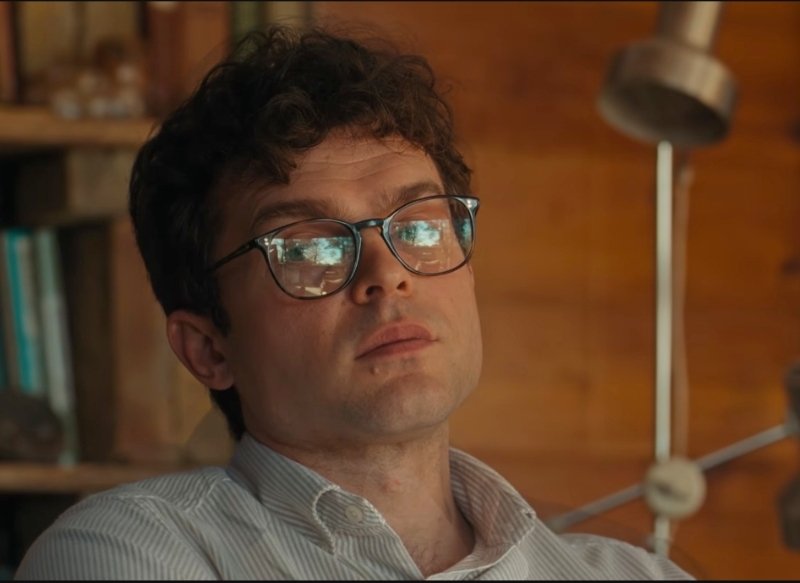
Edward, played by Alden Ehrenreich, is perfectly balanced to Mirren’s Highsmith. Although he initially seems polite and slightly clumsy, we quickly begin to see how far more sinister he is.
Ehrenreich subtly shifts his body language, tone of voice and quirks to reflect the breaking down of Edward’s carefully crafted façade.
Ehrenreich creates an interesting dual performance within the scenes where Tom Ripley is a fictional character.
He takes on a much more confident, scheming character in comparison to his initially timid appearance.
The chemistry between Ehrenreich and Mirren creates some of the most dramatic moments in the film.
Clementine Balfour, played by Olivia Cooke, plays a glamorous role in the fictional murder plot that Edward has pitched to Highsmith.
Although Cooke performs elegantly in the role, Clementine appears to be a shallow character in comparison to the main characters.
Although she plays a key role in blurring the lines between reality and fantasy in the film, this is mostly functional.
Anton Corbijn Opens Up the Stage Play
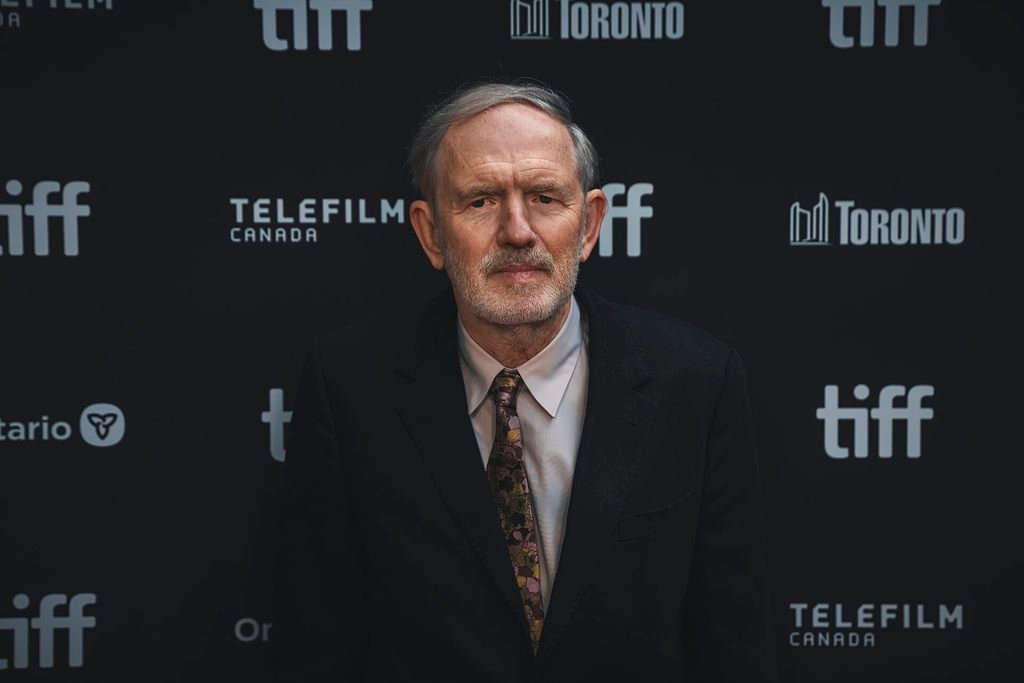
The direction by Corbijn adds a key element to this film. Known for Control, The American and A Most Wanted Man, Corbijn’s background in photography helps create an intense psychological drama.
Although there are only two characters in the real world scenario (Highsmith and her guest), Corbijn does not allow the movie to become a simple play transfer. He includes fictional scenes involving Tom Ripley.
These fictional scenes allow a change of scenery from the lonely Swiss house to beautiful views of Rome and Italy.
They add diversity to the visuals of the film to represent the increasingly confused nature of Highsmith’s imagination and Edward’s intention.
Although Switzerland is essentially a two character piece, due to the dynamic between Highsmith and her visitor, Corbijn does not simply shoot the film as if it were a play. Instead, scenes in the fictional story of Tom Ripley are interspersed throughout.
This variety moves the setting from just the isolated house in Switzerland to the luxurious sights of Rome and natural scenery across Italy.
The different settings reflect how confused the boundary between Highsmith’s imagination and Edward’s intentions becomes.
On occasion, these fictional scenes disrupt the dramatic tension between Mirren and Ehrenreich. The most engaging moments occur when both Mirren and Ehrenreich are on screen together as they threaten each other with literary references. Occasionally the tension in the middle of the film feels irregular as we cut away from these scenes.
However, Corbijn has created a clear demonstration of psychological tension within this film. Through camera positioning and highly composed shots, the balance of power between characters often changes without any additional dialogue.
Robbie Ryan’s Stunning Cinematography
Cinematography is a strong element in this film. Robbie Ryan (The Favourite, Poor Things) has shot this film on celluloid to create a rich aesthetic.
The contrast in different locations has been very effective. In the chalet in Switzerland, the tight framing and lack of light creates a claustrophobic and dark atmosphere.
The surrounding mountains are very aesthetically pleasing, however, they create a feeling of isolation. Combined with the dark interiors, the psychological struggle is made clear.
In comparison, scenes in Italy have a different aesthetic. The scenery in Rome and the Dolomites give a much more glamorous and warm aesthetic.
It feels like a completely different film in comparison to the previous scenes. This creates a big distinction between the harsh reality in 1995 and the tempting, false world of Tom Ripley.
Attention to detail is well executed. Close-ups allow small expressions to be seen clearly. Outside scenes provide relief from the intensity.
The cinematography has a traditional ‘thriller’ feel, without creating an artificial retro feel.
A very large sense of location is created throughout the film. Scenes in Switzerland and Northern Italy create an alpine setting.
However, much of the interior scenes in the chalet in Highsmith were filmed in London. These locations have merged very well in the final product.
When Fiction and Reality Become Murderously Entangled
The screenplay’s most intriguing idea is its exploration of the relationship between a writer and her most famous creation.
Highsmith’s obsession with Tom Ripley becomes central to the psychological confrontation.
Edward attempts to convince Highsmith to write another Ripley story. The plot he suggests involves a charismatic villain, a rich woman, and a murder in Rome.
As Highsmith develops the story with Edward, it appears that this narrative is beginning to manifest in their real world.
Clementine seems to be moving from fiction to reality. Similarly, as Edward becomes more sinister, it becomes difficult to tell if Edward is real, or if he is becoming identical to his creation.
It is revealed in the film that Edward has more sinister traits related to Ripley. As he knows information about Highsmith’s private past, and there was a previous character missing, suspicion is raised.
However, the final twist complicates this. Due to the scene returning to the train station in Zurich, it appears that this whole situation has taken place in Highsmith’s mind.
Edward, Clementine and the murder plot are all part of the final Ripley story that Highsmith is writing.
This is very interesting, though some people may find that they would have preferred a more simple explanation. As the film ends, it does not give a clear conclusion as you may expect in a thriller genre film.
The Real Patricia Highsmith Behind the Fiction
While much of the plot is fictional, many of the characteristics of Highsmith in this film come from true facts.
She lived in Switzerland in her later life and experienced severe illness that resulted in her death in 1995.
Highsmith’s unpleasant nature comes from true facts. Throughout her life, Highsmith was known for being very rude and had highly biased views in her diaries and works.
While these traits are not justified in this film, it is very engaging to watch due to Mirren’s acting skills.
Her relationship with Tom Ripley is very interesting. She often treated Ripley as if he were real, and even put his name on her Edgar Allan Poe Award Certificate.
This indicates that Highsmith had an unusually strong attachment to her character.
The unusual characteristics in the film, such as her love of cats, old weapons and pet snails, give more depth to the character.
They make clear that the character portrayed in the film differs from the real historical figure as the murder game is fictional.
However, much of the core plot of this film is fictional. Edward Ridgway and Clementine Balfour, and the imagined last collaboration on another Ripley novel, were all made up.
The film takes events and facts from Highsmith’s biography, but is not attempting to accurately recreate the ending of her life.
A Talent for Murder Is Stylish but Uneven
A Talent for Murder works best as an intimate psychological duel. Mirren and Ehrenreich deliver compelling performances, while Ryan’s cinematography gives the film a distinctive visual identity.
Corbijn also deserves credit for finding cinematic possibilities within a tightly constructed stage play.
However, the expansion does not always improve the material. The Rome sequences provide visual spectacle but occasionally interrupt the tension.
Cooke’s character feels underdeveloped, and the shifts between reality and fiction can make the middle section feel disjointed.
The ending is another potential stumbling block. Its symbolic approach offers an intriguing reflection on mortality and artistic creation.
However, it lacks some of the theatrical impact and sinister directness of the original play.
Even so, the film has plenty to admire. Its exploration of artistic obsession, the seduction of evil and the complicated relationship between creator and creation gives it more substance than a conventional murder mystery.
Final Verdict
A Talent for Murder is an atmospheric and intelligent thriller elevated by Helen Mirren’s commanding performance.
Its visual ambition occasionally disrupts its psychological tension, but the central battle of wits remains thoroughly compelling.