Captain America: The First Avenger: Review
Introduction (Warning Contains Spoilers)
With an extended version of Avengers: Endgame set for theaters this September, Marvel is back in the limelight.
Another movie, Avengers: Doomsday, will be hitting theaters in December. It is the perfect time for us to explore the Marvel Cinematic Universe.
We have decided to watch the movies in order. Our adventure starts with Captain America: The First Avenger.
The movie was released in 2011, and it served as the fifth installment in the franchise. Yet, chronologically, it brings us back to the beginning.
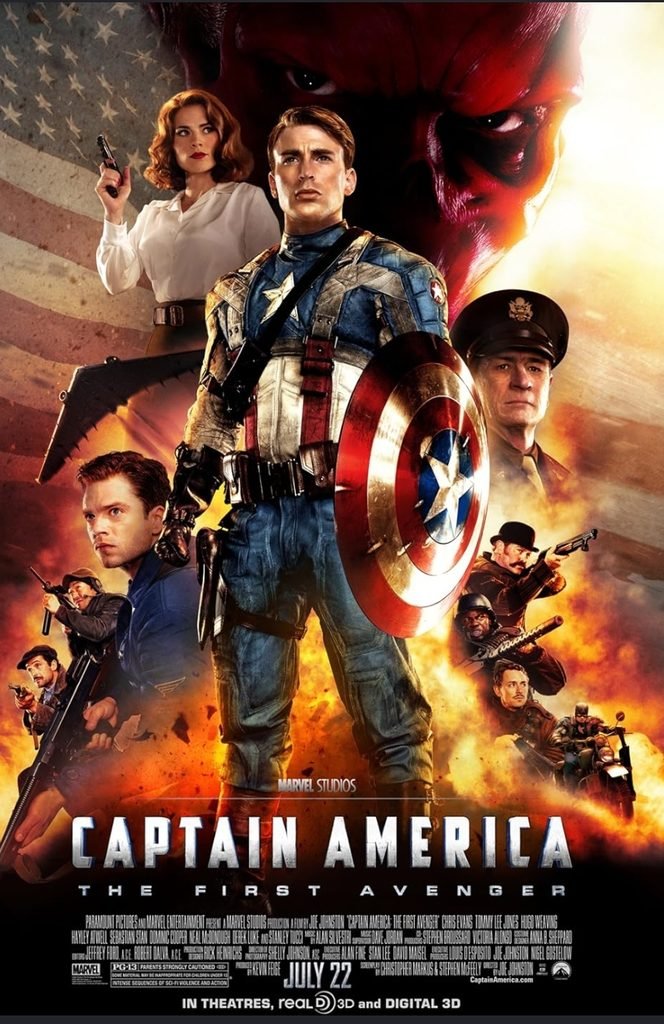
In fact, the action of the movie unfolds mostly during World War II, introducing us to the character of Steve Rogers who will later become Captain America.
The movie was directed by Joe Johnston and written by Christopher Markus and Stephen McFeely.
The main roles were performed by Chris Evans (as Steve Rogers), Hayley Atwell, Tommy Lee Jones, and Sebastian Stan. As for the villain, it was played by Hugo Weaving as Johann Schmidt, aka Red Skull.
The movie had to serve several purposes within the developing MCU universe. Namely, the movie had to be interesting on its own and also introduce one of the future members of the Avengers team.
The question is whether Captain America: The First Avenger successfully meets those expectations. More importantly, does it still hold up today?
Joe Johnston’s Direction
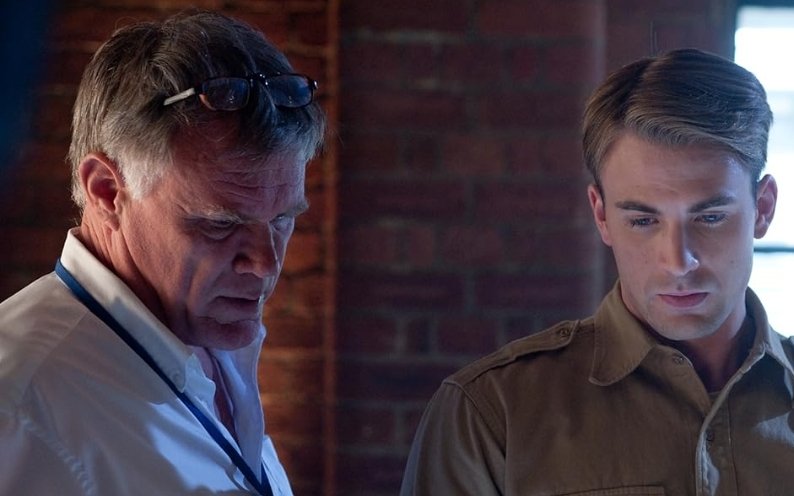
An interesting choice as a director of Captain America’s first movie was Joe Johnston. Prior to this project he had gathered enough experience while working on period adventure films.
The Rocketeer is another work by Johnston which is similar to Captain America: The First Avenger in its style and atmosphere.
Johnston manages to create deliberately anachronistic, old-style picture in The First Avenger.
There is something reminiscent of classic adventure serial in this picture. At the same time, there are also some elements of Indiana Jones movies which are characteristic features of this kind of films.
Thus, such a directorial choice was quite suitable for the film. Unlike other early pictures in the MCU, it has an identity of its own which makes it different from other films in this series.
Moreover, Johnston realizes that Steve must become Captain America.
Thus, the film introduces us to Steve as an ordinary young man who is physically weak but has a strong spirit. He tries to join the army despite the refusal several times.
Such a decision allows us to understand the inner world of the main character better. Steve is already heroic without Super-Soldier serum.
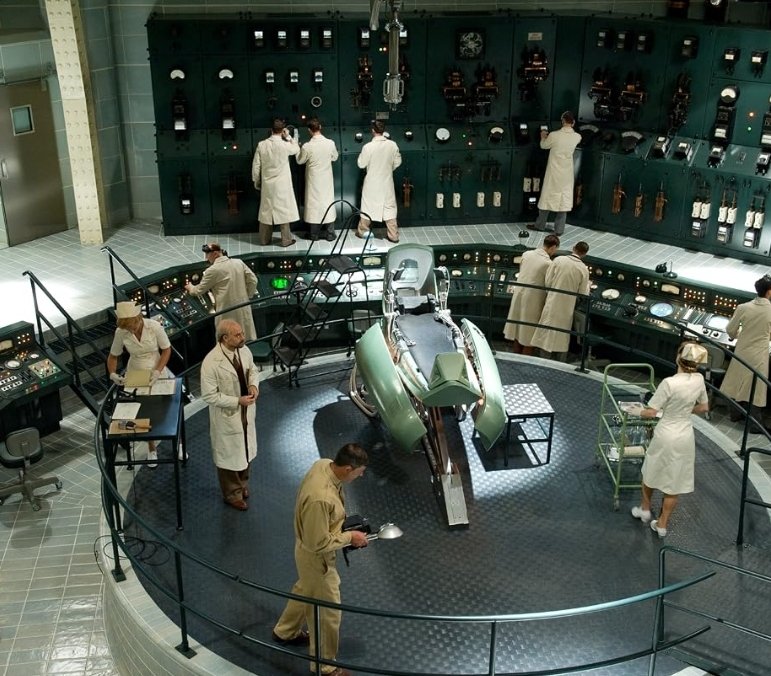
Only this invention gives him physical powers to act in accordance with his views and ideas.
Such an approach remains one of the most important themes of the movie. The greatest power of Steve is his willingness to make a sacrifice for others.
Johnston did not try to make all scenes look polished. There is a physical nature of action. Practical sets, stunts and props are used along with digital effects to create the atmosphere of wartime adventure.
However, the direction of this picture is far from being perfect. The second half of the movie moves much quicker than the first one. Moreover, some events are presented using montage.
For instance, we know about the adventures of Captain America but the movie presents them as a part of montage rather than developing them into independent scenes.
In particular, the adventures of the hero during the war look extremely fast and short. Almost another movie is hidden in these scenes.
There were opportunities to spend more time on describing these events and Steve’s new role and giving additional development of characters of Howling Commandos.
Still, Johnston managed to create the right atmosphere. His greatest success was the focus on Steve Rogers.
Cinematography
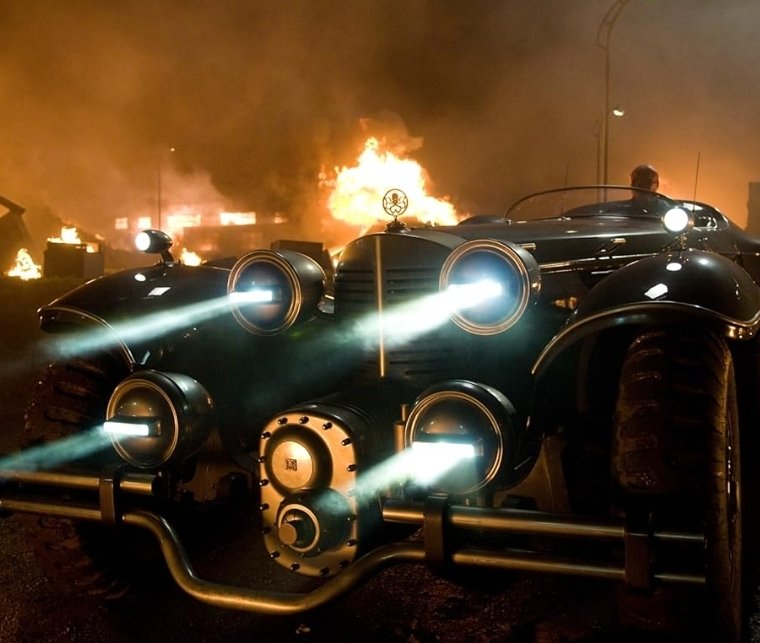
The cinematography of Shelly Johnson is very important for the creation of a unique image of the film.
There was a need to create a visual perception of the film as something that should resemble the atmosphere of the 1940s but not be an actual film of those times.
It is accomplished successfully. The muted colors and the earthy tones are typical for the majority of frames of the film. Browns, greens, greys and subdued blues are very popular among other colors.
The choice of these colors makes the film look old. At the same time, the cinematography technique used here prevents the picture from looking old-fashioned.
It means that the film looks like the story told in the past time but still preserves the scale of a modern film.
There is also a change of the lighting depending on the environment. The military environment usually appears to be very warm. On the battlefields, it becomes colder.
It should also be noted that the camera work during the action sequences is very successful.
Johnston and Johnson use the motion to create the energy but do not make all shots completely chaotic. The viewers understand the positions of the characters.
It should also be noted that the cinematography works together with the production design. There are no elements which are not appropriate in the environment. Vehicles, costumes, buildings look natural in their environments.
The costume of Captain America was also quite challenging. The bright red, white and blue costume could look inappropriate in this world.
The muted photography helped to make it look natural in the environment.
As a result, one of the most successful visual aspects of the film is achieved. The First Avenger looks like an old-fashioned film not because of its age but because of its visual aspects.
It is important to note the difference between these two approaches. The film attempts to imitate the style typical of some other films.
At the same time, it does not try to resemble an old film. In many ways, the cinematography of the film is very similar to Steve himself.
Visual Effects
Another aspect of the film that deserves praise is visual effects. Indeed, there is quite a lot of CGI used in the movie. However, it is difficult to say that the film is dominated by computer-generated imagery.
In particular, it should be noted the visual effect of creating a pre-serum version of Steve Rogers. Chris Evans had to be portrayed as someone physically weak and considerably smaller. This demanded significant effort using CGI and body doubles.
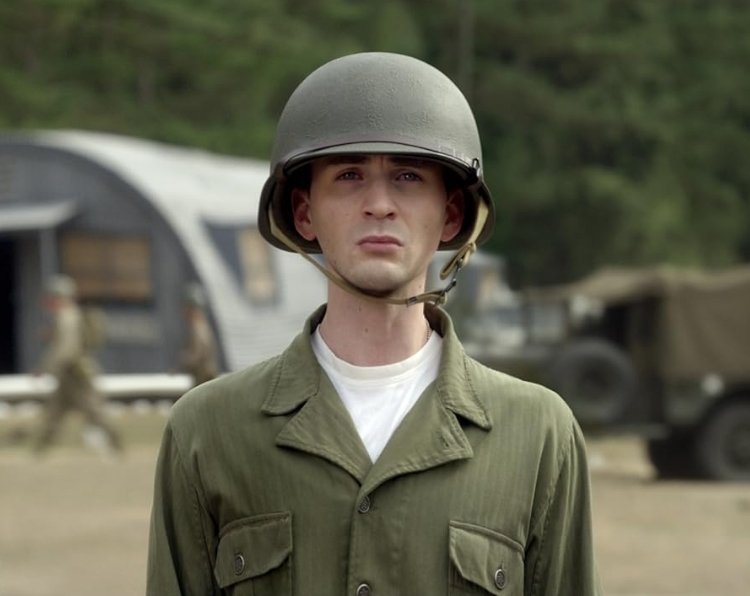
This effect is needed as it contributes to the plot development. Indeed, we need to believe that Steve actually was physically weak before. Otherwise, the whole transformation would be less interesting.
CGI allows Chris Evans to stay at the center of the movie. In other words, his face and mannerism remained recognizable.
Nevertheless, the effect is not perfect. There are some moments in which it becomes obvious that this was a result of digital manipulations. Moreover, in some cases proportions might seem a bit unnatural.
Still, this effect has aged quite well. As a result, most viewers do not think about how it was made.
Moreover, the film uses CGI to recreate its wartime environment. First of all, digital extensions make the locations appear significantly larger. Also, CGI is used for enhancing vehicles, buildings, and crowds.
However, some of these visual effects did not age as well. In particular, some green-screened sequences can appear too artificial according to modern standards. Also, some digital background becomes visible in large action scenes.
Of course, this does not mean that there is too much CGI in the film. What is more important is how the effects were used.
Many visual effects exist just to complement physical filming. Digital manipulations extend sets and locations. Other effects make impossible action scenes possible.
Also, the film uses various props and physical objects. For example, the shields used by Captain America were real.
Therefore, such an approach is one of the reasons why the movie feels grounded. The actors are not constantly surrounded by completely digital environments.
As a result, balance between the two approaches was mostly successful.
The weakest effects are those that become noticeable. The strongest effects are those that disappear into the story.
The least effective effects are those which stand out. The most effective effects are those which integrate into the story.
This is especially true for Skinny Steve. The technology is available to define the character rather than wow the audience.
However, considering the movie was released in 2011, the visual effects are quite impressive. Some things are definitely dated. It works because the effects support the story.
Themes and Storyline
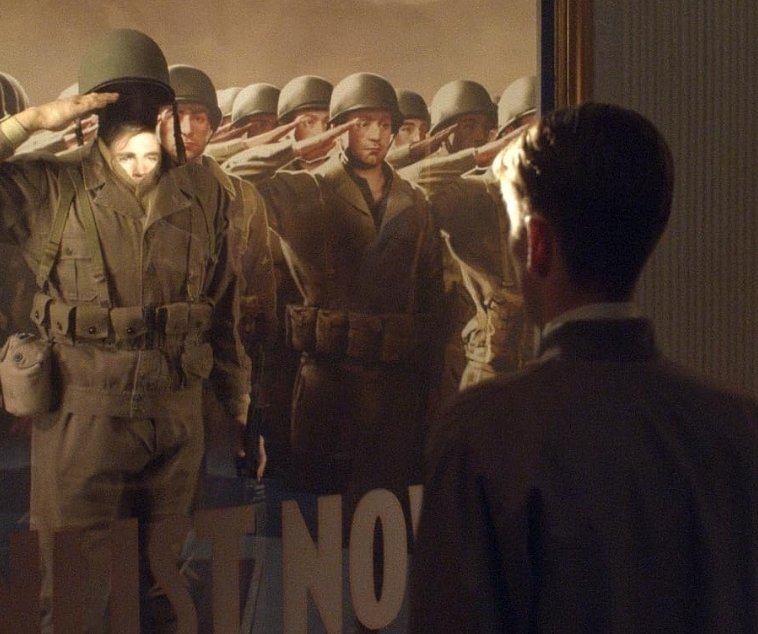
The main theme of the film is quite simple and effective. Heroism is based on character but not physique.
Steve Rogers proves that he possesses this characteristic even before being transformed into Captain America.
He wants to serve his country despite his physical weaknesses. He is ready to risk his life in order to save other people.
Dr. Erskine appreciates this trait in Steve. He knows that using serum on the wrong person could lead to disastrous consequences. That is why Steve was selected for this procedure.
This adds some sense to Steve’s transformation. The serum doesn’t make Steve a good man. It makes a good person a superman.
Sacrifice is another major theme in the film. Steve always cares about other people’s well-being more than about his own one. His last choice confirms all what we know about him up to this moment.
Patriotism is another important theme in the movie. However, the film doesn’t show patriotism as being a soldier. At first Steve becomes a propaganda tool but not a soldier.
This creates quite interesting parallel between a real person and his image. Captain America becomes a national icon before becoming an efficient warrior.
There was potential in this plot idea. The film only touches upon Steve’s dissatisfaction from being a propaganda instrument.
There were possibilities to analyze more deeply the question of manufactured heroism.
Steve’s character development is the best part of the whole story. Steve’s character changes a bit after his transformation.
His body changes a lot but his principles stay the same. This makes his transformation more meaningful.
Steve and Peggy Carter’s relationship is another confirmation of this theme. Peggy likes Steve before he transforms physically. So, their love is connected with his character.
Another important connection in the film is Sebastian Stan’s Bucky Barnes. Bucky knew Steve before he became Captain America. So, he becomes a representative of Steve’s old life.
However, these characters could have been used better. The film progresses quite fast.
Does the Story Have Enough Time?
Duration of the movie is 124 minutes. It is not unreasonable considering it is an origin of a superhero. But still the amount of material covered in those 124 minutes is huge.
We get to know Steve’s life before the transformation. We learn about the transformation itself and his military training. Then we witness his war with HYDRA.
Howling Commandos appear in the movie as well. We see how Steve’s relationship with Peggy and Bucky develop. Red Skull and HYDRA are introduced as well.
Finally Steve is transferred to the modern MCU.
It is a huge amount of story to tell.
The first half tells the story much better than the second. Steve’s past is developed enough to make him an intriguing character. Transformation is also important.
However, once Steve becomes Captain America pace accelerates. Steve’s wartime career is shown through several key moments.
The scene with Howling Commandos is fun to watch. At the same time it shows us what the movie misses.
We are told that Steve becomes a successful soldier. But we do not have enough time to see how it happens.
It is probably the biggest weakness in terms of storytelling. There was enough material to make it longer.
It does not mean that the movie is too long. On the contrary, maybe it needed more time to tell the story.
The secondary characters become the victims of this compression. Howling Commandos are fun but underdeveloped. Importance of Bucky is clear but their friendship should have been explored a little more.
Red Skull also does not receive enough development. Hugo Weaving plays him very convincingly. Still Red Skull is rather simple.
He represents the greed, ambitions and thirst for power. Ideological contrast between Red Skull and Steve works perfectly well.
Personal motives of Red Skull are not as interesting. So he is good as a villain but there is nothing special about him.
The whole plot works thanks to a great development of Steve Rogers. Emotional core of the story is preserved in spite of the rush.
The Performances
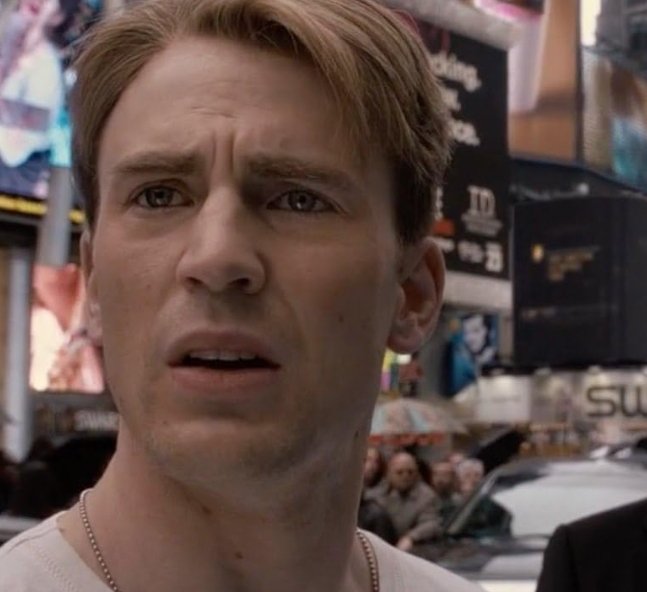
The casting of Chris Evans was among the key casting choices made for the movie. It was important to establish Steve Rogers before and after the transformation convincingly.
He manages to do that since Steve is portrayed convincingly by Evans in terms of acting. Vulnerability is evident in the early scenes.
Determination is also there underneath all this. Evans does not abruptly change Steve’s personality after the application of the serum.
Steve just becomes more confident while other aspects of his personality stay the same. This makes it more credible that we see the same person despite the transformation.
Evans does not make Steve too serious. He shows some humor and humanity.
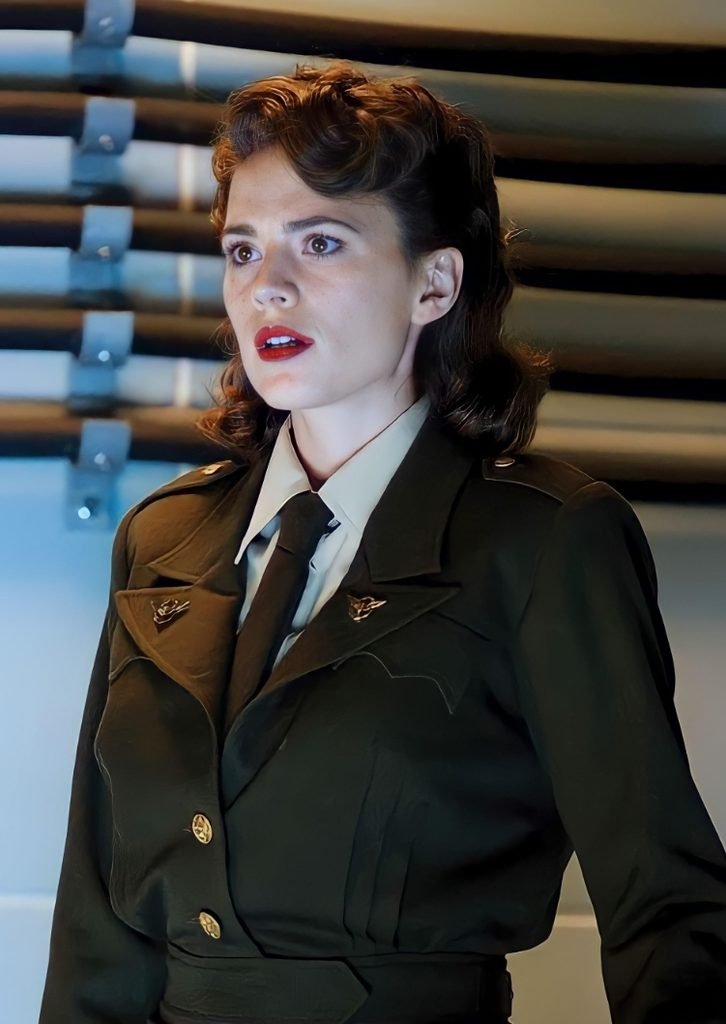
Hayley Atwell also works very well as Peggy Carter. She endows her character with intelligence and authority. Peggy never comes off as a character created for romance purposes.
The chemistry between Peggy and Evans is subtle. It is appropriate for the era that is being portrayed.
The relationship between them might have had more development, but Atwell ensures that Peggy becomes memorable even with limited screen time.
Tommy Lee Jones delivers most of the comedy of the film. His performance as Colonel Phillips is confident and enjoyable.
Jones knows that Phillips needs to be intimidating while also allowing room for humor. His dry sense of humor lends some extra life to a few scenes.
Stanley Tucci is another actor in the movie who delivers a heartwarming performance. Dr Erskine becomes Steve’s mentor in his short screen time.
Tucci makes Erskine into a real mentor figure. Therefore, his relatively short performance has a big impact.
Sebastian Stan also works well as Bucky Barnes. He endows him with confidence and charisma. This is a good counterpoint to Steve’s more shy character.
Bucky and Steve’s friendship seems authentic. The film simply fails to give it enough time.
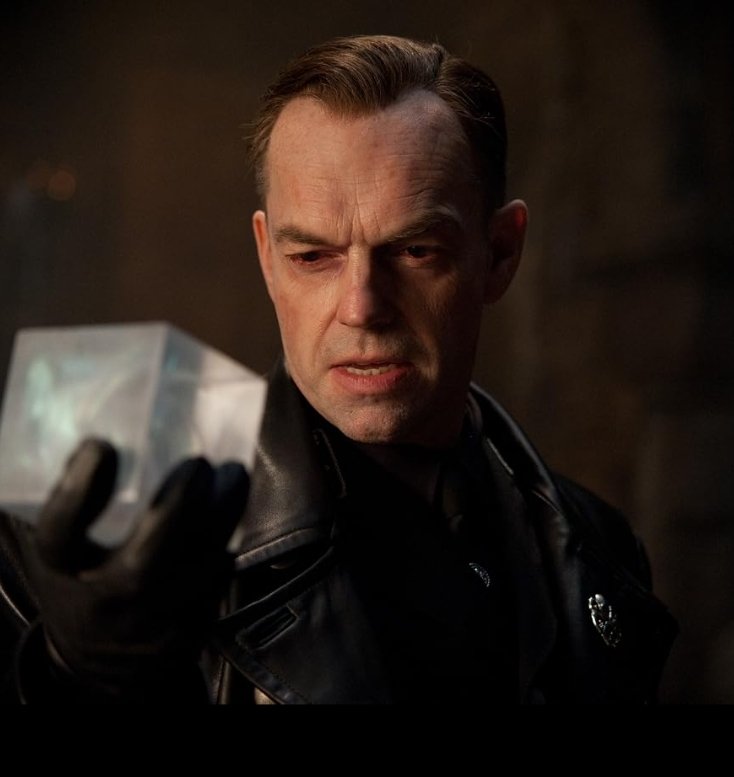
Hugo Weaving embraces the flamboyant qualities of Red Skull. His performance is theatrical but not totally over the top.
Weaving gives the villain a presence. At the same time, his performance is a stark contrast to the more reserved performance of Evans.
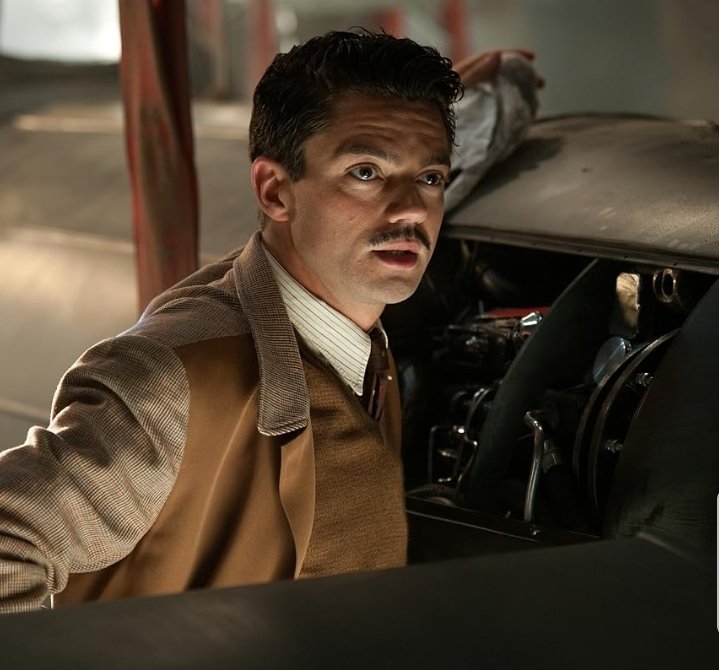
Dominic Cooper has great fun as Howard Stark. His arrogance and self-confidence give a hint about Tony Stark’s personality.
Another memorable performance is delivered by Toby Jones in the role of Arnim Zola. His unusual behavior contrasts with the flamboyance of Red Skull.
Neal McDonough gives Dum Dum Dugan a lot of charisma. Derek Luke also has a lot of quiet confidence as Gabe Jones.
Therefore, the supporting cast is consistently excellent. Their biggest problem does not lie in their performances.
Their problem lies in the lack of time in which to work. Several actors make the audience wish that they had gotten more screen time.
What Worked and What Did Not
There is a lot to enjoy in Captain America: The First Avenger. First of all, it has a very strong main character.
The movie captures the essence of the protagonist and makes his moral values more important than physical ones.
Second, the time period used for the movie is a huge success for the filmmakers. It has unique style of visual depiction.
Third, the cinematography in the movie enhances the atmosphere of a war adventure. Visual effects in the movie mostly work for the story line rather than against it.
Fourth, the performances of the actors and actresses are very powerful. Evans brings emotion into the movie. Supporting cast brings laughter, friendliness and threat into the movie.
The themes of courage, sacrifice, friendship and heroism are constantly developing throughout the plot of the movie.
However, the main weakness of Captain America: The First Avenger is its compression. There are too many characters and plot lines that need more time to develop.
In particular, the wartime section could allow more character development. In addition, Red Skull is less developed than Steve. While he works as a classic villain, he could have been even more complicated.
Finally, some of the visual effects in the movie have aged a bit. Some digital environments could look a little artificial now.
The action scenes in the movie are fun to watch although not spectacular in some cases.
Nevertheless, the movie keeps its unique identity which becomes increasingly important while watching it now. The film knows what kind of adventure it wants to become.
This is especially valuable when looking back at the early MCU movies. The movie is sincere without being too sentimental.
Final Verdict
This isn’t the most ambitious MCU movie. But what this movie does do is it gives you heart. Joe Johnston brings you a unique wartime adventure with true heart and emotion.
Chris Evans does an excellent job of portraying the character of Captain America. He manages to make Steve Rogers into a believable hero and a person.
The cinematography makes a great connection between 1940s war movies and the modern day cinema. Visual effects are amazing, though they sometimes do look outdated.
The plot is good in general but could use some more time. Some characters would have needed to develop a little bit more.
But what the movie does succeed at is the best thing it could have done – making us see why Steve Rogers became Captain America.
It gives him power but not courage. It gives him a shield but not meaning behind it.
And that’s why Captain America: The First Avenger will serve as a great beginning for our MCU adventure.
It may not be the best Marvel movie ever made. But it is definitely a sincere and entertaining origin story.