Fatherland Movie Review
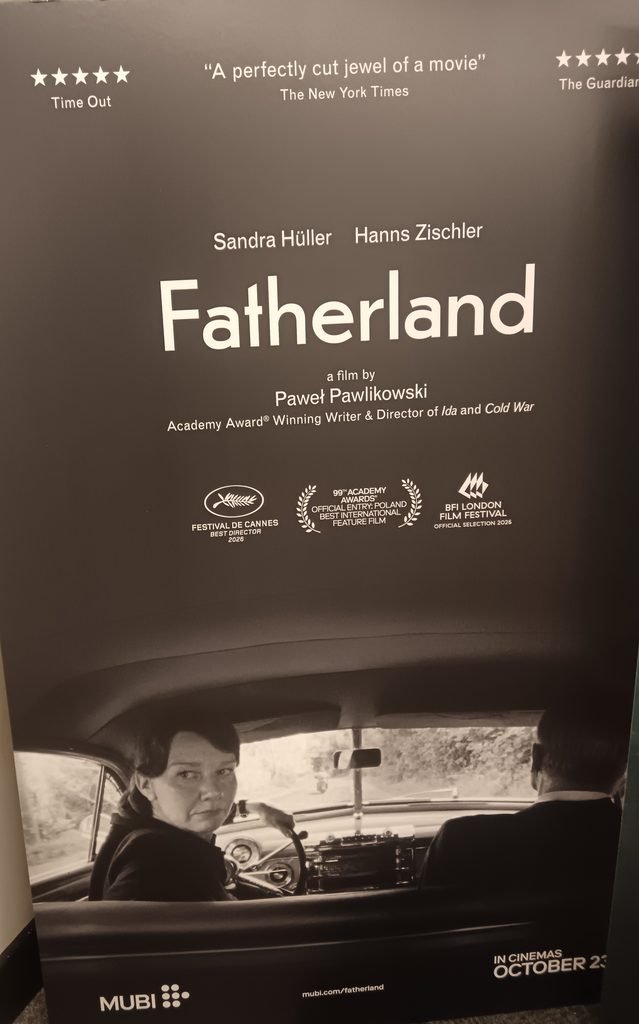
A Journey Through a Divided Homeland
While there are many movies that take history in terms of political occurrences, some movies capture its aftermaths through individual human experience. This is the case with Fatherland, which is a very poignant film on the issue of exile, pain, and split identity.
This movie by the Polish filmmaker Pawel Pawlikowski is the filmmaker’s exploration of the history of Europe in the twentieth century, after his Ida and Cold War.
It is yet another exploration by him on how people find themselves caught up between two worlds. In this film, he creates a visually stunning, yet very restrained movie.
This film is set in the summer of 1949, when a German writer Thomas Mann and his daughter Erika journey through a divided Germany, in the aftermath of the Second World War.
They head for the city of Weimar, where Mann is supposed to be receiving the Goethe Prize.
It should be noted that the trip means much more than just receiving an honorary award. Thomas goes back to his homeland after not being there for sixteen years.
During the years of the war, he was exiled from the country and now returns to find out that everything has changed beyond recognition.
Moreover, the journey brings the man and his daughter face to face with their personal tragedy. The man’s son, Klaus, committed suicide recently, but no one wants to talk about it. This secret tragedy shadows the movie.
Pawlikowski handles this subject matter with a surprising amount of assurance. He recognizes that historical trauma does not simply go away when politics shift.
Rather, trauma persists in the form of broken relationships, troubled memories, and the inability to return to a simple past.
For me, one of the reasons for wanting to see Fatherland was Sandra Hüller. Since I am a fan of her work, I was interested to have another chance to see her in a prominent international film.
Her presence is also indicative of one of the things that make movies outside of Hollywood special.
The success of an actor on the international stage after appearing in European and other non-English language films can help to expose people to new filmmaking cultures.
Her presence is one of the film’s greatest strengths. Yet this is not simply a showcase for a celebrated performer.
It is a carefully constructed historical drama whose visual discipline and emotional complexity reward close attention.
A Divided Germany and a Complicated Family
The premise of Fatherland is deceptively simple. Thomas Mann and Erika travel across post-war Germany, moving between territories controlled by opposing political powers.
Their journey takes them from the Western Zone controlled by Americans to East Germany controlled by Soviets.
At every stage of the journey, a new side of the country emerges. It is a side that is trying to find itself after having been destroyed and defeated catastrophically.
The country’s fragmented identity is mirrored in its physical appearance. The bombed out buildings, stark public places, and ruined churches give proof of destruction.
The return of Thomas is especially significant in that he is not an ordinary traveler. He is a Nobel laureate and symbolizes the success of German culture in the world. However, his attitude towards his native country is anything but simple.
Having criticized Nazism and lived in exile for decades, his coming back does not mean that all problems are solved for him.
On the contrary, he is facing a politically divided nation and morally corrupted by its past.
As his translator and organizer, and at the same time protective daughter, Erika has to deal not only with organizational issues related to his travel but also with his detachment and own grief.
Their interaction creates the main dramatic conflict of the movie. Thomas is highly intelligent and has much intellectual power, but this does not mean he is wise emotionally.
Erika knows about her father’s importance but also suffers from knowing all the shortcomings of this man.
The movie is especially good when these conflicts arise during everyday conversations. A discussion can express irritation but not become a quarrel. Even silence can tell about dissatisfaction better than any accusation.
But sometimes the historical background of the movie appears quite intentionally vague. People who have never heard about Mann family may find some references unclear for them.
The movie gives sufficient amount of information about the main story but not everything about its historical aspects.
This is a good fit for Pawlikowski’s style, even if it does distance the movie from an emotional level. The viewer is expected to participate in the story and in the history depicted.
The ones who choose to do that will be rewarded with an in-depth look into family, duty, and community.
Paweł Pawlikowski Completes His Historical Trilogy
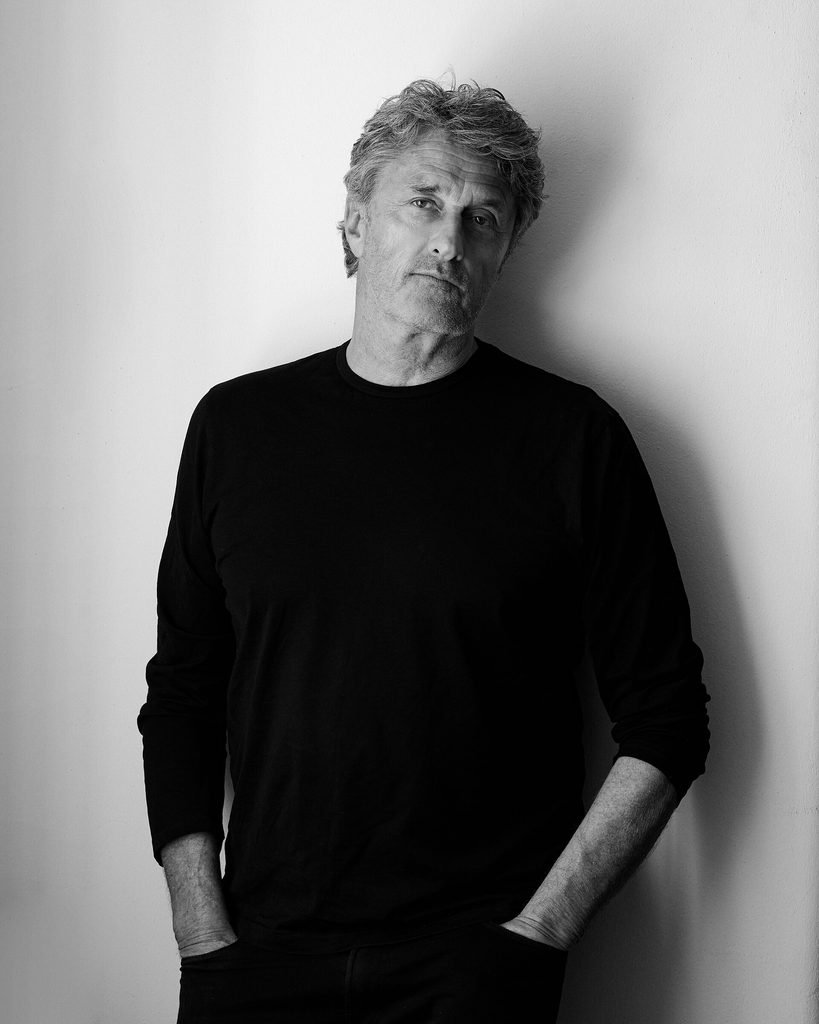
Pawlikowski has created an individual cinematic style as he has delved into the historical experiences of Europe during the twentieth century.
The film Ida dealt with the ethical and personal implications that Poland had faced due to its troubled past. Cold War featured two lovers whose lives kept getting affected by political conflicts.
The film Fatherland is similar to these movies but focuses on Germany after the Second World War. All three films can be considered as a loosely connected thematic trilogy.
They focus on individuals who have been impacted by history and displacement in forming their identities.
While Ida presents the past as an uncomfortable legacy that influences the way a young woman sees herself, Cold War shows how political borders constantly split apart a couple who cannot settle down together.
Fatherland looks at similar themes, only through a father and daughter who have returned to their homeland after years of exile. The geographical exile may be over, but the emotional one continues.
It is particularly effective in Pawlikowski’s direction, which manages not to present history through a series of boring lectures about the events of the past but through places, discussions, and relations.
It is intimate despite the massive historical currents that swirl around its characters. The division of Germany is crucial because it influences the people that populate it.
This strategy ensures that the movie doesn’t turn into an ordinary biography. Thomas Mann’s literary legacy is significant; however, Pawlikowski is more fascinated by the man who lies beneath it.
The movie explores the burden of serving as a national icon. Thomas is supposed to stand for the German culture when dealing with the ramifications of German savagery.
Thomas’ academic accomplishments can’t solve the ethical lapses of the country. They also can’t shield him from pain in his own family.
This tension gives Fatherland its strongest thematic foundation. It asks whether artistic achievement can survive historical catastrophe without becoming detached from human suffering.
Black-and-White Cinematography That Tells a Story
Fatherland’s cinematography is one of its most successful components. Pawlikowski works again with his regular cinematographer Łukasz Żal, who was the key creator of the look of Ida and Cold War.
Together, they form a strikingly bleak and oppressive monochromatic world. The black and white imagery is not only a stylistic choice.
It defines the audience’s understanding of the characters and the world they inhabit.
The almost square Academy aspect ratio gives rise to an unusually closed experience. Instead of widening the landscape through the widescreen framing, the director often confines his characters within tight frames.
This style further accentuates the themes of isolation and intellectual imprisonment found throughout the film. Thomas and Erika are shown to be encircled by history, but they cannot break free from its effects.
The composition allows for plenty of open space above the characters’ heads. This strange composition gives them an aura of insignificance against their surroundings.
It feels disquieting as well, as buildings, ceilings, and empty skies loom above those who populate the frames.
It can also create an unsettling atmosphere when the characters are talking. It shows how the characters can share the same physical space but still be emotionally apart.
Żal’s lighting helps make the composition sculptural-looking. The dark interiors contrast with the pale walls, as broken architecture becomes a set of sharp forms.
The black Buick passing through the ravaged environments represents yet another powerful visual metaphor. The shiny surface of the car is juxtaposed against the ravaged world in which it is situated.
Such juxtaposition signifies a passage through a country that tries to look forward to its future without breaking away from its past. Modernity and destruction exist side by side, generating an impression of deep uncertainty.
Finally, the monochromatic color scheme of the movie reminds one of historical photographs without just replicating them. Its pictures seem well-composed but also full of reality at the same time.
In such a way, the film turns out to be one of those rare movies in which the cinematography becomes integral part of narration.
A Concise Film With Remarkable Control
At approximately 82 minutes, Fatherland is remarkably concise for a historical drama of this scope.
Pawlikowski does not bother much with describing all the stages of the journey of Thomas and Erika. He is more concerned about showing a few events that show the conflicting emotions and ideologies of the characters.
This leads to a specific pace of the movie. The scenes do not always provide the full explanation of their emotional meaning.
It has to be taken over to the next event.
Its concentration on the central relationship creates a powerful sense of emotional pressure. Every conversation and journey carries significance because the film has little room for distraction.
The result feels carefully distilled rather than incomplete. Even when the narrative leaves questions unanswered, its emotional direction remains clear.
Sandra Hüller Is the Film’s Emotional Centre
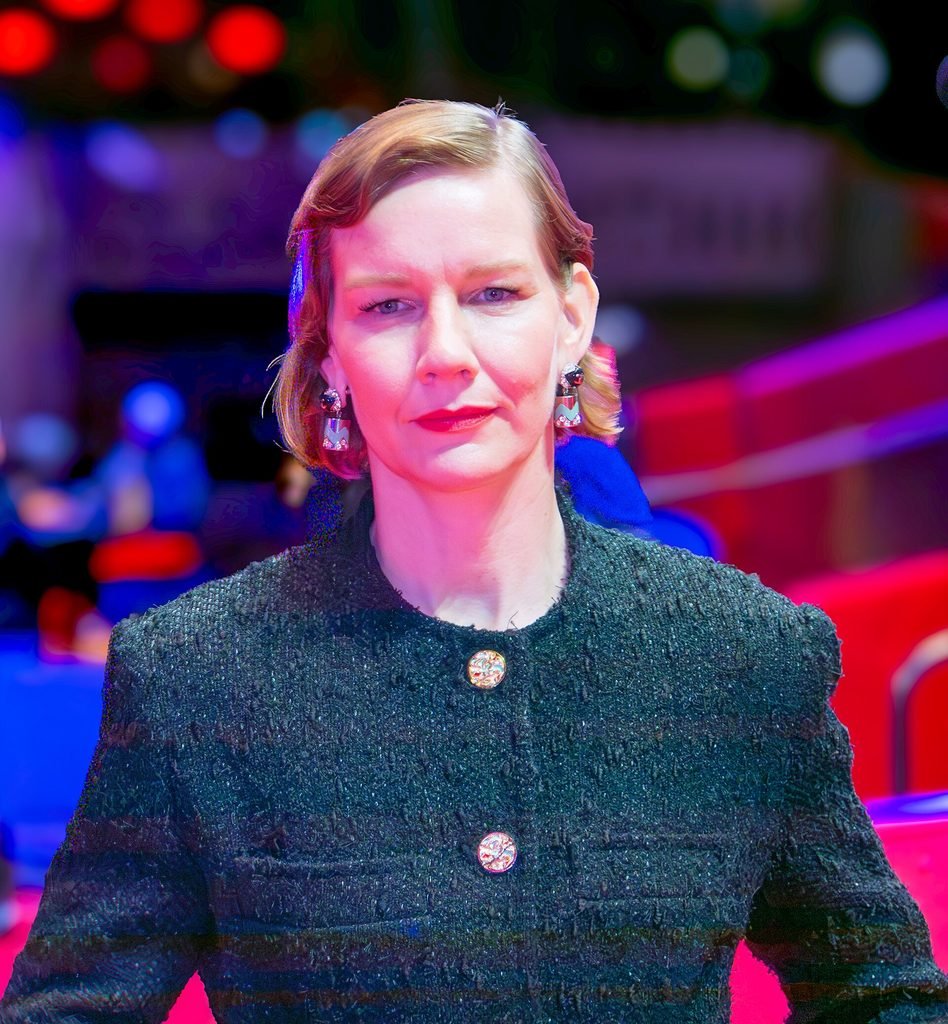
Sandra Hüller gives an excellent performance as Erika Mann. Intelligence, impatience, loyalty, and anger held back characterize the emotionally responsible character played by Sandra Hüller.
There is much more to Erika than being the assistant of her father. She handles the practical necessities involved in his public engagements in an attempt to keep him from facing uncomfortable facts.
Sometimes, her sharpness hides a lot of pain. She sees Thomas as being intellectually important but, at the same time, recognizes how painful it is to be around him.
This is conveyed by Sandra through highly controlled acting. A look or even a change in expression might mean years of frustration.
Her acting does not involve continuous emotional expressions. Rather, her feelings emerge slowly.
The recent passing of Klaus makes this internal conflict even more painful for her. Erika finds herself mourning her brother in the midst of her father’s inability to cope with the same grief.
Erika’s anger is justifiable, but it is also representative of the conflicting demands made on their family. She needs to maintain her ability to function with all these emotions swirling around her.
Hüller succeeds in making this internal struggle very human. Erika could be intimidating one minute and vulnerable the next.
The performance also helps in giving this movie a contemporary relevance. The burden of coping with being a child of a famous person is experienced by Erika.
This burden becomes even harder when there is the conflict between the fame and the disappointment. Hüller manages to capture this without turning Erika into a victim.
As a fan of Hüller’s work, I was impressed by her presence in the movie. She has shown a talent for grabbing international attention without sacrificing her challenging European productions.
This has implications outside the success of the particular movie. Performers known for performing in foreign language movies can introduce people to new traditions of storytelling.
Hüller’s international recognition can encourage viewers to explore European cinema beyond familiar commercial releases. It can also help bring attention to directors and productions that might otherwise receive less exposure.
Fatherland benefits enormously from her presence. She provides an accessible emotional entry point into a deliberately restrained and intellectually demanding film.
Hanns Zischler’s Controlled Portrait of Thomas Mann
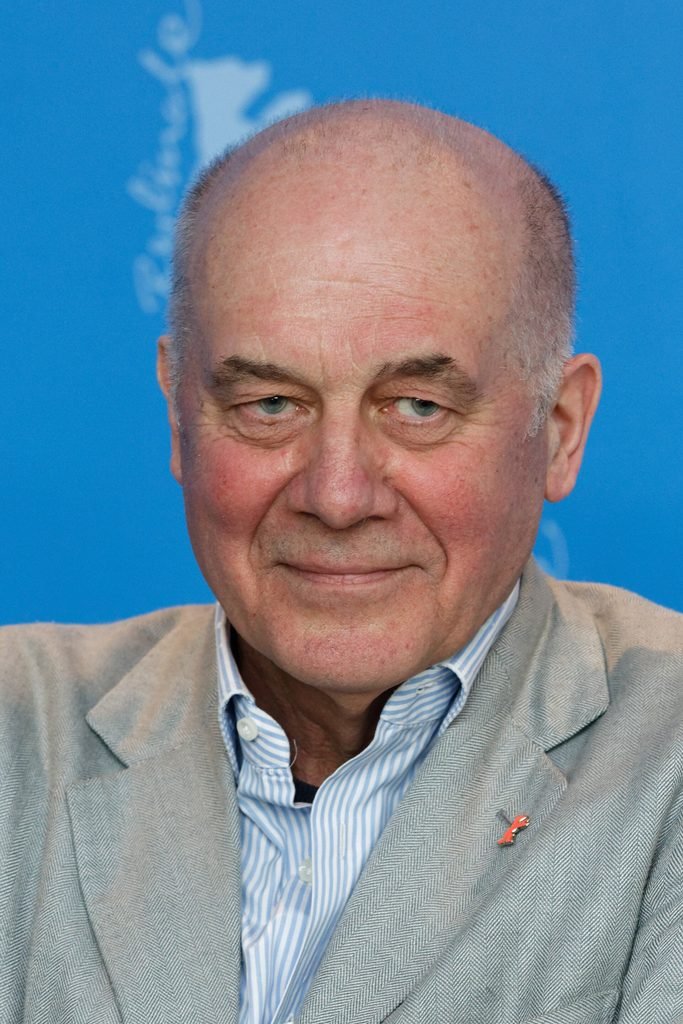
Hanns Zischler provides an interesting counterpart to Hüller, portraying Thomas Mann as someone well versed in retreating behind the intellectual authority that he commands.
Thomas comes across as a dignified character who is articulate but emotionally unavailable. He deals with sensitive issues through reasoning and not through vulnerability.
However, Zischler does not portray Thomas as an insensitive brute who is indifferent to everyone. Instead, he appears to be someone who has developed a shield for himself through years of discipline and intellectual abstraction.
This emotional armor becomes increasingly hard to accept in the context of Klaus’s death. Thomas appears to be a man who can not come to terms with the destruction around him.
His detachment hurts Erika who has to face her grief alone and without the necessary support from him.
The most compelling aspect of the performance is the series of subtle transitions which occur.
Subtle changes in expression allow the audience to suspect that the seemingly impervious writer is not completely immune to feelings.
Zischler’s control makes sure the character never becomes a stereotype of the self-obsessed intellectual. Thomas is exasperating, but Zischler makes sure that the fear and scars behind his façade can be appreciated.
His public image only adds to the complexity of the picture. He is supposed to personify the German literary genius, but his personal life suggests someone flawed and emotionally wounded.
The discrepancy between the famed writer and distant father grows increasingly poignant. His intellect is no cure for the pain of his loved ones.
Zischler does this without falling into the trap of melodrama. The actor plays off the intensity of Hüller to create a compelling dynamic between two people who cannot express themselves.
The Family Grief Beneath the Historical Drama
Klaus Mann’s death has repercussions that echo throughout the whole movie. Even though he does not play a significant role during the journey, his death has shaped the relationship between Thomas and Erika.
August Diehl brings emotion into the movie through his portrayal of Klaus. Through the phone calls of desperation, one sees the man suffering with despair while trying to connect.
This is a significant aspect because it allows for more than the tragedy of a character within someone else’s story. This enables the audience to catch glimpses of the man that keeps influencing the family.
However, what the movie is focusing mostly on is the grief of those who are left behind. One sees Thomas as emotionally detached and Erika with anger towards him because of the same reason.
Their incapacity to share their grief is another journey within the other journey. Father and daughter have to deal with their past while traveling through a country facing its past.
There is nothing subtle about the parallels between family and country, but they work well. Both have gone through the catastrophe and both cannot go back.
The film also examines the damage caused by emotional avoidance. Thomas’s refusal to confront his feelings does not make them disappear.
Instead, his silence leaves Erika carrying much of the emotional burden. Her frustration grows because she cannot force her father to acknowledge what they have lost.
This dynamic gives the film a powerful sense of accumulated pain. The most devastating moments often occur when the characters finally stop talking.
Can Art Survive a Broken Nation?
Fatherland raises many issues related to the connection between culture and politics. The contribution made by Thomas Mann to literature is of much significance for Germany’s rehabilitation after the war.
However, the presence of outstanding art does not relieve one of historical crimes. The presence of cultural value does not necessarily mean that the country’s reputation is rehabilitated.
It seems that this film often makes use of the opposition between the eternity of culture and the destruction around its heroes. The ruins of buildings are symbols of the fact that culture is linked with people’s behavior.
Pawlikowski does not seek to provide any easy solutions to these questions. Rather, he seeks to address these questions in the context of the feelings experienced by those who are dealing with issues of grief and dislocation.
The movie implies that there is something that can be preserved through art, even in times when politics fails to hold. However, the power of art does not lie in the form of absolution.
The cultural accomplishments of a nation cannot erase the horrors that it might have committed in its past. But at best, they can offer a language in which individuals can understand their own pain.
The Ending: Music Among the Ruins
The final part of the movie skillfully unites all the emotional and historical elements of the movie with exceptional subtlety. Thomas and Erika find themselves in the ruins of the church located in the fragmented territory of war-torn Germany.
An organist plays the piece of music by Johann Sebastian Bach titled Jesu, Joy of Man’s Desiring, thus turning the ruined church into a place of meditation.
The whole film depicts how Thomas tries to deal with the death of his son without facing it. Thomas’ intellect helped him cope with his sorrow.
For her part, Erika suffered from her own sorrow while also fulfilling the duties of her father. They kept feeling the distance between them throughout the movie.
In the church, this distance starts to dissolve. Thomas takes Erika’s hand and they cry together silently.
No explanation of everything that happened between them takes place in the movie.
Rather, the physical action conveys something that words could never convey before. At last, Thomas lets out the pain that he had always held back.
What Zischler and Hüller do makes the whole thing very moving. Their actions are understated, which lets the emotion come out organically.
It is also important that the ruined church is highly symbolic. The broken structure is a mirror of the damage, both physical and ethical, in the environment around the characters.
However, Bach’s music still resonates inside it. The comparison shows that artistic activity may continue despite the destruction of the institutions and society that surround it.
This does not mean that music can mend everything. The church is still ruined, Klaus is still dead, and Germany is still divided.
The message that the authors give here is that art may provide people with a place where to relate to each other. It can’t change their problems, but it can help people to talk about them together.
The whole thing is also relevant for the theme of exile developed in the movie. Thomas and Erika are back in Germany, but they cannot feel at home there anymore.
Their physical return does not bring back the world that they have remembered. They are still in the position where they struggle to reconcile individual memories with actual history.
This is why the last scene is a beautiful depiction of belonging that is not always certain. Even if their native country fails to give them comfort, their link will not be severed.
This makes for a brilliant end to their story within the movie. The combination of music, acting, and the devastated architecture speaks for itself.
Final Verdict
Fatherland is an exceptionally crafted historical drama which manages to gain immense emotional strength from restraint. In “Fatherland,” director Paweł Pawlikowski shows once more his skills to create intimate stories out of European history.
Monochrome cinematography by Łukasz Żal is particularly well executed. It complements the emotional state of isolation felt by the characters through tight composition and harsh lighting.
Concise editing is another strong suit of the film. Though some relationships and aspects of history could be explored more thoroughly, the concentrated structure mostly works for its emotional intentions.
Intelligent, frustrated and vulnerable Sandra Hüller stands out as the best actress in the film with her superb portrayal of Erika Mann.
Similarly to her, Hanns Zischler deserves attention with his complex and deep interpretation of Thomas.
The most impressive aspect of the movie is the link between individual grief and the destruction of an entire nation. Neither Thomas nor Erika can accept the fact that their world is no longer there.
It is especially impressive how well the idea is conveyed by the last church scene. Bach’s music shows how the art can be a point of connection when history does not allow anything else.
Being an admirer of Sandra Hüller, I was delighted by her participation in the movie. She can attract more attention to European movies thanks to her growing international fame.
Fatherland may be too far from emotions for viewers who like clear drama. Historical elements and the specific pace of the movie require more patience.
However, those aspects form the essence of Fatherland. Pawlikowski relies on images, performance, and silence rather than dialogue.
Fatherland is a haunting, visually exquisite historical drama, elevated by Sandra Hüller’s exceptional performance and a deeply moving exploration of exile, family grief, and belonging.