
Oasis: Don’t Look Back in Anger Review
Introduction
Oasis has always been a group shrouded in myth, infighting, and immense expectations.
Its history has been marked by hits, global stardom, sibling rivalry, and one of the biggest feuds in the rock world.
However, finally after many years of being separated, Liam and Noel Gallagher have taken to the stage again.
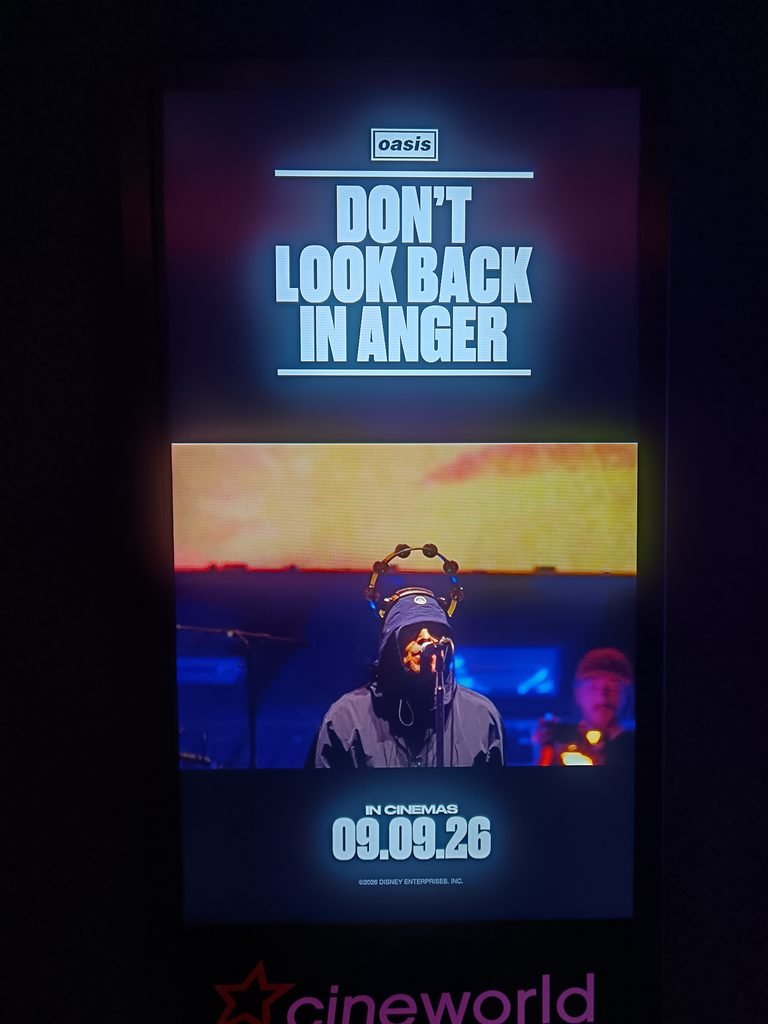
Oasis: Don’t Look Back in Anger captures their amazing reunion and the Oasis Live ’25 World Tour.
This documentary comes at a peculiar time in the band’s history. It does not intend to tell the whole story of Oasis from start to finish.
It only explores how the band and its members are today. Such an approach gives a very clear goal to the movie, but it also sets some boundaries for it.
The past is essential for understanding the reasons for such a reunion.
Without disagreements, separation, and years apart, there would be no weight of emotions behind it.
Therefore, this documentary can be regarded as an event taking place somewhere in between two periods in Oasis’s history.
The first one is the band known to us from the ’90s. The second one is the band that reunited after many years.
A Reunion Years in the Making
The background of this documentary is just as important as the performances in it.
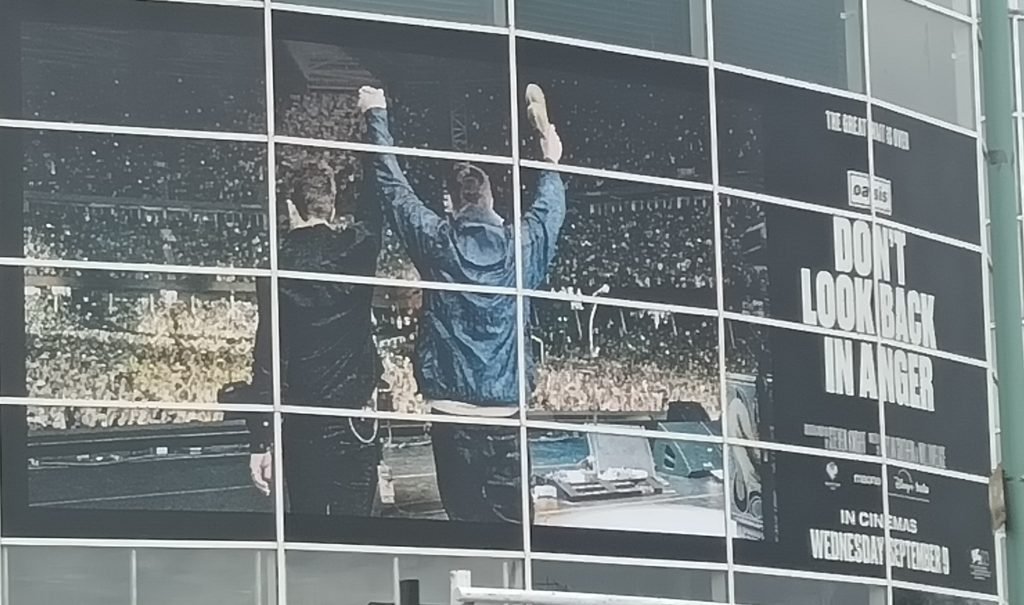
It is almost two decades since Liam and Noel Gallagher have agreed to give an interview together.
And their feud became one of the most talked-about rivalry in the British music industry.
Finally, the group disintegrated when the brothers had another public row.
For many, the prospect of their reunion seemed extremely unlikely to happen any time soon.
This is what makes this footage so fascinating.
The documentary provides audiences with access to the rehearsals, backstage and conversations that take place around the reunion.
The use of discreet camera while filming the rehearsals is highly efficient. The feeling is that the directors are filming an event that could go wrong at any second.
It creates suspense without the need for an elaborate narrator. Everyone knows the story about Liam and Noel.
This is why even small incidents and interactions between the brothers become interesting. A look, a comment or a pause can mean a lot more than it should.
The makers of this documentary understand perfectly well how much the relationship between the brothers can be used for.
Directorial Decisions and Style
The methods employed by directors Dylan Southern and Will Lovelace in this documentary have already been used in music documentaries many times.
Don’t Look Back in Anger has interviews, rehearsals, backstage moments, and concerts as well.
Such methods have already become quite popular among contemporary music documentaries. Documentaries about Iron Maiden, Led Zeppelin and Elvis, for instance, had the same structure.
That means that there arises an interesting question concerning the special features of this particular film.
The film does not represent any novelty concerning the methods of creating music documentaries. However, the unique thing about it is the possibility it gets to document something special.
The filmmakers document an event that many people did not expect ever to see. Thus, some methods of making a documentary get additional significance due to this fact.
One of them is the hidden rehearsals. It shows the viewers the brothers before their performance on huge stages.
Those scenes seem very different from the concerts performed by the duo. In addition, it reminds the audience that Oasis continues to be a story of two brothers.
This is not just the story of two successful musicians working together again. Their past plays into everything that happens.
The style of directing is most effective when this is allowed to emerge organically. Sometimes it is not necessary to explain things to the audience in the movie.
Even little moments between Liam and Noel say the most.
From Intimacy to Stadium Spectacle
The documentary film also makes a strong distinction between private and public spaces.
Rehearsal space seems relatively enclosed and private. Conversely, the stadium sequences are large, noisy, and seem very overwhelming.
The dichotomy is symbolic of both sides of Oasis. On one hand, there is the private side of Liam and Noel.
On the other hand, there is the public side of Oasis. The editing of the film draws the link between the two spheres.
From quiet moments backstage to very huge performances. The result is the process of moving from the uncertain to the celebration.
The technique is particularly effective because the viewers know what the reunion means.
The brothers are not rehearsing for another performance; rather, they are rehearsing their reunion after years of separation.
This gives an added emotional weight to the performance footage. The stadium crowds become part of the story.
Thousands of people are not simply watching a band. They are participating in something they once thought might never happen.
The Cinematography
Haris Zambarloukos brings an interesting visual perspective to the documentary. His background in feature filmmaking gives the film a strong cinematic quality
This is very necessary since this documentary was meant for theatrical screening. The cinematography has to be effective in both close-up and wide-shot environments.
The rehearsal scenes require a closer visual approach. The cameraman can take shots of faces, expressions, and other minute things.
Through this, the brothers become more humane to us. We are able to analyze the tension or lack thereof among them.
In the case of the concert scenes, an entirely different visual approach should be used. The cameraman must be able to capture the enormity of the performances.
He has to capture the stage, the musicians, and the many spectators at these places. This contrast in visual features is one of the most interesting aspects of this film.
The cinematography changes from the two brothers to cultural phenomena. This is the story of Oasis.
They started as musicians from Manchester, but they are much bigger than their personality. The stadium scene captures this growth so well.
It shows the reason for the importance of the reunion.
Does the Film Capture the Concert Atmosphere?
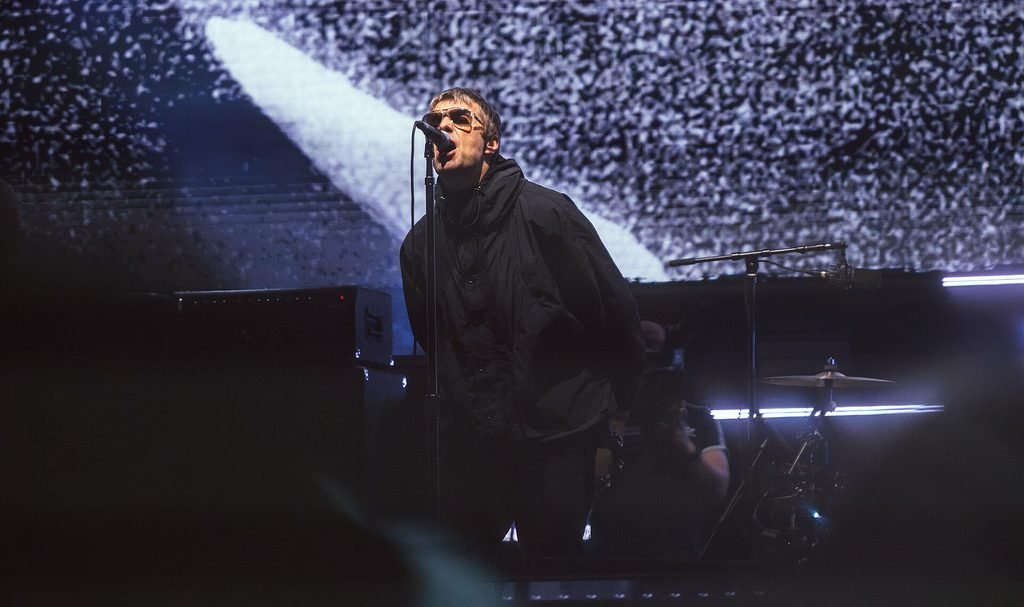
For me, the concert sequences in the film are some of the strongest parts of the whole documentary. This is where the film comes alive for me.
It is captured through the performance scenes and the reactions of the audience to them. The audience seems to form the fifth member of the band.
When thousands of people sing together, there is a feeling of community. The film captures the scene well.
There is also something very special about watching Liam and Noel performing as a band once again.
They have grown old compared to when they were forming the band. They have lived years of success, fame and conflict.
However, their confidence at performing in front of the stadium remains intact. From these scenes, we realize that they are trying to recreate the past and the 1990s.
There is a certain maturity in their performance. This maturity shows through the band’s performance scenes and even when they are off the stage.
We are able to see people whose lives have changed a lot both personally and professionally. Therefore, their performance is something else entirely.
The stadium footage demonstrates exactly how far that journey has taken them. It also shows why the reunion became such an important cultural event.
The Problem With the Pacing
My major problem in this documentary is the pace. There are parts in which I can feel that the film starts dragging.
There is enough content to keep the film rolling smoothly. But at times it tends to go away from the most exciting content.
A perfect example is the time it spends with the fans. The interviews are clearly intended for something within the documentary.
They help to prove how much impact Oasis has made in the life of people. This also helps to prove how long the band’s music has been going through generations.
They can indeed make you emotional and provide context on some occasions. But there are times when there are just too many of them.
It follows a certain pattern. First comes concert footage and then come the interviews.
Next comes the fan’s story and then back again to the band. And then the process goes on and on. To me, this really affects the flow of the documentary.
I always felt that I wanted the documentary to go back to Liam, Noel and the music. This is because there are moments where the film became more energetic.
More Music, Less Talking
This, in fact, is one of my main complaints about the documentary. I wish there was more music. The songs of Oasis are good enough for parts of the documentary to speak for themselves.
The film does explain at times what is important about Oasis. But the music can say so much better than words.
Crowd singing in a stadium is an immensely powerful thing.
It does not always have to be followed by yet another interview explaining how important this moment was.
The performances illustrate the influence of the band right away. And at the same time provide an opportunity to actually take part in the reunion.
For a theater viewer, that matters. Because viewers are not just watching the documentary about Oasis. They pay for the opportunity to enjoy Oasis on a big screen.
More comprehensive performances would have added more to the immersive experience of the documentary. And would help to deal with the problems of rhythm.
The best moments of the documentary are often those moments when the documentary allows the band to play.
The Past and the Present
One more thing to be noted here is the treatment of the band’s history in the film. Sometimes, one may think that there is something missing from the history.
There is quite an understandable explanation for this. The filmmakers do not try to shoot another documentary about Oasis in the 1990s.
They want to show what is happening right now. This idea is very reasonable. There are already many stories about the band’s rise, their success, and separation.
The repetition of that history might have turned the film into some kind of useless addition. But this history is extremely important.
The history of relations between Liam and Noel is the reason for the importance of the reunion. Without this information, one could not say how great the reunion of this group was.
And the documentary faces an important challenge.
It has to show the present Oasis and provide enough information about its past at the same time.
I suppose that the filmmakers should pay more attention to the past of the band. Some additional information could have added much emotionality to the reunion.
The viewers know the history of the group. But they could get more information about it. Allowing that history more space could have deepened the story.
Forgiveness and Reconciliation
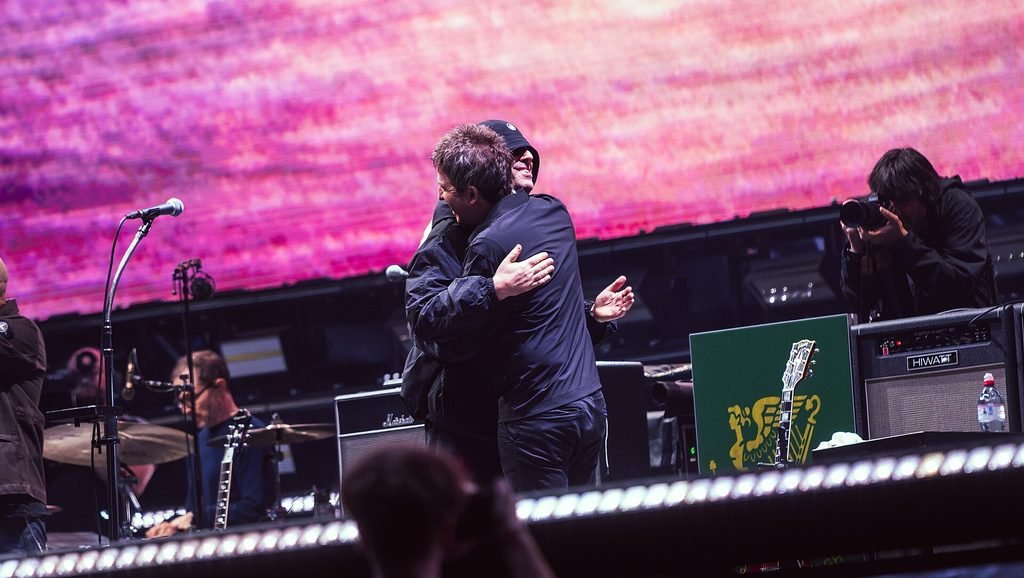
One of the key themes in this documentary is forgiveness. This reunion is more than just a band getting back together.
It is two brothers trying to get to work together once more. This gives forgiveness a very big place in the message behind this movie.
What this documentary is not showing is how all of the tensions between Liam and Noel have suddenly disappeared.
No, it is their ability to come together in harmony that becomes important. Given all the public spats, just to see them perform side by side becomes significant.
This reunion shows us how some people can endure huge amounts of conflict and still stay together.
Then there is also something very special about these brothers coming back together at this point in their lives.
They are not the young lads who created Oasis anymore. They have known success and failure, family life and public criticism.
They have learned perspective through their journey. This is seen in the way they now seem to view the band differently.
The music has endured the tension. Maybe that is the real act of reconciliation.
The Power of Music
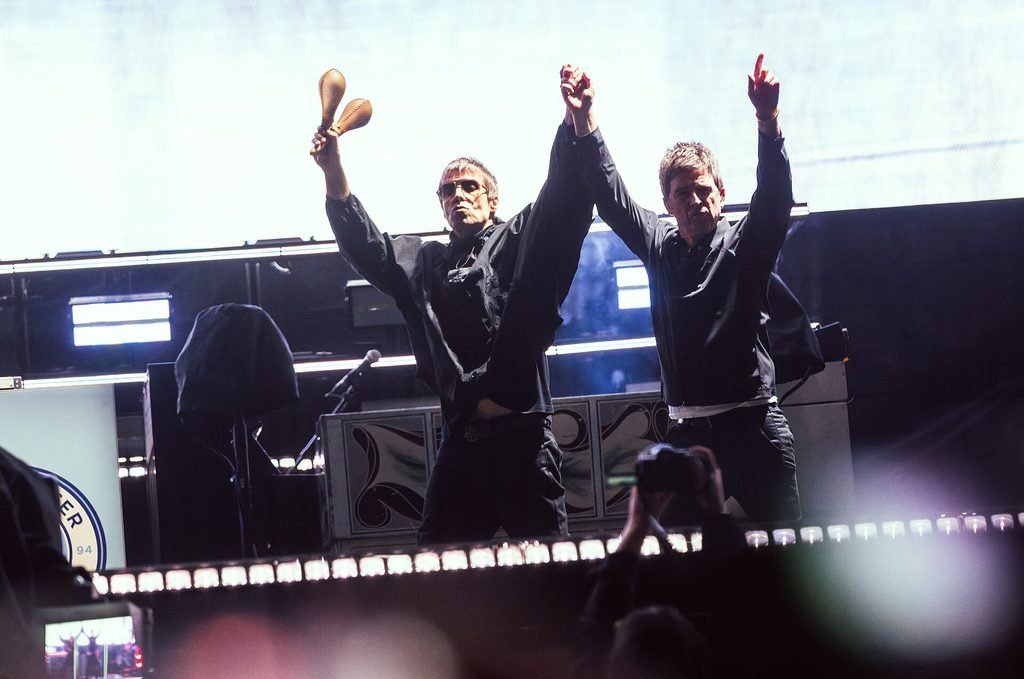
The second major theme of the documentary is the power of music. Clearly, Oasis is no longer just music; it is now more than that.
Oasis has now become an integral part of memories and relationships. This point is most strongly expressed through the fan stories presented in the film.
Here we see stories where people relate experiences tied up with Oasis and its music.
This demonstrates how music can be tied up with the personal history of individuals.
This is why the reunion is so moving to many people. Fans are not only getting their favorite band back, they are also getting back memories tied up with it.
Music has this amazing ability to unite people like almost nothing else can. Concerts shown in the documentary are probably the best demonstration of this ability.
Thousands of people gather to listen to the same songs, people who are in many ways very different. All the differences between them suddenly disappear.
All of them are united by the same music. This is a very good theme for a documentary about a group like Oasis whose members were quite often at odds.
But their music always managed to unite people. That contradiction makes the documentary’s themes particularly interesting.
What Worked and What Did Not
The most positive feature of Don’t Look Back in Anger is access. Seeing Liam and Noel together again makes this documentary really important.
The rehearsal footage brings intimacy. The interviews bring reflection. The concert footage brings energy and show.
When all of these things work together, the documentary becomes really interesting. Another thing that the documentary manages to show successfully is the changes in the band.
Oasis is not just playing old songs. There is something new in their performance. Liam and Noel look like they’ve grown and matured.
The band shows that it is able to pull off huge crowds. This might be the most convincing argument to have the reunion.
This documentary doesn’t need to convince us of the importance of the band. Crowds show it. Performances show it. Audience reaction shows it.
The weakest features are when the documentary is trying to explain everything. The interviews with the fans can interrupt the flow of the movie.
Also, lack of full songs in the documentary may be disappointing. Sometimes it feels like the documentary leaves its best moments behind.
For me, these are the reasons why it wasn’t as interesting as it could have been.
Final Verdict
Overall, “Oasis: Don’t Look Back in Anger” is an emotional tribute to an incredible reunion.
It highlights the excitement around the return of Oasis on the scene. In addition, it focuses on the themes of forgiveness, nostalgia and the influence of music.
The best scenes are when the band members themselves take the spotlight. The concert scenes reveal how much the band has evolved since its early days.
The rehearsal scenes show the more intimate part of the Gallagher brothers. The fan testimonials show how much their music has meant to generations.
However, the movie is sometimes slow..The film could have delved into the complex history of the band.
Most importantly, I would have liked to hear more music and have more complete performances.
Sometimes, the documentary tries to explain the power of Oasis music where music could have explained itself.
Regardless of these problems, the documentary succeeds in showing something significant. It shows a band that returns at a completely new stage of its life.
It shows two brothers who are able to find common ground to share the stage once again.
Most importantly, it shows why people care about Oasis.
The reunion is not simply about nostalgia. It is about forgiveness, growth and the ability of music to bring people together.
For all its pacing problems, Don’t Look Back in Anger makes that message difficult to ignore.