
Godzilla Minus One Movie Review
Introduction
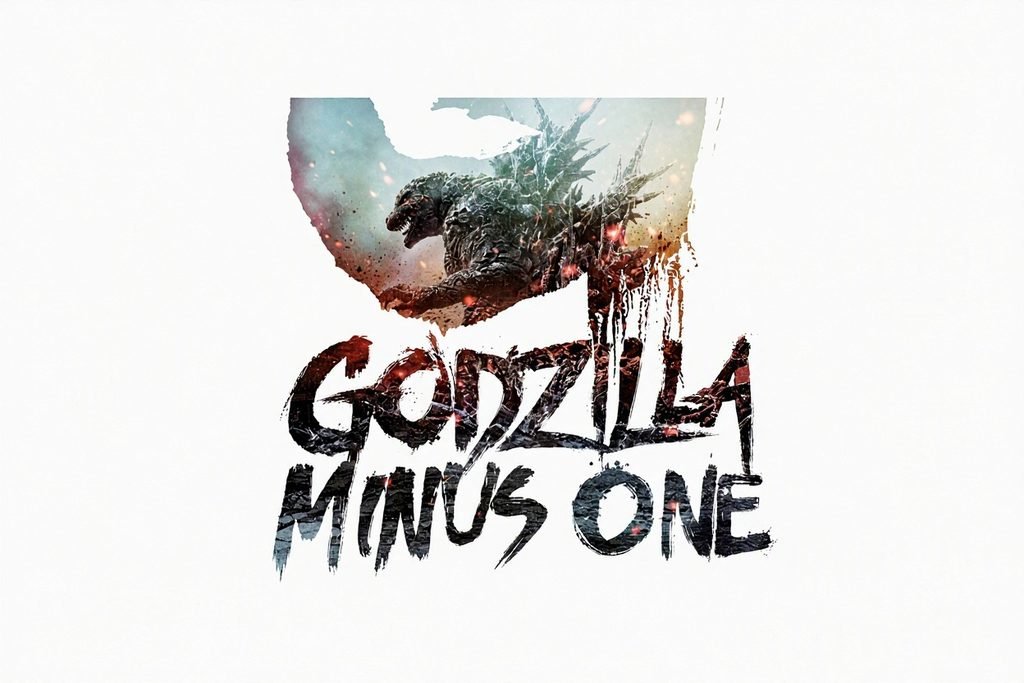
With Godzilla Minus Zero hitting the big screen, we thought it would be a great time to take a look at the 2023 film Godzilla Minus One.
The Oscar winning creature feature by Takashi Yamazaki returned Godzilla to his terrifying origins, telling a gripping story about post-war trauma, survivor’s guilt and nuclear destruction with some incredible visuals.
This is the perfect chance to look back at the movie which brought Godzilla back to the big screen.
Few monster movies can be so gut wrenching whilst being spectacular like Godzilla Minus One. This is a brilliant movie directed by Takashi Yamazaki that brings the classic Godzilla back to its roots as a horrifying monster.
Combining gripping human stories, retro kaiju elements and amazing visual effects this Japanese Blockbuster really shows off how awesome Godzilla can be.
Taking place after the second world war, the movie shows a country already on their knees when Godzilla rises from the ocean causing another seemingly impossible disaster.
With Yamazaki creating a personal story of guilt, sadness and redemption the movie is one of the most engaging in the long running Godzilla franchise.
The best monster movies know that the human element is just as important as the monster themselves.
Japan at Its Lowest Point
The title Godzilla Minus One perfectly sums up the overall message behind this movie. It shows that Japan has already had a terrible time in the war, essentially having nothing left.
The country is in a state of complete ruin and the people are struggling to get back on their feet. Godzilla makes things go into negative.
Kōichi Shikishima (played by Ryunosuke Kamiki) is the central character of this story. He was a former kamikaze pilot, but survived the war as he faked a mechanical issue with his plane.
However, he is struggling with living as he feels guilty about surviving.
When he returns to Japan, Kōichi becomes part of an unusual family. He meets Noriko Ōishi (Minami Hamabe), someone who has lost almost everything, and an orphaned baby called Akiko.
They try to create a normal life, but Kōichi is still struggling with his past. He feels like he has not lived up to his duty and does not deserve to be happy.
As Godzilla appears, he must face these feelings. Kōichi joins a group of civilians and ex-military members to save his country.
The government do not seem to have a great plan so it is up to the everyday people to organise themselves.
This is one of the most interesting ideas within the movie. People who have been told for years that their lives do not matter and should be sacrificed for the country now need to come together to try and save each other.
Their goal is to not only defeat Godzilla but make sure everyone has a chance to go home.
A Terrifying Return to Godzilla’s Roots
One of Godzilla Minus One’s greatest achievements is the re-establishment of Godzilla and the themes from Ishirō Honda‘s original 1954 film.
Godzilla is no longer portrayed as a hero or even an anti-hero who will sometimes join forces with humans.
Instead, Godzilla is simply a force of destruction that cannot be stopped and embodies the destructive nature of nuclear weapons.
This version of Godzilla was created as a result of American nuclear testing in the Pacific. As such, Godzilla embodies the fears and worries of America after experiencing the reality of atomic warfare.
This is shown through the destruction caused by Godzilla which reminds viewers of the destruction caused by the atomic bombs dropped on Hiroshima and Nagasaki. Godzilla also represents the fear people had about radiation.
Yamazaki understands that Godzilla should be portrayed as something that cannot be understood by humans. Godzilla’s movements are slow and heavy making them reminiscent of classic Japanese tokusatsu.
This gives Godzilla a large and intimidating figure. His movements always seem dangerous.
Godzilla’s atomic breath is incredible. The scene begins with Godzilla’s dorsal plates clicking into place like a nuclear reactor.
Then there is an explosive attack which creates a mushroom cloud over Tokyo. This was one of the most memorable parts of the movie with incredible special effects.
The classic Godzilla score by Akira Ifukube is used well throughout the film. The score instantly reminds the audience of Godzilla’s history within the franchise. This makes Godzilla seem very threatening.
A Human Story That Gives the Destruction Meaning
Whilst Godzilla certainly brings the spectacle, the characters within the movie really add to the emotional aspect of the film.
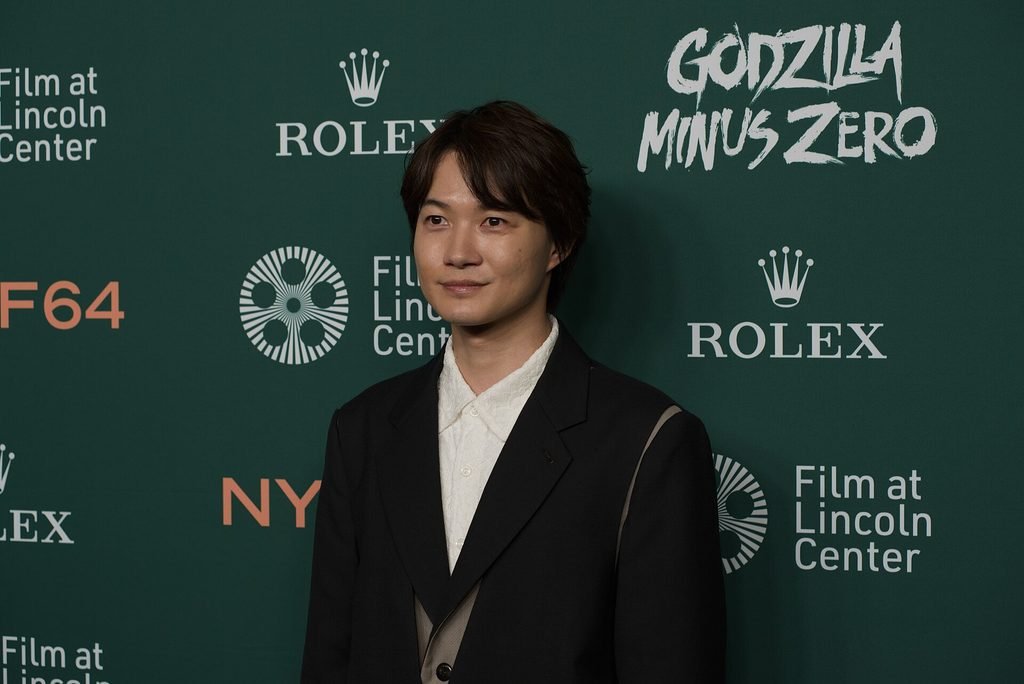
Ryunosuke Kamiki plays his role very well, showing his sadness and pain but not using his trauma as a plot device.
His journey to come to terms with himself that he should be alive gives the film a strong emotional core.
His decision to fight for others at the end makes him feel like he has actually grown throughout the movie.
Minami Hamabe also does a superb job with her role. Noriko has lost her family due to the bombings during the war but still decides to live and build a new family with Kōichi and Akiko. She adds a huge amount of emotion to the film.
The supporting cast are fantastic. The bond between the crew aboard the mine sweeper adds some light-hearted fun to the film.
The conversations allow for the film to feel like there is a real sense of community.
This ensures that the film does not get too dark. The relationships add something for them to fight for, meaning there is a lot of emotion attached to their eventual battle with Godzilla.
Spectacular Direction and Oscar-Winning Visual Effects
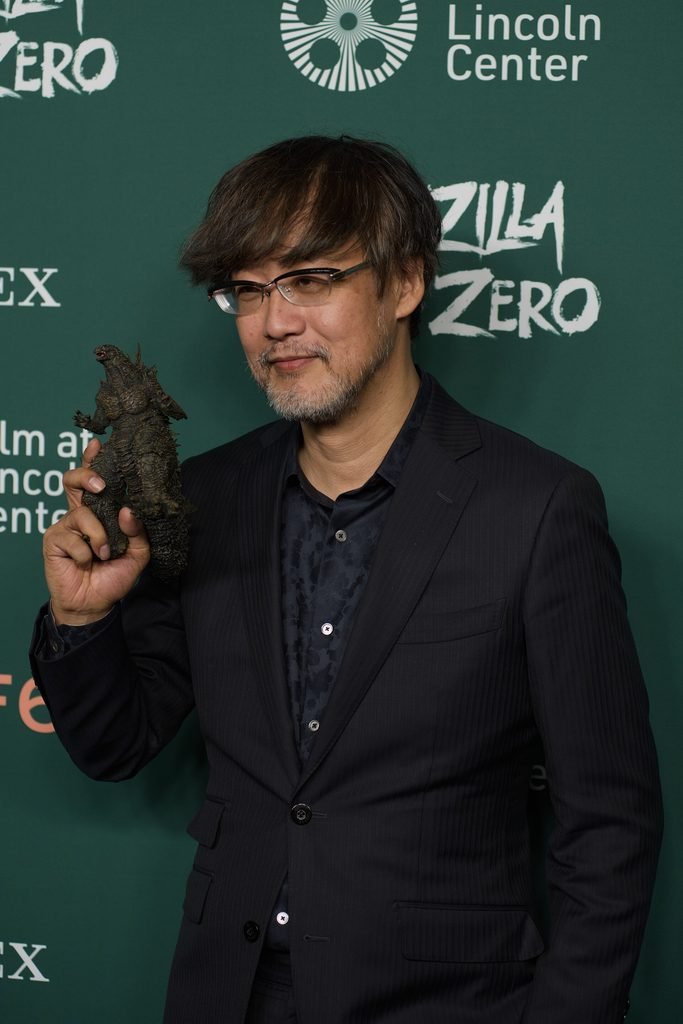
Takashi Yamazaki should be massively commended for this film. He has done a great job as writer/director/visual effects supervisor keeping the visuals cohesive throughout.
Scenes set in this characters home life feel very well put together and match the scale of the huge destruction in the movie.
The cinematography by Kōzō Shibasaki is very good. Godzilla does not always get shown from high up in the sky, it often gets shown from peoples people’s point of view when they’re on the ground.
This helps to show how huge Godzilla really is. We feel the fear of being dwarfed by such a huge creature.
The visual effects are incredible. Considering the low budget of the movie (Estimated to be around $10-15 million) there are over 600 visual effects shots in the movie created by a team of around 35 artists. The effects have a heavy feel to them and everything moves realistically.
The water effects are amazing and Godzilla looks very solid and scary throughout. The movie won the Academy Award for Best Visual Effects and they certainly deserved it.
It was a historic achievement for Japanese cinema as Takashi Yamazaki became the first director to win this award since Stanley Kubrick won for 2001: A Space Odyssey in 1969.
The set design is very good. The dull colours and textured lighting create a realistic feel to post war Japan.
The Sony CineAlta Venice cameras and Zeiss Supreme Prime lenses help to create a clean but realistic feel.
If you prefer more of a classic look then you can watch the black and white version of the movie which has been graded separately (Godzilla Minus One/Minus Color) to enjoy the stunning cinematography.
An Old-School Approach With Modern Ambition
Godzilla Minus One is refreshingly aware of what the Godzilla franchise could be without losing any of its traditional identity.
It takes inspiration from the 1954 original and Godzilla is used as a metaphor for nuclear destruction.
This is demonstrated throughout the action. The battle in the third act is very realistic. There is lots of creative thinking, physics and teamwork involved in the plan to take down Godzilla.
Yamazaki does not include an unrealistic weapon or any lucky escape, the plan feels realistic as if the characters are using what they have limited resources to their advantage.
The scene is a great example of creating tension through problem solving. The team have to understand the creatures behaviour, work together and put themselves at risk.
This helps show that the plan will only be successful if they work together, showing the importance of human life.
There were some parts where the film became quite melodramatic. There were scenes where characters were crying, screaming and breaking down dramatically which may be too much for those who are used to more subtle western acting.
The middle of the film also slowed down a lot. It focused on the personal lives of the characters and how they were rebuilding their lives post-war. Those who expected constant monster action may find this a bit frustrating.
However, these slower scenes are important to give the film emotional impact. Without knowing what the characters have lost and what they are fighting for, the destruction wouldn’t mean as much.
Perhaps the most controversial part of the film is the ending. There is a twist towards the end involving a major characters fate which brings some hope.
However, it does take away from the tragic nature of the rest of the film. Whilst some may enjoy the emotional ending, others may have preferred a more ambiguous ending.
Final Verdict
Godzilla Minus One is an absolutely brilliant entry into the franchise. Takashi Yamazaki has made a film that fully understands the significance of Godzilla from both a historical and symbolic perspective.
With amazing visuals, some amazing low angle shots and an absolutely terrifying version of the monster itself, it becomes a visually stunning piece.
However it is the emotional story of Kōichi, Noriko and those around them that really makes this stand out.
The cast have done an awesome job at bringing some heart to the film. Ryunosuke Kamiki and Minami Hamabe are a brilliant duo, with the rest of the cast also adding some lovely character and humour.
Whilst the film can drag in places, and some may not like the overly dramatic acting and twist in the third act, there are very minor complaints with how well made the film is overall.
Above all else Godzilla Minus One reminds us why Godzilla was so powerful in the first place. Godzilla is not here to save humans, instead he is the terrifying embodiment of the destruction that we have caused.
This incredible, emotional and surprisingly personal film shows that a great Godzilla film is not just about having a big monster destroy buildings. It needs to have something to save.