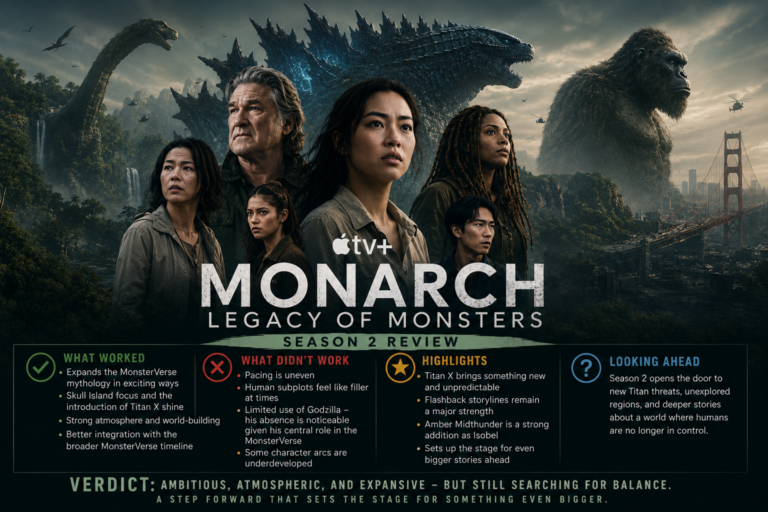
Jana Nayagan Review
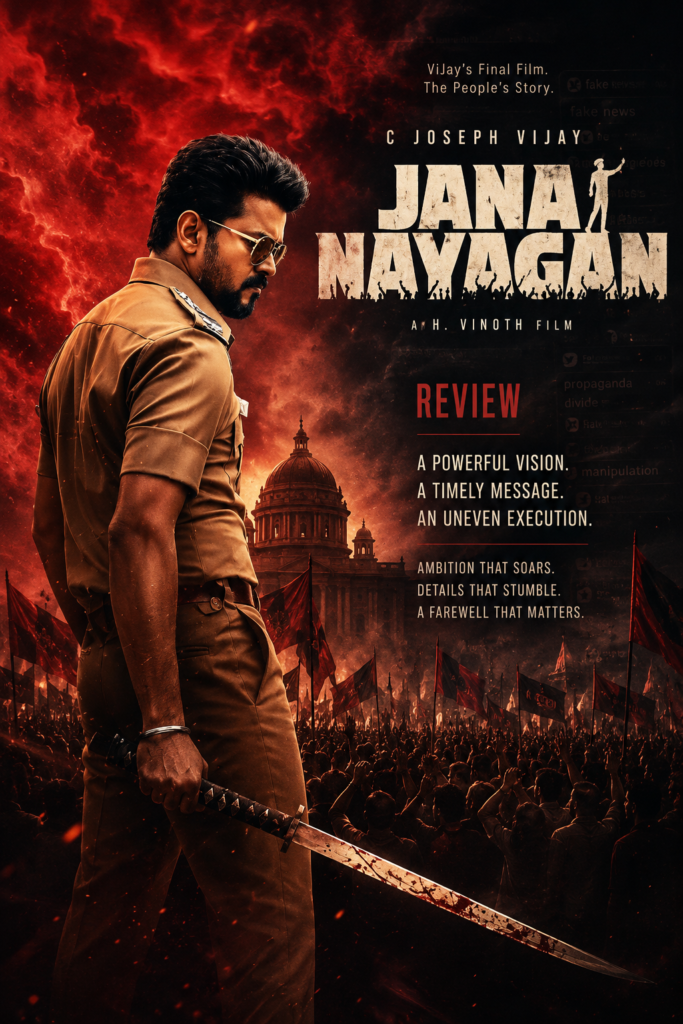
Introduction
Rarely does a movie come with such pressure associated with it as Jana Nayagan. The film, directed by H. Vinoth, features C. Joseph Vijay in what is going to be his last movie appearance on the silver screen.
And the movie is coming at a time when Vijay is on the verge of taking up politics. This makes the movie very hard to treat like any other commercial film.
The title of the movie “Jana Nayagan” can be translated as “People’s Hero,” and is very significant.
For many years, Vijay has been creating a character that revolves around heroism and social responsibility. His entry into politics adds a whole new meaning to these issues.
Released globally on July 23, 2026, the movie was a production of KVN Productions. This movie release was after months of controversy regarding the certification process.
This controversy was almost as big as the movie itself. Additionally, it was yet another element in an already politically charged movie production.
This movie revolves around Vetri Kondan who is acted by Vijay. Vetri is a former Indian Police Service officer.
He is assigned the duty to take care of Viji, whose parents have expired. Viji has a traumatic past, and she aspires to join the Indian Army.
Vetri’s relationship with Viji provides the emotional centre of the story. Their relationship gradually develops beyond simple protection.
Vetri becomes a mentor, guardian and source of emotional stability. That gives the film something more personal than its political conflict.
The greater danger lies in the form of John Himler, portrayed by Bobby Deol. Himler is keen on causing civil and caste disturbances in the nation.
The use of social media for purposes of manipulation and division is another skill he possesses. This enables the movie to touch upon some really modern political issues.
However, Jana Nayagan is more than just a political thriller. It is also an action movie, a family film and a star vehicle.
In one big commercial film, the movie tries to blend various traditions together. This is both its biggest strength and biggest flaw.
A Film Caught Between Cinema and Politics
The circumstances surrounding the film’s release cannot easily be separated from its content. Certification of Jana Nayagan took place amid the most unusual circumstances.
The movie had been applied for certification in December 2025. Consequently, the original date of its release had been delayed due to the persistent uncertainty.
The process of certification entailed examination and revision of committees. Issues related to religious, military and political aspects of the movie have been addressed.
The producers appealed against the process of certification in court. Consequently, the movie continued to attract attention for several months.
Ultimately, the movie obtained its certification with some changes made. They entailed some parts of the dialogue, references and images related to politics. Thus, the movie finally came out amid some persistent uncertainty.
This is significant in terms of the subject matter of the movie, which is about politics. In this respect, the movie deals with the issue of manipulation with information. At the same time, its own political aspects were under institutional criticism.
This produces an inevitable contradiction.
A movie on the control of narratives turned out to be one of the controversies in the real world regarding freedom of expression.
However, it would be wrong to conclude that censorship is the sole reason for the delay.
Various perspectives have provided various reasons for the delay.
The controversy definitely affected the reception of the movie. It came with months of anticipation and political discourse. This altered the experience of viewing a movie from that of a commercial one.
The political transformation of Vijay complicates the matter further. Audiences will be seeing an actor turning into a politician.
Also, audiences will be seeing an actor playing the role of a political hero. Thus, the distinction between the fiction and the public personality becomes extremely vague.
Vinoth’s Direction
H. Vinoth’s directorial style works best when merging established conventions with modern preoccupations.
He does not altogether discard the conventions of the Indian mainstream cinema. Rather, he tries to revive the conventions to suit the political conditions of today.
The movie has many features common to the Indian entertainer of masses. It has an exaggerated hero and a strong villain.
There are romantic liaisons, conflicts, and political rhetoric. In addition to that, there are action scenes choreographed for the superstar.
None of these can be called revolutionary.
They have been used in Indian films successfully for decades. Entertainment has been a feature of Tamil cinema since its inception and mixed with politics.
What H. Vinoth tries to do is synthesize, not revolutionize. He incorporates established heroic conventions into a world of social media.
Politics takes place through digital tools rather than through conventional means only. This adds a modern veneer to the film.
The process may work remarkably well at times.
With its familiar hero, the film makes political issues understandable for average viewers.
In addition, the commercial format lends weight to heavy topics and provides a much bigger reach.
Nevertheless, the same approach can be constraining. Issues like caste rivalry and politics cannot always be resolved by traditional means of heroes versus villains. The film often fails to examine such issues in depth.
That is why, for Vinoth, this approach appears to be ambitious rather than revolutionary. He knows his commercial language well. His task is to lend it new political layers.
Sathyan Sooryan’s Cinematography
Sathyar Sooryan’s cinematography backs up the hybrid nature of the film. The style is a blend of conventions of commercial cinema of India along with international action films of today. It will be inaccurate to term this technique either Bollywood or Western style only.
The camera appreciates the value of Vijay on mass-screen. Vetri is rendered powerful physically and visually through heroic compositions.
Close-ups highlight the emotions, confidence, and determination. Compositions on large scale are needed for a star vehicle.
On the other hand, the movie also adopts the language of modern action cinema. Camera movement makes the confrontation scenes dynamic.
Wide shots define the scope of the major sequences. Rapid changes of the visual field ensure that action moves on.
However, that does not mean that the movie just copies Hollywood. Many cinematographic techniques of other countries found their way into international cinema. Cinematographers from India have been using them for many decades.
Sooryan uses the language of globally inspired Indian cinematography. The movie preserves the elevated style characteristic of Indian popular cinema. However, it also updates the look of this style to be more modern.
This approach serves especially well in action sequences. The camera makes Vijay an element of the spectacle. The viewer does not only watch the action. The camera is celebrating the hero who is doing it.
The Action Sequences
Action scenes are one of the biggest selling points of the movie. They are crafted with consideration of Vijay’s physique and screen personality. They are not supposed to deliver realistic fights.
Instead, action fits the tradition of Indian mass cinema. It is necessary that the hero appears special and even mythic.
This way might be perceived as overly grand by the standards of the West. Nevertheless, exaggeration has always been a feature of commercial Indian action movies.
The cinematography makes these scenes epic. The wide shots help show the scale of actions, while the close-ups add to the sense of power.
The camera movements emphasize the intensity of battles. The slow motion gives the scenes the expected feeling of heroism.
However, the best scenes take into account the importance of choreography. The viewer should understand what is going on in a fight scene.
Too many cuts can create a confusing effect rather than an exciting one. If the geography is clear, then the action seems much better.
The action also relates to Vetri’s character. His experience as an IPS officer allows him to use the skills effectively. His violent actions are shown as a part of his duty to people.
However, the actions in the movie itself also highlight how conventional the movie is. Vetri becomes the exceptional person who is able to solve big problems.
Therefore, the political problems are also often reduced to personal battles. This helps make the plot more relatable, but it makes it less politically complex as well.
Themes and Character Development
Responsibility is the most compelling theme within the movie. Not only does Vetri defeat villains, but he takes responsibility for the future of another individual.
His connection with Viji is what makes the plot of the film emotionally meaningful. The trauma that she has experienced is not used just as background details, but her growing confidence is included in Vetri’s character arc.
There are also two kinds of power explored in the movie. Vetri’s use of influence involves the protection and empowerment of another individual, while Himler’s use of influence results in dividing whole communities.
This is one of the most interesting themes within the film. However, not all aspects of the theme have been examined sufficiently.
There are a number of thematic issues vying for attention within the narrative. They include the issue of trauma, caste, nationalism, politics, manipulation, and social media. Public leadership and responsibility are also thematic considerations in the film.
All of these themes have potential but some get less attention. At times, the screenplay presents an issue but does not fully explore its implications. It results in political messages that appear more dogmatic than analytical.
John Himler faces a similar challenge. His concept is quite relevant to the film’s contemporary political background. However, John Himler can be seen simply as a bad guy.
Having a more complex villain would have enhanced the political narrative altogether. The movie could examine why manipulation is so effective.
Rarely do people fall apart just because some villain tells them to. Manipulation is effective because it takes advantage of pre-existing tensions.
This omission detracts from some of the film’s political relevance.
The Storyline and Its Length
This plot has an emotionally rich foundation.
The connection between Vetri and Viji gives the movie its human heart. The political conflict expands the plot to the national level.
The challenge here lies in linking these two stories organically. When done correctly, the personal story adds power to the political plot. It shows how national issues influence people’s lives.
Otherwise, the movie might seem split into two separate plots. The personal drama and political thriller fight for viewer’s attention. The result may appear to be too lengthy.
Thus, the great length of the movie is a very significant problem. The long length of the movie doesn’t make it a poor movie. The large scale action drama requires more time for its creation.
The question is if the extra time justifies itself in the movie. In Jana Nayagan, there are some parts that enrich the story. There are other sections that appear to be unnecessary or repetitive.
The screenplay contains some repetitions of previously expressed ideas. As a result, some following events lose their effect. A better construction would make the political plot stronger.
The long length of the movie is thus not the problem per se. The problem lies in the fact that it doesn’t create any new depth.
Vijay’s Final Performance
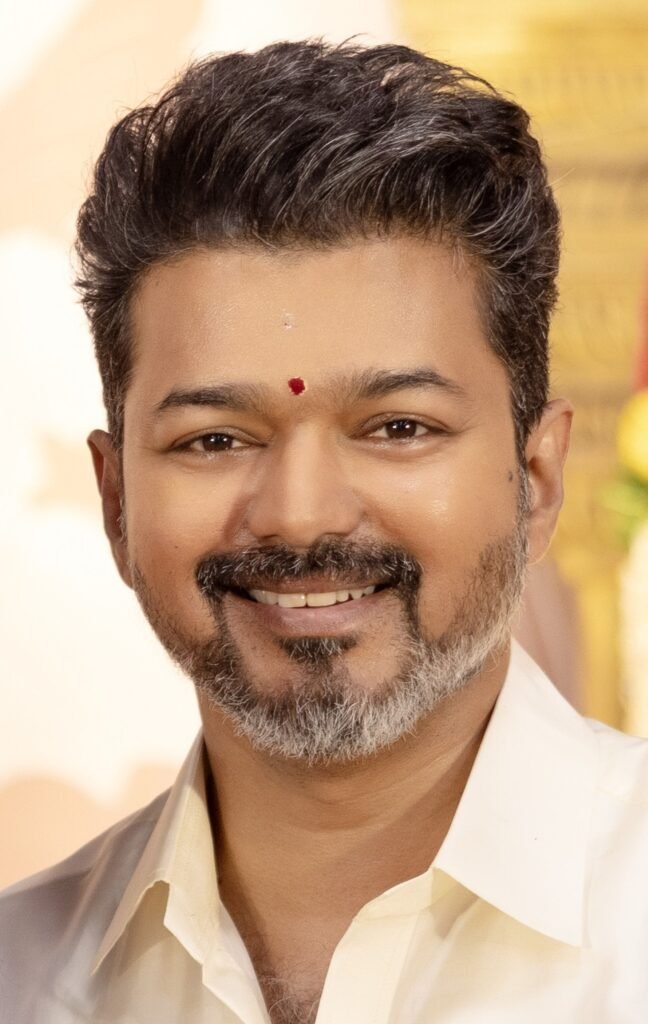
The importance of Vijay’s performance must also be discussed from an emotional point of view. In the knowledge that it will be his last film, everything about the movie feels different. Even the smallest gesture can feel like a farewell gesture.
As Vetri, Vijay employs features that are known to him very well. These features include confidence, charisma, and physicality. He also retains his comedic timing.
But he does not change the actor in any way by taking on this role. Vetri is still a version of the familiar Vijay hero. This is both a merit and a shortcoming of his performance.
The scenes in which he works with his wife give more emotional depth. In these scenes, Vijay shows patience, vulnerability, and responsibility. This is probably more valuable than the most spectacular action sequences.
It is another dimension of the farewell performance. The audience does not see Vijay act again one more time. The viewers see the beloved star bid farewell to the screen.
The political context influences this performance.
Vetri represents leadership, responsibility and civic activity. At the same time, Vijay begins his political career.
In this regard, it becomes hard to consider certain scenes fictional. The hero and the actor become inseparable in some moments.
But to say that this was his greatest performance would be unfair. A farewell performance is not necessarily a good one. It becomes significant in its context.
Bobby Deol, Pooja Hegde and Mamitha Baiju
Bobby Deol provides the required presence for John Himler. His intensity makes him appear believable as a threat. The writing hampers him from exploring his psychological depths.
John Himler is an intriguing character because of a contemporary idea. He knows about the power of technology in manipulating emotions of people. But sometimes the character tends to become the typical mass film villain.
Bobby Deol makes up for the simplicity of the screenplay through his physicality and menace.
This works well for him when the character doesn’t require much exposition.
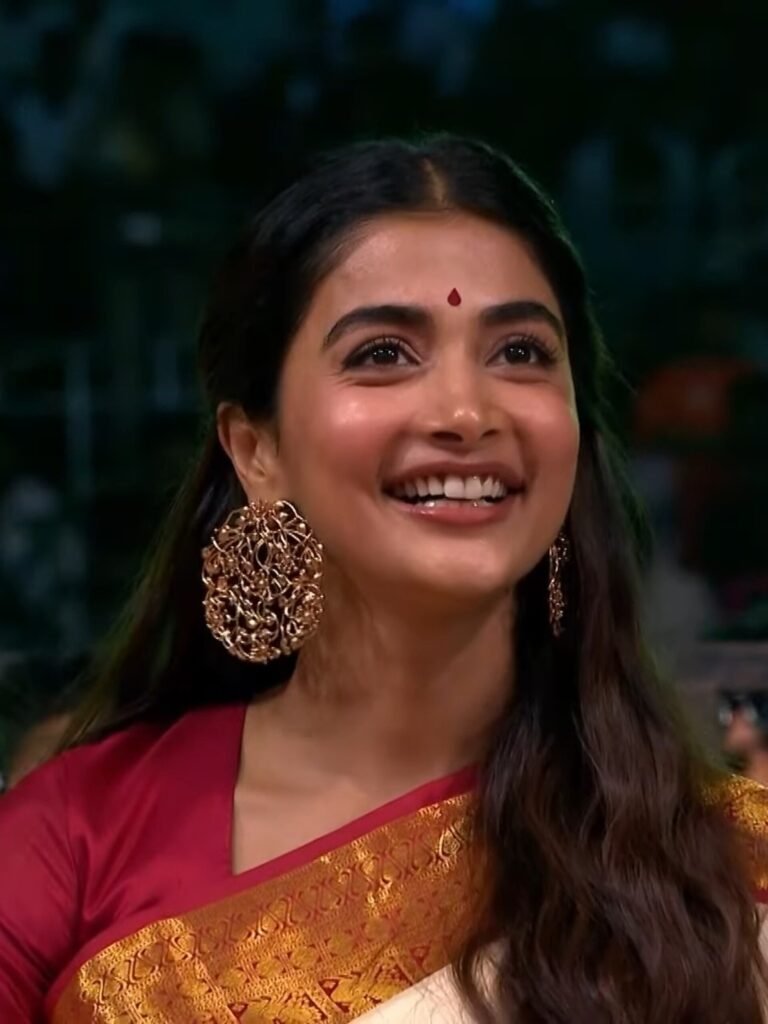
©Creative Commons Attribution-Share Alike 4.0
Pooja Hegde portrays professionalism and presence in her performance. However, the writing provides her with less dramatic scenes than those enjoyed by Vijay. Her character appears to be somewhat peripheral in the overall male-dominated story line.
This flaw can be blamed partially on the screenplay. An actor is limited by the amount of material that the writing provides.

Mamitha Baiju is possibly carrying the film’s most important emotional weight. Viji’s experience and growth provide much of the humanity to the story.
Baiju offers vulnerability and strength as the character grows.
It also stops the film from being all about Vijay.
The relationship of Viji and Vetri gives emotion to the action.
The AI Controversy
One of the strangest controversies involving this film relates to its use of artificial intelligence.
It originated due to an easily avoided editing error of the trailer. In a shot with a shotgun scene, people noticed a Google Gemini watermark.
The watermark quickly turned into ridicule on the Internet. Viewers could not understand the necessity of using AI for that picture. The makers decided to remove the watermark from further trailers of the film.
The controversy persisted even after the film was released. The film faced criticism related to its excessive use of artificial intelligence. The criticism included use of digital extras and AI effects.
Another aspect attracting attention was recreated appearance of MGR. It aims to establish a symbolic link with a political figure. However, the artificial appearance became too distracting for some viewers.
Having seen the film, I could understand that criticism. The matter is not in the fact that the technology was used. It is in the visibility of some of it.
Some parts of digital imagery seem less realistic than expected by the scale of the film. Instead of blending into the movie, some effects draw viewer’s attention to themselves. It may diminish the emotional effect of some scenes.
Artificial intelligence should not automatically be regarded as a problem. Cinema has always been introducing new technologies to have more creative possibilities..Digital effects can do things that traditional technology cannot easily achieve.
The question is about whether technology serves the creative vision. In case it does, the technology goes unnoticed. Otherwise, it draws viewer’s attention away.
It is natural that Jana Nayagan faces criticism.
The film is a large-scale production, and the expectations regarding it are high..Sometimes the use of technology seems too practical for creativity.
It is particularly disappointing for a farewell film on that scale. The audience expects the film to show excellent craftsmanship.
What Worked
Jana Nayagan thrives when it plays to its strengths without complicating things. Charisma of Vijay is still one of the biggest strengths of the movie. Action scenes provide the grandness expected of a big-budget movie.
A strong point in the movie is Vetri and Viji relationship. It allows the main hero of the story to have something else to fight for apart from his enemies. This is also strengthened by Mamitha Baiju’s acting.
Another strong point of Jana Nayagan is the fact that it addresses contemporary political issues. The issue of social media manipulation in politics is quite topical.
The film gets that the technology can have some impact on people’s behavior in politics and society.
Finally, Sathyan Sooryan’s photography helps the film achieve its goals effectively. It manages to incorporate both Indian star-cinema style and contemporary global techniques. The result looks fresh while staying Indian at heart.
Also, Vinoth knows how important spectacle is. The movie understands that sometimes there is a certain expectation from the audience. The movie fulfills these expectations perfectly.
What Did Not Work
The most notable flaw in the movie may be its lack of restraint. It seeks to cover too much ground within one storyline. Thus, quite a number of issues are not fully explored.
Firstly, the politics part of the movie tends to become simplistic. Issues that may be quite complex socially and politically are simplified into interpersonal rivalries. This makes the story easier to understand but also less intellectually stimulating.
The character of the villain may have gotten more attention. Himler’s tactics are quite fascinating, but the character is fairly ordinary. Some explanation for his motivations is given but not enough to make it meaningful.
This is evidenced by the runtime of the film. While some parts develop the story well, other parts tend to be a rehashing of already established concepts. A better script could have helped improve this.
Finally, the AI imagery itself may be considered a flaw. There are times when the technology seems to be used as an easy solution rather than an improvement. This is especially true where it interrupts the emotional parts of the movie.
None of these flaws ruin the movie completely. These only hinder its success in realizing its ambitions.
Final Verdict
Ultimately, Jana Nayagan is an ambitious but mixed goodbye. This film comes at a time when Vijay’s career and personal life have seen some remarkable changes. That alone makes it an interesting film beyond its typical commercial context.
As a tribute to Vijay’s cinematic persona, the film works well. The film contains plenty of action, emotion and political drama.
The best relationships the film has are those between Vetri and Viji. It is through this relationship that the film has a human dimension beneath its politics.
At times, the ideas in the film appear to be better than their execution. The film poses several interesting questions but fails to explore them enough. Political aspects of the film appear more like declarations rather than exploration.
The action works well but still falls back on commercial conventions. The cinematography is modern in its approach but is not completely innovative. The usage of artificial intelligence reveals Vijay’s technology ambitions and creative limitations.
Vijay’s farewell appearance is the most emotionally charged aspect of the film. However, he does not manage to reinvent himself as a movie star. Instead, Vijay offers his fans another variation on an already established cinematic character.
This might be a good thing after all. Jana Nayagan is not trying to transform Vijay’s screen personality. Instead, it brings the character to an end.
Therefore, the film is at its best when considered as a synthesis of various traditions. It merges Tamil mass cinema with politics and contemporary action cinema. It also combines melodramatic tradition with the theme of technology and social stratification.
Nevertheless, it is not an innovative film for Indian cinema. Yet, it shows how existing traditions can be adjusted to the new times. In any case, the most original aspect of the film lies in its context of production.
Vijay is no longer just playing a role of a leader. Instead, he is moving towards real political career away from the cinema. This fact inevitably affects our perception of his last performance.
For me, Jana Nayagan is neither a cinematic masterpiece of Vijay. Also, it is not a revolutionary political film as one might expect it to be. Rather, it is more complicated film and, to a certain extent, more interesting.
It is a commercial film loaded with significant cultural expectations. It is successful enough in providing us with spectacular scenes and real emotions. At the same time, it reveals limits caused by too many statements.
Its biggest success is not perfect film. Its biggest success is the synthesis of various worlds into one final cinematic product.
It is the world of mass heroes and political leaders. It is the world of Indian commercial cinema and global filmmaking.
Finally, there is a world of human performance along with the fast developing artificial intelligence.
And sometimes, they complement each other perfectly. At other times, they fight for the viewer’s attention.
This is what makes the film uneven. Jana Nayagan is ambitious, political and visually energetic. It is also overreaching, at times simple-minded and uneven in its craftsmanship.
However, when it comes to the significance of this film as Vijay’s cinematic swan song, there is no denying its importance. Because the significance of the final image of the actor lies in all that came before it.
For the generation that grew up watching Vijay, this film alone may make the experience memorable. But when one analyzes the film strictly as an artistic endeavor, there is room for doubt.
Jana Nayagan is certainly an ambitious farewell of the actor; however, there are cases where the concepts are stronger than the execution.
Jana Nayagan does not bring Vijay’s cinematic career to perfection. Rather, it ends his career with spectacular flourish, controversy, political symbolism and ambition.
Maybe this was only appropriate of an actor with a career that could never have ended with just one film.