
Prima Facie 2026 Movie Review

There are films that entertain you, but there are also films that make us question the world around us. Prima Facie is certainly the latter.
This British Australian drama is based on Miller‘s award winning play and looks at some difficult topics. It follows Cynthia Erivo as she looks at sexual assault, consent and the struggles faced by survivors.
Directed by Susanna White, this has taken a brilliant play and brought it onto the big screen. However, adapting a one woman show can be challenging.
The film follows Tessa Ensler (Cynthia Erivo), a successful criminal defence barrister who believes in the legal system. But after being sexually assaulted, her confidence is shaken.
She suddenly finds herself in the same situation as the other women she used to play tricks on in court.
Does this portray the emotion of the original production well? Does the cinematography make the important message hit harder?
Cynthia Erivo Delivers a Powerful Performance
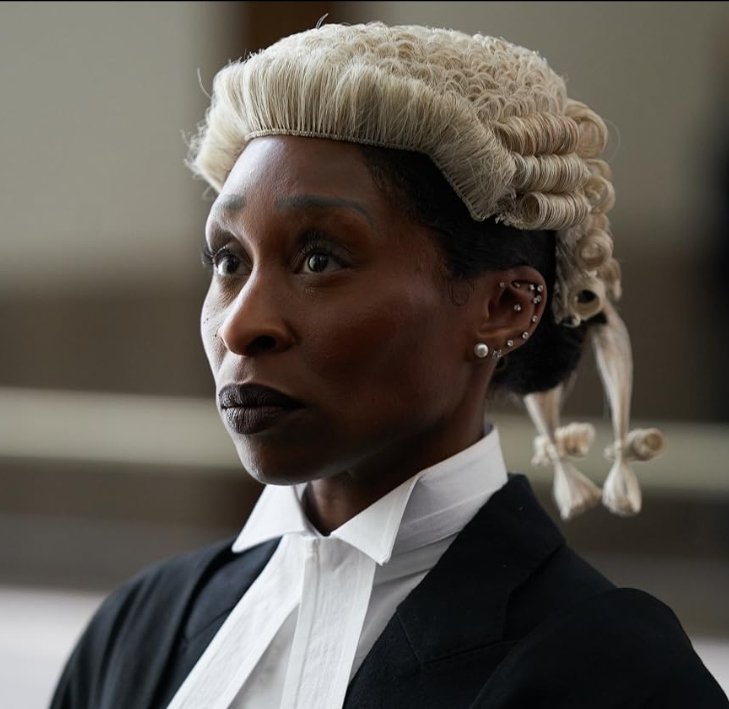
Cynthia Erivo is undeniably the standout of Prima Facie as she provides incredible emotional depth to Tessa.
At the start of the movie, Tessa is very self-assured, ambitious and fully at home in the legal world of London. She knows how to win cases and how to go about questioning witnesses.
However, after her assault, Tessa begins to have completely different views on the justice system. Her arguments are now being used against her.
Erivo does an incredible job showing this. We see how confused Tessa is trying to understand why the justice system is treating her this way.
As she is cast as a working class black woman, it adds an extra layer to Tessa’s character. This forces her to constantly prove her worth in a world that is not her own.
Despite her professional success, she is unable to shield herself from becoming the victim seeking justice.
This is a challenging role which requires a lot of emotional range. However, Erivo plays well during the calmer scenes and allows Tessa to show her vulnerability without too much over dramatisation.
An Impressive Supporting Cast
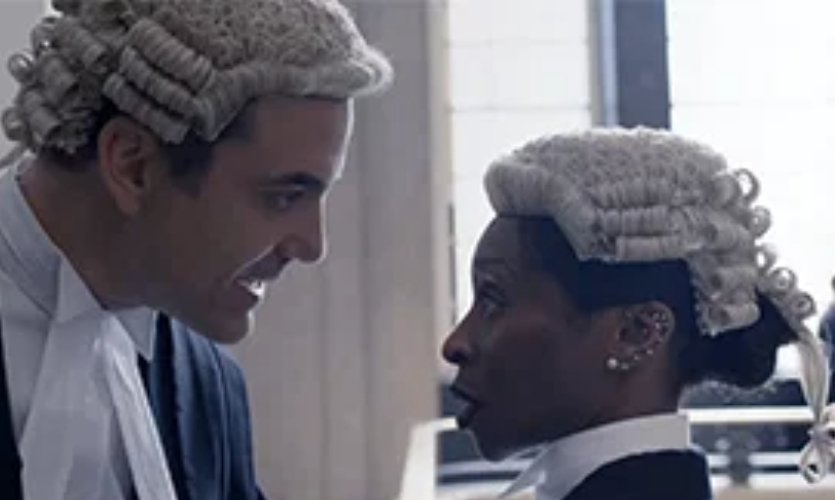
There are some brilliant supporting roles.
Daniel Ings is brilliant as Tessa’s colleague and love interest Julian Brooks.
He is charismatic, intelligent and genuine at first which makes the betrayal even more shocking.
He does not make the audience feel like Julian is a monster but rather someone who becomes more and more uncomfortable with his sense of entitlement and his version of events.
Another standout performer is Noma Dumezweni as June, Tessa’s mother. June has a lot of warmth and class.
This gives a good insight into the generational and class divide. June knows how hard her daughter has worked.
June also displays some valid worries about Tessa which highlights how tough the decisions she faces are. Tessa would risk losing everything she has built up over the years if she went public.
Simon Russell Beale adds authority to Sir Hugh Dalton KC. Toheeb Jimoh, Harry Treadaway and Elizabeth Dulau also add to the ensemble.
The ensemble can be a little overwhelming sometimes meaning some characters were not fully developed.
From Stage Play to the Big Screen
One of the main issues the film faced was transferring the piece from stage.
The original play had just Jodie Comer acting alone for about 100 minutes and playing all the characters. We see her personal journey through Tessa’s eyes.
This gave the play a very personal feel as we were stuck in Tessa’s mind.
However, the film has introduced a whole host of other characters into the story. Now we have Julian, the judge, other barristers and Tessa’s family.
This allows us to have a more varied view of the story however it does lose some of the intensity found in the original. The intensity and claustrophobia from the stage performance loses some of its impact.
Susanna White tries to keep the personal element using Tessa’s thought process. This often means we see her thinking differently to how she acts.
This can be very effective at times as we get another layer of emotion in seeing what she is actually thinking whilst maintaining a professional exterior.
However, there are times when the voiceover can feel a little forced. It does remind us that this is an adaptation.
This film can also give us subtle visual cues such as focusing on a regular coffee stain during Tessa’s police interview.
These small details help us understand how disorientated and shocked she is due to the trauma. This is a great example of how film can do things differently compared to theatre.
Making the Audience Feel Like the Jury
One of the most interesting features of Prima Facie is how it makes the viewer feel.
It makes the viewer feel as though they are part of the jury.
As we are shown the trial and both sides arguing their points, we are encouraged to think about the evidence.
This is quite uncomfortable to watch as we know what actually happened but in the trial there is a completely different story being told.
It is very frustrating to see Tessa’s credibility being attacked by a defence barrister. The arguments about her past relationships, drinking and behaviour come into play.
The film shows us how small details can cause reasonable doubt. All of a sudden it is not about the truth anymore but how well someone can convince you of their story.
This makes the audience think about their assumptions. If we had only seen the evidence from the trial would we have come to the same conclusions?
Although it is a clever idea, there are some negatives. Sometimes the film does lose the intensity of the original play as we are no longer in Tessa’s point of view.
In the stage production we felt Tessa’s isolation as we were in her shoes. With the film we are looking at the machinery behind her isolation.
This is not necessarily a bad thing but I did miss some of the raw emotions from the original production.
Cinematography and Susanna White’s Direction
Cinematography by Mike Eley helps to create distinctions between Tessa’s personal life and her professional life.
The courtroom scenes are utilised well, using the grand architecture. Wide shots are used to show the power and grandeur of the British legal system.
This often makes Tessa look very small, helping to emphasise how she is fighting against a bigger system.
There is a lot of focus on personal details. Close-up shots of Erivo’s painted fingernails, tattoos and piercings.
These focus on Tessa’s unique characteristics. As she is expected to conform, the shot of the barrister wig acts as a visual reminder of her hard work to become a barrister.
Overall some of the best cinematography is when we see Tessa after the assault. Intimate shots are used along with sensory details.
The scene when Tessa is being interviewed by the police is done really well. The camera focuses on the everyday items around her.
This helps to focus on the oddness of how the setting is so mundane yet her personal trauma is so intense.
The cinematography does not always work as well. The film does feel more like a typical TV drama.
There are some instances where the visual symbolism is a bit too obvious. The horse motif is used repeatedly which can sometimes feel like it is trying too hard.
Overall the cinematography does help to support the themes of emotion throughout the film. The less intense scenes tend to work better.
The Film’s Important Themes and Ending
Prima Facie is fundamentally about how the current legal system does not fully understand sexual assault.
Suzie Miller, having worked as a criminal defence and human rights lawyer, has written a powerful story about the challenging relationship between consent, evidence and reasonable doubt.
The film also highlights how women are expected to act in certain ways in order to be believed.
Tessa learns this the hard way when she realises the legal arguments she used to know so well were now very personal to her.
The ending of the film does not follow the typical courtroom win narrative but instead makes you think wider about how the system has failed.
Her final speech is a key moment where she takes back control of her voice and questions the traditional legal framework.
The film also extends this by showing images of female unity to show that it cannot just be individual survivors who make the change.
This was a good choice to give the film a greater sense of purpose. Instead of focussing on individual success, it gets the audience to think about how many people went through similar experiences.
The title of the film is very significant. Prima facie means ‘on the face of it’. This refers to evidence that initially appears to be enough.
This is a fitting title for the film as it is questioning how much justice is based on appearances and assumptions. Just because something seems credible in court does not mean it is true.
What Worked
Cynthia Erivo is a strong part of this film. She really brings emotion and vulnerability to a very challenging role.
There are some great supporting roles too. Daniel Ings and Noma Dumezweni stood out.
The themes of race, class, consent and institutional power make this a relevant film. It also makes you really think about your own assumptions around these topics.
Mike Eley’s cinematography really shines through in the calmer moments of the film. The attention to detail in these moments really conveys how traumatic Tessa’s experience was without being overly dramatic.
Finally, the film does not give us an easy answer. The ending really makes us think about the uncomfortable questions raised through the film.
What Did Not Work
A major downfall of the film is it does not translate well from the stage to the screen. The one woman play means that the intensity is lost when expanding the story.
In some scenes the inner thoughts seem to be too forced. There are some parts of the courtroom scenes that fail to create the desired dramatic effect.
I feel like the cinematography could have been taken further. Susanna White falls back on traditional courtroom methods.
I also felt like Tessa’s character was slightly watered down from the theatrical version. This makes it less contrasting around her professional attitude towards the other survivors.
Overall though it is a significant and valuable adaption.
Final Verdict
Prima Facie is a thought-provoking legal drama elevated by Cynthia Erivo’s outstanding performance. Although it loses some theatrical intensity, its powerful message makes it difficult to forget.
A compelling film that leaves you questioning the justice system long after the credits roll.