Rise Of Yhe Footsoldier: Retribution Review
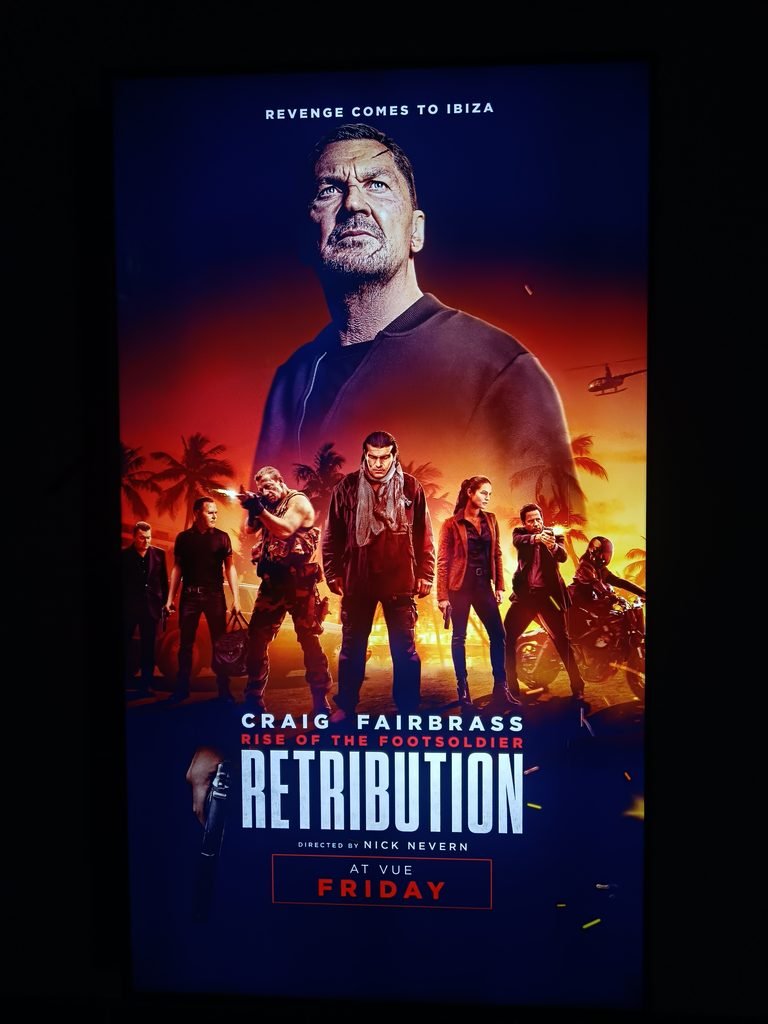
Rise of the Footsoldier: Retribution review: Introduction
There are very few British crime franchises that are as consistent as the Rise of the Footsoldier.
What started out as a tough gangster movie has turned out to be a long series which revolves around themes such as violence, revenge, loyalty and betrayal.
Rise of the Footsoldier: Retribution is the seventh film of the series.
Directed by Nick Nevern and produced by Andrew Loveday, the film continues the story of Pat Tate played by Craig Fairbrass.
Pat Tate has proved to be an interesting character in the series. He is fictional, unpredictable and almost invincible. The latter part of his character has been of much importance as the series has progressed.
The new story brings Pat Tate into a violent struggle, after the events of Rise of the Footsoldier: Vengeance.
This time, the revenge brings Pat Tate to Ibiza from Essex. What starts out as an easy job soon turns into something much bigger.
Tate realizes that he has gotten himself entangled in a big weapons trafficking scheme. The matter turns even riskier when the CIA starts keeping tabs on the transaction.
Before Tate knows it, he is not just up against some criminals anymore. He is trapped in between weapon dealers, mercenaries and American officials.
This is way beyond what we had seen in the early movies in the series. Now comes the big question of whether the growth is beneficial to the series or not.
A Franchise Built on Violence
Understanding Retribution is much easier when considering its source movie.
The initial film emerged in 2007 and very soon gained popularity amongst viewers of British gangster movies.
This film showed a tough portrayal of Essex criminal underworld.
It became famous for its violence and unique characters. One of the main characters was Pat Tate, the character performed by Craig Fairbrass.
Tate is not meant to be a hero. He is cruel, proud and frightening. However, despite all his flaws, films make him a person to whose fate viewers pay attention.
That makes the unique connection between the character and the viewers. You do not need to like Tate’s actions but the films require to see what is going on with him next.
Over years, the franchise grew bigger and produced many sequels and prequels. Sometimes, they showed different stages in the life of Tate.
Sometimes, they opened new aspects of the world of Tate. Retribution follows that tendency but takes Tate to an entirely new world.
Ibiza provides a very different backdrop from the streets and clubs associated with earlier entries.
The location gives the film an opportunity to feel bigger without completely abandoning its British crime roots.
From Revenge to Something Bigger
The underlying idea is rather familiar. Tate is out for revenge. His closest friend is killed, and Tate aims to find his murderers.
That is what gives the film an initial direction. Nevertheless, the plot quickly becomes more complex.
Tate finds himself involved in the business of weapons trafficking and heavily armed mercenaries.
Further involvement of the CIA makes the stakes even higher. It is here where Retribution expands the scope of the franchise.
Previous installments were free to focus on the criminal rivalry and personal vendetta of their characters. Now the plot involves elements of international crime and intelligence organizations.
It makes the movie more like an action thriller. Still, it retains the features of Rise of the Footsoldier.
The environment around Pat Tate, however, becomes much bigger..It can be viewed as an advantage depending on what one expects from the franchise.
If you like the escalating nature of the movies in the series, it might very well be an attraction. If you enjoyed the more realistic atmosphere of the previous films, the plot may sound somewhat new.
For me, the expansion is entertaining when it remains connected to Tate. It becomes less effective when the plot starts to feel bigger simply for the sake of being bigger.
Pat Tate Remains the Main Attraction
Craig Fairbrass remains the biggest reason for returning to this series. Pat Tate is an exaggerated character.
He is not particularly interested in diplomacy. When faced with a problem, violence is usually somewhere near the top of his list of solutions.
That makes him a difficult character to describe as sympathetic. However, sympathy is not really what the films are trying to create.
Tate works because he is a force of nature. Put him into an increasingly dangerous situation and wait for the consequences.
That formula remains effective. Fairbrass understands the character’s appeal. There is a confidence to Tate that makes even his most reckless decisions feel inevitable.
The danger is that a character who appears almost impossible to stop can eventually lose some tension.
If audiences believe Tate will somehow survive anything, the question becomes less about whether he will survive.
Instead, it becomes about how much destruction he will cause along the way. Retribution leans into that idea.
Tate is surrounded by people who should represent overwhelming opposition. Yet he continues moving forward. That gives the film its relentless quality
Ibiza Changes the Atmosphere
The decision to move the action to Ibiza is among the most intriguing decisions in the film. Firstly, it completely changes the visual identity of the franchise.
Ibiza has been connected with nightlife and tourism. Against such a background, the level of violence appears much higher.
One can see a contrast between the light background and the dark world of Tate.
Thus, the film acquires a new atmosphere which is quite different from the usual British setting of the franchise.
Secondly, the move to Ibiza enables the creators of the film to widen the scope of action. They are not limited by one criminal environment anymore.
In the present film, Tate deals with international criminals and mercenaries. This means that the action becomes much more grand.
On the other hand, such a decision entails certain risks.
The further the Footsoldier series gets away from the environment where it was born, the more British identity it loses.
The Footsoldier franchise has had its own distinctiveness for many years.
Dialogue, settings and the criminal world helped to distinguish the franchise from the common gangster films.
Retribution manages to retain some of this identity. Still, it has an international plot.
The Action
If you head into Retribution hoping for violent moments, you won’t be disappointed. The movie lives up to the reputation of the series as a whole for its brutality.
Tate’s story is full of clashes, threats, and increasing danger. The action also fits the scale of the story.
Mercenary work and weapons trading naturally lend themselves to more action.
There is a feeling that the filmmakers hope to turn this installment into an event. It makes sense too.
After six movies before it, there was a risk of predictability in continuing the same criminal confrontation.
The problem with making the action sequences larger is that it does not necessarily make them more tense.
The best action scenes tend to be those in which the stakes are clear. Tate does not get into conflict just because the script demands it.
Instead, he goes after the people involved in his friend’s death. This makes the action have an emotional purpose.
Without the connection to Tate’s emotions, the action can turn into spectacle for the sake of spectacle.
The Problem With Escalation
With a seventh installment in the series, there is obviously a temptation. Things have to get bigger.
Larger cast of enemies. More violent. More locations. More dangerous. Revenge follows such an approach.
However, sometimes the constant escalation can lower the effect of previous movies.
Part of the success of the original “Rise of the Footsoldier” was the fact that the world looked believable.
The characters were slightly exaggerated, yet it all took place within the framework of a believable criminal underworld.
With seven films in the franchise, the story becomes more exaggerated.
Pat Tate can suddenly find himself involved in an international arms deal.
It certainly is a more epic tale. Though whether it is a better tale is debatable. I believe it depends on how much you care about the character of Tate.
Fans of the character will definitely like the idea of his being placed in a more dangerous situation.
Though those who look for a more down-to-earth gangster film might not appreciate the choice.
Does It Work as a Seventh Film?
Many sequels find it difficult to justify their existence. For the seventh film, this becomes an even more difficult task.
However, Retribution has an easy solution to this dilemma. It gives Pat Tate another reason to take revenge and changes the entire setting of the film.
This is enough to make a sequel. The filmmakers realize that the audience is already familiar with Tate.
They do not have to waste time telling us who he is. They simply move forward with the story. This keeps the movie moving at a nice pace.
Sometimes there are times when the storyline becomes predictable. But, being predictable does not automatically doom a movie if it is still fun to watch.
Here, it is not the puzzle or mystery that attracts people. It is how Tate deals with his new problem, which is even worse than the last one.
The makers know this and realize that their audience will come for this reason.
What Worked for Me
In my opinion, what makes this movie great is its dedication to Pat Tate. Craig Fairbrass is again believable as Tate.
Pat is larger-than-life, but the acting has enough personality in Tate to make him interesting.
Another positive about the film is its use of the Ibiza backdrop which allows the franchise to have a new visual landscape.
An international crime story adds a new layer which the franchise has not had before. And, the expanded scope helps the action sequences too.
I like how the movie has kept the revenge motive in there too. This allows Tate to have a personal stake in the bigger picture.
Otherwise, the weapons trafficking plot could become disconnected from Tate. This is when the movie is at its best when the two collide.
What Did Not Work
However, the greatest drawback of this movie lies in its size.
There are moments when Retribution tries to transform Rise of the Footsoldier into a completely new franchise.
Indeed, the international crime setting and involvement of intelligence agencies increases the ambition of the movie.
At the same time, the movie becomes less unique in its setting.
Some elements of the plot seem to be added not for the sake of the characters’ development but to raise the stakes.
The movie is also predictable at times.
Once Tate gets caught between a number of conflicting forces, it is obvious that violence is going to be the ultimate resolution.
This removes some level of suspense from the movie. The movie’s brutality also becomes repetitive at some point.
The audience can become accustomed to it and nothing is able to surprise them anymore.
Of course, the action in the movie remains exciting but sometimes it needs additional ingredients to stay interesting.
A Different Kind of Footsoldier
The thing that makes Retribution stand out is that it marks another step in the development of the franchise.
The franchise started off with a hardcore British gangster story. Now it covers the international field.
Pat Tate went from being a famous local criminal to the hero of a much wider conspiracy. Such a step can lead to division among viewers.
Some people will appreciate the wider scope of action in the film. Others will miss the more realistic atmosphere of the preceding installments.
Both reactions are valid. Clearly, the film wants to develop the franchise. The issue is whether the film keeps enough elements of the identity of the franchise.
In my view, the result is mixed. There is still enough crime and Britishness in the film to make it recognizable.
At the same time, the international plot consumes a major portion of the movie. That is why Retribution is a hybrid.
It is half gangster movie. Half revenge movie. Half action movie. And increasingly half international crime movie.
Final Thoughts
Footsoldier: Retribution is yet another high-energy film in the franchise which doesn’t seem to be running out of steam anytime soon.
Once again, we see Pat Tate embark on a revenge-driven quest and get entangled with ever-so-more dangerous villains.
The location on Ibiza is an interesting one and a refreshing change.
The story involving weapon trafficking adds a bigger context to the movie than previous installments.
Craig Fairbrass is still the key reason for watching. Fairbrass portrayal of Pat Tate once again adds to the unpredictability of this character.
However, at times the ambitions of the movie become its drawback. Adding mercenaries, weapon trafficking, and the CIA into the story makes it big.
That being said, it also makes it somewhat unrealistic.
At times the bigger storyline can take away the focus from the personal revenge tale which drives Pat Tate throughout the movie.
From my point of view, the film does best at keeping its focus on Tate and his enemies.
These sequences preserve the high energy level which helps to attract fans of the franchise.
Nonetheless, Retribition will serve the purpose of satisfying those who have been following the saga this far.
It understands what the audience demands. It brings with itself violence, vengeance, outsized characters, and lots of action.
It might not have the same sense of reality that was once associated with the saga.
However, as the seventh episode, it shows that there is still room for Pat Tate to get bolder.
Rise of the Footsoldier: Retribution is not a remake of the saga. It is rather an elevation. Pat Tate’s world has merely gotten bigger.