Runner 2026 Movie Review
Introduction
Watching a movie that has a very clear idea of what it is trying to be is always a rewarding experience.
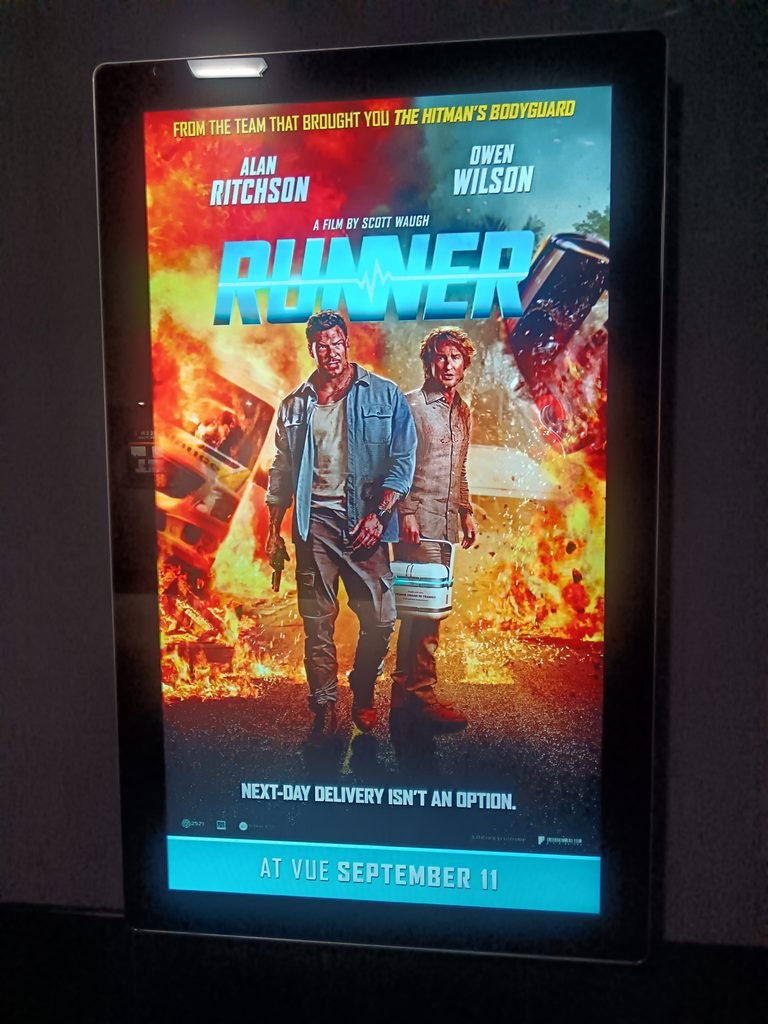
Runner, directed by Scott Waugh, does exactly that right from the beginning. The film gives an exhilarating, violent, and unexpectedly humorous tribute to action movies of the past.
The story involves Alan Ritchson and Owen Wilson playing the main characters who have to transport a live liver through Queensland in a rush against some extremely dangerous criminals.
While the concept is straightforward, the approach gets more outlandish with each passing minute. Luckily, Ritchson and Wilson offer enough personality to make it all work.
A Classic Action Formula

Essentially, Runner is an old school action film that has been put on some fancy clothing. The film revolves around a heroic character with little emotions, a bunch of colorful villains, an ongoing ticking clock and an odd couple whose relationship transforms into real friendship throughout the movie.
None of these elements are really groundbreaking. Rather, most of what happens in the film seems like a deliberate choice on the part of the director to make the film feel familiar.
Waugh has been very open about the influence that such films have had on his work and he is not afraid to use his knowledge of them and their storytelling in order to craft his film.
In this sense, the director is a big fan of the late director Tony Scott and other action films. The combination of these elements is quite visible in the film.
Rather than reinventing the genre, Waugh wants to recreate its uncomplicated pleasures. That decision occasionally works brilliantly, although it sometimes exposes the screenplay’s lack of originality.
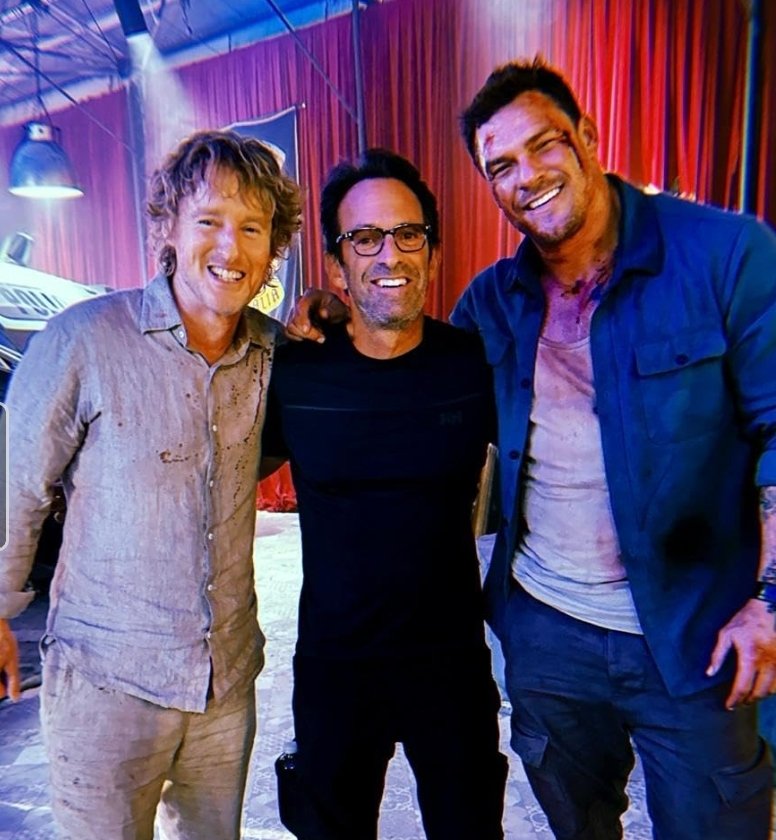
Scott Waugh Keeps Things Moving
Given that Waugh had worked as a stunt performer, it becomes clear why he approached the direction of action sequences in the way he did. He understood well how crucial it was to consider physicality while creating action.
In general, the action in the movie is quite dynamic and real, not relying solely on digital wonders. There are crashes, fights, and bodies occupying the same space in reality.
There is CGI in the movie, which is inevitable in any modern action movie. Still, the practical stunt performance is a big part of the visuals of the film.
Another thing Waugh understood very well is the concept of escalation. Every sequence tries to outdo the previous one in some way – by being larger, more dangerous or more elaborate.
The director pulls off his most daring shots while filming the action sequences inside the bigger vehicle.
It becomes clear that Waugh does not just follow the traditional approach. He sometimes plays around with it, trying different ways of presenting action conventions.
Nevertheless, the film does not seek to turn into an experimental work of its kind. Waugh stays loyal to the genre’s conventional style.
This fact works for and against the movie. On one hand, the film is confidently shot. On the other hand, it lacks innovation.
Lorenzo Senatore Makes Queensland Shine
Runner’s unique cinematographic identity is shaped largely by Lorenzo Senatore‘s approach to filming. Queensland appears colorful, wide, and unexpectedly cinematic.
Indeed, such a backdrop allows one to create great contrasts to the increasing violence. The broadness of roads provides a perfect sense of scale to the chase scenes.
Furthermore, Runner doesn’t use the usual and somewhat cliché visuals found in modern action thrillers. Indeed, a brighter photography works perfectly well with the movie’s pulp character.
During the scenes with action, Lorenzo Senatore’s work becomes even more efficient. The movement, composition, and locations combine to form greater physical momentum.
Another interesting aspect can be seen as a quieter one. Both Hank and Ben have certain emotional detachment despite the fact that they travel the same road.
This detachment becomes gradually dissolved in the way they are framed in the film. Their changing relationship is subtly reflected through their positioning within the frame. As their trust develops, the camera increasingly brings them together.
It is a minor aspect of directing and cinematography, yet it imbues their relationship with more visual significance.
Thus, the cinematography goes beyond creating spectacular visuals. It lends visual personality to the characters and settings.
A Story About Redemption
Beyond the violence, Runner unexpectedly has some interest in redemption. Hank is a veteran with plenty of emotional baggage.
In his backstory, he had suffered from war experiences, lost something, and battled with alcohol problems. The task thus acquires not only the purpose of getting medical supplies somewhere.
It also offers an opportunity for Hank to save another person’s life rather than think about his own mistakes. So, his actions gain an emotional purpose.
The theme of sacrifice and friendship is revealed in the characters’ relation with each other, which becomes even more significant than the main character expected.
However, the script doesn’t delve deeply into the mentioned aspects. The emotional background of the main character is fascinating, but the film is going too fast.
The cartels operate in the same way as well; their purpose is just to advance the plot along.
This doesn’t really constitute a problem for a film such as Runner.
However, there are times when the emotional subtext seems to hint at a more profound film that lies underneath the action.
The Pace Never Lets Up
Coming in at 98 minutes, Runner is very well condensed and manages to keep itself on its feet throughout most of the duration of the movie.
A clock ticking naturally lends itself to such a format. Any kind of delay is an additional complication, while any complication results in another chase scene.
In the end, it becomes a movie that is rarely boring, with more than one new challenge around the next corner.
Of course, fast-paced doesn’t mean perfectly paced. Transition from one sequence to another can be somewhat jerky, especially when character development clashes with the action.
Often times, the movie ends up opting for yet another chase instead of taking some time off to focus on the characters.
That being said, however, the fast pace actually benefits the movie. Runner could not take too much time from viewers.
Its simplicity becomes an advantage because the film knows when to move forward.
Ritchson and Wilson Drive the Film

Alan Ritchson is well-suited to being Hank Malone because his physicality immediately establishes him as a believable action star.
Furthermore, Ritchson knows that the strength of Hank comes from his subtlety. He doesn’t need to tell anyone that he is dangerous.
This is shown through his physicality. Rather than this, Ritchson adds a touch of weariness to Hank beneath his brawn.
Those who have seen Ritchson in Reacher will notice some similarities. Ritchson is once again an intimidating and silent man with fighting skills.
However, Hank’s vulnerability adds something new to Ritchson’s role. He is not just a human battering ram.
And there’s Owen Wilson, who just nails it with his nervousness and funny timing, ensuring that the movie never gets boring.
Ben’s talkative nature would be annoying in any other performance, but Wilson somehow manages to make him very likable.
Perhaps the best thing about the movie is the amazing chemistry between Ritchson and Wilson. They are quite different and this gives a lot of personality to the standard script.
Ritchson is totally believable as the deadpan character, while Wilson adds all the nervous energy and timing.
Both actors don’t deliver a career-defining performance, but they know exactly what their movie needs.
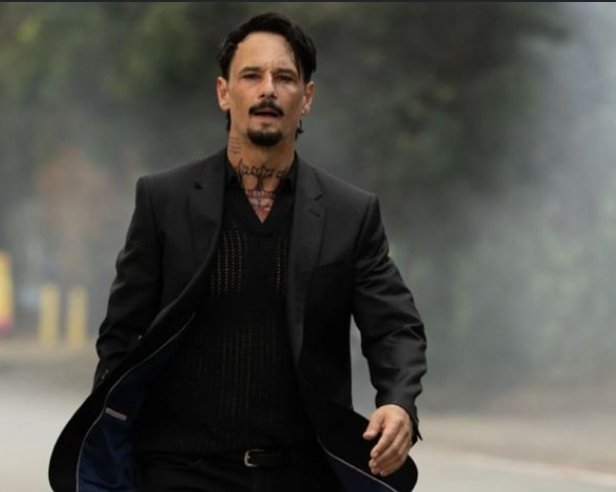
Rodrigo Santoro takes much more enjoyment from the proceedings. His cartoonish bad guy for the cartel is very much over-the-top in his menace.
Santoro plays into the B-movie nature of the film rather than trying to keep it all utterly realistic. This makes for an enjoyable performance even when the character becomes predictable.
Leila George adds more emotionality to Kate’s character. It is essential for remembering that there is a child involved, and not just yet another task to be done.
The actors Adriana Barraza and Sullivan Stapleton are also decent in their roles. But again, there is not enough room in the script for them to show themselves in full force.
What Works
Runner’s most convincing quality is that it believes in itself. It understands its template, and it makes no apologies for using it.
The practical action is entertaining, especially when Waugh lets the stunt-work rule the day. The Queensland settings add to the film’s impressive scope.
Above all, Ritchson and Wilson ensure the trip is fun. Their chemistry turns a predictable plotline into a more interesting one.
Another key asset is Runner’s relatively brief running time. Nothing superfluous is included, and the plot concentrates on its main task.
Lastly, there is something refreshing about Runner being unencumbered by any franchise baggage. Runner just wants to be one straightforward action flick.
What Did Not Work
It is clear that the problem with the movie is originality. Each and every major plot element sounds familiar from other action movies.
There are few villains who can be called unforgettable. Some secondary characters are underdeveloped despite good acting.
The screenplay often compromises plausibility to keep the plot flowing. Some events happen just because there is a need for an action scene afterwards.
There are some emotional elements which are not fully developed. For example, the history of Hank could have been explained better.
Sometimes jokes work great, especially when Wilson and Ritchson play. Sometimes they sound like a try to copy the dialogue of older action movies.
Another problem is the tone of the movie. There is a desire to be serious and show real emotions. But at the same time, there is the cartoonish style of violence.
Most of the time it works well, sometimes not.
The Final Verdict
This is not a movie trying to rewrite the action genre. This movie has no ambitions of doing so.
Scott Waugh presents a fun and enjoyable throwback to the good old days with practical action and unusual team at the heart of the story.
It’s predictable, its antagonists are cliché and character development seems rushed. And still the movie remains unexpectedly enjoyable.
Alan Ritchson gives physical believability to the film, while Owen Wilson provides comic relief. These two actors make the best reason to watch Runner.
And the cinematography by Lorenzo Senatore adds visual uniqueness to the movie. Queensland becomes an outstanding background for increasingly chaotic travel.
Runner works due to its understanding of the importance of simplicity. The movie does not need mythology and constant construction of the world around characters.
It needs hero, partner, liver and increasing insanity of travel. Waugh gives all of that in appropriate amount of energy.
Runner can become a refreshing option for those who crave uncomplicated action adventures. It does not try to rewrite the genre, but it sure moves well.
The final verdict is clear. Runner uses formula but it drives it with enough charisma to get to the end line.