Scarlet Anime Movie Review: Stunning Visuals & Deep Themes
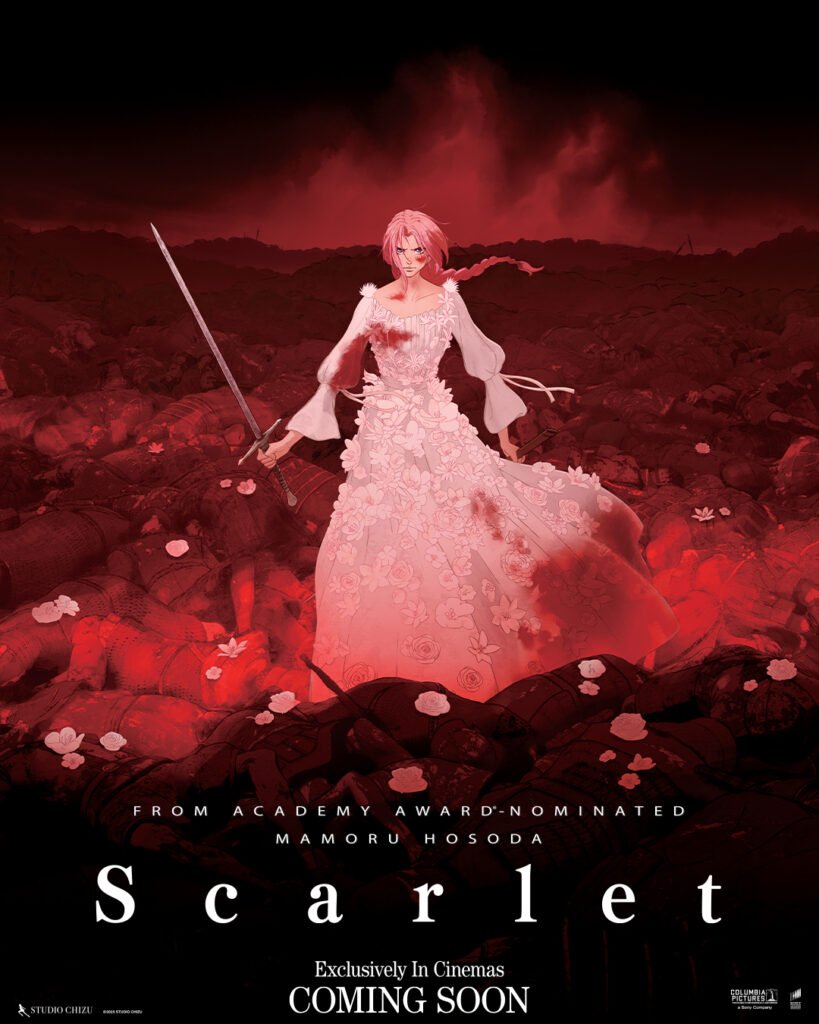
Scarlet Anime Movie Review: Hosoda’s Bold and Visually Stunning Film (Warning Contains Spoilers)
In this Scarlet anime movie review, we explore Mamoru Hosoda’s ambitious vision, blending complex themes, striking visuals, and intense emotional storytelling. Hosoda has established himself as one of modern animation’s most distinctive voices through films like Wolf Children, Mirai, and Belle.
Following the success of Belle, he decided to explore darker, more introspective themes, diving into grief, anger, and the psychological scars of loss. Hosoda explained he wanted to stray from standard coming-of-age tales to look at what occurs when someone is eaten up by a destructive goal.
The conceptual roots of Scarlet
Scarlet’s conceptual roots draw heavily from classic tragedy, most notably Hamlet. Hosoda reinterprets revenge not as a heroic quest but as a trap that distorts identity and isolates the individual. Rather than adapting Hamlet directly, he created an original story that channels similar emotional conflicts. He sets it in a fantastical world blending medieval elements with a surreal, metaphysical atmosphere. This setting allows Hosoda to explore timeless themes while retaining creative freedom, making the narrative both familiar and fresh.

At Studio Chizu, the studio Hosoda started, they focus on projects driven by directors not committees. While developing the film, the team tried new animation methods to catch small facial expressions and amp up emotions.
Hosoda aimed for the visuals to show Scarlet’s inner struggle. So, they switched between realistic and abstract scenes based on her emotions. This way, the movie uses visuals as much as dialogue to express feelings.
Global Considerations
In Scarlet, Hosoda aimed for a global audience. His earlier movies got international recognition, so he wanted to craft a story that would hit home for everyone, avoiding too much Japanese context. He focused on relatable emotions like grief and regret, and the search for purpose after failing. Because of this, Scarlet feels very personal yet appeals to a wide range of people.
In Scarlet, Makoto Hosoda makes a purposeful change in his directing style. He’s known for movies like Mirai and Belle which mix warmth with deep emotions, yet in Scarlet, he opts for something tougher and more mentally complex. The character Scarlet is fueled by rage and obsession, and Hosoda deliberately doesn’t smooth out her rough sides. Because of this, audiences have to face some discomfort instead of getting an easy feel-good moment. This makes the movie tougher to watch, but ultimately more satisfying.
Stylistic Choices
The big stylistic choice in the movie is how it contrasts the different worlds, showing Scarlet’s inner turmoil. It switches between the real world and an ethereal afterlife-like place in a way that’s really abstract and dreamy. Things get thrown off logically, but that matches how messy Scarlet’s mind is. This shows how Hosoda uses visual storytelling—structure and rhythms—to convey emotions instead of just having characters talk about them.
Visually, Hosoda departs from the soft, rounded character designs of earlier films. At Studio Chizu, he emphasized sharper lines and realistic proportions, particularly in facial animation. Micro-expressions—small shifts in eyes or mouth—convey suppressed emotion, adding depth to Scarlet’s character. Simultaneously, environments swing toward painterly or surreal styles, creating tension between grounded human detail and a volatile world.
Pacing And Structure
Pacing in Scarlet also reinforces the narrative’s psychological focus. Scenes linger during moments of silence or internal conflict, immersing the audience in Scarlet’s emotional stagnation. Conversely, action sequences and moments of violence are sudden and disorienting rather than choreographed for spectacle, emphasizing that revenge is chaotic and unsatisfying rather than heroic.
Hosoda embraces ambiguity in Scarlet, avoiding clear answers or moral conclusions. This aligns with the reinterpretation of Hamlet, where indecision and internal conflict are central. Viewers must actively interpret Scarlet’s journey, making the experience introspective and intellectually engaging.
Themes
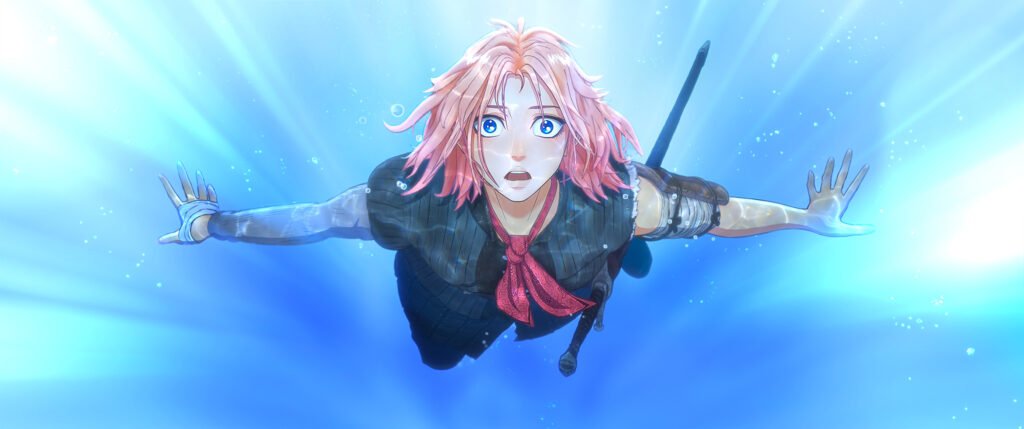
At its core, Scarlet examines the tension between revenge and forgiveness. Scarlet’s initial drive to avenge her father evolves into a meditation on letting go of hatred. Her father’s final plea to forgive shapes the story, transforming a revenge narrative into a story about breaking cycles of violence. The film’s supernatural underworld, filled with endless conflict among spirits, symbolizes how vengeance perpetuates suffering. Ultimately, the story conveys that true resolution requires compassion rather than retaliation.
The film also delves into existential questions about life, death, and meaning. The afterlife is neither heaven nor hell but a liminal, uncertain space where souls risk fading into nothingness. This forces Scarlet—and the audience—to confront impermanence and consider what gives life value.
Parallel to this, the character of Hijiri, a modern paramedic, represents empathy and human connection. His presence demonstrates that understanding and compassion grow through relationships rather than isolation. Scarlet’s journey of self-reinvention, symbolized by cutting her hair, reinforces the importance of choosing one’s identity instead of being defined by revenge.
What Worked And What Did Not
Scarlet excels in visual storytelling and thematic ambition. Surreal landscapes, ghostly armies, and symbolic imagery amplify the story’s philosophical weight. Emotional moments, particularly Scarlet’s confrontations with forgiveness and farewells with Hijiri, land with real impact. Hosoda combines spectacle with intimate human emotion, which elevates the narrative’s resonance.
However, the film faces challenges with narrative clarity and character depth. The rules of the afterlife can be confusing, and supporting characters, such as the knights or Claudius, lack consistent development. Philosophical points sometimes appear heavy-handed instead of emerging naturally. Tonal shifts between historical realism, surreal fantasy, and intense action sequences can feel uneven, occasionally reducing the impact of critical scenes.
Overall Opinion
In short, Scarlet shines through its visual storytelling, emotional highs, and thematic ambition but struggles with narrative coherence and subtlety. Its intellectual boldness makes it compelling, even when execution falters. Overall, this Scarlet anime movie review concludes that Hosoda delivers a film worth watching, with unforgettable visuals and thought-provoking storytelling despite minor narrative flaws.