Street Fighter 2026 Movie Review
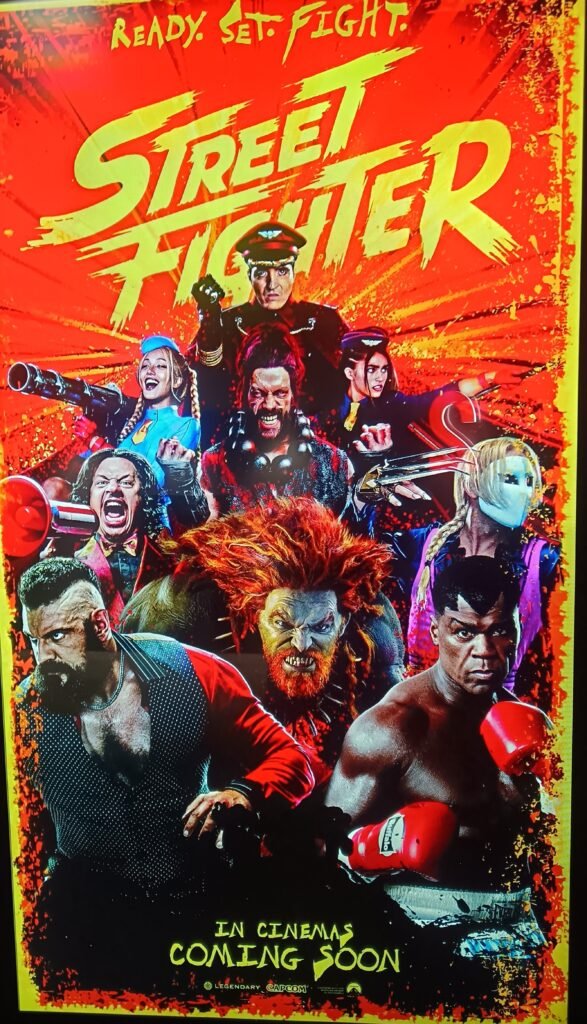
Street Fighter 2026: A Chaotic, Colourful Fight
Some video game adaptations struggle to understand what made their source material special.
This Street Fighter understands the assignment. But this adaptation of Street Fighter has managed to grasp the concept despite faltering at times.
Directed by Kitao Sakurai, the film is loud, odd, colorful, and shamelessly not serious. But it is inconsistent, and while there may be flaws with the plot’s attempt to catch up with its own ambitions, I left the film feeling entertained. And that goes a long way.
Taking place in 1993, the plot involves Ryu and Ken, who are estranged brothers of martial arts. They are reunited because they are enlisted by Chun-Li to take part in the World Warrior Tournament organized by M. Bison.
However, he plans something beyond the simple tournament of fighting champions. A conspiracy slowly unfolds, leading the fighters into something larger than the tournament itself.
The setup gives the film room for rivalries, spectacle, and a large collection of familiar faces.
An Anime Opening That Steals the Show
The movie opens up with an animated prologue which is done entirely in 2D animated style from Titmouse.
Being set in 1987, it is a reference to the year of the original video game release. Though hand drawn, it has some texture and flaws making it much more warm in comparison with computer animation which is usually pretty clean.
Young Ryu and Ken are students of Gouken voiced by Don Lee. In a fight against Sagat, Ryu unlocks the Satsui no Hado and scars him badly.
Death of Gouken breaks up the life of the two brothers and changes the course of their lives forever.
This sets up the rivalry between the two characters before the main live-action movie starts and is both stylish and tragic.
Camp, Colour, and a Very Specific Sense of Humour
Sakurai brings an absurdist sensibility that suits a franchise built around outrageous fighters. His experience of creating anarchic comedies might be a good explanation why the movie has such an insane atmosphere.
The film does not seek to make all characters brooding and psychologically tortured. On the contrary, there are lots of ridiculous jokes, excessive poses, and fan service.
This approach is definitely not going to be appreciated by everybody. People who expect from this movie a dramatic martial arts action movie in the dark atmosphere might get disappointed because of the silly jokes and scenes.
In fact, the movie is intentionally naughty and cartoony, and the filmmakers do not seem to be ashamed of their creation.
One more thing worth noting about the film is the role of M. Bison played by David Dastmalchian. As one can notice, he is not just a traditional world-conquering villain, but a maniac who is obsessed with controlling things and attracting attention.
He is both physically and psychologically menacing to the viewers. At the same time, the actor manages to interpret the role in a different way and avoid the imitation of Raul Julia‘s famous performance.
A Neon-Soaked Visual Style
The aesthetics of the movie give its universe a distinct character. The cinematographer Ken Seng offers a glossy wide screen style for the colorful fighting arenas and neon-lit environment.
This aesthetic is tangible with a shallow focus, horizontal lens flares and an overall texture which is reminiscent of the analogue action cinema.
As a result, the atmosphere of nineties is brought up but at the same time the movie looks very current.
At times, the aesthetic is reminiscent of Blade Runner, however the mood of the movie is very different from the dark and gloomy one.
The bright colors and dramatic compositions suggest that the fighters were taken out of the arcade cabinet.
This stylized approach is vital since the movie does not strive for realism but rather tries to create a universe recognizable for the video games players.
The large-screen format also allows room for the fights to breathe. Large compositions make it easier to set up the environments before they become crazy.
The movie is said to have shots composed for IMAX screenings, which fits its approach of emphasizing spectacle and scale.
And even beyond these scenes, the camerawork gives style to a film that would otherwise seem rushed.
There’s definitely a visual perspective in this film, and it makes the movie distinct.
The Fights Deliver the Arcade Fantasy
One of the most significant aspects of the movie is action. While all the typical moves of the characters from the games are mentioned only in passing, they actually make their way into the battles as a part of the choreography.
The end result is a highly literal interpretation of the arcade fighting game, complete with recognizable poses and highly theatrical finishers. Practical martial arts are the basis, and visual effects add some fantasy to the scene.
Andrew Koji’s martial arts expertise proves useful in this aspect. It brings some discipline and precision to Ryu’s movements, giving them a sense of controlled aggression.
Each fighter has a unique style in this aspect, which adds personality to each battle. The choreography knows that a Street Fighter match must be expressive rather than just efficient.
The effects enhance rather than distract from the action. Special moves have an intentionally over-the-top look, fitting into the game-like atmosphere. Some scenes may be obviously ridiculous, but it is exactly what makes the movie great.
The film does not try to make the viewer believe in the fact that every move should be allowed in an official tournament.
However, the confrontation between Dark Ryu and Akuma takes this method of storytelling to a much darker place indeed.
Featuring the soundtrack of Rob Zombie’s “More Human Than Human,” the fight is violent and merciless.
The impact is strong, and the escalation inspired by anime turns the fight into a very brutal experience. This is a good payback for those who appreciate the more intense side of the franchise.
The Soundtrack Adds to the Spectacle
Music also forms another element of the exaggerated personality in this movie. It usually sounds better where it accentuates the contradiction between the well-known action scenes and the film’s exaggerated style.
The broader musical approach fits the film’s nineties setting and arcade-inspired atmosphere. The music contributes to creating momentum in the fight scenes and acts as an indicator of changes in tone.
At times, recognisable personalities and presentation make the music feel like another attention-grabbing insertion.
When the soundtrack supports the scene, it adds texture. When it competes with the characters, it becomes distracting.
The Story Moves Faster Than It Can Explain Itself
This movie has lots of energy, but its speed works both for and against it. The story moves from one fight scene to another without really pausing to get the story down.
Sometimes, that pace keeps the movie from being boring, but sometimes you wonder if some necessary details went by while you were trying to figure things out.
There are many characters in this movie, and not everyone gets enough time to develop. Known faces show up without much explanation, and people have to figure out where they fit into the big picture on their own.
Sometimes, it seems like characters show up in the movie just because people know them from the series. That can be fun as a game of spotting favourites, but it weakens the story’s overall focus.
This idea of tournament conspiracy is very useful, yet at times, it seems like a connective tissue between the set pieces.
Certain events occur without giving viewers the necessary time to react emotionally to the situation that occurred before that.
The dark twist of Ryu, for instance, is one of those situations. The actors sell the idea of it, but the script does not give enough time to the process and its consequences.
The brothers’ relationship should be a backbone of the film, and it is at times. Particularly when they fight and try to get on nerves with each other, they bring authenticity to all the fun in the film.
Yet, this film could have benefited more from slowing down the pace in order to let the audience enjoy the moments of conflict and reunion between them.
Performances: Brothers, Villains, and Scene-Stealers
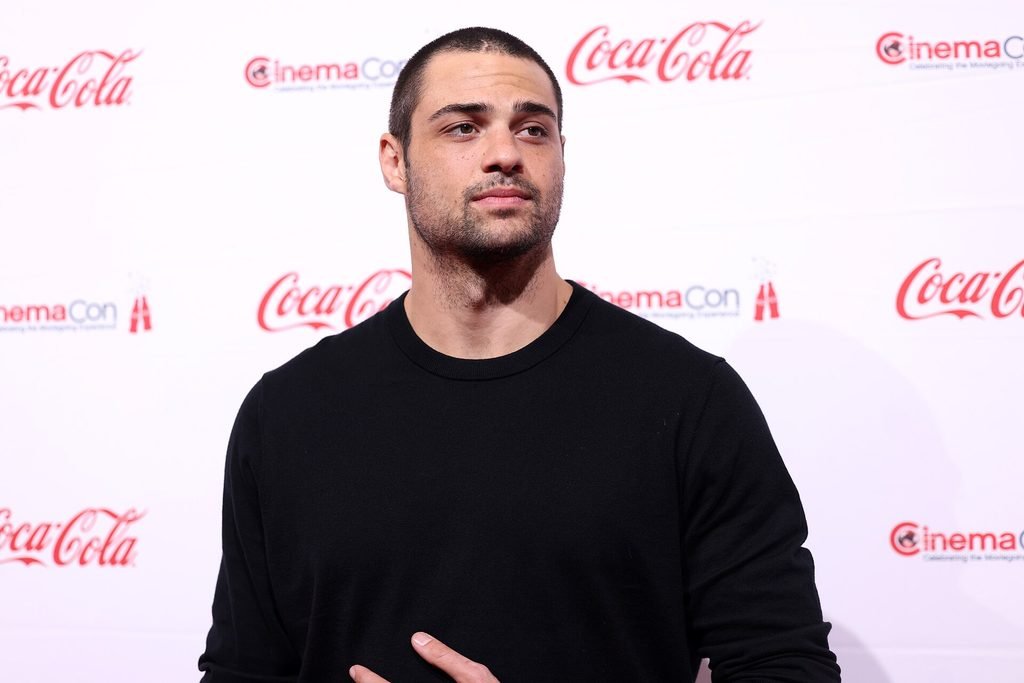
By Gage Skidmore ©Creative Commons Attribution-Share Alike 4.0
Ken, played by Noah Centineo, provides the comic spark of the movie and, in many ways, the emotional core.
The actor plays Ken as a performer who cannot help but perform for any audience, and there is something restless about him that generates a lot of laughs with his physical humor and shameless mugging. But the character is given a sense of pain, which emerges whenever Ken feels abandoned.
The character of Ken could easily be exhausting with all his loudness, but Centineo brings enough vulnerabilities into the character to make him believable.
The relationship between Ken and Ryu works very well since the jokes show their intimate knowledge of one another and how much they can hurt each other. This chemistry helps anchor a movie that revels in the cartoonishness of its excesses.
Andrew Koji is equally well cast as Ryu. He displays a calm demeanor but does not make the role look static.
He has credible fight choreography and his subtle responses tend to speak volumes at times. He is most effective in scenes when Ryu must contend with the nonsense offered by Ken due to the contrast between their personalities.
Although he does well with Ryu’s dark side, the role does not afford Koji enough time with this aspect of the story. He ends up developing into Dark Ryu against a background of many cameo roles. This limits his ability to make the crisis believable.
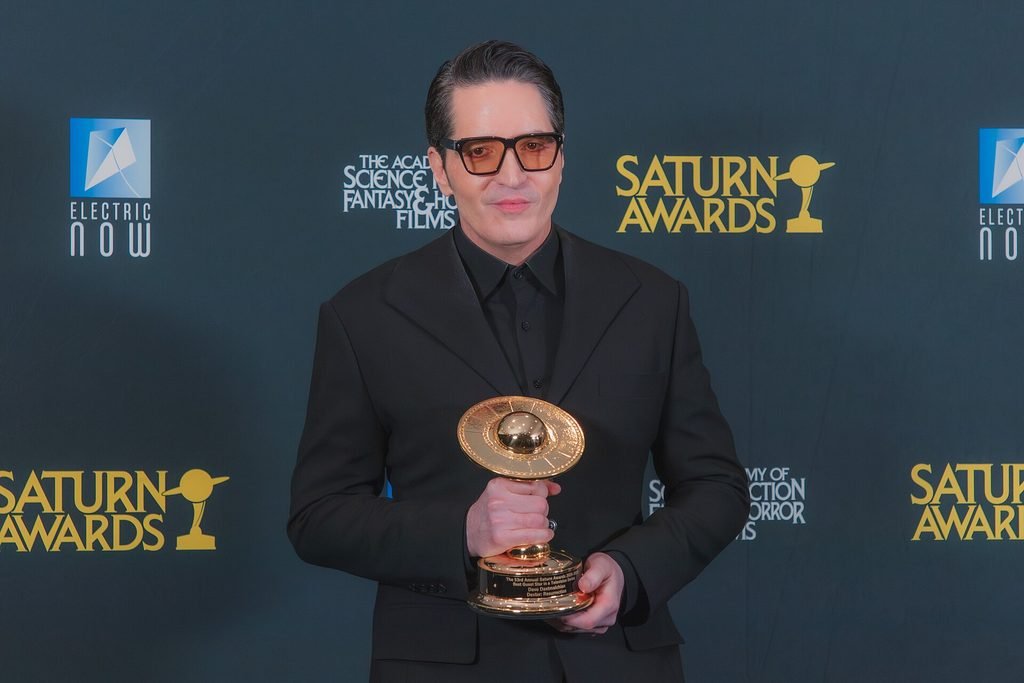
David Dastmalchian makes Bison unnerving through his self-importance and controlled menace. His version feels less like a simple theatrical tyrant and more like a man who believes his own mythology.
Callina Liang gives Chun-Li strength and physical authority, making her feel like an active force in the story. She is more than a guide who exists to point the brothers toward the next fight.
Cody Rhodes brings a wonderfully ridiculous energy to Guile. His delivery suits the film’s broad humour, especially when the character gets caught up in childish arguments.
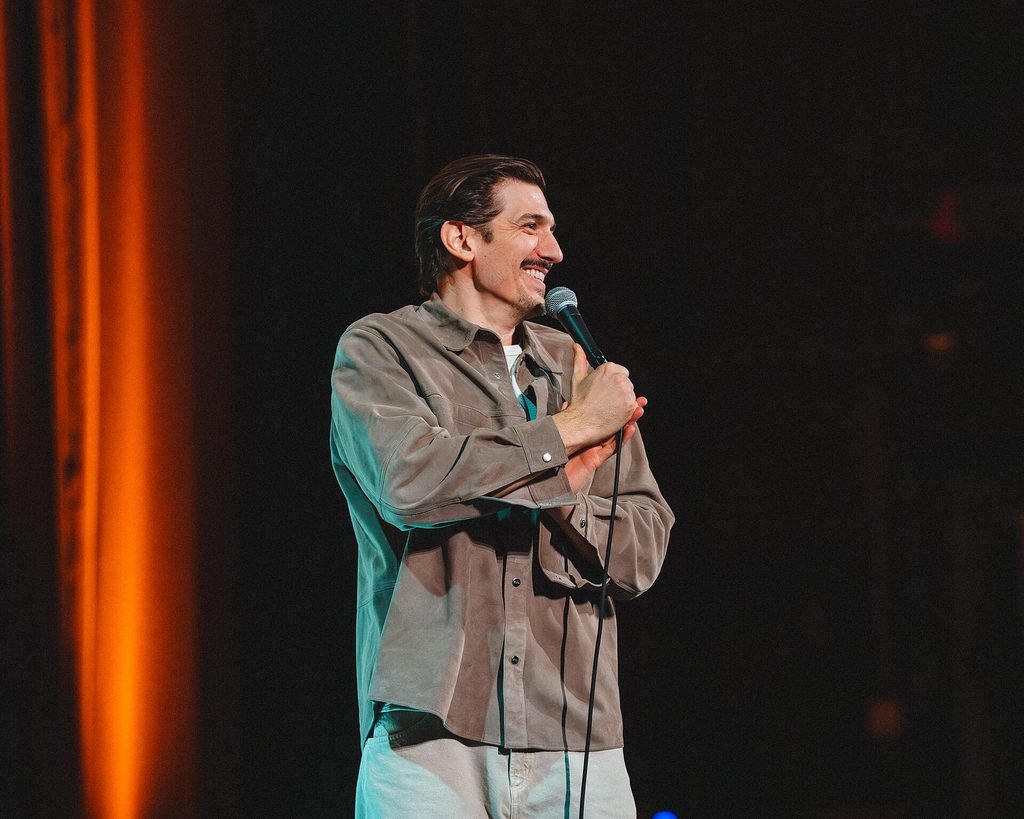
Andrew Schulz’s Dan Hibiki is another comic wildcard, acting as Ken’s excitable hype man and manager. His pink gi and opportunistic approach to street fighting make him an amusing embodiment of the franchise’s sillier corners.
Eric André adds another layer of unpredictability as tournament commentator Don Sauvage. His unhinged commentary feels designed to keep both the fighters and the audience off balance.
Orville Peck makes an intriguing Vega, using the character’s mask, claw, and elegant physicality to create an eerie presence.
These smaller roles help the world feel busy, even when the screenplay cannot give everyone meaningful development.
Not every performance fits as neatly. Jason Momoa’s Blanka has a laid-back, bro-ish delivery that sometimes undercuts the character’s strangeness.
A few line readings pulled me out of the scene rather than drawing me further in. Curtis “50 Cent” Jackson’s Balrog also feels too close to the performer’s public persona.
His appearance can resemble a celebrity cameo built around branding rather than character.
Final Verdict
Despite its faults, I thoroughly enjoyed myself with Street Fighter. Chaotic, colorful, and sometimes way too chaotic for itself, it has fun at heart. Street Fighter doesn’t hide how ridiculous its universe is; on the contrary, it revels in it.
It may have jokes that fall flat and a plot that needs some breathing room, but I came out of it grinning.
The after credits sequence sets up an intriguing potential for a sequel, indicating that there may be some other stories worth telling in this universe.
I certainly would eagerly await a follow-up to it, especially one that would give its characters some more time to grow.
There is much about it that could inspire a continuation – their rivalry, the franchise’s quirky cast of characters, and more.
Street Fighter may not be a knockout, but it certainly makes me want to step back into the ring.