
The Queen at Sea Review

Introduction
Some films are designed to entertain. Others ask questions that remain with you long after the credits have finished.
The Queen at Sea definitely belongs to the latter group.
Directed and written by Lance Hammer, the movie represents his return to filmmaking after an 18-year-long break from the industry.
His last feature was Ballast which came out in 2008 and received much praise for itself. So, there is definitely something to look forward to.
But what really makes The Queen at Sea complicated is the issue raised by it.
It deals with issues such as aging, dementia, family obligations and the very complex matter of consent.
And all of this happens through an intensely private family feud.
Amanda is a newly divorced intellectual who leaves for London. Her decision is partly motivated by a desire to be closer to her elderly mother.
Leslie suffers from advanced stages of dementia. Thus, Amanda comes into a scenario that is already filled with both emotional and practical troubles.
But nothing can prepare her for the discovery she makes once she is inside her mother’s home. She catches Leslie engaging in an intimate moment with her husband, Martin.
Amanda is aware of the fact that recent medical evaluations suggested that Leslie could not consent to what was happening.
Therefore, she assumes that something has gone seriously wrong. But the man himself sees the whole issue quite differently.
For him, their intimacy is an aspect of a long-lasting marriage that provides him with a source of comfort for his wife, and not an abuse at all.
An Uncomfortable Beginning

The film’s central incident is deliberately difficult to watch. It forces the audience into a situation where there are no simple answers.
The reaction of Amanda is instantaneous and quite understandable.
There is an impression of a vulnerable woman who might have lost her capability of giving consent regarding intimate activities.
It means that she needs protection from those people. Calling the police becomes the intervention into the process.
Nevertheless, Martin has a completely different point of view on this matter. He does not see himself as someone who exploits his wife.
For him, he and Leslie still continue their intimate relationship. It means that this problem becomes the basis for the movie’s moral conflict.
Is the protection of the person the same thing as respecting her wishes? Does a person keep some types of autonomy even when he or she develops advanced dementia?
How to combine the opinion of the doctors and personal experience? The movie does not provide easy answers to all these questions.
On the contrary, it makes the viewers feel more and more uneasy. This fact is the great advantage of the movie.
Juliette Binoche at the Centre
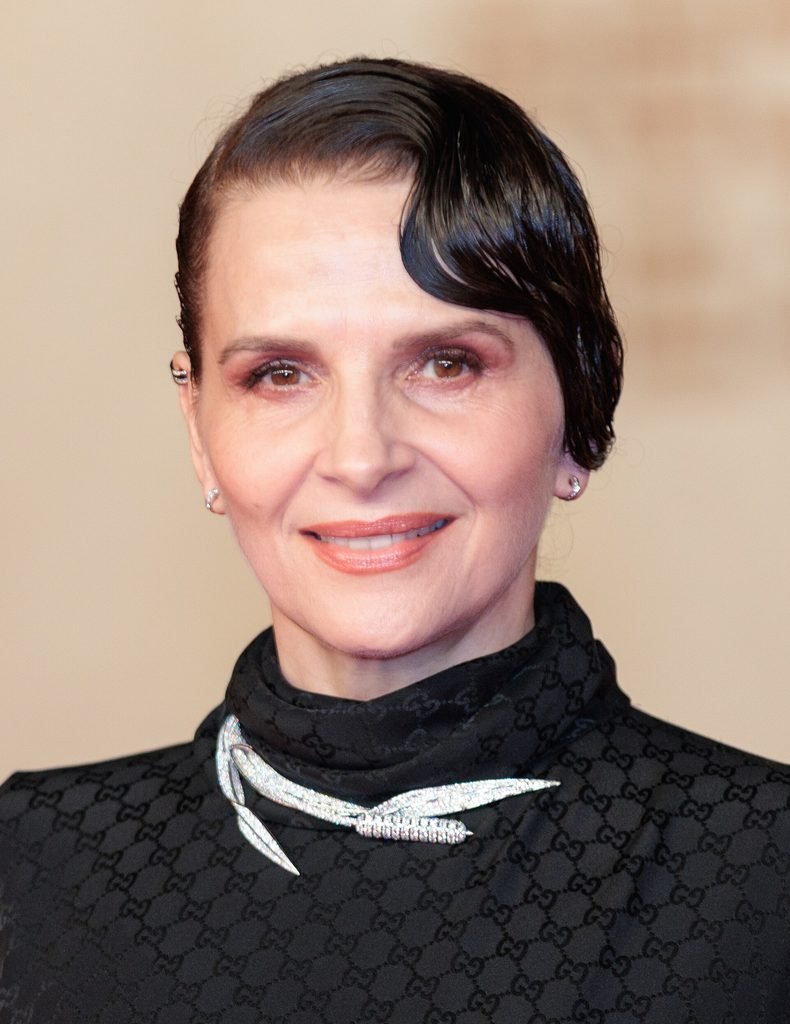
By Segolene Liger ©Creative Commons Attribution-Share Alike 4.0
Juliette Binoche gives Amanda an emotionally complicated role.
She has to be a woman who thinks that she is doing the right thing. On the other hand, the choices that Amanda makes affect all those around her.
It is a very complicated balance. She is caring but not always unbiased. Her anger is fueled by her care about her mother.
But care often leads people to making choices for others. Binoche shows that contradiction well. Amanda is not shown as a heroine straightforwardly.
Also, she is not presented as an interfering daughter. Instead, Amanda is shown as a complex personality whose motives include love, fears, and morality.
The performance by Binoche helps to understand the reasons of Amanda’s reaction. At the same time, it gives an opportunity to discuss whether the reaction was really necessary.
It is quite a complex character. Amanda herself has a very chaotic personal life. Having divorced recently, she is trying to build it again while her mother gets worse.
She is dealing with grief even though her mother is still alive. There is a particular sadness in watching someone lose parts of themselves through dementia.
The film understands that this loss affects families as much as individuals.
Anna Calder-Marshall’s Difficult Role
Anna Calder-Marshall has an especially hard job playing Leslie. Leslie’s state ensures that the communication cannot always be understood on face value.
In this case, she has problems expressing herself due to the advanced stages of dementia. That poses the hard task of trying to understand other people’s interpretations of her behavior.
Is the gesture a clear statement of intent? Is anything familiar when memory is no longer available?
Can you still express yourself when you cannot communicate? One of the ways the film is powerful is its refusal to make the issue easy for the audience.
She is not shown to just be a passive victim of her disease. She is shown to be a character with a history, relationship, and emotional bonds.
This is crucial as there is a tendency to see dementia only as something of loss. Queen at Sea instead focuses on what is left when communication becomes increasingly harder.
It is a hard question. Memory may be gone. Communication may be unreliable. But relationships can carry immense weight.
Leslie’s marriage to Martin therefore becomes central to the film’s argument. The audience has to consider what that long relationship means in the present.
Tom Courtenay’s Martin
There is a great deal of emotional depth to the portrayal of Martin by Tom Courtenay.
Martin himself is placed in a highly uncomfortable position. As far as Amanda is concerned, there is very little about him that is not troubling.
From Martin’s point of view, however, the relationship that he enjoys with his wife, Leslie, is deeply intimate and loving.
He believes that it has been ongoing throughout his marriage to her. He also believes that it offers comfort to her.
This does not, in and of itself, answer the issue of consent. In fact, it complicates things further. Courtenay never allows Martin to become a completely villainous figure.
This is critical to the complexity of the film. Were Martin clearly malicious, the key issue raised here would be made far simpler.
Instead, one must examine both his intentions and Leslie’s mental state. There is vulnerability to his position.
Not only is he caring for his wife, but the woman that she has become. Furthermore, he could very well be losing the relationship that defined him.
His notion of intimacy may thus be intrinsically tied to grief. That does not give him an excuse.
It does, however, humanize him.
The Moral Maze
The more that outside institutions get involved in the situation depicted in the film, the more complex it becomes.
Police, social workers, and carers are getting into a private dispute. Involvement of these people turns the conflict upside down.
The family is no longer struggling with internal issues. It is now the issue for institutions.
And this brings the opportunity to discuss one more controversial topic – when does society need to intervene in vulnerable adult’s life?
Of course, intervention is necessary to protect people from manipulation and exploitation.
But intervention can limit people’s freedom. It is very difficult to find the line here.
This line becomes particularly blurred in case of inability of the person to express his/her desires clearly.
This film never tries to suggest that institutions are providing easy answers.
Various professionals are approaching the situation from various perspectives.
Everyone has to consider certain responsibilities. Police has to investigate the issue. Social workers have to consider protection of vulnerable adults.
Carers have to balance the need to provide assistance and the requirement to respect people’s dignity.
The family has to accept the results of the investigation. All these responsibilities are interconnected in some way.
Consent and Autonomy
Consent is clearly one of the film’s most important themes. Yet the film approaches the subject through relationships rather than abstract arguments.
For Amanda, it is Leslie’s inability to give meaningful consent. For Martin, it is their shared past in marriage.
There is some legitimacy in both positions. Prior engagement is not the same thing as consent in the current situation.
And, at the same time, dementia does not make a person a zombie. That is the space where the movie is situated.
It provokes reflection about the nature of autonomy amid altered cognitive ability. It is not limited to sexual relationships.
It goes into healthcare choices, housing and daily decisions. Whose will should prevail in decision-making for a person with dementia?
It may be a relative, spouse, physician or the government. This film is not trying to find an easy way out.
What it does is expose the difficulties of these decisions. It is its strength as a story.
Family Responsibility
Underneath the issue of consent lies another important theme in the film.
Leslie’s family is also faced with a dilemma about the rights and responsibilities of family members towards each other.
Amanda feels responsible for taking care of her mother. For Martin, it is important to keep on taking care of his wife.
Both characters do not consider themselves self-centred. They both think they act because of Leslie’s needs.
This makes their arguments even more painful. Not only do they argue about the past events. They argue whose idea about Leslie’s needs is correct.
Also, they have different interpretations of her welfare. Amanda puts emphasis on protection. For Martin, it is important to maintain stability and love.
Both positions are uncomfortable. It gives the family dilemma its intensity and depth. Moreover, it makes the film human rather than a straightforward police or court drama.
Consequences of all these events go beyond court decisions. People’s relations are hurt. There is no trust left. All familiar beliefs are put under question.
It becomes clear that everyone can find himself in the situation when his understanding of caring can be insufficient.
Lance Hammer’s Direction

The return of Lance Hammer to the world of cinema ensures that the film takes on an appropriate intimate tone.
The content of the film calls for a subdued handling of the story.
Any other way could have easily compromised the plot. On the contrary, the emotional turmoil in the film takes shape through the characters.
Through the directorship in the film, emphasis remains on the people involved.
This is important since the film’s crucial events take the form of conversations.
The emotional upheaval takes place through disagreement as opposed to any showmanship.
One conversation is as effective as any dramatic scene in the film. This gives the film a sense of reality.
Moreover, this ensures that the actors get ample space to perform their roles. This is due to the fact that the direction ensures that the audience think.
This is necessary given the morally complex story of the film. It doesn’t require the film to tell us which side we should take.
What Worked
However, the most powerful element in this film lies in its unwillingness to provide clear answers to the problems posed by the plot.
It could have been done in one way or another: either it could have served as a narrative about the issue of domestic violence, or as an apologia for the intimacy of marriage.
In any case, The Queen at Sea avoids such approaches and finds itself in an uncomfortable middle position, thus forcing viewers to rethink their assumptions about the film.
Excellent acting is also a very strong element. Binoche plays Amanda with great emotional depth without turning her into an angry character.
Courtenay manages to play Martin sympathetically but, at the same time, does not take away from the viewer any questions about his actions.
Calder-Marshall shows Leslie, who still retains her importance and influence despite the fact that she cannot speak much.
The film also uses the idea of exploring uncomfortable things. It does not distance aging from viewers. Rather, it immerses them into the life of the family coping with painful reality.
What May Not Work for Everyone
It is certainly not an easy movie to watch. The subject matter alone carries significant emotional weight right away.
The central scenario may also be off-putting to some. This seems to be one of the intentions of the film.
But those in search of conventional entertainment may find watching it difficult.
The narrative revolves more around moral dilemmas than around conventional action.
Its suspense lies in discussions, choices and their consequences. This will probably result in a slow pace of the story.
The movie also doesn’t give the viewer the emotional satisfaction he may have been expecting.
There are no clear-cut villains. There are no easy solutions. There are no clear protagonists who know exactly how things should play out.
This ambiguity is among the main features of the movie. But at the same time, it may cause frustration to the viewer.
Some may feel dissatisfied after watching the film because of this. Others may like the fact that the movie leaves it up to them to make the decisions.
Overall Verdict
The Queen at Sea is a difficult watch as it does not seek to make the central conflict easy. Lance Hammer explores very important issues by using very personal family conflict.
Consent, autonomy, ageing and responsibility are among the themes that are considered but not reduced to simple arguments.
Juliette Binoche brings out all the necessary qualities in the character of Amanda. Tom Courtenay makes Martin a very complex character.
Anna Calder-Marshall plays the central role in making sure that Leslie takes the centre stage. The trio brings out a family trapped in an impossible conflict.
Police, social workers and carers become part of the conflict which moves the story from just a family dispute.
It becomes an exploration of the manner in which society deals with vulnerable people. This means that the movie is larger in scope than one could easily imagine from the story.
The issues dealt with will not be comfortable to many viewers. In addition to this, some viewers may even be frustrated by the ambiguity in the film.
Nonetheless, that is precisely why the film is interesting. Instead of providing the audience with answers, it poses questions.
Moreover, it acknowledges that taking care of someone can mean conflicting priorities. Making sure that the vulnerable one is protected is necessary.
Being respectful of his/her dignity is equally essential. Knowing how to do both of these things is exceptionally challenging.
The Queen at Sea does not make such claims about itself. Instead, it challenges the audience with it. This is what makes the film heart-wrenching from time to time.
However, it is also incredibly humane. Instead of making the issue of dementia purely tragic, it considers how it impacts relations.
Moreover, instead of creating characters out of symbols, it creates flawed humans. This is the source of strength of the film.
The thing is that moral choices are never made under ideal conditions. They are made by people who love each other.
They are made when there is not enough information available. They are made when everyone knows he/she is doing the right thing.
The Queen at Sea takes that uncomfortable reality and builds an absorbing drama around it. It is a demanding film, but it is also one that gives its audience plenty to consider.
Most importantly, it leaves the difficult questions where they belong. They are left with the viewer.