
The Terror: Devil In Silver Review
Introduction: A Franchise Reinvented (Warning Contains Spoilers)
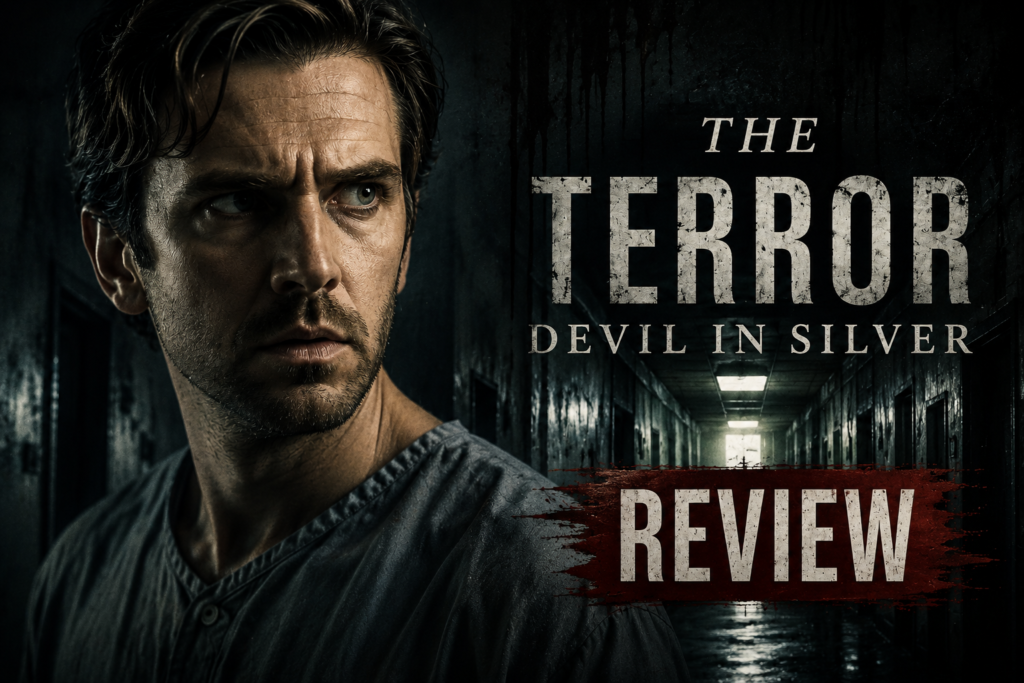
The Devil in Silver: The Terror review starts off with a basic yet fundamental truth. This is not the same program that audiences had been watching in previous seasons. This new iteration opts to replace historical terror with institutionalized horror in the present day. It takes viewers from freezing tundra to the halls of a psychiatric hospital.
While the earlier seasons had made use of geography as terror, this season makes use of systems. The hospital is not merely a backdrop; rather, it acts as the main antagonist. This creates a more psychologically based fear.
The series immediately signals that clarity is not the priority. Disorientation becomes part of the viewing experience. That choice defines both its strengths and its weaknesses.
Premise and Narrative Structure
The story revolves around Pepper (Dan Stevens), who was wrongly institutionalised in the first place. Pepper arrives at New Hyde Psychiatric Hospital, where he was sent through dubious means. The system is against him from the get-go. It is hard to distinguish between truth and lies while in the institution.
The show takes its time in building the story through its early episodes. This is done for a purposeful reason. The show values realism more than story progression. Audiences have to live in ambiguity just like Pepper himself.
Initially, the episodes concentrate on routine and setting. The characters are introduced gradually and subtly. Thus, the feeling of verisimilitude is achieved within the institutional world. It, however, leads to the narrative delay.
Later on, the supernatural dimension becomes much more pronounced. The Devil starts to appear as an actual character and symbol. Hallucinations and reality tend to blend. A coherent storyline is built in the second part of the season.
Direction and Stylistic Choices
The directing style is quite different from what we have seen before. In previous entries, there was an emphasis on calmness and clarity. In this season, chaos and fragmentation prevail.
The use of the handheld camera can be observed in many hospital scenes. It conveys a certain feeling of immediacy and uneasiness. The scenes do not seem to be viewed from the outside but lived through.
Framing also does not follow conventional rules for establishing shots. Spatial geography is consciously concealed. The passages merge with each other in ways that are confusing. Thus, they help emphasize the psychological confusion of Pepper.
Expressionism is also strongly used by directors. Rooms have different atmospheres according to the emotion at hand. The reality seems unstable and fluid. Thus, they support the psychological themes of the season.
The approach is effective but not always controlled. At times, stylistic ambition overrides clarity. This becomes more noticeable in later episodes.
Visual Effects and Horror Design
The visual effects are restrained but deliberate. They focus on distortion of psyche over visual spectacle. The paranormal elements are left intentionally ambiguous.
The Devil itself is never fully revealed.
Its true nature is shrouded by shadows and fragmentation. This keeps the suspense high throughout.
Environmental effects add to the perceptional changes in the hospital. The corridors seem to be distorted or elongated. These effects enhance the theme of psychological horror.
The boundary between hallucination and reality is unclear. This is a recurring theme in the season. It adds to the ambiguity of the story.
Unfortunately, darkness makes some effects harder to see. Some visual elements cannot be fully appreciated. This impacts their effectiveness greatly.
Cinematography and Lighting Design
Cinematography is definitely one of the most controversial topics of the season. The visual language uses a lot of shadows and darkness. Fluorescent lights are used along with dark, artificial shadows.
Thus, there is always an atmosphere of uncertainty. Hospital hallways are both clean and frightening. Light doesn’t really illuminate everything around the scene. That adds to uncertainty but makes things less legible.
Many shots use under-exposure. Things tend to disappear in the shadows at some point. It shows the character’s state of mind. But, it also poses challenges to the understanding of the viewers.
The last episode makes use of this technique in a more extreme fashion. Critical scenes become hard for the viewers to understand through visual perception. The emotional heights of such scenes are somewhat concealed through lighting effects. Such a trend creates frustration among certain viewers.
Indeed, the cinematography manages to set up the mood but not to make itself comprehensible.
Themes and Psychological Focus
In terms of the themes, the season is inherently connected to the idea of institutional criticism. The failure of the system towards vulnerable people is examined. The problem of mental healthcare treatment plays the theme of primary importance. In fact, the hospital is the embodiment of physical and psychological incarceration.
Pepper’s development involves losing control and identity. He is under continuous criticism from the authority. His reality turns increasingly unstable.
This is also reflected in his surrounding world.
The Devil appears as both a literal and figurative element. He embodies fear, abandonment, and cruelty of the system. Ambiguity plays the key role for this concept. This element is never fully clarified within the plot.
The show also addresses trauma experienced collectively within the institution. The patients are not relegated to minor characters. They are at the forefront of what gives the season its emotional depth. It allows the season to have morality and emotion.
Book vs Screen Adaptation
The adaptation departs from the original in several ways. Yet, the thematic construct is largely preserved in the process. There can be no denying that LaValle’s contribution is palpable.
The biggest departure in the adaptation lies in the period. Instead of taking place in the early 2000s, the action takes place now. The updated plot better conveys the flaws of our healthcare system. Consequently, the thematic content becomes more relevant.
Also, there are changes in the personality of Pepper. In the novel, he was represented in a more abrasive way. However, in the series, he was made more sympathetic. It helps to create a stronger bond with the audience.
More attention is paid to supporting characters. This is the advantage of the television adaptation. Herein lies the opportunity to explore the institution emotionally.
There is a tendency towards more psychological horror. While the novel combined satire and horror, the series emphasizes the psychological aspect more strongly.
Performance-Led Horror
This season is not motivated by plot or spectacle in particular. It is motivated by performance. The performers carry the story and emotion at all times.
Whereas previous seasons were marked by an external horror, this one is marked by an internal one. The institution is certainly significant, but what makes it so is the characters. All themes revolve around performance. As a result, casting is the key factor of this season.
From episode one onwards, Dan Stevens is the one who holds the show down. The ensemble cast then helps in expanding the emotional dimension around Dan Stevens. Collectively, they help in turning the hospital into an emotional ecosystem.
Dan Stevens as Pepper: Emotional Anchor of the Series
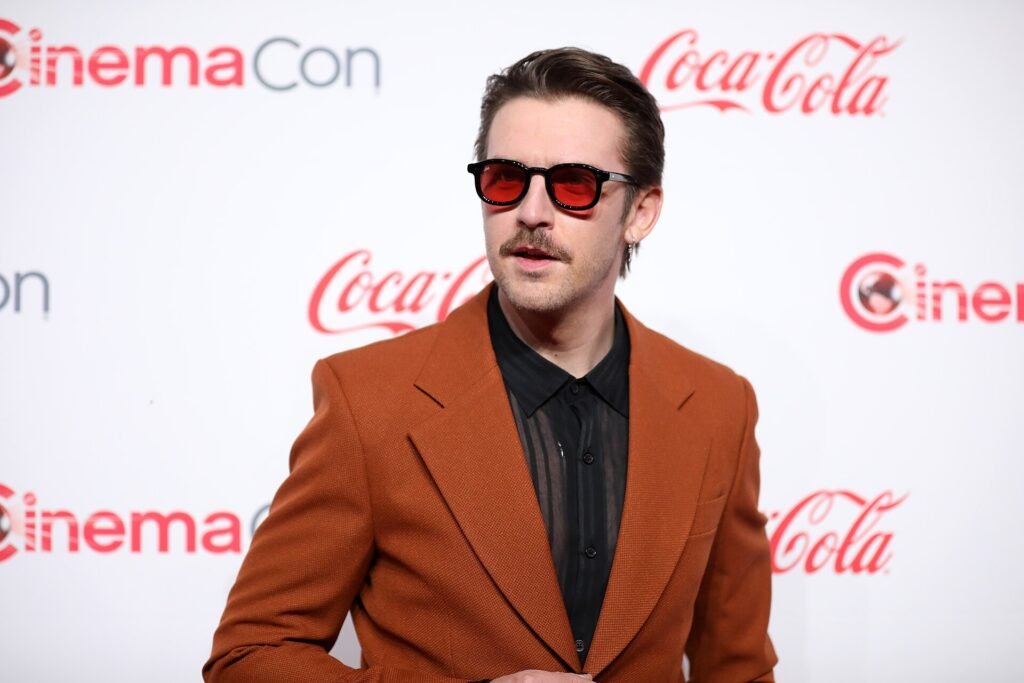
It is in Dan Stevens’ performance that the season’s most important performances are found. His interpretation of Pepper is one that is real, explosive, and profoundly human. He shows frustration without stripping himself of empathy.
Pepper starts off as a man who is in turmoil. He is lost, frustrated, and unjustly institutionalized. In his performance, Stevens does not reduce Pepper to a victim but gives us a character reacting strongly against injustice.
The strength in his performance comes in its subtler forms. He is a good listener during institutional interrogations. This helps create an element of realism and control in his performance.
The psychological pressure on Pepper builds as the season unfolds. Stevens accurately records this progression without going overboard. Stevens uses fear, uncertainty, and exhaustion through controlled transitions. This creates an underlying emotional structure to the narrative.
More importantly, Stevens retains audience identification with Pepper. Even when the storyline becomes confusing, he continues to be intelligible. This is vital considering how complex the series is.
Judith Light as Dory: Emotional Gravity and Humanity

©Creative Commons Attribution 2.0
Judith Light offers one of the most moving performances of the season. The character of Dory is not created through plot devices but emotions. She brings a sense of warmth into a hostile setting.
Light’s portrayal of Dory is based on a combination of laughter and tears. The actress avoids sentimentality in her acting yet manages to stay empathic. It is obvious that she relies on her personal institutional experience.
In each scene that involves Judith Light, there is a certain emotional charge. Light is used quite often as a reflection of Pepper’s feelings. As a result, both actresses benefit from this.
Judith Light is distinguished by her skillful work with the tone. She moves between vulnerability and power effortlessly. This makes Dory one of the most convincing residents of the hospital.
The scenes that require a slow pace are held together by Light. Without her, the show would lack emotion in its calmer episodes.
Chinaza Uche as Coffee: Quiet Intelligence and Control
The portrayal by Chinaza Uche as Coffee is sharp. It is not flamboyant, but very effective. It is more about observations than emotions.
Coffee acts as a character and guide at once. He is aware of the secret codes and rules of the hospital. Uche has not made it too expositional or talky in performance.
Rather, knowledge is conveyed through subtext. Controlled body language and minimal movements characterize him. This makes Coffee seem intelligent even under pressure.
There is an element of psychological detachment too. Coffee seems to shield himself emotionally from others. All of this is communicated by Chinaza Uche through non-dialogue.
With each episode, Coffee gets more relevant. Uche slowly exposes emotional cracks in the character. They happen in brief moments of brilliance in acting.
His performance adds to the ambiguity in the season. It keeps the viewers guessing what Coffee knows or believes.
John Benjamin Hickey as Dr. Walter: Institutional Menace
John Benjamin Hickey provides a quiet disturbing performance. Dr. Walter is neither evil nor aggressive. He shows institutional power and emotional detachment.
Hickey portrays the character with perfect composure. His voice and posture are always controlled. This makes him more frightening.
He is part of the system and not against it. His power seems to be procedural rather than personal. This makes for a different kind of horror.
Hickey has no melodramatic element to him. Even when the scene is intense, he is always composed. This gives his character unpredictability through composure.
It works perfectly because of its ambiguity. The viewer is never completely sure of his intentions. This makes him interesting at all times.
Supporting Ensemble: Building the Institution
The supporting cast adds to the emotional landscape of the hospital. Every single performance helps to build authenticity. There is not even a single stock character here.
With C.C.H. Pounder, authority and complexity come into play. As Dr. Shaughnessy, she shows her acting skills well. Her acting is professional and conveys a lot of emotions and tension.
In Philip Ettinger‘s role as Merrick, emotion is raw and unfiltered. The character of Merrick cannot be defined as predictable. Vulnerability and sensitivity of the person are captured by Ettinger.
Performance as the True Narrative Engine
Throughout the series, action defines the narrative. Often, the plot advances via interpersonal exchanges. Human emotions impact plot structure.
This ensures that acting matters more than special effects. Even supernatural aspects require human responses. The fear factor comes across through human emotions.
The cast provides an ongoing emotional flow. It helps carry the viewer through parts of the plot that move slowly. With poor performances, the rhythm of the show would be compromised.
Instead, it is the actors’ performances that sustain attention. Even when the images blur, the emotions are clear. That is the show’s biggest asset.
What Worked
The best part of the show is undoubtedly the performance. The actors add realism and emotions to the story. The hospital comes across as vibrant and psychologically rich.
Thematically, the current season is quite bold and relevant. It addresses the issue of institutional failures seriously. It manages to make horror relevant in today’s society.
The atmosphere created in this show is quite effective. The idea of oppression created by the hospital is convincing. The feeling of dread persists throughout the episode.
The show does a great job in adapting its source material. The relevance of the show to current times can be felt. Themes of the original story are further explored in it.
What Did Not Work
Pacing continues to be the most prevalent flaw. Earlier episodes can lack energy and cohesion. It will take some time before the storyline picks up its pace.
Sometimes cinematography tends to compromise on clarity in favor of atmosphere. Some scenes become hard to understand visually. This is especially true for the final episode.
Tone is sometimes unbalanced between the genres used. Changes between the two genres tend to occur abruptly. This negatively impacts the rhythm of the narrative at times.
Although visual effects look impressive, they tend to be erratic. Too much darkness results in loss of clarity at certain points. This becomes quite apparent in certain scenes.
Overall Verdict
Conclusion for The Terror: Devil in Silver review is that it is an ambitious and flawed season. It does not have the perfect episode within the anthology. Nevertheless, it is one of the boldest.
It shines when it focuses on developing themes and characters. It falls apart when it tries to create atmosphere without explaining anything. That contradiction defines the overall season.
Still, the show maintains its strength despite having numerous flaws. It has memorable acting, and it explores profound themes. It provokes the audience rather than entertaining them.
In summary, it is a bold continuation of the franchise. It may disappoint viewers, but it does not shy away from challenging conventions. That is why it becomes an important contribution to modern TV horror.



Pingback: Dan Stevens RoboCop TV Casting: Epic New Role