Undertone 2026 Horror Film Review: A Slow-Burn Horror Film
Undertone 2026 horror film (Warning Contains Spoilers)
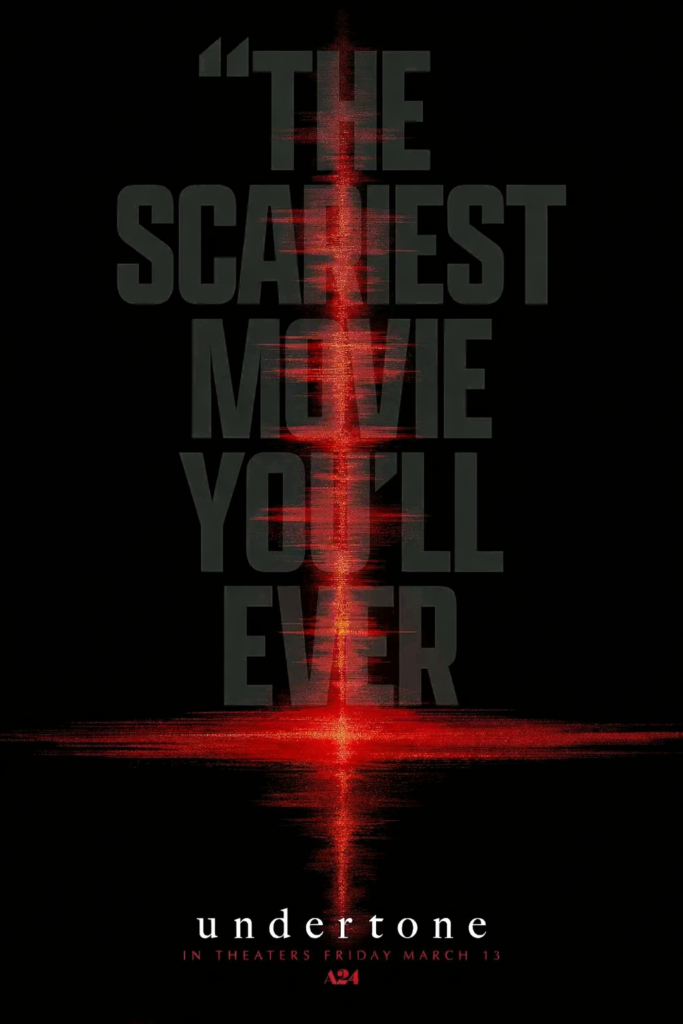
Undertone is a daring and creatively inclined horror film produced in 2026. Moreover, it definitely seeks to provide viewers with something unique compared to other films of this genre. In particular, from the very beginning, the movie eschews all standard features characteristic of typical horror films.
For instance, there are no jump scares, fast movements, and quick visual revelations featured in this production. On the contrary, this work relies heavily on creating fear through atmosphere and sound. What is more, Undertone is Ian Tuason’s first ever movie as a director.
This automatically makes Undertone a unique horror movie in today’s world. Besides, it also indicates that there is an effort made by the filmmaker to go against audience’s expectation in terms of horror movies. Instead of creating fear through visual elements, the film actually encourages the audience to create their own fear. Therefore, the whole concept becomes highly psychological and interpretative.
Execution and effectiveness
Nevertheless, the implementation of this idea is somewhat lacking. Although the notion is quite unique and highly ambitious, the constant emphasis on sound does make an impact. In some instances, it made me feel detached from the scenes occurring onscreen. Moreover, instead of experiencing the terror along with the character, I had to experience it via sound alone.
In light of the above, the scary scenes do not always succeed in delivering the required effect. Lack of visuals does not make the scene scarier but diminishes its impact. The horror becomes less realistic as well. However, for most horror movies, the combination of visible and non-visible elements works efficiently to build suspense. However, at times, Undertone undermines certain scenes by lack of visual representation.
Moreover, the sound design is quite repetitive despite the obvious creativity involved. While it generates initial intrigue and discomfort, the method may fail to develop enough to maintain the suspense throughout the scene. This leads to certain scenes failing to create the desired sense of fear effectively.
Pacing, structure, and narrative development
The other notable problem I have observed relates to the pacing of the movie and its structure. Although the pacing is probably appealing to those who enjoy atmospheric horror films, in my opinion, it was definitely an issue. It made the entire movie seem as though it had no direction at all.
Throughout the film, numerous clues and innuendos make for great anticipation. This is indeed one way to build up tension short-term. However, what follows is rarely something concrete or conclusive. On the contrary, the film is reserved, and ambiguity keeps the tension but never lets go of it.
Ultimately, this creates an impression that after a while, things begin to get repetitive instead of creating an element of suspense. This repetition and lack of fulfillment create an impression that certain portions are overly drawn out. Additionally, sometimes it feels like the story stagnates needlessly. Ambiguity is quite effective for a horror film, but in some cases, it takes away from the emotional impact.
Themes, symbolism, and depth
However, despite these drawbacks, there are some interesting themes explored in Undertone. First, one can mention the theme of psychological discomfort, emotional suffering, and fear of losing something. Furthermore, there is also a theme of ambiguity associated with the themes of grief, illness, and frailty.
One of the most crucial themes in the novel is the presence of a demonic creature, Abyzou. The incorporation of such a theme adds more depth to the novel. In addition, this theme brings together supernatural horror with old fears of the culture about maternity and fertility. This is highly significant because the central character is pregnant.
This notion of the supernatural powers working against fertility makes the film more emotionally charged as well. Moreover, it ties the horrors that are happening outside to the fears occurring inside. This way, the movie is being played out on two levels at once.
Nevertheless, the treatment of those topics is rather subtle and reserved. Due to the ambiguous nature of the movie and its lack of explanations, it might be confusing for some audiences. Moreover, there are topics that can be considered insufficiently developed in the movie. Despite the fact that I liked the message they were conveying, they could be highlighted better.
Performances and character focus
However, some of the best things about the film are the performances, especially that of Nina Kiri in the starring role. Her contribution to the film is essential because she spends most of the movie alone on screen. She succeeds in portraying anxiety, tiredness, loneliness, and mental stress all along.
The reason why her performance works very effectively is that it involves expression instead of talking. The small nuances of expression through body language and facial expressions are important contributors to the emotional content. Additionally, vocal inflections are used as the vehicle for conveying most of the drama. This is perfectly suitable for a story like this one.
Michelle Duquet‘s role of the ill mother is restricted; however, it is still significant. Her illness emphasizes themes such as sickness, dependence, and suffering successfully. Though her role is not that vibrant, it helps to build up the necessary emotional background.
The sparse casting and remote location also play an important role in creating the general mood. The enclosed space contributes greatly to the claustrophobic mood of the movie. But this sparsity makes the movie more dependent upon its pacing and flow. And in my view, it is here that Undertone suffers the most.
Cinematic style and atmosphere
From a stylistic perspective, Undertone places strong emphasis on restraint and minimalism. The film avoids dramatic visuals and excessive movement throughout its runtime. Instead, it focuses on stillness, silence, and sound layering to create tension. This approach works effectively in establishing an unsettling atmosphere, particularly in quieter scenes.
Use of confined spaces emphasizes the sense of isolation and emotional pressure even further. Nevertheless, although this minimalistic approach fits the theme perfectly well, it also creates some distance between the viewer and the film. The movie itself lacks visual elements that would demonstrate the nature of its horror.
Conclusion
In summary, Undertone is definitely one of those films that I appreciate due to its uniqueness and boldness. Moreover, its courage to break through traditional horror and try new things really needs to be acknowledged. Undoubtedly, there was a certain artistic vision behind it, especially because of the sound and atmosphere of the film. Lastly, Undertone is quite smart in its symbolism and psychological approach.
Yet, while possessing such qualities, the film fails to sustain a consistent level of suspense. Although I respect and understand the intentions of the movie, at times I felt detached from it. Furthermore, sometimes my concentration began to fade during parts where the plot was less clear.
In general, I think that Undertone 2026 is quite an innovative horror movie to watch. In terms of concepts used in the plot, the film impresses me much more than I actually enjoyed watching it. However, in my opinion, the realization of such ideas has some problems that should be addressed.