House Of The Dragon Season 3 Review
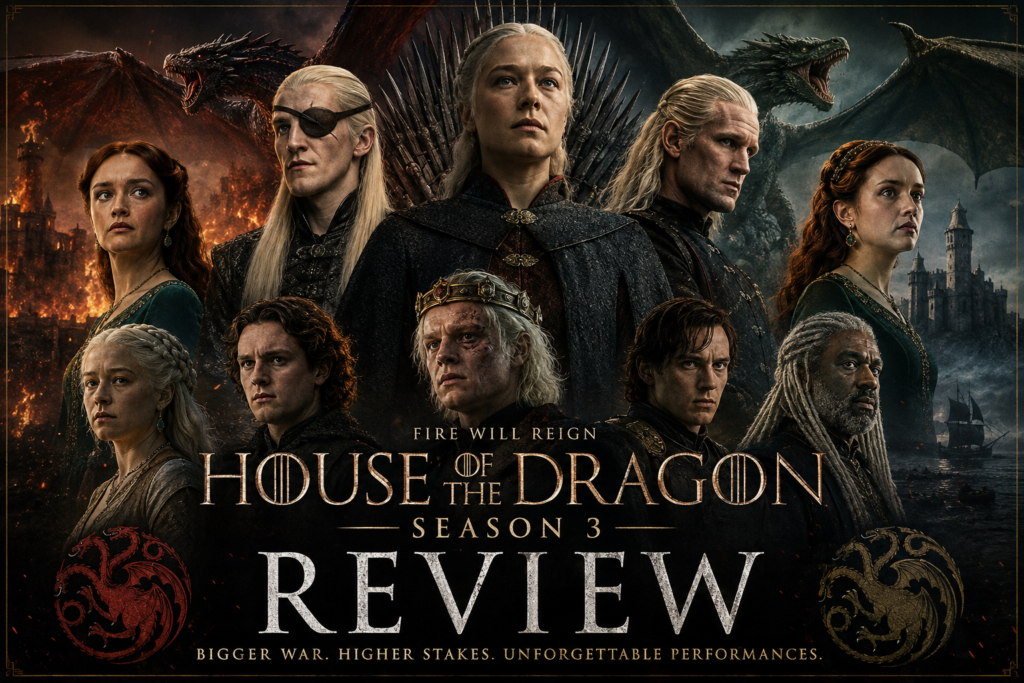
Introduction (Warning Contains Spoilers)
Having completed two seasons of politics, treachery, and dragons, House of the Dragon comes back with increased confidence.
Season three was launched on June 21, 2026, and ended after eight episodes on August 9. The season largely centers on the war between Targaryens, famously titled the Dance of Dragons.
Finally, the fight goes past politics and becomes a war that wreaks havoc in Westeros. The cast is as strong as ever.
Emma D’Arcy returns as Rhaenyra, while Matt Smith continues his magnetic, unpredictable run as Daemon Targaryen.
Olivia Cooke is back as Alicent Hightower while Tom Glynn-Carney as King Aegon II, Ewan Mitchell (Aemond) and Steve Toussaint (Corlys Velaryon) anchor their respective sides.
With supporting returns from Fabien Frankel, Sonoya Mizuno, and Rhys Ifans, the show proves it can still strike that delicate balance between grand spectacle and intimate character drama.
Living in the Shadow of Game of Thrones
There has always been one major question surrounding the HBO series House of the Dragon: Will it be able to stand on its own two feet despite being under the giant shadow of the legendary Game of Thrones?
That question has always been a hard nut to crack. Being a prequel, House of the Dragon is doomed to constant comparisons with the original due to the popularity of the latter.
In its prime, Game of Thrones established an almost unattainable bar for all future productions with its perfect combination of political tension, unexpected turns, and grandiose epicness.
Despite all the good aspects of House of the Dragon, I’ve always been watching it through critical glasses, asking myself whether it equals the original.
Of course, there have been some great moments in House of the Dragon. But quite a few times, I’ve seen it with an unfair critical perspective as to whether or not it matches the Game Of Thrones. This is a very hard benchmark for anyone to reach.
It is in season three that it really starts looking like an independent narrative, with the war taking place becoming not just a menace on the horizon but the whole narrative itself.
The Pressure After Season Two
Season two left a lot of heavy lifting for this third outing. While critics liked it, fans were vocal about the slow pacing.
There was a sense that the show spent too much time getting ready to fight. The promised battles often felt perpetually out of reach, and the lack of dragon action—ironic, given the title—was a recurring point of contention.
Timing has also presented an interesting case of renewed interest in Westeros. A Knight of the Seven Kingdoms presented yet another story from this world on television.
The success of the adaptation proved that people still want more stories apart from the original series. This renewed interest presents an additional challenge for House of the Dragon.
House of the Dragon now has to vie with all these other adaptations of George R.R. Martin‘s world.
It has to show that it also deserves attention. Given that it has this larger canvas to work with, the series had to spread out.
Season three has succeeded in accomplishing this. The war is no longer a conflict between a few castles and council chambers but that of the whole kingdom.
The story travels further, and the consequences feel much broader.
Expanding the Battlefield
The House of the Dragon has always appeared like a big production. Its direction was always big, detailed, and visual.
Yet, previous seasons often were limited in their location as castle settings. The political moments were very large but the physical space did not reflect that enough.
Season three fixes that dynamic. The camera is allowed to travel out of the walls. Armies march on the landscape, battles happen, and dragons rule the skies.
One point that people used to criticise the earlier seasons about was lack of dragons. Season three fixes that problem.
There are now more dragons, more battles, and much more action. The direction becomes more action-oriented while still maintaining character drama.
This balance is crucial for the series since spectacle is not everything the show can do. Battle of Tumbleton becomes an obvious example of all these things.
This battle seems like the moment that season has been preparing us for the whole time. The war is no longer just discussed at the tables but fought.
Visual Effects and the Dragons
One of the strongest components of the third season is the visual effects. Dragons themselves look good, but their existence is even more important.
Dragons seem scary, unpredictable, and powerful. This effect is especially noticeable during the confrontation between dragons in episode seven.
This scene is very hard to watch, but it is quite an effective one too. The scene demonstrates the physical horror of such fight for the viewer.
These creatures are not just fantasy animals looking pretty. They are tools which are able to destroy everything surrounding them.
Dragons were always something I liked about Game of Thrones, so it was nice to see more of them. But the show realizes that it is already not enough to show the dragons.
The Game of Thrones changed television by proving it that it was possible to create a movie on it. The show proved the viewers that television could compete with blockbuster movies.
This legacy impacted nearly every ambitious fantasy TV show which came afterwards. The viewers started to expect the amazing effects from the productions made for television.
House of the Dragon continued this tradition in its visuals. But at the same time, the show faced some additional competition.
For example, The Rings of Power provided the fantastic spectacle of fantasy world. Stranger Things also proved that television is able to create some cinematic supernatural effects.
The Last Kingdom also demonstrated that television is able to provide some good historical battle scenes. Welcome to Derry is yet another example of ambitious production of modern television.
The audience became harder to impress. Flying dragon over the screen is not enough to make some impression anymore.
Effects, therefore, must work for the plot. The third season usually understands this principle well. Dragons scare the characters, influence the battle, and influence their decisions.
The existence of dragons also emphasizes the threat of the Targaryen war.
Themes, Storylines, and Pacing
The most significant change for me is the pacing. The House of the Dragon is often referred to as a slow burn.
It fit perfectly well at certain points during the first season. However, in the second season, the pace could become quite painful.
There were several storylines preparing for events but not happening. Season three is noticeably faster-paced.
Events are unfolding quicker, and the storylines themselves are developing with a clear purpose. Also, the characters are changing faster.
Their actions have immediate consequences. These consequences then affect the next part of the story. It creates much more compelling momentum.
Moreover, even the themes benefit from it. Power, revenge, loyalty, grief, and responsibility become increasingly intertwined.
The war is not just about which one of them deserves the throne. It is about how much they are ready to sacrifice for the power.
Rhaenyra has to consider her duties as queen and reality of the war.
Daemon deals with the consequences of his decisions and his relationship with Rhaenyra.
Aemond sees his arrogance melting away in front of him as his enemies become stronger.
Aegon suffers humiliations and starts an unexpected change.
Alicent realizes how little she managed to achieve by all of her sacrifices.
Corlys becomes more and more disillusioned with the human price of the war.
Helaena is stuck in the space between knowing and helplessness.
This development makes the fast pace meaningful. The show isn’t just quick because there’s more fighting.
The show is quick because the characters are finally being affected by the things happening to them.
That was one of the biggest complaints I had about season two. The narrative would stop to wait for the war to happen.
Finally, season three will have the war affect the characters.
The Performances
The performances continue to be one of the major strengths of House of the Dragon. Season three provides the cast with much better material to work with.
The faster-paced story enables the characters to evolve through their actions rather than through conversations.
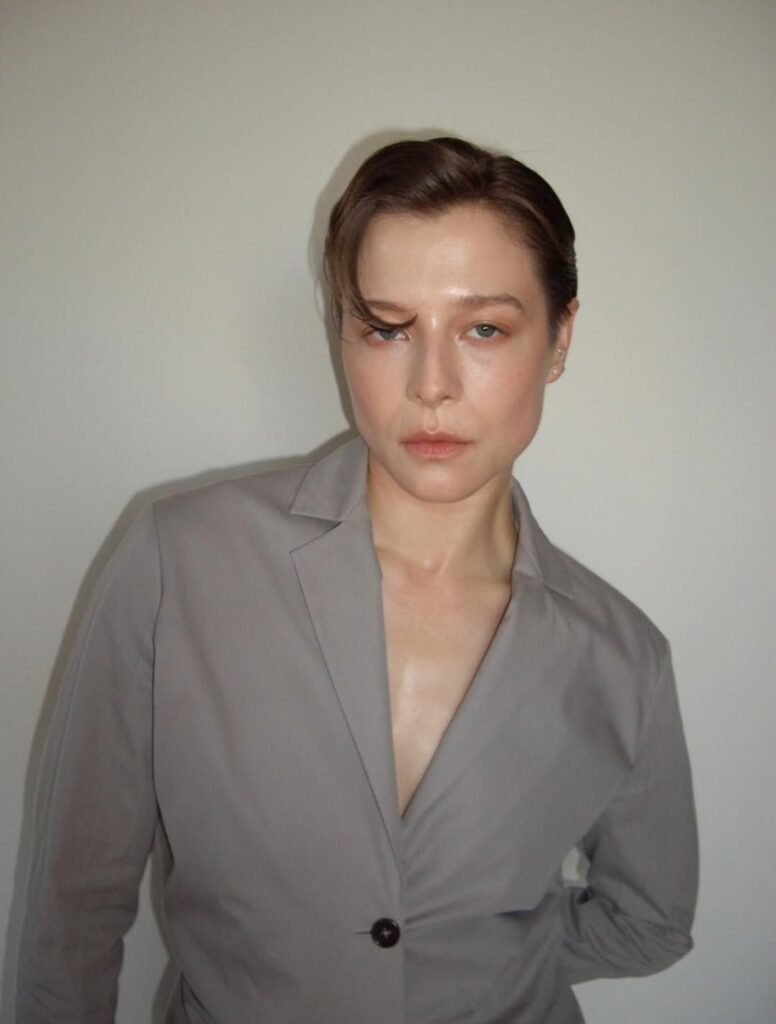
Emma D’Arcy continues to be outstanding in the role of Rhaenyra Targaryen. Season three presents Emma D’Arcy with a very challenging emotional arc.
Rhaenyra is dealing with terrible personal tragedies, as she becomes a queen. Moreover, she has to cope with her court, her subjects, and her enemies.
Emma D’Arcy manages to convey this very well. Rhaenyra gets increasingly tough as the season goes on.
Nonetheless, the performance manages to retain her vulnerability. Witnessing her evolution until the end of the season feels like witnessing a metamorphosis.
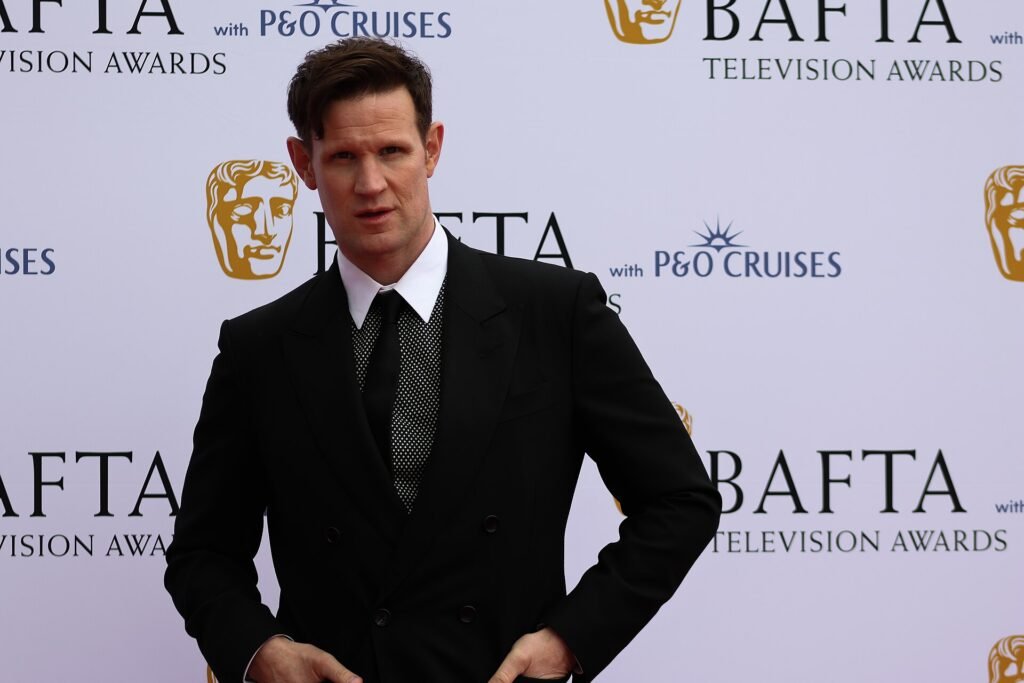
By JaceMerlyn ©Creative Commons Attribution-Share Alike 4.0
In my opinion, it is Matt Smith who stands out most in terms of performance as Daemon. One of the most disappointing aspects of season two was the lack of story lines for Daemon.
Isolated storyline left him disconnected from the overall conflict of the show. Fortunately, season three starts off strong as Daemon once again takes center stage.
Matt Smith seems like he was made to play Daemon. I cannot imagine anyone else portraying the character as well as Smith does.
Daemon is arrogant, brusque, violent, and constantly certain of his own greatness. However, Smith makes him hard to ignore.
There is charisma in his arrogance and vulnerability in his violence. He can be frustrating and annoying, but also intriguing.
Season three gives him an opportunity to take control of the plot again. It is great to see him back in the action.
His own conflict with himself also strengthens his connection with Rhaenyra. Previously performed actions towards Lady Rhaena Targaryen have consequences.
Smith handles the conflict perfectly while maintaining Daemon’s unpredictability.
Olivia Cooke can match Olivia Cooke’s portrayal of Alicent Hightower. After her covert agreement with Rhaenyra, Alicent wants to ensure a smooth transition of power.
Cooke portrays Alicent with an air of desperate hollowness. Alicent is trying to maintain peace through her memories and past sacrifices.
She comes to terms with the fact that she has no control over the war. When Rhaenyra’s soldiers take over King’s Landing, Cooke shifts gears in her acting.
She shifts from panic to a sort of frozen stoicism. Alicent accepts the possibility that all her sacrifices could be for naught.
Ewan Mitchell gives Aemond Targaryen one of the season’s most interesting arcs. Aemond begins as Prince Regent with enormous authority.
He appears cold, confident, and completely convinced of his own superiority.
That confidence begins to collapse when Rhaenyra’s Dragonseeds gain power. His retreat from Dragonstone further damages his confidence.
Such a character may easily develop into a cartoon character of a villain. However Mitchell depicts an unfortunate man who cannot control himself anymore.
Paranoia of Aemond only increases due to the strengthening of his rivals. The life he led in the past adds up to his psychological disorder.
He starts being tormented by his brother whom he wanted to kill. Additionally, Alys Rivers has an odd impact on him.
All these scenes Mitchell depicts in a rather vulnerable manner. He seems to be disconnected from reality and becomes more isolated.
Aegon: The Season’s Surprise

Tom Glynn-Carney might present the most unexpected character development of the season. At the beginning of the season, Aegon appears physically broken and emotionally crushed.
He flees King’s Landing together with Larys Strong. He has lost his crown, his dignity, and much of his pride.
Glynn-Carney takes advantage of Aegon’s self-pity during these episodes. His storyline has also a quite dark comic element.
His relationship with Larys presents an unexpected Westeros’ odd couple. His attitude towards him is another humiliating experience for Aegon.
These scenes show us how dependent Aegon used to be on his status. The acting shifts as the Aegon starts reconstructing himself.
This is far from a typical redemptive storyline. Aegon is still flawed, broken, and able to make wrong decisions.
Nevertheless, this experience gives him a new view on power. Glynn-Carney manages to combine vulnerability, comedy, desperation, and resolve.
As a result, there emerges a character that is significantly more compelling. His subsequent political reemergence seems deserved since we saw him broken down.
Other Character Developments
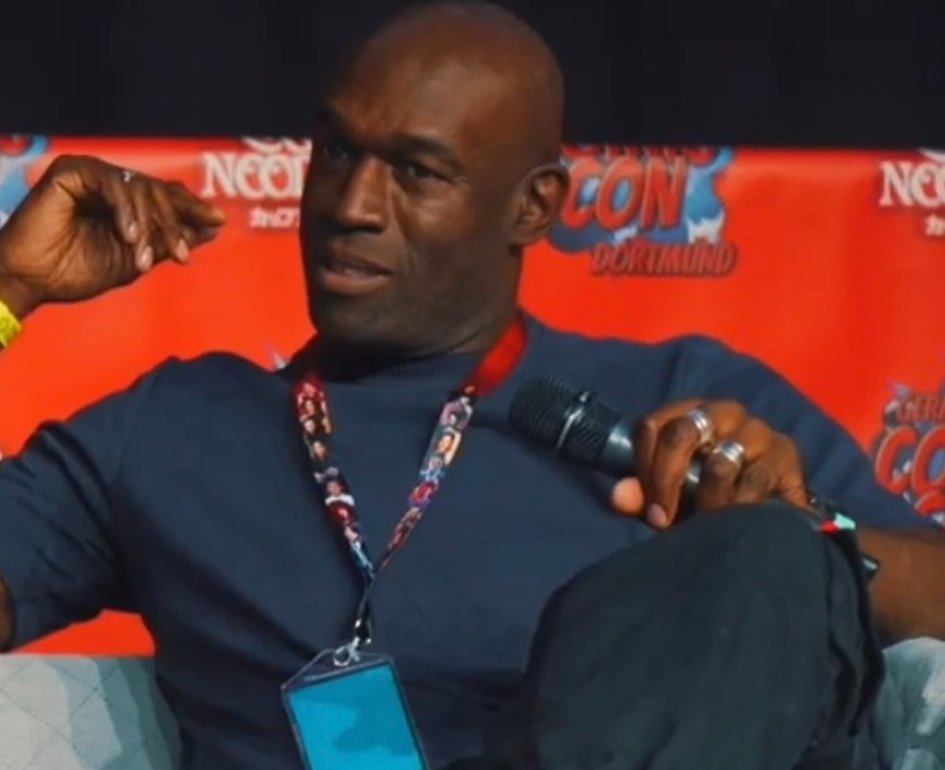
Steve Toussaint gives another strong performance as Lord Corlys Velaryon. Corlys begins the season carrying years of grief.
He has already lost his children and his wife, Rhaenys. Now he must watch the Targaryen civil war consume even more lives.
Toussaint portrays a man who is becoming deeply war weary. The legendary Sea Snake no longer appears interested in glory alone.
Corlys increasingly questions the human cost of the conflict. His experience gives him a perspective that younger characters lack.
While others continue fighting for the throne, Corlys sees the price. Toussaint brings quiet sadness and exhaustion to the character.
His performance does not need dramatic speeches. His weariness is visible in his restraint. Corlys represents the tragedy of someone who has sacrificed almost everything. He now has to question whether those sacrifices were worthwhile.
But the fate of Phia Saban’s Helaena Targaryen continues to remain one of the most tragic of the season.
She plays a role of the moral and emotional center of the story. Helaena did not wish the war that surrounded her family at all.
However, she was drawn into it. Everything got worse for her once Rhaenyra’s troops occupied King’s Landing.
Sabon’s main strength lies in her restraint. Often Helaena speaks with silences, with expressions, with gestures.
She knows much more than many characters realize. But she cannot do anything to stop what she foresees.
This gives a sad paradox. She knows everything about what is going to happen without any possibility of controlling it.
Saban captures this isolation perfectly. Helaena’s plotline becomes the struggle for freedom of action.
She spent her life being controlled by other people’s decisions. That is why Helaena’s actions in the finale become so dramatic.
Finally, she tries to gain back control over her own life. The situation is sad as she has never wished the war. Her sufferings become the price of the Targaryen struggle for the throne.
The Wider Cast
The ensemble is firing on all cylinders. From Jace’s maturation to the unpredictable nature of the Dragonseeds like Hugh Hammer and Ulf White, the world feels lived-in and dangerous. Everyone has a part to play, and the politics feels like a real, suffocating web.
New addition James Norton plays Lord Ormund Hightower in season 3, thus making him one of the key antagonists for the Green side.
Ormund is the calculating head of House Hightower, Otto Hightower’s nephew and Alicent’s first cousin.
Norton brings an authoritative and controlled presence to the role.
Unlike some of the more unpredictable characters, Ormund appears driven by strategy, duty, and the pursuit of victory.
As the war expands across Westeros, Ormund becomes an important reminder that the Targaryen struggle is no longer simply a family dispute.
Powerful houses are now committing armies and resources to a conflict that threatens to consume the entire kingdom.
What Worked and What Did Not
For me, season three is the best season of House of the Dragon so far. The best thing about this season is its improved pacing.
For the first time, the story seems to be developing and not waiting. Characters start making choices, and their actions have consequences.
Increased action also fits well in the context of the general story. The increase in the number of dragons and battles makes the civil war truly scary.
Visual effects are another very important advantage of the show. Dragons look amazing and seem physically realistic.
Battle scenes also demonstrate the ambitions of modern TV. The show realizes that spectacles need some emotional price to pay for them.
It stops the action from becoming entirely pointless. Performances are perhaps the best aspect of the show.
The actors, D’Arcy, Smith, Cooke, Mitchell, Glynn-Carney, Toussaint, and Saban all shine. Also, the ensemble makes the kingdom of Westeros more alive and populous.
Finally, the war seems like an issue of the entire kingdom. It is no longer only the concern of the Targaryens anymore.
Still, season three has its own flaws. The abundance of stories leads to some uneven character development.
Sometimes, minor stories are developing fast because of the main plot. The faster pace may sometimes result in sudden developments.
There is also the danger of the spectacle overshadowing the character drama. This would be a grave mistake because character drama is still its strongest asset.
And the analogy with Game of Thrones simply cannot be avoided. Some sequences inevitably recall the original TV series.
But now I no longer find this comparison as destructive. Because “House of the Dragon” seems mature enough to develop its unique style.
It does not have to imitate Game of Thrones. It just has to tell its own story well.
Overall Verdict
Having gone through three seasons now, I can say that House of the Dragon is beginning to become its own show.
The show might not be able to break away from being under the shadow of Game of Thrones forever.
But Season 3 certainly does the most justice in being a standalone show. This is by far the best season of the series in my opinion.
Dragons are amazing, but it is the characters who make it worth watching. It is thanks to the performances that all these battles have true emotional weight.
At last, the plot allows the Targaryen civil war to be completely devastating. Season three is also aware of how television has evolved nowadays.
Game of Thrones showed that television could be cinematic. Now House of the Dragon has to surpass this benchmark.
After all, viewers have been familiar with fantastic universes and big television battles.
It is no longer enough for the series just to have dragons. There should be stories and characters that justify the imagery.
Fortunately, season three mostly succeeds at doing that. The series seems more confident about its identity and more comfortable about its scale.
There are some aspects where the development could have gone deeper. There are storylines that are happening way too fast.
There are other storylines that are not being used well enough. Nevertheless, the general improvement is evident.
The House of the Dragon is unlikely to beat Game of Thrones. I am pretty sure that it doesn’t have to.
The original series was revolutionary and changed television forever. That legacy cannot be escaped.
However, House of the Dragon still has a chance to become a great TV series. Season three is getting us close to reaching that target.
Finally, it starts feeling more like an epic and less like a prequel. The Targaryen family is committing suicide and destroying Westeros in the process.
It is a powerful story that requires no imitation of anything that preceded it. As for my opinion, House of the Dragon Season 3 is quite a success.
It gives us everything we have been waiting from the show. It gives us dragons, battles, great acting, and well-developed characters.
More importantly, it gives us the momentum. After the disappointment of season two, it is especially valuable now.
It might stay in the shadow of Game of Thrones forever. However, season three proves that it can stand there confidently.
It doesn’t have to be Game of Thrones.
It just has to be the best House of the Dragon.