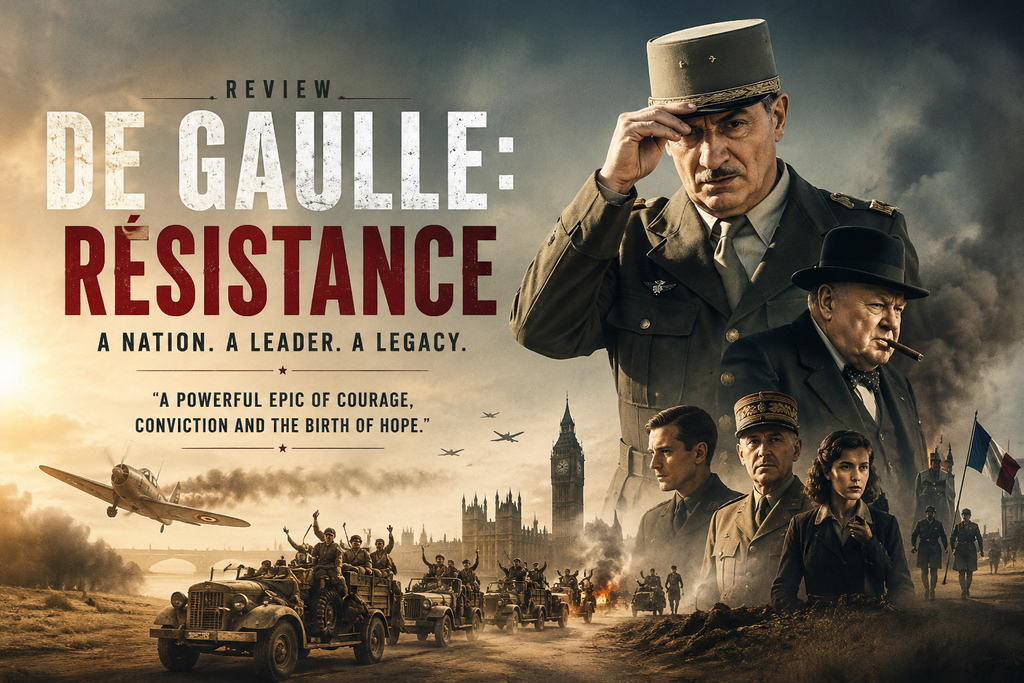
De Gaulle: Résistance Review
Introduction: A Nation in Defeat
History rarely arrives quietly. Sometimes it storms across the screen with the weight of armies and collapsing governments.
De Gaulle: Résistance by Antonin Baudry does just that at the onset of the film. The movie begins at a time when France finds itself in dire straits.
France is collapsing, its military situation has become worse and surrender seems imminent. Amidst all of that stands Charles de Gaulle.
He is not yet the historical national hero whom we shall soon know. He is a man who is a determined general who is very confident but politically powerless.
This distinction forms the basis of Baudry’s historical drama. The movie is not about de Gaulle as an already established historical hero.
Instead, it shows the making of him as he makes his way to London after the defeat of France. In London, he begins laying down the groundwork for Free France.
What he intends to do is nearly impossible. He has to convince everyone that surrender is not the end. First, however, he needs to convince people to believe in him.
This is how the film “De Gaulle: Résistance” goes beyond a typical biography film about war. Instead, it tells the story of leadership, identity, resistance, and political legitimacy.
Baudry is fascinated by that point of time before history turns into mythology.
Antonin Baudry’s Ambitious Direction
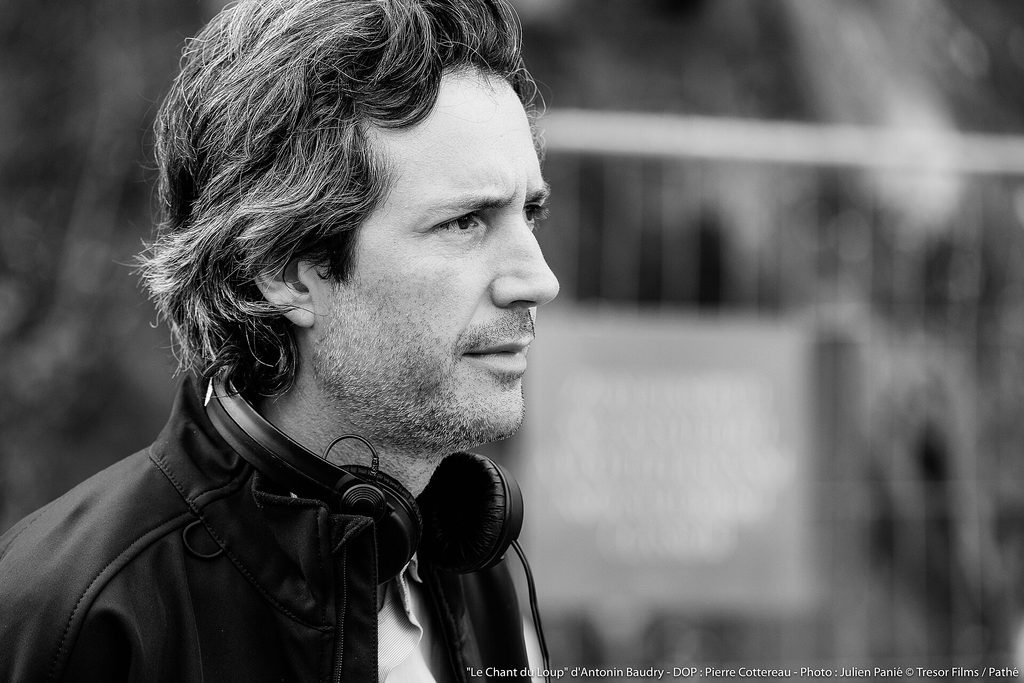
Baudry is confident in his approach to this material. The previous work he has done in the military context can be seen from the way he creates atmosphere in the film.
But there is more involved here. De Gaulle: Résistance is about politics in various rooms, occupied France, distant battlefields, etc.
The film also oscillates between personal drama and huge military scenes. That constant shifting adds an interesting rhythm to the film.
At times, it is done perfectly. At other times, it feels like too much. One thing Baudry seems to want to do here is not create another serious historical film.
He presents his de Gaulle as an eccentric, proud, stubborn and sometimes difficult character. But there is also a sense of humor around him in the face of serious historical events.
Baudry is also aware that de Gaulle’s most powerful weapon is his conviction. He starts out with nothing else to his credit.
He has no power, no resources, nor even an assured political standing. But he acts as though history has already selected him for the job.
This paradox forms one of the most intriguing concepts of the movie. Is de Gaulle brave because he never gives up?
Or does his bravery have something to do with his astounding belief in himself? The film deliberately leaves us wondering.
Such ambiguity adds to the intrigue of the character.
A Film About the Birth of a Legend
The main theme is the connection between personal conviction and national identity. For De Gaulle, France continues to fight even when France has surrendered.
His conviction goes beyond being purely military. It becomes an exploration of what France really is.
How can a nation survive when its leaders have surrendered? How can a country exist on an idea rather than an institution?
How can someone embody that idea? These are some of the reasons why the movie has more substance than a mere tale of war.
The movie is also concerned about leadership. De Gaulle does not come into the situation as an undisputed leader.
He has to build his leadership around himself. This gives much of the tension to the plot. The viewers are already aware that de Gaulle will turn out to be a historically significant figure.
The figures around him do not enjoy this luxury. They have to decide whether the stubborn general is worth their trust.
That dramatic irony works particularly well. We know the destination, but the film asks us to consider the uncertain journey.
Resistance Beyond One Man
It could appear that everything is based on de Gaulle from the title. Luckily, the film tries to be more general.
Resistance is shown through different individuals and different forms of bravery. There is political resistance, military resistance and personal resistance.
The film understands that the resistance of the whole nation needs more than just one extraordinary person.
This is a very important choice. It prevents de Gaulle from becoming the only hero of French survival.
Other characters show other forms of sacrifice. Their stories also show the personal risks involved in the political conflict.
Nevertheless, such broad approach gives rise to one of the film’s disadvantages. The plot sometimes looks split into several historical stories. The more the film develops, the less concentrated it becomes. Some supporting plots look interesting.
Others look necessary from the historical perspective. This becomes especially visible when watching longer parts of the film.
Sometimes it looks like the plot is trying to cover everything. The result is broad historical coverage, but not always consistent dramatic development.
Does The Long Runtime Work?
The film’s considerable runtime gives Baudry room to explore his subject. The additional time enables the narrative to span countries, political settings, and military campaigns.
It also enables certain relationships to evolve. But length alone does not necessarily translate into depth.
Certain scenes seem vital to the central character. Other scenes are nothing more than footnotes to history.
This is especially true during expository moments. The film succeeds when history takes on a personal aspect.
It slows down when characters simply explain historical developments. This is a familiar problem for large historical productions.
Filmmakers should determine whether they want to dramatize history or report on it. De Gaulle: Résistance sometimes goes with the latter.
This is a reason why certain parts feel weaker. The film does not become dull visually. Its locations, costumes, cinematography and production design keep viewers engaged.
But visual action is not always enough to make up for a dragging story. The outcome is an inconsistent but captivating pace.
The best sequences constantly refocus on people. The worst sequences show us just how much history this film tries to cover.
A more concise narrative structure could have made it even more dynamic. However, the expansive structure is what makes this film epic.
It is not a character study pretending to be a war film. This is a film trying to depict an important period of French history.
Simon Abkarian’s Commanding Performance
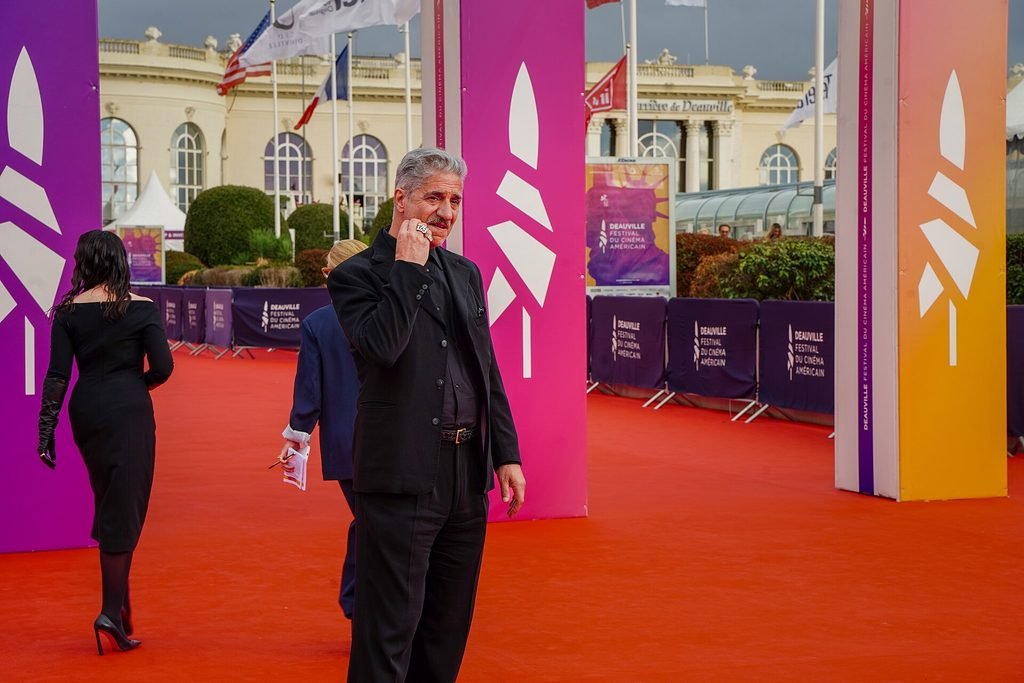
At the heart of everything is Simon Abkarian. It can be said that his performance is the best part of the film.
Abkarian does not just impersonate de Gaulle. He gets the real personality behind the historical figure.
The portrayal of Abkarian is a proud, intimidating man who is completely confident. He is also awkward, inflexible and sometimes infuriating.
This mixture makes his portrayal believable. Otherwise, de Gaulle would look like an impersonal marble statue.
Instead, Abkarian provides him with the element of unpredictability. His posture conveys his authority before he has it.
His voice speaks with the authority despite unfavorable conditions. All of that creates an interesting paradox.
De Gaulle behaves as a leader despite others do not recognize him as one. Abkarian realizes the importance of visible arrogance.
Otherwise, it will make the character too predictable. His best features are linked with his negative ones.
Inflexibility prevents him from giving up. Confidence helps him convince people. Ego makes him strong enough to be alone.
At the same time, it makes him difficult. This complexity adds strength to his performance. Abkarian also realizes when to stay silent.
His expressions often reveal more than his speeches. A glance can suggest irritation, calculation or wounded pride.
Those smaller moments prevent the performance from becoming overly theatrical. The result is a de Gaulle who feels human before he feels legendary.
Churchill And The Political Theatre
The pairing of de Gaulle and Churchill proves to be one of the most dramatic elements of the film.
Simon Russell Beale infuses Churchill with quite a lot of personality. He creates an effective foil for Abkarian.
Both characters have huge amounts of confidence. Neither likes to give up control. Thus, their interactions turn into personality conflicts.
The humor comes from the fact that their disagreements seem genuine. They understand each other but distrust each other immensely.
Churchill needs de Gaulle for practical and political reasons. De Gaulle needs Churchill’s help to carry out his fight.
This creates a peculiar relationship based on necessity. These scenes also provide a contrast to the rest of the military aspects of the film.
The political discussions turn into a drama rather than explanation. This is where the film’s writing shines.
There is no need for any historical narration. The personalities reveal the conflict on their own.
Niels Schneider and the Military Perspective
Niels Schneider brings something else entirely to the ensemble. His work helps make sense of the military side of the film.
While the motivations of Abkarian’s de Gaulle have everything to do with politics, Schneider shows much more physical assertiveness.
His role becomes all the more important when the narrative takes a more military direction. He helps us remember that the resistance must also consist of men who can take their beliefs into battle.
Schneider does not fall into the trap of too much theatricality. This quality suits him perfectly with Abkarian’s more grandiose acting style.
He seems to have a more realistic military background than Abkarian’s more symbolic political one.
The contrast between the two helps strengthen the entire ensemble. Not all characters need to steal the show.
In fact, sometimes an actor who does not get all the attention can be very valuable to the big film.
Schneider knows that truth.
His work may not be as striking as that of Abkarian. Still, it lends realism to the overall military narrative.
Thierry Lhermitte’s Authority
Thierry Lhermitte contributes another level of presence to the movie. It serves as an excellent comparison to de Gaulle.
The actor’s performance reflects the strength of an experienced military figure. This difference is significant since de Gaulle’s authority is yet to be formed.
This comparison raises one of the main themes of the movie. Who is able to represent France? Does authority depend on rank?
Is authority based on political structures? Can someone generate authority just by convincing someone?
Lhermitte’s performance doesn’t require him to overpower anyone to express his opinion. Lhermitte creates another perspective compared to the strong personality of de Gaulle.
Karim Leklou Brings Humanity
One of the most solid performances comes from Karim Leklou. It shows us another point of view, separate from the perspective of the generals and politicians.
This other perspective makes the story more human. Leklou also adds some lighter elements to the film.
The interaction between him and Abkarian gives another dimension to de Gaulle. Without the political speeches, de Gaulle is portrayed as a difficult individual amidst others.
This makes de Gaulle less distant. But not all of the humorous elements work well. Some of the light elements feel a bit out of place compared to the drama that surrounds them.
The film sometimes relies too much on humor. But Leklou makes the comedy feel warmer. His performance ensures that the military characters do not completely dominate the movie.
Cinematography and the Visual Language of War
It is the cinematography that makes this film seem huge. France, Britain, and North Africa are three different environments visually.
This alternation between small rooms and large landscapes happens throughout the film. The reason for this is found in the plot.
Things are happening on an enormous scale in history. But the person experiences history in rooms, streets and battlefields.
The scenes of the resistance seem smaller and more unstable. Camera movement by hand creates instability.
The wider battle scenes give the image much room to breathe. Deserts and battlefields become a visual contrast to the political rooms in London.
In this way, the film does not become visually boring. This cinematography allows the film to have various emotional scales.
The conversation can be as significant as the battle. One expression can mean a lot in the history of the country.
This is when the style of filming works best. The film’s strongest images often make history feel surprisingly intimate.
A face in a room can become more powerful than an army on the horizon. The cinematography makes history look monumental.
Its best moments also make history feel small. That balance is one of the film’s strongest visual achievements.
What Works Best
The film is at its best when character and history merge seamlessly. The scenes of de Gaulle and Churchill provide a perfect illustration of this point.
Their dialogues have politics but do not come across as lessons. So too do the important battle scenes.
The scenes give the historic elements cinematic heft. The art direction does much to support the period feel of the movie.
It is clearly put together well. Another great asset is its scope. This is a film meant for the big screen. It is satisfying to see the story unfold in varied settings.
In terms of performances, the film is quite compelling. Even in its weakest moments, Abkarian’s de Gaulle is always engrossing.
This is something special. The film should be praised for making sure that its main character was never likable.
The hero becomes much more complex when there are visible flaws. Baudry knows that de Gaulle’s arrogance is his story.
What Does Not Work
It must be noted that the main issue is still the structure of the film. There is too much material to process.
Sometimes, the plot loses its main focus. A few storylines are really interesting on their own. However, together, they sometimes become disorganized.
Some parts look really important. Others are there only due to historical facts. This point affects the rhythm of the whole thing.
Sometimes, the film explains things that might be better shown. Such things weaken the narrative’s sense of urgency.
The personal aspect of de Gaulle is also not enough. We can see the public person more than the man behind the myth.
This point makes the film less effective when destroying the myths. There is a contradiction in the film. It tries to humanize de Gaulle.
On the other hand, it likes showing de Gaulle as a huge historical figure. While its visual language worships him,
its storytelling challenges his mythological nature. Such a contradiction is fascinating. Baudry wants to knock off the statue’s pedestal.
However, sometimes, he also seems to enjoy enlarging the statue.
The Man Behind The Monument
Ultimately, De Gaulle: Résistance is most successful as a portrait of a leader. What transpires when one person’s conviction is turned into a symbol for a whole country?
Also, is incredible self-confidence a strength or a weakness? De Gaulle presents itself as hard to understand because all these statements can be right.
His self-assurance is inspirational. It is also frightening. His ambition is a necessity. It is also threatening.
His determination makes him persist. It makes compromise impossible sometimes. That is where all drama of this film is rooted.
This helps avoid simplifying the story into mythologized national history. Still, the film is very sympathetic to its main character.
Though it questions him, it does not try to destroy him. This may cause disappointment to those looking for something more radical.
Others will find it appropriate.
The film does not have to transform de Gaulle into an antagonist in order to depict him as a contradictory figure.
All it had to do was to show his contradictions. And for the most part of its duration, it succeeds at doing that.
Final Verdict
Its biggest asset is possibly its insistence on making history seem neither comfortable nor distant.
This is the story of a man who refused to give up. Perhaps appropriately, the movie itself is not free of that obstinacy.
It chooses the slow path, meanders around a bit, and ends up finding its direction.
Thus, the end product may not be perfect but still makes for some pretty darned good historical filmmaking.
Verdict: An epic with a powerful ambition, beautifully crafted and starring a superb Simon Abkarian performance.