
The Social Reckoning Movie Review
Introduction: A Different Kind of Social Network Story
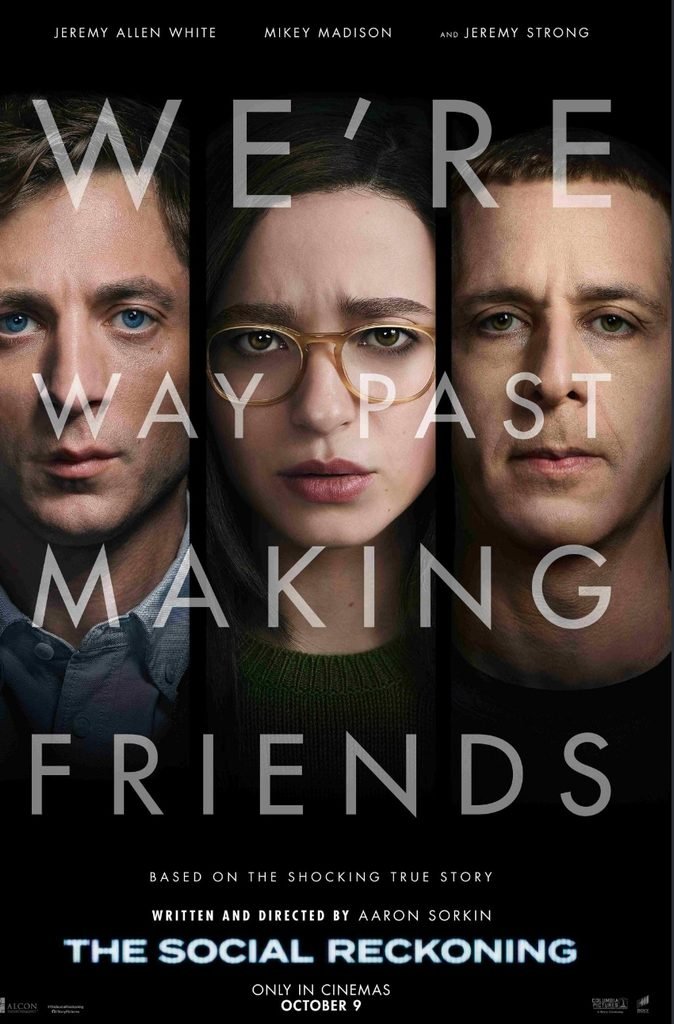
Returning to the world of The Social Network was always going to be a difficult challenge.
The 2010 David Fincher movie became an iconic example of the themes of ambition, betrayal and the founding of Facebook.
Now, Aaron Sorkin is back in the same world but with a tale of the ramifications of the company’s success.
In The Social Reckoning, the focus has been shifted from the formation of Facebook to its destructive impact on the society.
Instead of returning to the same tale of Mark Zuckerberg‘s rise, this movie focuses on the responsibility of the company.
The story follows whistleblower Frances Haugen, played by Mikey Madison, as she exposes troubling internal practices.
She joins forces with Wall Street Journal journalist Jeff Horwitz, portrayed by Jeremy Allen White.
Both of them uncover how Facebook’s algorithm reportedly favored engagement irrespective of any harmful effects that could arise from that.
It’s a compelling premise that feels particularly relevant in today’s digital landscape.
Social media has become an integral part of our lives, affecting everything from our personal interactions to politics.
What we want to know is if The Social Reckoning can make the transition from concept to screen in the same way.
Unfortunately, the answer is more complicated than its subject matter initially suggests.
Direction and Cinematic Style

Once again, Aaron Sorkin is responsible for both writing however this time he is directing the film too.
The plot of the screenplay goes through rapid transitions from investigation to conversation with corporations and discussion of Facebook’s duties.
The screenplay continues to use its strong side – the dialogue.
It becomes a way of interaction between the characters via their argumentative discussions and planned verbal confrontations.
This approach gives the investigation considerable momentum when the screenplay finds its rhythm.
However, directing his own material presents Sorkin with a different challenge.
The original The Social Network benefited enormously from Fincher’s precise visual storytelling and controlled atmosphere.
Sorkin’s approach places greater emphasis on dialogue and performances than visual experimentation.
Consequently, The Social Reckoning sometimes feels closer to a political newsroom drama than a gripping corporate thriller.
This is not automatically a bad thing, but it makes a clear difference between the two movies.
The film in spirit has its own unique identity, although it sometimes misses the cinematic suspense that made the previous movie so special.
Some moments depend too much on the characters telling what’s happening rather than letting things speak for themselves.
It can give the impression of a film presenting an argument rather than telling a story.
However, Sorkin demonstrates his ability to make complicated corporate and technological issues accessible to general audiences.
His direction works best when the investigation itself provides the tension.
Storylines and Themes

One thing for certain is that the theme in the movie is the strongest feature of the entire film.
The Social Dilemma focuses on the issues of corporate accountability, misinformation, and the repercussions of the algorithms that aim at maximizing engagement.
This is an important topic that concerns many people.
The movie poses some difficult questions on how a corporation’s business can collide with the health of its users.
Moreover, the movie focuses on the obligations of the people working within these organizations.
Frances Haugen’s journey provides the story with a human perspective. Her choice to leak confidential papers leaves both her career and personal life under great stress.
The process itself demonstrates the problem journalists have when confronting powerful corporations who have great assets.
In “Whistleblower,” Haugen and Horwitz help the movie examine the interconnection between whistleblowing and journalism.
This contributes greatly to the depth of the movie, not only in relation to The Social Network.
Unfortunately, however, the movie’s focus on its message sometimes interferes with its storytelling.
Some points are made repeatedly, although the viewer is already aware of their importance.
Sometimes, the characters themselves are more like representations of different sides than people who have been well developed.
This is especially the case when business comes before friendship.
While the movie certainly grasps the gravity of its topic, its drama is somewhat inconsistent.
Nevertheless, its treatment of the impact of social media is certainly thought provoking.
The Performances
The cast provides several reasons to remain invested, even when the screenplay becomes heavy-handed.

Mikey Madison brings an important human dimension to Frances Haugen.
Her performance helps ground the story in the experiences of someone confronting an enormously powerful organisation.
Madison also gives Haugen a sense of determination without making her seem invulnerable.
Her character’s position becomes increasingly complicated as the consequences of speaking out become clearer.

Jeremy Allen White provides an engaging counterpart as journalist Jeff Horwitz.
Their professional relationship gives the investigation much of its emotional and dramatic structure.
White brings energy to the reporting process, helping maintain momentum when the corporate material becomes dense.
The performances work particularly well when the characters must navigate uncertainty rather than simply explain the facts.
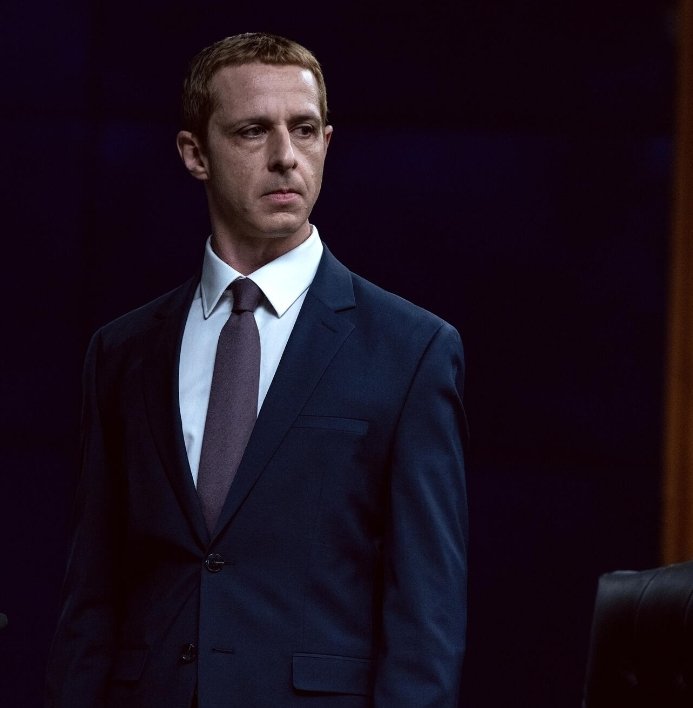
Jeremy Strong takes on the challenging role of Mark Zuckerberg.
Replacing Jesse Eisenberg inevitably invites comparisons with the original film.
However, Strong approaches the older Zuckerberg as a different kind of character.
His portrayal emphasises emotional distance, corporate authority and an unsettling sense of detachment.
The performance fits the film’s darker perspective on Facebook’s evolution.
Nevertheless, Zuckerberg sometimes feels strangely peripheral to a story examining the organisation he leads.
Such a choice could stem from the director’s focus on the institution’s accountability rather than a single person’s.
However, movie-goers who hope for yet another well-developed character may be disappointed with him.
The supporting cast also adds welcome personality to the corporate world surrounding Zuckerberg.
Bill Burr provides some particularly memorable moments, bringing a different energy to the film’s business discussions.
Wunmi Mosaku and Betty Gilpin also contribute to the ensemble’s stronger scenes.
Their performances help prevent the story from becoming entirely dominated by its central investigation.
Overall, the cast is one of the film’s most dependable assets.
The material occasionally limits their opportunities, but the strongest performances give the story much-needed humanity.
What Works
The film deserves credit for tackling a subject that continues to affect modern society.
The study of the impact of social media seems to be topical enough, especially when thinking about the link between participation and propaganda.
Finally, the investigative plot provides a clear direction to the movie.
Instead of retelling the story of the creation of Facebook once again, Sorkin analyzes the results of its growth.
That is why the movie seems to be a natural continuation of The Social Network.
The screenplay also brings some good confrontations, which are Sorkin’s specialties.
The acting brings some good performances, especially that of Madison as Haugen.
The portrayal of Zuckerberg by Strong presents yet another angle to a very familiar character.
The movie is at its best when it combines both these aspects with the rising stakes of the investigation.
These instances clearly show what could have been done with a more dramatic take on the whole story.
What Does Not Work
The most significant flaw lies in the movie’s incapability to reflect the complexity of its theme.
Its themes are vital, but at times, the movie is too focused on explaining them.
Thus, there is less opportunity for ambiguity and character development.
The lack of Fincher’s unique directing skills can also be felt.
Sorkin has his own style, but the movie sometimes lacks tension and atmosphere.
At times, the scenes feel more like discussions rather than discoveries.
The pacing can also become uneven when exposition takes priority over suspense.
One of the biggest issues with the film is its connection to the present.
The topic is definitely important but some of the claims presented by the movie are already well-known.
People have been discussing the impact of social media and obligations of technology companies for years.
So the film not only has to be relevant but also provide an original outlook on the issue.
It succeeds with the most interesting parts that shed light on the investigation, but fails with other scenes.
Final Verdict
The Social Reckoning has an important story to tell, but its execution doesn’t always match its ambitions.
Aaron Sorkin successfully shifts the conversation from Facebook’s creation towards the consequences of its growing influence.
The film raises worthwhile questions about corporate responsibility, misinformation and the power of digital platforms.
The film raises worthwhile questions about corporate responsibility, misinformation and the power of digital platforms.
Mikey Madison and Jeremy Allen White provide strong performances that help ground the investigation.
Jeremy Strong also brings an unsettling quality to his interpretation of Zuckerberg.
However, the screenplay occasionally prioritises its message over character development and dramatic complexity.
The lack of visual elements makes the movie less distinct than The Social Network.
While the movie has enough strength to survive on its own, comparison to the predecessor is unavoidable.
Ultimately, The Social Reckoning is more successful as an interesting corporate movie rather than a good follow-up to a great movie.
The topic of the film definitely demands to be paid attention to, and there are scenes that show how the story could have been done.
The problem is that the movie fails to produce enough tension and complexity needed for a good film.
For the audience who is interested in technology, journalism and corporate responsibility, the movie definitely has something to offer.
However, those who expected something in the vein of The Social Network will feel that there is something missing.
The idea of final reckoning sounds good but fails to be executed well.