Peaky Blinders: The Immortal Man Review
Introduction
Very few TV series can match the success of Peaky Blinders. While initially a British TV crime drama, Peaky Blinders has since become an international sensation, captivating the attention of viewers with its intriguing characters, style, and complex narratives.
For six seasons, audiences witnessed the rise of Tommy Shelby and the Shelby family, witnessing how they thrived amidst their criminal activities, political maneuvering, tragic losses, and the devastating impacts of wars. Now comes Peaky Blinders: The Immortal Man, taking the narrative to the big screen.

Directed by Tom Harper and penned by Steven Knight, the movie comes with great expectations. It wasn’t just about moving forward with the tale; it was about demonstrating that a series which revolves around long stories can successfully be moved to the big screen. Even though The Immortal Man is able to retain many features that made the series popular, it still brings out some of the problems of transitioning a TV show’s story to a film.
From Small Screen to Big Screen
Perhaps one of the main issues regarding the adaptation of The Immortal Man would be whether it is possible for the universe established in Peaky Blinders to transition well from television to the big screen. Thankfully, director Tom Harper knows how to do just that since the film has retained much of its distinctive visual style.
Due to the expansive nature of cinema, Harper can take advantage of this to enlarge the world of his film. Locations become grander; action scenes become more expansive; and production design becomes more impressive due to the increased scale that comes with this format. In many ways, there are times when the film is really cinematic, especially in its more visually ambitious moments.
Nevertheless, there were certain drawbacks. First of all, the TV show was very successful due to the fact that it had enough time for the characters’ development. A movie does not offer such possibilities, which leads to some shortcomings in its plot lines. Secondly, some emotional scenes may lack depth and intensity because of those restrictions. Even though Harper succeeds retaining the visual style of the TV show, the narrative suffers from the constraints of the format to a certain extent.
Cinematography
The cinematography by George Steel makes up one of the most important parts of this movie. The artist manages to preserve the recognizable visual elements of the show while enhancing them for cinema viewers. In addition to this, the foggy streets, dim lighting, and well-composed scenes can be observed through the entire movie.
Steel’s approach makes his work unique in the sense that it doesn’t only involve reproducing the television format. It actually involves improving upon it. The wider shot allows the environment to seem more spacious, and there is greater reliance on big picture visuals. It works well for the factory scenes, street scenes, and country settings.
However, Steel is always careful not to forget about the characters. Close-ups are often employed skillfully in order to portray the characters’ vulnerable and emotionally intense scenes. A good mix of personal moments and big visuals works well to keep the emotional essence of the story alive. Even when the story fails, the cinematography does not lose its power.
In some shots, the filmmaker opts for visual intensity, but they are never too overwhelming. It is obvious that Steel knows the expectations of his audience concerning Peaky Blinders; thus, he successfully expands its visual universe without violating its boundaries.
Themes and Story
In terms of themes, The Immortal Man still revolves around all the themes that were introduced in the TV show. Such themes as legacy, power, family allegiance, guilt, and redemption still play an important role in shaping the plot. Indeed, Tommy Shelby still lives in guilt for what he did in the past. Most of the movie depicts all the repercussions of his actions taken throughout his life.
For those fans of the TV series who follow this character, such an approach can be seen as one of the advantages of the film. The plot does not represent a drastic change from the series but rather continues the story about Tommy in a logical way.
However, such a dependence on recurring themes also shows one of the problems of this movie. For much of its emotional effect, there is an implied requirement that the viewer be very familiar with the backgrounds and the characters from the start. This is certainly not a movie for those who are newcomers in the genre. It is always helpful if you are familiar with Peaky Blinders first before watching this film.
The plot, on its own, does not entirely measure up to the complexity that made the series such an engaging one. This is not to say that there aren’t any engaging concepts in the movie; however, the plot itself comes off as relatively shallow compared to the complex story lines in earlier seasons that were able to incorporate many different elements within it.
In any case, more importantly, this movie is never really a cinematic experience. Even if the images are well adapted to the large screen, the story comes across as being something more appropriate for the small screen and not for theater viewing.
Performances
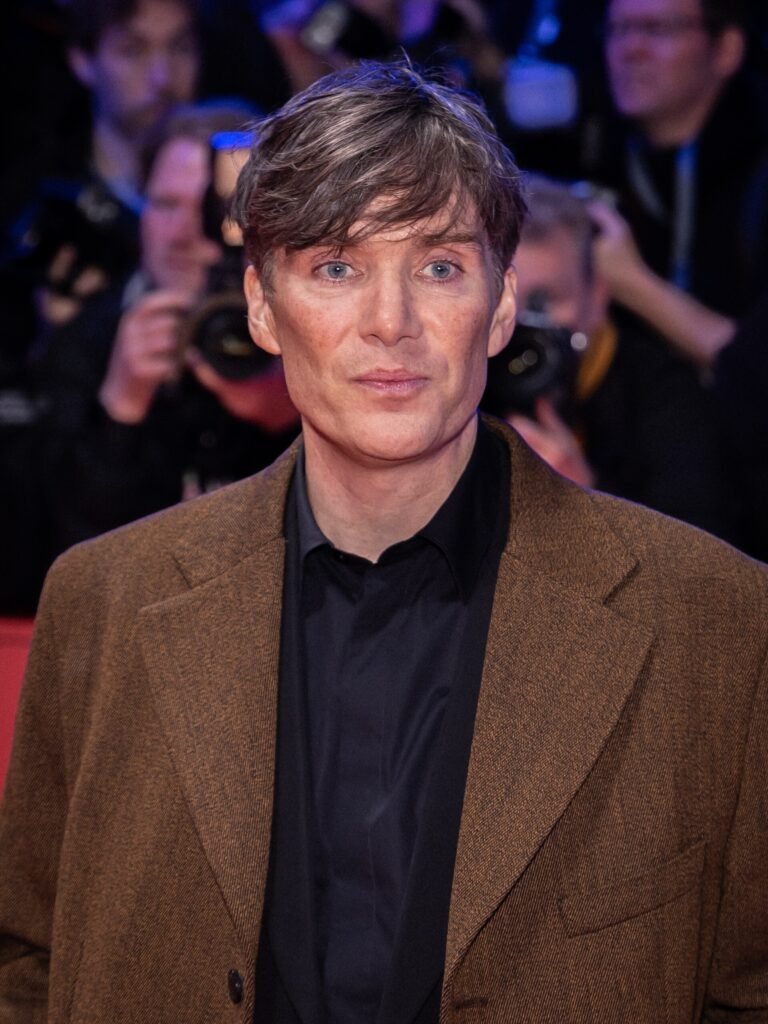
A lot of the movie is riding on Cillian Murphy, who again shows us why Tommy Shelby was one of the greatest characters on television. Even after the many years that have passed since his previous performance as Tommy, Murphy slips into the character’s shoes without much effort. The power, intellect, and complexity of the character are all there.
The weariness of Murphy’s portrayal matches this stage of life for Tommy very well; he comes off like a man carrying a lot of baggage with him from many years of sorrow, burden, and grief. No matter how inadequate the writing of the screenplay may be, Tommy always comes out as the focal point of the movie by virtue of his acting.
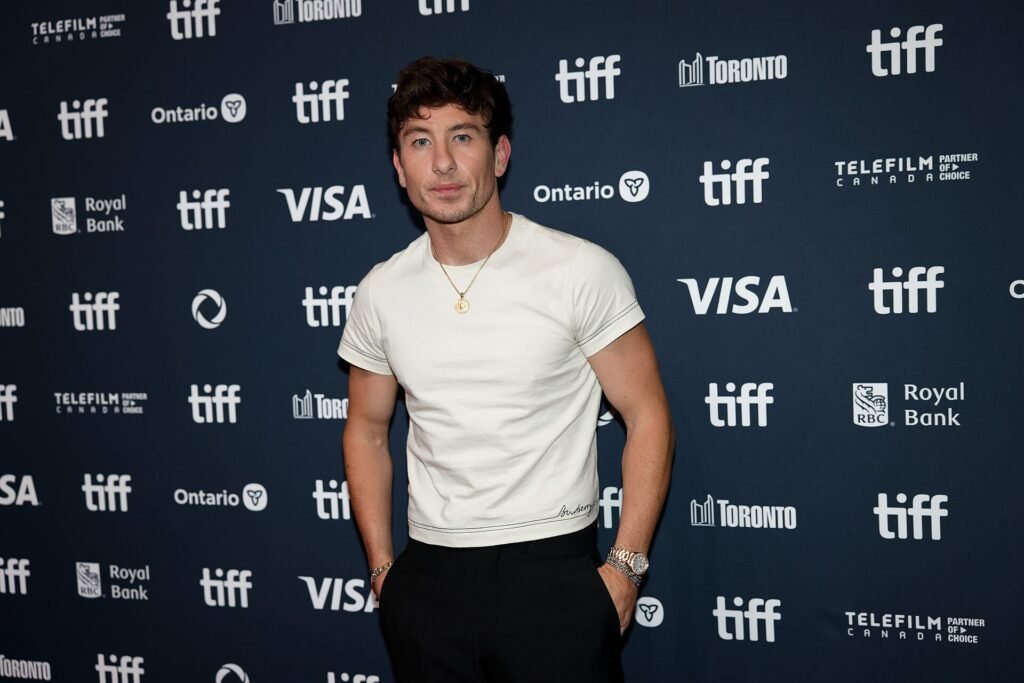
Barry Keoghan adds unpredictability to Duke Shelby’s personality. The portrayal indicates someone who will be able to carry on the Shelby family tradition while establishing his own individuality. Barry Keoghan succeeds in conveying the traits of both ambition and impulsiveness that make him such an interesting character. Unfortunately, the script does not provide for the full development of this role.

The character of Kaulo and Zelda Chiriklo is played by Rebecca Ferguson. Through her role of Kaulo, she manages to bring out mystery in her act as she makes people wonder about what she wants. In her role as Tommy’s ex-lover and Duke’s mother, she offers some of the movie’s most emotional scenes.
Nevertheless, most of the text that revolves around the two characters tends to be perplexing. This is because although there are intriguing themes raised in the mystery surrounding Kaulo and Zelda, the concepts are not developed adequately enough to engage the viewer.
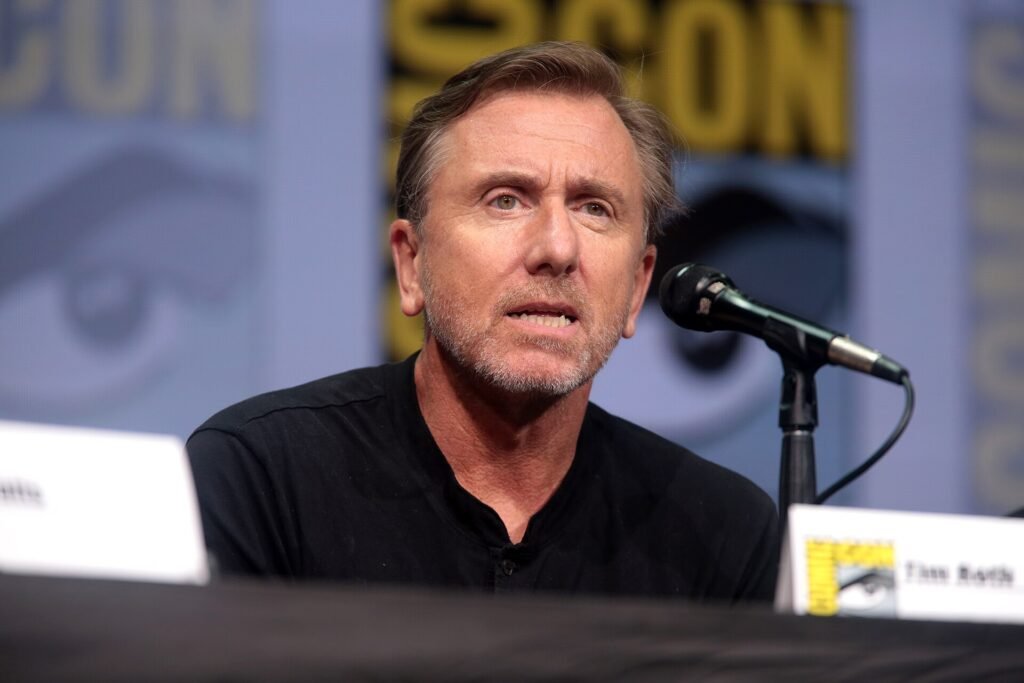
The role of John Beckett played by Tim Roth is performed well, although he is not a physically threatening figure in the movie. However, his character appears intelligent, making him threatening in terms of brainwork and manipulation. Although the character is interesting, unfortunately, the movie does not develop him further for one to remember him as a villain.

Here Stephen Graham yet again shows himself to be one of Britain’s greatest character actors. Reprising his role as Hayden Stagg, Graham makes even the shortest moments believable and charismatic. Even though Graham appears in just a few scenes, he makes them count and enriches the world of the movie.
Soundtrack
Music is one aspect that has always characterized the show Peaky Blinders and the latest series, The Immortal Man, is no exception. The show features a soundtrack that incorporates elements of modern rock music against the backdrop of a historical era.
The best part about the soundtrack is when recognizable songs come up which have already been used in the TV series. This instills in us a feeling of nostalgia and reminds us how far we’ve come from where the characters once were. The songs never seem out of place but instead add a nice reminder for loyal fans.
In addition, there are new musical pieces incorporated into the soundtrack that reflect the mood of the movie more effectively. It is very well balanced since the new pieces do not overshadow the classics but rather contribute to the sense of celebration. Although the movie does not include any musical pieces as iconic as those from the most popular episodes, the soundtrack is definitely a highlight.
What Worked
One of the strongest aspects of this movie is how it manages to maintain the identity of the Peaky Blinders and at the same time extend its visual scope. The camerawork by George Steel successfully manages to convey all the gloominess and picturesqueness typical for this television show. Instead of merely repeating the old formula, the film takes advantage of the wider cinematic space to create an impression of a much broader reality. With Tom Harper at the helm, this movie seems like a natural continuation of the television series.
The performances are also something not to be missed. Cillian Murphy once again takes up the role of Tommy Shelby as if it were nothing new for him, providing a very commanding, intelligent, and emotional performance. Barry Keoghan provides Duke Shelby with a very unpredictable aura, while Rebecca Ferguson, Tim Roth, and Stephen Graham all give excellent performances as well. Even though at times the story may not do too well, the performances always do.
The music deserves credit as well. From the outset, music has been a major characteristic of Peaky Blinders. It is evident in The Immortal Man that the creators understand the significance of sticking to their roots when it comes to this factor. Listening to music that has appeared before in Peaky Blinders brings out nostalgia, while listening to new music adds to the dark and contemplative nature of the movie.
In terms of thematic consistency, the movie stays true to the concepts that have kept the franchise alive. Legacy, family, power, guilt, and redemption remain at the forefront of this movie, which continues to explore the conflict in Tommy Shelby’s life and keeps a link between the movie and previous television shows alive through the character’s past deeds.
What Didn’t Work
The major flaw of the movie is its pacing. The first act of the movie takes quite some time to set up and sometimes lags. There might be instances when a slow pace can be used effectively to create tension. However, the movie seems to lag at times and there are moments when one wonders if something interesting is going to happen anytime soon.
Interestingly, when the pace picks up, the narrative suddenly becomes too fast-paced. In the final stage, there is an attempt at juggling several plot developments and revelations into a rather short period. This causes some crucial scenes in the narrative to be handled rather quickly, with certain aspects deserving more attention receiving insufficient attention.
The actual plot doesn’t get into the same level of depth and intrigue that Peaky Blinders was known for during its heyday. Sure, there is some intrigue and good character interactions involved, but there isn’t enough depth in the plot to make for an exciting film plot-wise. Past seasons of Peaky Blinders had an ability to intertwine organized crime, political intrigue, and personal matters. Compared to those past seasons, The Immortal Man pales when it comes to narrative ambition.
Despite Rebecca Ferguson’s excellent acting skills, two characters that she plays, Kaulo and Zelda Chiriklo, remain some of the most perplexing characters in the movie. They are presented in such an interesting way at first, but the whole thing turns out to be disappointing, because neither the film nor anyone else in it is able to explain their importance.
Probably the most critical problem lies in the fact that the movie comes across as a stepping stone towards other films and is not an independent one itself. There are a number of aspects of the plot which seem to point to the future and which are clearly intended to set the ground for other movies, especially concerning Duke Shelby and his descendants. Of course, in case future movies come into fruition, such an approach would pay off; however, this does not do the movie any good by turning it into a television project rather than a feature film.
Overall Verdict
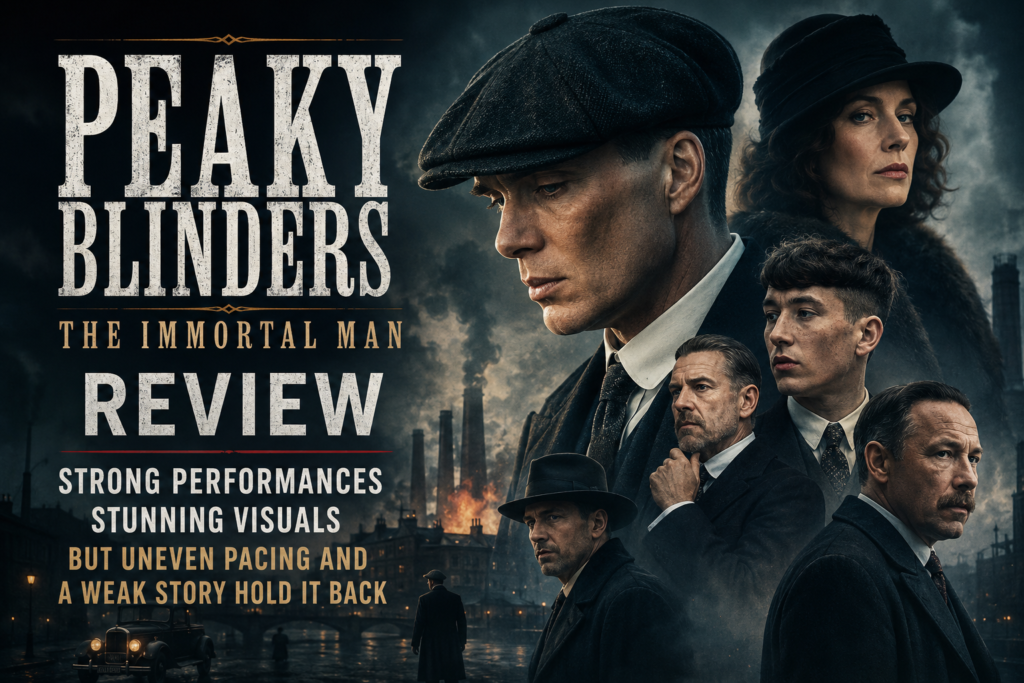
The Immortal Man: Peaky Blinders is a movie that will definitely cater to the audience that already appreciates Peaky Blinders. In addition to its plot and acting, The Immortal Man: Peaky Blinders manages to maintain the essence of the TV show perfectly. George Steel’s cinematography adds value to the visual identity of the franchise, and the performance of Cillian Murphy does justice to his character.
Yet, the movie fails to make a valid case for its place among cinema as an experience in its own right. It’s paced poorly, its story is too simplistic compared to the show when it reached its prime, and some characters’ arcs are rather lacking. Perhaps most importantly, the plot seems to set up more than it concludes.
The long-term fans can certainly find lots of things to like about it. The return into that world has a lot of appeal to it, and there is no denying that some aspects of the film recall the magic of the original series. However, as a separate movie, it does not fully deliver as the great film that many have been hoping for.