Ice Cream Man: Gripping or Gory Disappointment?
Introduction (Warning Contains Spoilers)
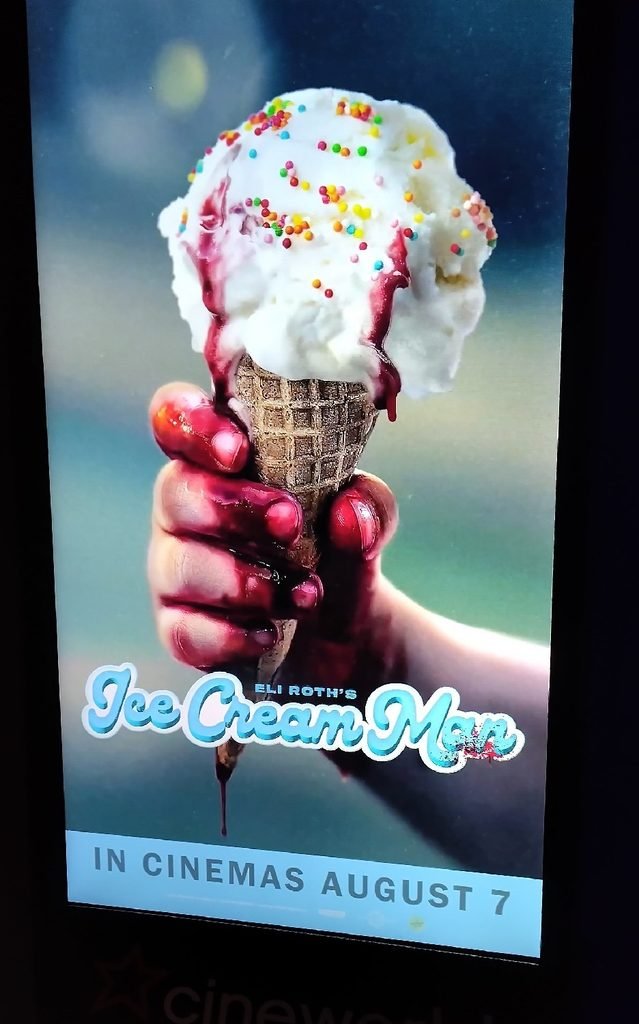
Eli Roth’s The Ice Cream Man transforms an iconic symbol of childhood into a sinister instrument of suburban terror.
The movie tells us a story about how the children in a peaceful suburb turn into monsters after eating hypnotizing ice cream.
The plot of the movie is intentionally absurd; it combines the elements of slashers, black humor, gory scenes and childhood innocence.
The strength of The Ice Cream Man lies in the use of contrasts. The bright streets of the suburb become a backdrop for more and more shocking scenes of violence.
However, this brilliant concept is not always supported by good storytelling.
Direction: Roth’s Vision

Eli Roth directs Ice Cream Man through the style he applies to horror. It entails the use of graphic violence, humour and exaggeration of imagery.
Throughout the film, there is no intention to present subtleties of realistic style.
The best directorial choice is placing the horrific action in the everyday suburbs. These places seem familiar and even a little bit too comfortable.
The use of such setting creates a powerful contrast when the violence starts. A harmless ice-cream truck becomes an unexpected symbol of horror.
This idea takes advantage of the expectations of the audience regarding the childhood. Usually, ice cream implies something innocent and sweet. However, this association becomes a horror movie metaphor in this case.
The only problem with this style is that it may destroy the horror atmosphere of the movie. In order to shock people, the director uses the most outrageous elements which do not look real anymore. People understand what they are seeing.
Thus, Ice Cream Man works better as splatter entertainment than psychological horror. The director knows how to shock people with violence and create interesting images. However, he is not good at building tension before shocking moments.
In addition, this film follows the elements which can be observed in his other horror movies. Roth combines physical violence, dark humour and exploitation style in all of his films.
The influence of slasher horror movies is also obvious here. Familiar things become frightening because they remind the objects and locations used by slasher directors.
Overall, Eli Roth accomplishes the main purpose of this movie. The weakness is in the fact that sometimes the outrage is chosen above terror and emotions.
Cinematography: Simon Shohet
The cinematography of Simon Shohet contributes to Roth’s vision in how it deals with the suburbia. The brighter look of the film establishes normality until the horror prevails making violence seem more disturbing and intrusive.
Bright surroundings play a vital role in defining the identity of the film. Dark settings are used to generate fear and uncertainty in traditional horror films. Ice Cream Man is quite the opposite.
Usually, the audience is capable of seeing the surroundings at the moment of terrible events happening.
It eliminates some of the mystery yet provides additional emphasis on the discrepancy between appearance and reality.
The happy-go-lucky setting is disturbing due to the fact that the audience sees what it hides behind.
The ice cream truck profits from this technique as well. With the friendly appearance, the vehicle has positive childhood connotations before being associated with something dangerous. It is a great motif that can be easily remembered.
The cinematography also goes well with the increased style of the director. The images sometimes come across as exaggerated and not totally naturalistic which is an asset for the dark and comedic film.
Yet there are some downsides to the mentioned exaggeration. Some scenes may seem artificial rather than frighteningly realistic.
It may decrease the emotional connection between the audience and the characters.
Hence, the cinematography is better seen as the result of increased horror. The cinematographer succeeds in creating a unique visual world for Roth’s unique concept.
Horror and Visual Effects
The horror aspect in the film Ice Cream Man is quite intentionally over-the-top. Indeed, Roth uses various means, such as gore, shocks, black humor, and scary situations, which ensure the movie’s ability to provide many interesting moments for fans of splatter horror.
The best horror concept used by the director lies in his inversion of the image of the child as the most vulnerable and innocent creature in the world.
In the movie, children are used as an instrument of violence against the adult population.
The main point of this concept consists in the way in which it subverts the established expectations. One witnesses how innocence turns into threat, and that is why the described horror concept proves to be more disturbing than violence in itself.
What concerns the suspense concept, it is not that successful in Ice Cream Man. The majority of scenes concentrate on the outcome of violence rather than the anticipation of it. As a result, one experiences shock instead of fear.
The excessive visuals used in some of the scenes can also contribute to that phenomenon. In fact, their over-the-top look perfectly corresponds to the overall tone of the movie but sometimes makes violence unnatural. As a result, people might appreciate the effect instead of being scared by it.
However, that does not mean that the effect fails to work. It helps to build the unique visual identity of the movie and its extreme character. However, visual impact does not always correspond to the emotional impact.
The use of generative AI in the movie creates an additional problem in this context. The recent controversy concerning it influences the way in which people see some aspects of the movie.
Moreover, any film which uses much visual invention requires some transparency concerning how unique scenes were created.
Themes and Storyline
The central storyline seems to be the worst element of the film. While the plot provides many chances for horror, it does not seem to develop the core concept well enough to create an adequate story around it.
There is one main theme in the film, which is the corruption of innocence. Before being linked to fear and death, the ice-cream truck symbolized happiness in a person’s life.
Another significant theme is the fragile nature of safety in suburban communities. Such a community seems quite ordinary and safe until horror disrupts its usual way of living.
In addition, the relationships between adults and children are inverted in the movie. Adults are supposed to defend children from any kind of danger and here the latter become sources of threat for the former.
Such an inversion creates a good basis for the movie’s themes. Sadly, the screenplay does not utilize it to its full potential as the plot is nothing but opportunities for progressively outrageous killings.
Such a structure is definitely appropriate for those who watch horror films on a regular basis. It is fast and does not make the premise too complex. On the other hand, it turns out to be a drawback because there are no developed characters in it.
A better storyline would have helped to increase the effect of horror. In order to feel the suspense and fear, one should have reasons to care about people put in danger. Otherwise, even the most shocking deaths become too distant for viewers.
In conclusion, the concept seems to be much better than the plot based on it. Roth has created a great idea for a horror film. The screenplay fails to develop it well enough.
Performances
In general, the cast is aware of the heightened tone of the material. Ari Millen carries much of the film’s central menace as the mysterious ice-cream vendor.
His performance benefits from the contrast between his apparently friendly demeanor and underlying malevolence.
The young cast members also aid in establishing the film’s theme of innocence corrupted. Their inclusion makes the change in the community even more disturbing. Their performances work best when the film lets their reactions be believable.
Charlie Zeltzer, Shiloh O’Reilly and Kiori Mirza Waldman help keep the story connected to its childlike origins.
Their characters are essential because the film’s horror relies on the innocence becoming menacing.
Sarah Abbott and Benjamin Byron Davis help establish the adult community in the film. Their performances contribute to the feeling of the ordinary, suburban community life prior to the horror taking hold.
Unfortunately, the screenplay keeps the cast from doing more with their roles. A number of characters simply do not get enough character development to make them emotionally engaging. This means that their menace can be functional rather than personal.
The actors must also deal with Roth’s heightened tone. This often leads to more theatrical reactions being called for rather than realistic acting.
For some audiences, this will be entertaining, while others will find it less convincing.
In general, the cast gives good performances in the unique world of the film. The performances fit the horror concept but cannot save it from weak characterisation.
What Works
The key strength in the movie is its main dichotomy between ordinary and terrifying things. Suburbia becomes a very effective setting for increasingly extreme occurrences. The ice-cream truck serves as a symbolic image in the film.
Another major strength is the ability of the director to take the film to the extreme. The movie is not ashamed of its extremely ridiculous premise.
It goes for blood and darkness and for horror that is consciously heightened.
The cinematography of the movie also contributes to its specific personality. Shohet’s cinematography adds up to the decision of the director to make the environment look bright and familiar. It separates the movie from other dark and conventional horrors.
The premise itself has many interesting thematic aspects as well. Innocence of childhood, safety of suburbia and consumption all become associated with dangerous themes.
What Does Not Work
The main weakness is the plot. The premise implies much more than is delivered in the screenplay. In some instances, the story becomes subordinate to the violence.
Poor character development is also a serious flaw. There should be better emotional connections between the characters in the movie. Without them, there would be less horror in it.
There is also a risk of too much violence. While it might shock at first, the shock effect would wear out quickly. Overwhelming the viewer with the escalating violence may eventually become ineffective.
The stylistic exaggeration is yet another risk that may turn into a weak point of the film. Even though it gives character to the movie, it decreases the sense of reality. Consequently, some of the scenes become humorous rather than frightening.
The AI debate also poses difficulties for the movie. Even though it might use AI minimally, it still creates some issues in terms of transparency.
Final Verdict
Ice Cream Man is an original slasher that recognizes the effect of contrast. Roth brilliantly manages to use suburbia as a background for outrageous horror. The movie has a unique look and several great ideas.
However, its main strengths lie in visual and conceptual elements, whereas the plot seems to be too weak.
Moreover, the lack of development is felt not only in the plot but also in the characters. The scenes of horror are often shocking but do not make people afraid.
The movie might be interesting for those who like gore and slasher films. Those people looking for psychological elements and development of characters will be disappointed.
Roth manages to realize his goal to make excessive and impressive horror but fails to scare viewers.
Thus, the movie can be called a unique horror spectacle but cannot be called a horror story. The concept is better than its realization.