If You Like Weapons Then You Will Love These 7 Movies!
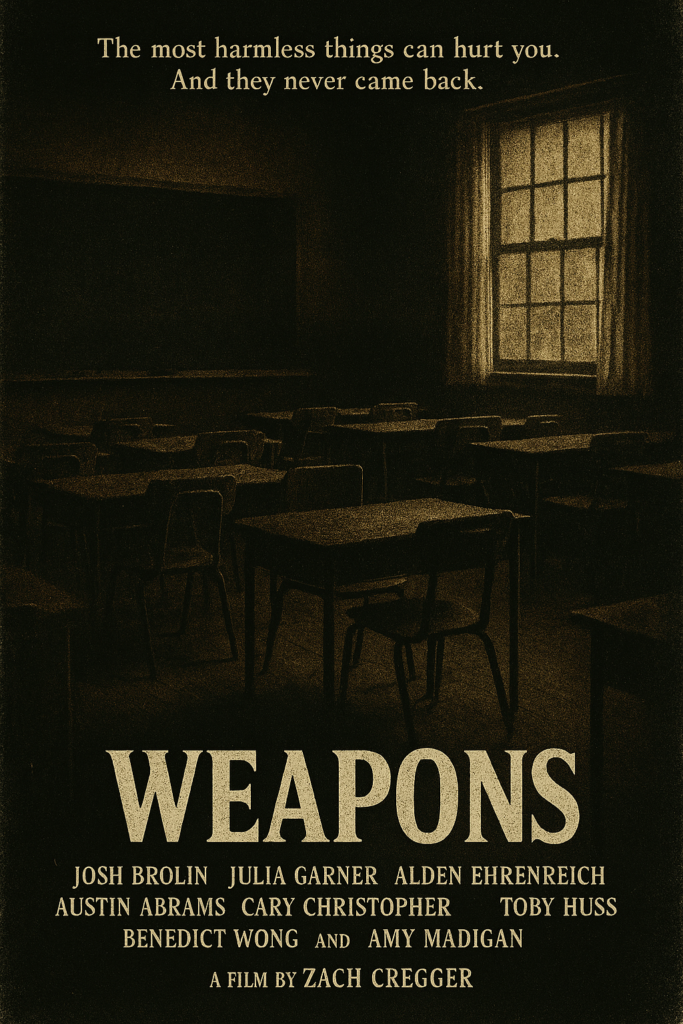
If you like weapons and the raw, pulse-pounding tension it brings to the screen, then this list was made just for you. Obviously sinners are on everyone’s watch list, so we will exclude it. From Hereditary’s deeply unsettling domestic horror to Bring Her Back, each film on this list delivers psychological fear and confrontation.
The claustrophobic nightmare of Barbarian, physical, atmospheric, and psychological, is at the heart of every twist. Add the creeping paranoia of It Follows and the eerie small-town secrets of the Indian hit Baramulla, and you have seven films proving the most gripping cinema is always armed with something dangerous.
Baramulla (2025)
Baramulla (2025) is a Hindi-language supernatural horror thriller streaming on Netflix, directed by Aditya Suhas Jambhale. Manav Kaul stars as DSP Ridwaan Sayyed. A police officer transfers to the serene Kashmiri town of Baramulla to investigate a troubling string of child disappearances. What starts as a criminal investigation gradually pulls him into something far darker. The town’s haunted past spawns a web of supernatural occurrences, including the trauma of the 1990s Kashmiri Pandit exodus.
The film weaves together crime, folklore, and social drama against the breathtaking yet unsettling backdrop of Kashmir’s landscapes. At its heart, it uses horror as a lens to examine grief, historical trauma, and buried secrets. Manav Kaul’s performance has drawn particular praise, as has the film’s slow-burn atmosphere and striking cinematography — though opinions are divided on how seamlessly its many genre threads come together.
Best Wishes to All (Yoroshiku 2023/2025)
Best Wishes TO All (Yoroshiku 2023/2025) marks director Yûta Shimotsu’s feature debut. It is a slow-burning Japanese horror which takes a while to really pick up, but it still manages to keep you interested with lingering suspense and disquieting undercurrents.
Kotone Furukawa stars as a young nursing student from Tokyo who arrives early at her grandparents’ rural home, expecting a warm reunion. Instead, she finds a house thick with unspoken dread. Strange noises echo from upstairs, relatives ask unsettling questions about happiness, and her grandparents’ affection feels slightly, disturbingly off.
What she uncovers is a horror that is not supernatural but entirely human. Happiness, in this community, is not earned but extracted.
The practice is not bound to her family alone — it is the town’s dark tradition, a collective agreement passed down through generations.
Kotone Furukawa’s performance carries the film’s suspense and ambience. The way she transitions through different emotions and fears shows her range as an actress, which adds to the deeply uncomfortable, thought-provoking piece of horror cinema.
Barbarian (2022)
Written and directed by Zach Cregger in his solo feature debut, Barbarian is a genre-defying horror film announcing a new voice in horror. Starring Georgina Campbell, Bill Skarsgård, and Justin Long, the film became one of the most talked‑about sleeper hits of its year — and deservedly so.
Tess arrives late at night in a deteriorating Detroit neighbourhood, checking into an Airbnb ahead of a job interview. Inside, she discovers a double-booking — a soft-spoken stranger named Keith is already there. Even though it goes against her better instincts, she stays. What follows begins as a taut psychological thriller, rooted in the modern unease of trusting strangers. Yet gradually, it peels back layers of something far older and far worse lurking beneath the house itself.
Georgina Campbell plays Tess with such naturalism and kindness, especially in the first act. Staying away from the tropes of a naive lead but leaning towards someone who’s genuinely empathetic.
Bill Skarsgård keeps the stakes high effortlessly, walking the line between charming and creepy while Justin Long injects chaotic energy that accelerates the film.
This is exactly the kind of horror that reminds you why the genre, at its very best, can reach places no other form of storytelling ever could.
BRING HER BACK
Bring Her Back is an Australian supernatural folk horror directed by Danny and Michael Philippou. After their father’s tragic death, step-siblings Andy and Piper are placed with Laura (Sally Hawkins), a grieving foster mother whose own daughter recently died, leaving her and her son forever changed. Piper is blind, and Andy helps her navigate the world as much as he can. But as Andy and Piper settle in, disturbing rituals and secrets start to surface, and Laura gradually turns from caring and genuine to sinister.
Sally Hawkins’ performance swept the 2026 AACTA Awards. She drives the character into the deepest, darkest places of trauma. Furthermore, she breaks down script nuances that no one else noticed, portraying a mother shattered by extreme circumstances. Yet most strikingly, she twists her sunny Happy-Go-Lucky energy into a brittle brightness that conceals a ferociously dark interior.
Bring Her Back builds suspense as a relentless, suffocating force, echoing the structural dread that Weapons (2025) constructs. Both films weaponise the vulnerability of children.
Woman In The Yard
After a devastating car accident claims her husband’s life, Ramona (Danielle Deadwyler) is left physically broken and emotionally hollowed out. She isolates herself in a remote farmhouse with nowhere to run and no one to turn to. The horror takes hold when a mysterious woman dressed entirely in black appears in her front yard — still, silent, and unmovable — shattering whatever fragile calm Ramona had left.
The threat here, much like in Weapons, refuses to rush, making the tension unbearable. Each hour, the woman inches closer. Every small advance tightens the air around Ramona like a vice. The film avoids sudden shocks or loud, unsettling noises, instead building dread through the accumulation of silence and stillness.
But the most unsettling revelation is not how close she gets — it is the growing certainty that the danger did not arrive with her. Something already answered the call long before she appeared in that yard.
Hereditary
Ari Aster’s debut feature slowly studies grief, family dysfunction, and the secrets that pass silently between generations. After a bereavement, the Graham family unravels, and what begins as emotional trauma gradually exposes something far darker lurking in their home and history. Toni Collette delivers one of modern horror’s rawest, most fearless performances, and Alex Wolff brings intense emotional commitment to his role. Every element—from the writing to the cinematography and score—works brilliantly, making you feel the horror has always lived inside the family.
It Follows
David Robert Mitchell’s film transforms a simple premise into an unsettling meditation on adolescence, intimacy, and the burdens we pass on to one another. A slow‑moving, relentless supernatural force pursues teenager Jay (Maika Monroe) after a casual encounter. The film employs that threat as a subtle metaphor for anxiety, loss of innocence, and the burden of inherited consequences.
Monroe anchors every frame with a fragile, watchful stillness that feels entirely real. It Follows never rushes — it simply closes the distance, and that restraint is precisely what makes it so deeply unsettling.
It Follows takes the quiet suburban neighbourhood and turns it against its inhabitants. The film transforms familiar streets and sunlit cul‑de‑sacs into landscapes where dread grows slowly and settles permanently. Letting long atmospheric shots do what jump scares cannot. Build a creeping, suffocating sense that something is wrong with the world these characters occupy.
The movie understands trauma not as a private wound but as a contagion. The horror either spreads through a supernatural curse passed between bodies or ignites as a community-wide activation of buried violence. It moves outward, infecting the social structure of every household it touches.
It does not stay in one room. The director opts for unsettling realism over CGI, featuring familiar people in familiar settings committing unimaginable acts. The result is a deeply intimate cinematic experience that lasts.