Manhunter The Final Cut Review
Introduction
Not all movies get better with age. That definitely is the case for Michael Mann‘s Manhunter.
Released way back in 1986, this movie has built up a very loyal fan base and earned a reputation that was only growing with time.
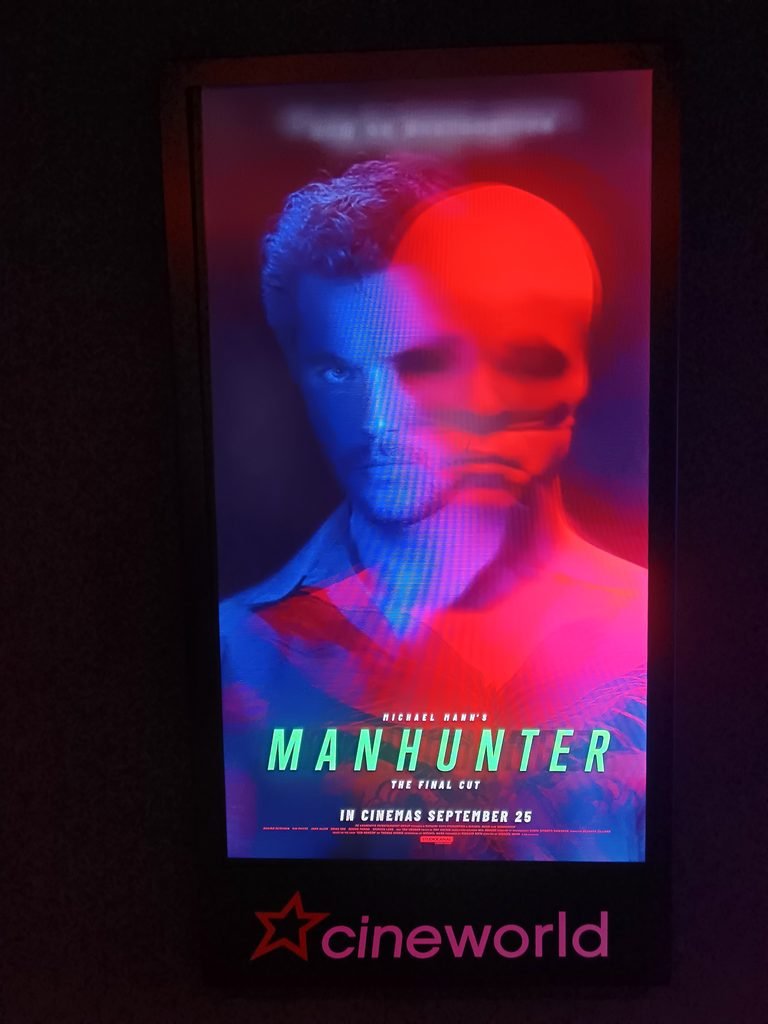
Now, four decades later, we have the return of Manhunter to the UK screens. But not in its original form – this time around, the movie is titled Manhunter: The Final Cut.
This re-release has undergone significant restoration and upgrading. It received a 4K restoration process overseen by Michael Mann himself.
The movie was scanned from the original 35mm film. The sound, on the other hand, underwent restoration as well and was remixed into a 5.1 soundtrack.
It’s clear now that this is not just an anniversary screening.
Instead, this is the chance to see one of Michael Mann’s most unique films in a different presentation altogether.
This film can be considered interesting for people who view it for the first time. At the same time, for those people who have watched the film for many years, it gives another chance to watch this film which has gained increasing influence over time.
I have always thought Manhunter to be an interesting film, especially considering its unique approach to such films about serial killers.
Atmosphere in the film plays no less important role than the detective story.
A Film That Found Its Audience
Manhunter did not initially get the recognition that its reputation may imply.
Over time, however, it has gained much different significance. Its cult status slowly but surely grew within the audience and filmmakers.
Its influence can be found throughout the entire genre of serial killer thriller.
The film’s reputation also benefitted from the growing interest in Michael Mann’s career. Heat, The Insider and Collateral made him an important director.
Retrospective consideration of Manhunter reveals its significance even more clearly.
Manhunter was already a very unique movie in 1986. Mann was making something that sounded and looked like no other thriller of that time.
It was not purely stylistic. They play an important role in providing a psychological effect.
That makes the new restoration even more appropriate.
In this film, color, composition, lighting, and sound are central components. Restoring those components enables modern viewers to understand what Mann was trying to do.
It also serves as a reminder that Manhunter was never just a typical serial killer film.
The Story
The film is based on Thomas Harris‘s novel Red Dragon.
It follows FBI profiler Will Graham, played by William Petersen. Graham has retired following the psychological damage caused by his work.
He is persuaded to return and investigate a series of brutal murders.
The killer has become known as the Tooth Fairy. The late Tom Noonan gives the character an unsettling and memorable presence.
Graham’s investigation requires him to understand how the killer thinks.
That reunites him with Hannibal Lecktor. Hannibal Lecktor is portrayed by the restrained Brian Cox.
It was the first time that this iconic character from Harris had come onto screen. The performances of Cox are especially fascinating in light of what came after them.
The role of Hannibal Lecter would go on to become world-famous in the hands of Anthony Hopkins several years down the line. Nevertheless, the performance of Cox has an identity of its own.
Hannibal Lecktor in his interpretation is cool, intelligent and quietly menacing.
In his performance, he doesn’t have to dominate every scene. Sometimes, his restrained performance is even more disturbing.
That approach suits Mann’s film.
Manhunter is less interested in theatrical villainy than psychological intrusion. The characters are constantly attempting to understand one another.
That creates an uncomfortable relationship between Graham and the people he investigates.
Will Graham
William Petersen is key to making the movie work. Petersen’s acting skills make Graham seem flawed but do not typecast him as the standard troubled detective.
Graham is brilliant, resourceful and extremely self-conscious about his skills. His best asset turns out to be his worst weakness.
To comprehend the Tooth Fairy, Graham must try to put himself in the shoes of the killer. That makes for an intriguing psychological struggle.
It is not enough for Graham to solve a crime; he must try to think like the criminal. This poses a real threat to his mental well-being.
Petersen does a good job of conveying this internal struggle.
Throughout the movie there seems to be this sense that Graham is fighting to keep himself in control. His quest forces him to relive his past and deal with what happened then.
This adds a whole new dimension to the movie beyond the standard police thriller. Another factor that comes into play is his family.
Graham’s wife Molly represents the normal life he wants to protect. His return to the investigation threatens that stability.
This gives the story an emotional centre. Without that relationship, Graham could easily become another detached investigator.
Instead, Mann shows us what Graham could lose.
Tom Noonan’s Tooth Fairy
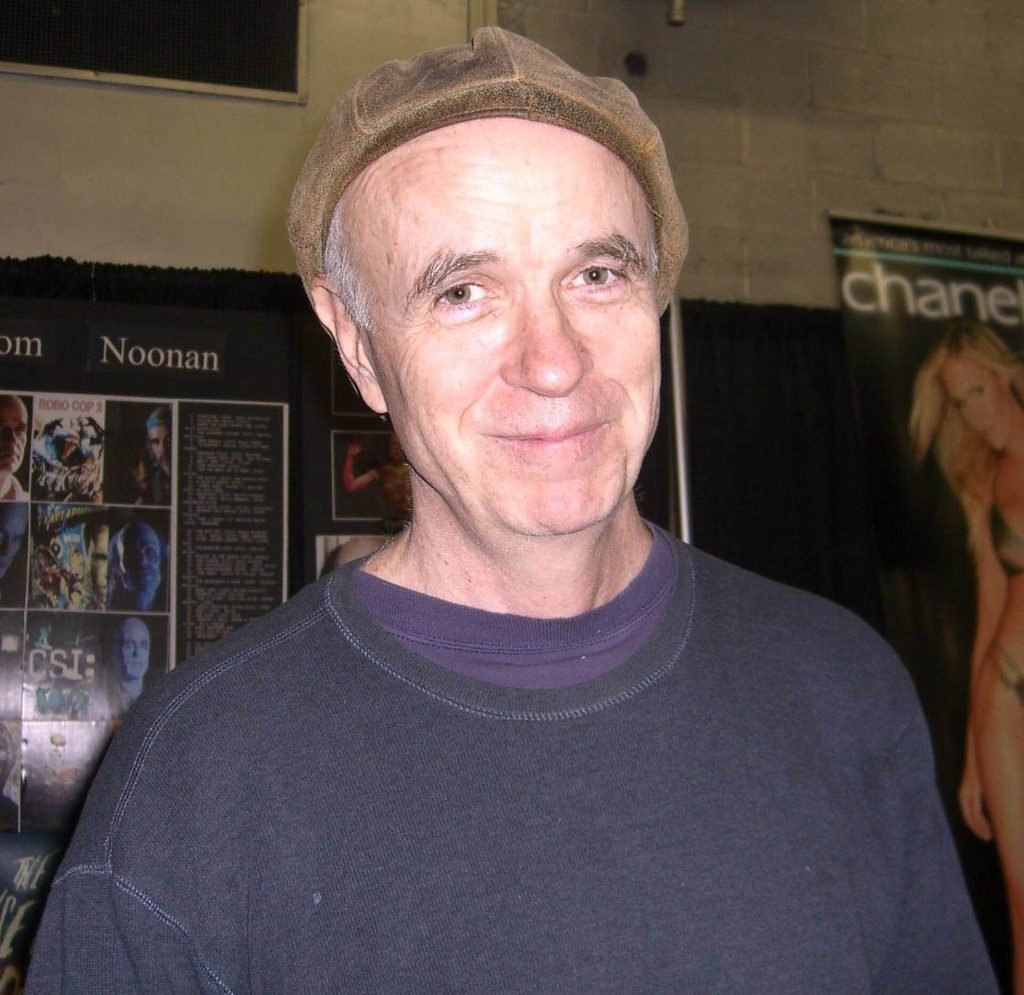
One of the film’s most striking features is the performance of Tom Noonan. The Tooth Fairy is not characterized as the traditional horror villain.
There is something weak about him. His weakness makes his brutality all the more frightening.
Noonan constructs a character that is capable of being physically threatening and psychologically frail.
The film also focuses on the individual behind the criminal acts. This creates a dissonant dynamic.
While we come to recognize some of his loneliness and mental instability, we do not forgive his crimes.
This adds another level of complexity to the character. At the same time, it is also one of the film’s most compelling motifs.
Manhunter explores the bond between victim and assailant.
Graham attempts to understand killers because understanding them may allow him to stop them. However, getting too close to their thinking comes with consequences.
The film continually asks how much of a killer’s mindset an investigator can adopt.
Brian Cox’s Hannibal Lecktor
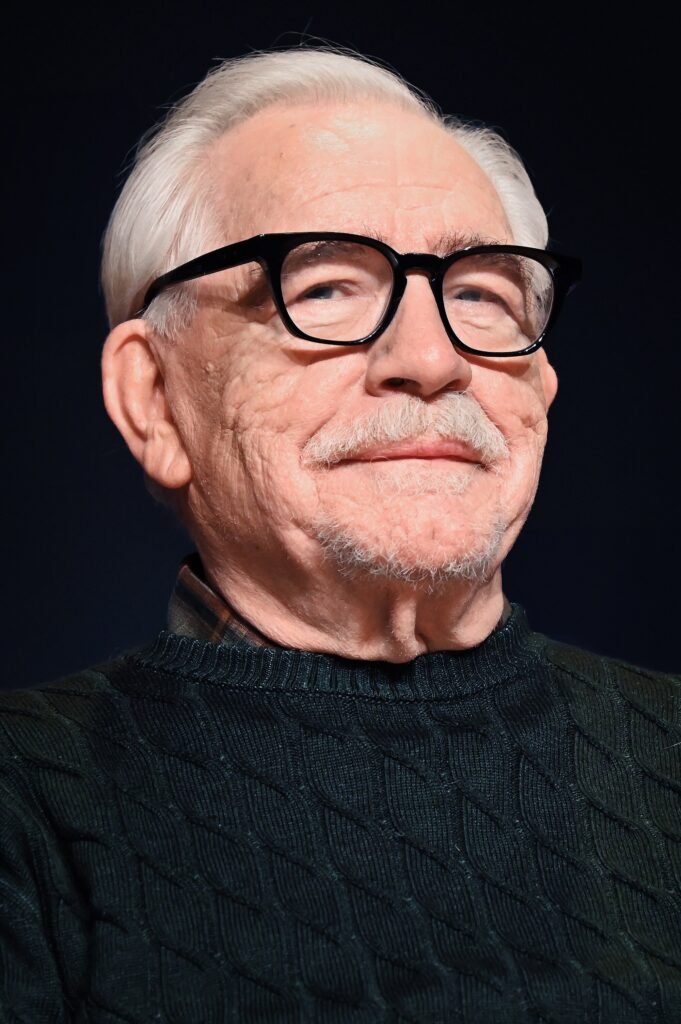
Brian Cox’s Hannibal Lecktor is still one of the best assets of the movie.
His take on the character is quite different from what is usually associated with the character nowadays.
Cox does not resort to grandiose acting. Instead, Lecktor feels comfortable with his intellectual side. He is well aware that Graham needs him.
This allows him to have some control in their exchanges. Their interaction becomes somewhat of a psychological game.
Lecktor is fully aware of the weaknesses of Graham. He is aware that Graham is trying to analyze characters like himself.
This makes for an uneasy connection. The performance by Cox is still very effective even forty years later.
At the same time, it is interesting to see it without always comparing it to Anthony Hopkins.
Cox’s Lecktor should be evaluated on its own merit.
Michael Mann’s Direction

Direction by Michael Mann is definitely one of the most essential aspects of Manhunter. Manhunter is much more than just narration of the plot.
Mann builds a particular world where the plot takes place. Every aspect of it seems under control. The framing, lighting, editing, and music combine to form almost a dreamlike ambience.
While the film can be really violent, Michael Mann does not try to make the violence shocking at all times.
He rather forms tension through anticipation. We are certain that something terrible will happen in the film.
However, we have to wait. This technique gives Manhunter a unique rhythm. The film does not continuously try to shock the viewer.
Rather, it forms a gradual tension.
The Visual Style
The cinematography is one of the first aspects of the movie to grab one’s attention. The usage of color is very memorable in this film.
Mann constructs a world of cold blue tones, shadows, and vibrant colors. There are also instances of warmth and heat.
This contrast provides the movie with its own visual signature. The images in the movie sometimes seem to be a bit too much composed.
This is not an objection. This artificiality contributes to the unsettling atmosphere of the film.
At times, it seems that one is witnessing a nightmare being depicted through perfectly composed images.
Such restoration allows this aspect of the movie to be more prominent.
A 4K restoration is especially useful for such a movie, which has so well thought-out visuals.
This restoration allows one to preserve the authenticity of the original film while improving the visuals.
This is important since Manhunter is the movie which deserves to be shown on the biggest screen possible.
The images in the movie are not just means of storytelling.
The Music
The soundtrack forms yet another crucial element of Manhunter. The music gives the audience a feeling of discomfort, but it is not violent.
It helps the film stand out from the standard crime thriller. Some music has a dreamlike element about it.
This element goes well with the director’s style of filming. The soundtrack further assists in defining the emotion of the movie.
Beautiful music surrounds the characters when they go through disturbing situations.
The combination of two elements produces a strange sensation. The music is not just a warning sign. It becomes an important part of the film.
Sound And Atmosphere
Sound is equally important. The new 5.1 audio mix gives the film another opportunity to create atmosphere.
The restored sound allows the quieter moments to carry more weight. That matters because Manhunter often builds tension through silence.
A distant sound can suddenly become significant. A piece of music can transform the mood of an otherwise ordinary scene.
The soundscape helps create the feeling that something dangerous exists just outside the frame. That is particularly effective during the investigation.
Graham is constantly trying to piece together information. The audience is doing the same. The film therefore makes us listen as carefully as we watch.
The Influence Of The Film
It is impossible to discuss Manhunter without considering its influence. The film arrived before the modern explosion of serial-killer thrillers.
It helped establish ideas that would become increasingly familiar.
The psychological profiler would become a recurring figure within crime television and cinema.
The relationship between investigators and serial killers would also become increasingly prominent.
Manhunter approached these ideas with an unusually stylish visual language.
That visual identity helped distinguish it from more conventional police thrillers. Its influence also becomes clearer when viewed alongside later films.
However, Manhunter does not feel like a prototype that was waiting for something better. It still feels like its own film.
That is one reason its cult reputation has endured.
The Cult Following
What I found particularly interesting about the way the film gained such status was quite intriguing.
Over time, people were able to appreciate the movie’s qualities.
This is especially true as the reputation of the movie coincided with the general fame of Michael Mann.
Also, the popularity of The Silence of the Lambs influenced people’s attitude toward the characters created by Harris.
Of course, it increased the popularity of Manhunter. But the reputation of the film is not based only on the connection of Manhunter to Hannibal Lecter.
Perhaps, the best quality of the movie is the filmmaking of Michael Mann. The visual atmosphere of the film is unique and distinct.
It explains why it continues to gain new fans decades after its first premiere. Such reputation of the movie appears to be quite reasonable.
In my opinion, it is a movie that should be watched multiple times. The more focus one pays to the visual decisions, the more one discovers.
The 4K Restoration
The primary concern for any restoration is whether it makes things better. Here, the answer is unequivocally yes.
The restoration itself was overseen by Mann.
A 4K scan of the original 35mm negative has been used in the restoration. Original audio was also restored.
The Final Cut is therefore a serious effort at trying to recreate Mann’s vision. It is not merely a new rendition of a vintage film.
The restoration attempts to make the original experience more accessible to modern audiences.
This is key.
Vintage movies can occasionally appear too clean when transferred to modern media. But Manhunter retains its own aesthetic from its original photography.
It is still a movie made in 1986. The restored transfer makes it possible for its meticulously constructed visuals to truly shine.
This is precisely what this film needs.
Does It Still Work Today?
Perhaps the most crucial question is whether Manhunter continues to be effective.
In my opinion, the answer is affirmative.
Several things about the movie are definitely products of its time.
For instance, the technology, the fashion and some stylistic decisions clearly tell us that we are dealing with an eighties’ movie.
However, the core psychoanalytical concepts behind it continue to be relevant.
The examination of obsession is still engaging.
The idea that Graham is willing to get into the psyche of a serial killer is still discomforting.
The connection between Graham and Lecktor still gives us shivers.
Finally, the Tooth Fairy is still a frightening character.
What is especially amazing is how well Mann’s direction has aged.
His confidence with camera work can be seen all through the movie.
Moreover, the movie does a very good job at not being too explanatory.
Sometimes it takes some distance from its audience to do that.
What Works And What Does Not
Even after all these years, there are many things about Manhunter that stand out.
First of all, the strength of this film is its atmosphere.
This is a film that establishes a unique atmosphere throughout the whole movie.
In addition to that, the performances in the movie are fantastic.
William Petersen is great as Graham, and he gives him a lot of emotions.
Also, Tom Noonan does wonders as The Tooth Fairy.
Finally, Brian Cox does an outstanding job as Hannibal Lecktor.
All of that is achieved with the help of Mann’s direction.
As for the rest, the cinematography is still amazing, and the soundtrack is memorable as well.
Finally, there is also a restored sound in the movie.
Of course, sometimes the pace at which the movie moves will be hard for modern audiences.
This is definitely not one of those films that rush from scene to scene without any breaks.
The film has many scenes that go slowly.
Sure, some people will see this as one of the film’s weaknesses.
However, I do not see it that way.
Final Verdict
Manhunter is an intriguing example of how some films find their audience only after a while.
The initial reaction to the film doesn’t really define it today. The film earned its reputation and is a very important element of Michael Mann’s filmography.
Even after forty years, the style is fresh and impressive. The film’s performances are still captivating.
Its psychological nature is still quite disturbing. Its take on serial killer stories is unique even today.
The 4K restoration provides an opportunity to appreciate it anew. The director’s involvement makes this anniversary edition special.
The Final Cut seems like the director’s take on his own film. For people who have seen the film before, it is a good reason to see it again in theaters.
For those who haven’t watched Manhunter, it is an opportunity to understand why this film was so successful.
It might not be an easy thriller for all modern audiences to watch. It demands a certain patience from the viewers.
But it will be rewarded with a film, which is very different from other crime thrillers.
Manhunter is cold, stylish and disturbing. It is undeniably Michael Mann’s film. The cult reputation of the film is now understandable.
Its influence has only become clearer with time. The 4K restoration allows that legacy to be appreciated on the big screen again.
If you have never experienced Manhunter, this feels like an ideal opportunity. If you already know the film, the restoration gives you another reason to return.
After forty years, Manhunter has not simply survived. It has become a film that audiences continue to rediscover.