
Ultimate Mortal Kombat II verdict review: explosive take
Introduction
This Mortal Kombat II verdict review will analyze whether the sequel succeeds in capitalizing on the success generated by its reboot in 2021. The reboot brought back the Mortal Kombat series to modern audiences globally. Mortal Kombat II comes after the 2021 reboot of the game.
It goes for more in all aspects. This includes lore, character development, world-building, and the scale of the film. There are some great parts in this film. Nevertheless, the inconsistent structure makes a big impact on the end result.
There are some great fights and scenes in the movie. Nevertheless, it is not consistent enough in its implementation and execution. The lack of focus and identity is a problem. The film switches between Johnny Cage, Kitana, and the tournament storyline.
Once more, Scorpion and Sub-Zero aren’t used enough. This is a bit of a disappointment considering their significance to the franchise’s lore. It is especially difficult for people who are not familiar with the video games to follow along.
Expanded Tournament and Story Setup
Directed once again by Simon McQuoid and written by Jeremy Slater, Mortal Kombat II attempts to achieve something greater than the previous movies. The sequel delves deeper into the much anticipated interdimensional tournament that characterizes the games. It is about the warriors from Earthrealm pitted against those from Outworld led by Shao Kahn.
Johnny Cage, portrayed by Karl Urban, is the protagonist in the film. His presence injects a new level of charisma, humor, and unpredictability into the dynamics of the franchise. Raiden, Sonya Blade, Scorpion, and Sub-Zero also make appearances. The film broadens its scope by including new characters like Kitana.
Franchise Ambition and Expectations
The Mortal Kombat II is not only yet another action movie sequel. It marks an attempt by the franchise to move from mere nostalgia to building up of cinematic universe. It attempts to create higher stakes, greater mythology and stronger ties to the original story line.
There are certain expectations created by both hardcore and casual fans alike. They all want to witness the realization of their dreams in terms of a definitive Mortal Kombat experience. The success of that can only depend on how that is achieved.
Simon McQuoid’s Directorial Growth
One of the most interesting aspects of Mortal Kombat II is seeing how Simon McQuoid has evolved as a director. The 2021 film was his feature-length debut. In the first movie, McQuoid showed clear visual ambition. This was especially evident in fight choreography, costume design, and darker fantasy atmosphere throughout the film’s presentation.
But the movie was often inconsistent in its pacing and flow. One reason for this was that it took too long to establish the world and build the foundation for future sequels. The movie also failed to completely commit to the tournament plotline that many fans were looking forward to seeing.
The action sequences were memorable and visually striking. However, transitions between scenes and character arcs sometimes lacked emotional weight and impact. This made the movie feel more like a prologue than a complete standalone story. It lacked a clear emotional conclusion overall.
Directorial Confidence
In Mortal Kombat II, McQuoid seems to be much more sure-footed in dealing with the magnitude and identity of the franchise. One clear difference is the more focused approach and narrative drive that the film demonstrates.
The sequel avoids the gradual buildup of tension and jumps straight into the world of the tournament right away. In doing so, it brings about a stronger sense of urgency and clarity. As a result, the plot is more meaningful and feels more logical throughout its major events. The director clearly feels more comfortable striking a balance between fan service and storytelling.
McQuoid’s Improved Visual Direction
As for visual aspects, the film proves to be more professionally directed by Simon McQuoid. While the 2021 movie was predominantly dark, the gritty visual style helped at times while making it hard to understand what was happening at others. Particularly in action scenes, such visual style had a negative impact on their appreciation.
The setting in Mortal Kombat II appears more expansive and stylized, as well as having a more defined visual style. This is because it incorporates many of the fantastical aspects of Outworld, Edenia, and mythological fantasy that the first movie lacked.
Remaining Weaknesses in McQuoid’s Direction
With all that said, however, there are still some shortcomings in the second film that originated in the first one. That is, despite the obvious visual advancements, the franchise’s mythology remains highly complex. It is packed with characters, information, and preparation for the upcoming sequel.
The director, McQuoid, gives priority to action and spectacle. This can sometimes result in less focus on drama and emotional connection in some instances. It becomes difficult to follow the story in some cases. Or to remain interested.
Stephen F. Windon’s Cinematic Visual Style
Stephen F. Windon‘s cinematography provides clear evidence of the stylistic progression of Mortal Kombat II. This differs considerably from the dark visual tone seen in 2021. Windon is renowned for his cinematography on the Fast & Furious series.
The lighting and color schemes used in the film seem more vibrant and clearer than those in the previous one. This is a huge factor in the fight scenes since they are more immersive and clearer to understand.
Windon’s Brighter Visual Approach
The Outworld world is more vibrant and dramatic. The Edenian visuals give colors such as blues, golds, and purples to differentiate between realms. Even indoors, everything looks well-lit. It puts focus on details such as costumes, facial expressions, and movements during fights.
What strikes one most is the enhanced lighting that makes everything much more visible during the action choreography scenes in the movie. This effect works perfectly well in general. Windon films almost all fight scenes with a sense of space in mind. It helps viewers enjoy watching martial arts.
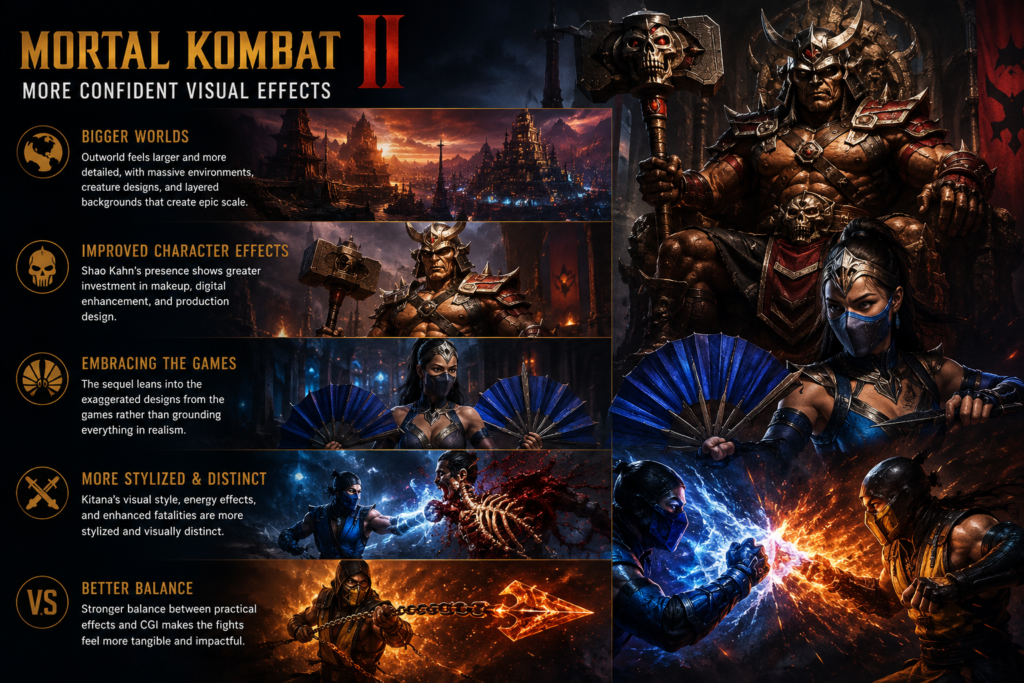
More Confident Visual Effects
However, Mortal Kombat II seems to have gained some confidence in its special effects. There are no more reservations about the use of supernatural elements in the movie. On the contrary, the sequel has embraced the idea of the supernatural nature of the series.
There are clear improvements with regard to the character effects in Mortal Kombat II. This can be compared to the visual effects used in the preceding movie. The look of Shao Kahn has clearly been improved with better makeup and digital effects.
The sequel makes use of extreme game-like aesthetics. The film does not insist on anchoring all characters and settings into absolute realism. The aesthetic of Kitana’s look, her action, and fatalities seem to be more stylized.
Moreover, there is more balance between the real effects and the computer graphics, which makes the fights feel more realistic overall.
However, even with all these improvements, sometimes the movie goes overboard. The scenes involving too much computer graphics sometimes tend to become overwhelming for the viewer. The digital settings may lose their realism because of the spectacle. However, in contrast to the first movie, the shortcomings of the sequel do not overshadow its strengths.
Themes And Game Lore
One of the stronger elements of Mortal Kombat II is how much it captures the theme and spirit of the games. This is when compared to the 2021 film version. The first film took many of the characters, violence, and myths of the franchise. But thematically speaking, it felt quite generic and could be considered a modern fantasy action reboot.
This was due to its emphasis on Cole Young, the Arcana powers, and the setup before the tournament. These elements kept the film at a certain distance from the elements that fans of the Mortal Kombat games associate with it. The games are all about fighting, but there is a lot more going on.
The sequel appears to be much more closely related to these classic ideas. Most importantly, there is an increased focus on the tournament and its meaning. In the games, Mortal Kombat is not just a series of battles. Rather, it is a fight to the death between the different worlds, and winning means controlling their future.
Mortal Kombat II captures that idea much better, along with the theme of ancient battle and prophecy.
The theme of legacy
Another aspect that becomes even more evident in this film is the concept of legacy. The characters of Scorpion, Sub-Zero, Raiden, and Kitana all have an air of legacy about them. They are burdened by their past, their family, and their duties.
The rivalry between Scorpion and Sub-Zero especially continues to reflect one of the franchise’s central ideas. It shows how vengeance can consume people and trap them in endless cycles of violence. The sequel appears more interested in exploring these emotional motivations. It avoids using characters solely as fan-service icons.
However, despite all these similarities, Mortal Kombat II manages to remain very contemporary in some ways. As is typical for most big-screen adaptations, Mortal Kombat II focuses more on action than on philosophy. Perhaps some of the character stories will be simplified compared to their game counterparts simply because of the number of characters in the movie. Nevertheless, Mortal Kombat II is much more respectful of its roots than the previous movie.
Sub Zero And Scorpion
But Scorpion and Sub-Zero might just be the emotional heart and the most recognizable rival pair in the entire series. Nevertheless, even in the films, they are treated mostly as “event characters”.
Any time they come into the picture, there is an immediate shift in the energy of the film. Everything gets serious, the air gets thick, and the stakes become personal. However, just when it seems that the film is going to center on them, it veers off once more.
The frustrating part is that Hiroyuki Sanada and Joe Taslim might be two of the most talented dramatic actors featured throughout the entire series, giving their performances a sense of gravitas that is missing from typical big-budget action fare.
The opening scene in the 2021 movie demonstrated just how powerful Mortal Kombat could be. This occurs when the film becomes slow and emphasizes the tragedy, honor, and hate between the two characters. Fans of Mortal Kombat were expecting the sequel to rely more on such a basis. This was especially so after the praise received by such scenes.
Rather, Mortal Kombat II divides its attention to a considerably larger roster of characters. This makes logical sense considering that the Mortal Kombat series is always an ensemble cast.
On the other hand, this comes at the expense of giving less attention to Scorpion and Sub-Zero. It is rather ironic how the presence of Scorpion and Sub-Zero tends to eclipse all other characters the moment they appear.
Another reason is that the directors seem hell-bent on expanding Mortal Kombat into an entire movie universe. They are not focusing on just one rivalry here. There is a lot of character development involving Johnny Cage, Kitana, Shao Kahn, and the world politics involved. This leaves little space for the development of the rivalry between Hanzo Hasashi and Bi-Han. From the point of view of long-time fans of the series, this comes across as something of a disappointment.
At this stage, the films almost utilize them in the same manner that monster films use legendary monsters. They come into play when needed, creating suspense and providing exciting scenes. The difficulty here lies in the fact that the audience is so deeply attached to them. In fact, there are plenty of people who will be willing to sit through a whole Mortal Kombat movie based solely on them.
The Performances
Another aspect that makes the sequel appear more confident is the performances in the movie. It looks like the cast knows better what kind of vibe the Mortal Kombat series is going for. The performances in the original movie were excellent, especially those by Hiroyuki Sanada and Joe Taslim.
Nonetheless, some of the new characters seemed emotionally detached. In the sequel, however, the actors seem much more at ease with their characters, playing up the larger-than-life qualities of the game.
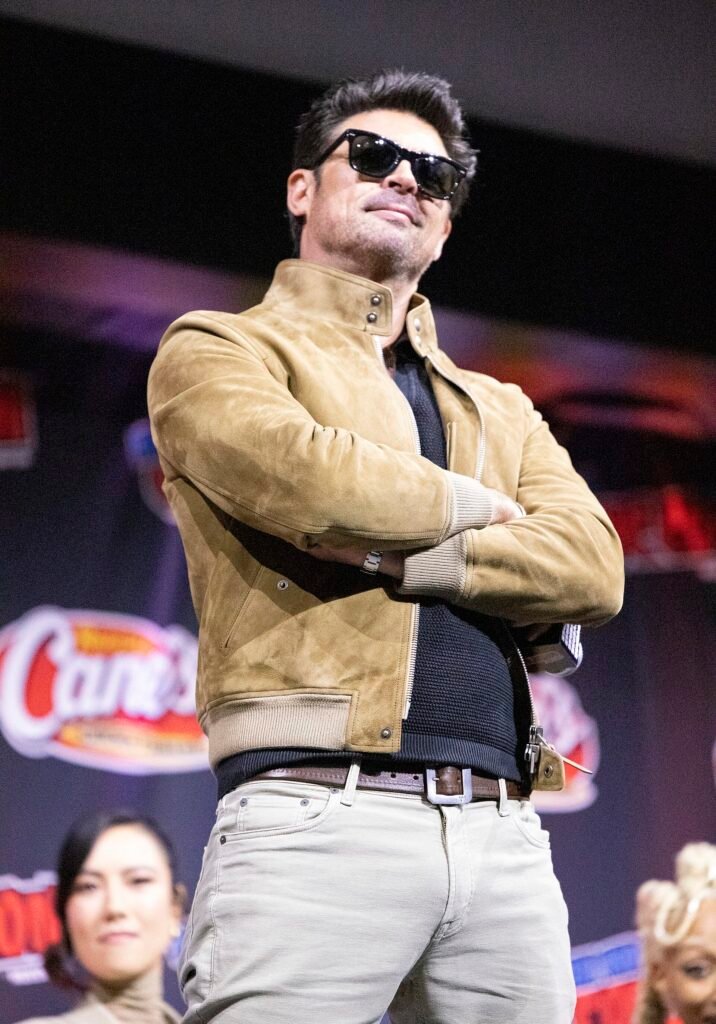
Without a doubt, Karl Urban’s Johnny Cage was the character whose casting generated the most discussion prior to its release. Many people had a picture in their heads of Johnny as someone young and flashy. This was the Johnny from the video games.
Since Urban is usually known to play characters who are tough and serious, it was doubtful whether he would be able to pull off the character successfully. People were concerned whether he would be able to bring out the cocky and funny nature of Cage without being miscast.
The reason why Urban manages to succeed in his role so well is because he doesn’t attempt to emulate the games themselves. He portrays Johnny as not constantly cracking jokes but with a tattered arrogance about him. It seems fitting for an older action hero who has to prove himself once again.
The combination of Urban’s sense of humor and his hardness is perfect for the atmosphere of this film. He manages to keep Johnny’s arrogance and flamboyance intact. The chemistry that he creates with the other actors is another factor contributing to this success.
This performance works so well because Urban realizes that Johnny Cage isn’t just there for comic relief. While he comes across as an arrogant character, this hasn’t really changed since the beginning of the franchise. But the character is also very insecure about himself and needs to be taken seriously. This is something that Urban brings out even more than previous actors playing the role.
Recurring And Additional Cast
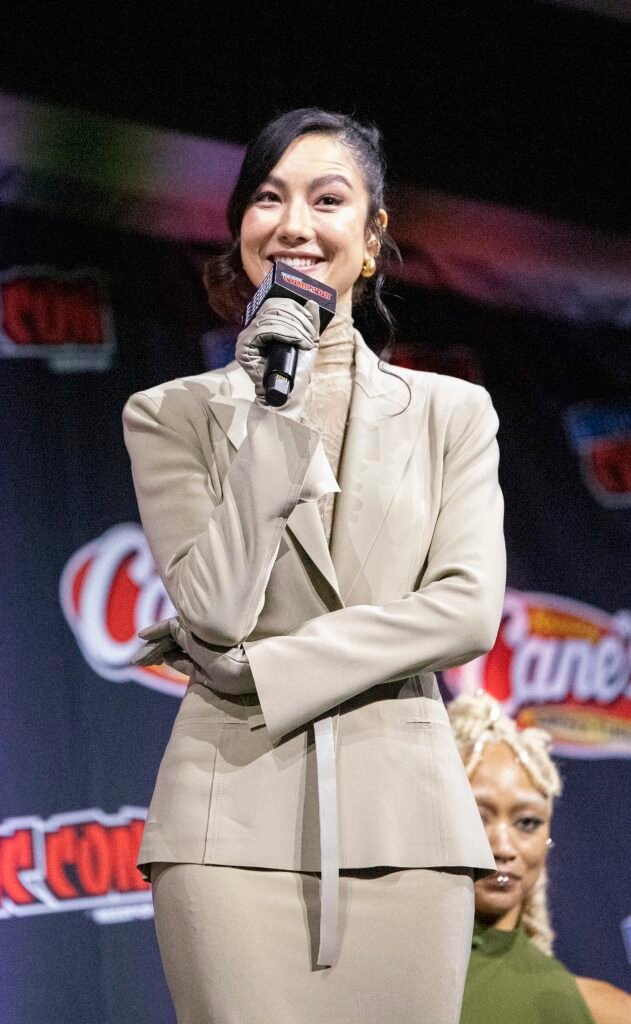
New addition Adeline Rudolph‘s as Kitana also adds to the sense that the film has been made more like the video game. She adds a sense of grace and control to the role. This works well against the brutality of Outworld. Instead of just playing Kitana as a warrior, Rudolph plays up the internal struggle and royal obligations of the character.
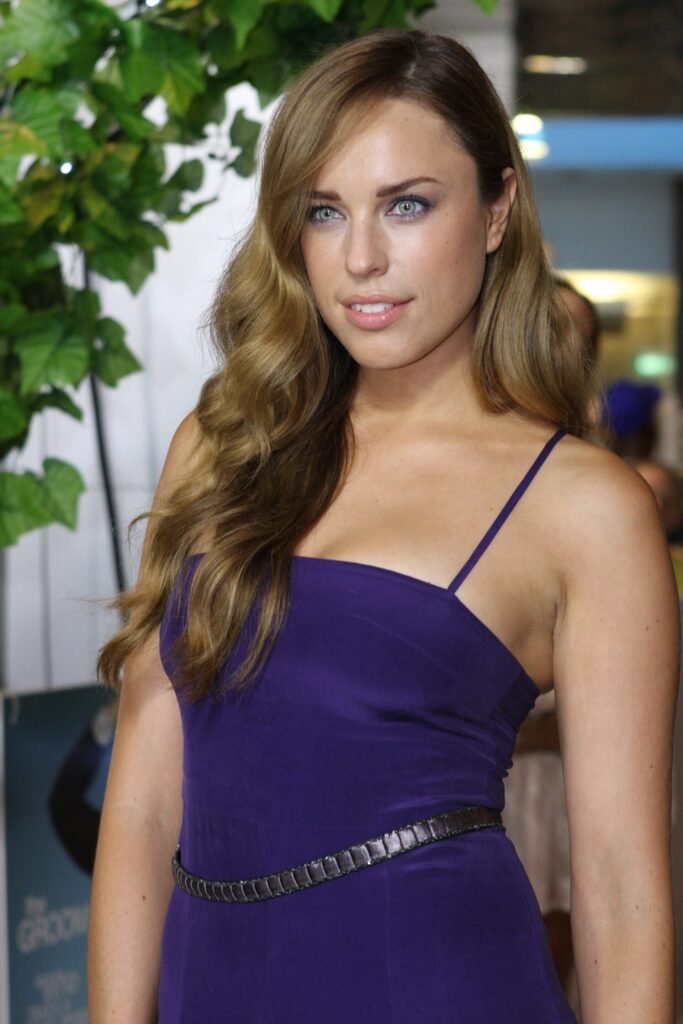
Jessica McNamee returns as Sonya Blade but this time with much more confidence than before. In the previous film, there were times when Sonya felt stuck between delivering exposition-filled lines and staying grounded. In the second one, however, she looks much more comfortable playing a part in the larger-than-life story.
Her portrayal of Sonya comes across as much more assertive and commanding than before. She maintains her same level of determination as she had portrayed in the previous film. There is better chemistry between her and the cast members in this film. This becomes evident when there are interactions between her and characters such as Johnny Cage and Raiden.
Josh Lawson steals the show yet again as Kano, showing once more why his portrayal was such an outstanding element of the 2021 film. Kano is still the best element of the franchise in terms of comedy, but Lawson makes sure to avoid going overboard and making him a complete caricature. The sheer charisma and unpredictability of Kano make many scenes fun.
Even as the conversation gets close to being completely ridiculous, Lawson is committed to his part, which makes Kano enjoyable rather than annoying. The film wisely embraces the character’s popularity even as he remains selfish and manipulative.
Familiar Faces
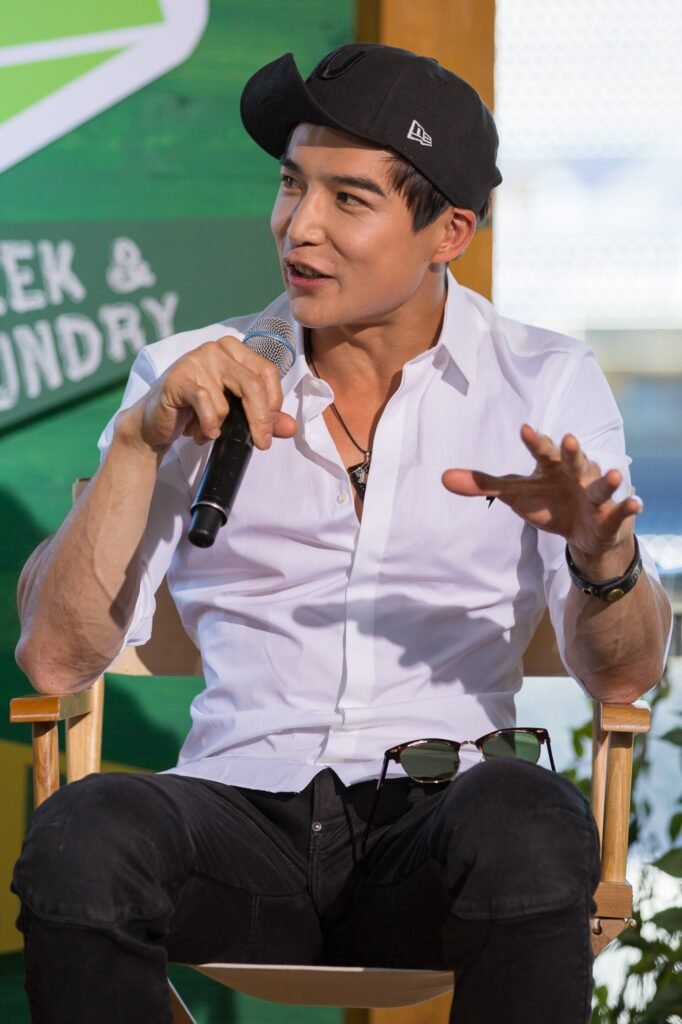
Ludi Lin‘s Liu Kang seems to be more significant and self-assured in this sequel. The character of Liu Kang seemed to be strangely marginalized in the movie released in 2021. This happens even though he is one of the most prominent heroes of the franchise. Now Lin has an opportunity to portray the image of the spiritual warrior and a hero of the game. With his calmness and sincerity, he manages to convey the reality of this fantastic character. His martial arts skills are still evident, especially during the fights.
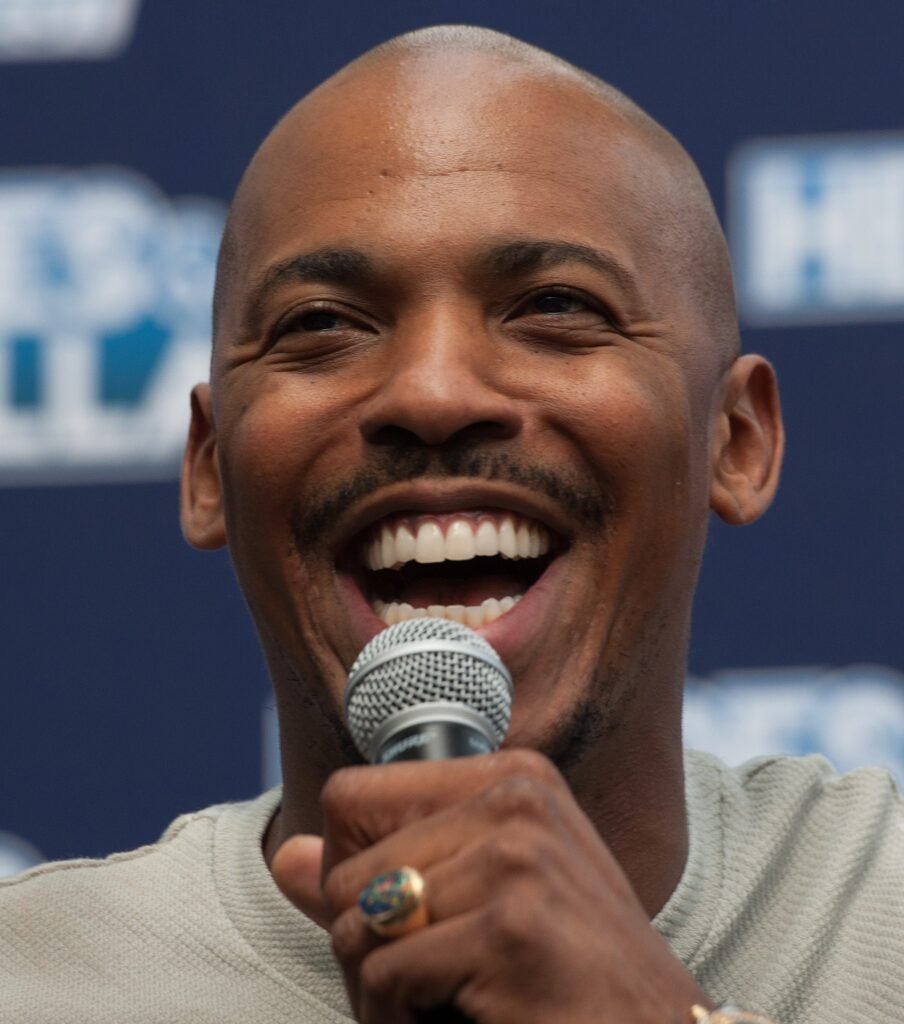
Mehcad Brooks continues to provide Jax with a solid emotional foundation. Nevertheless, he is not developed as he should be. Brooks portrays Jax with sincerity and strength, and he is one of the most relatable characters in the film.
This portrayal is successful due to the fact that he does not try too hard to portray a tough man. Rather, he focuses on the loyal nature of Jax and his protective instincts. In the sequel, Jax has more scenes where he can act like a seasoned soldier and a mentor figure.
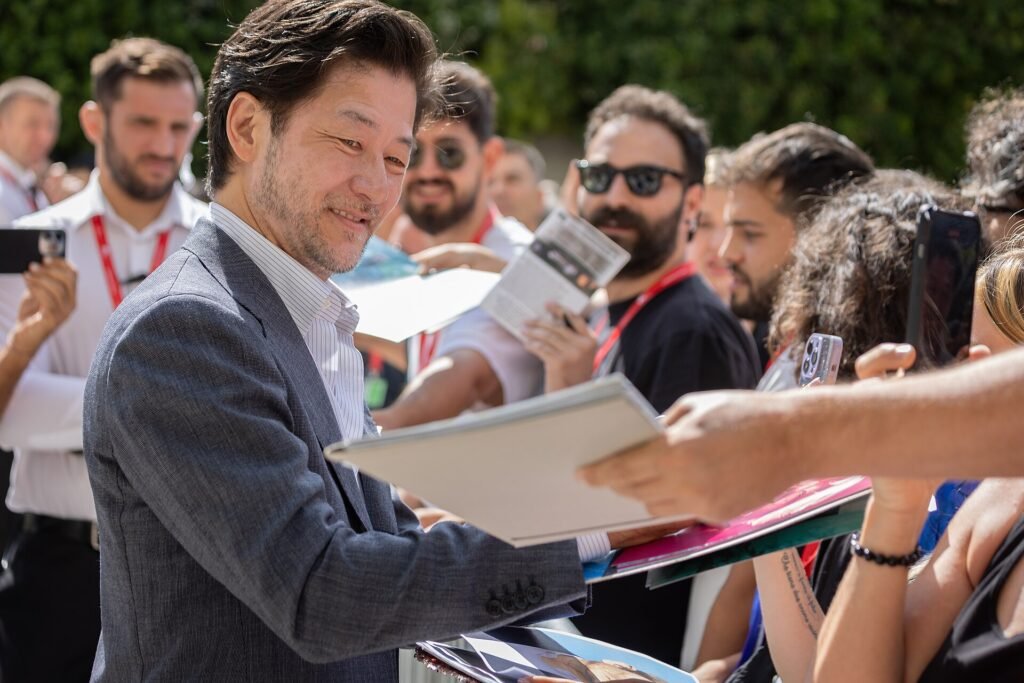
Tadanobu Asano‘s lord Raiden is more confident in the sequel than in the previous movie. Raiden was portrayed as strangely passive in 2021, despite his position as the guardian of Earthrealm. However, in the sequel, Asano brings a sense of power and wisdom into this character.
He keeps the enigmatic aura of the character but plays the part with a certain degree of restraint. This way, he balances the action going on around him. Finally, in the sequel, Raiden gets the chance to take the lead.
Cole Young And Baraka
Lewis Tan‘s Cole Young is one of the most controversial aspects of the series. Tan does give an energetic and competent performance. Nevertheless, the character lacks importance despite being placed in the company of well-known Mortal Kombat characters. In the first movie, Cole was given too many screen moments, which annoyed fans who were expecting to see more of the well-established characters.
However, this movie remedies this situation slightly by allowing him to fit in with the group. It does not require him to take on the role of the emotional focal point of the story. Tan does well when the movie gives Cole the ability to work with the rest of the team.
CJ Bloomfield‘s portrayal of Baraka in this movie sequel is one of its biggest surprises. For once, Baraka seems intimidating enough for his role as a character from the video game series. Unlike before where he was just another creature in the game, this time Baraka truly intimidates because of how he looks.
One of the main reasons why the performance is effective is that there is a good combination of practical effects and Bloomfield’s physicality. The way he moves and his approach to fighting makes him appear very barbaric and unpredictable. He does not look like an excessive use of CGI has been applied to him.
New And Old Villains
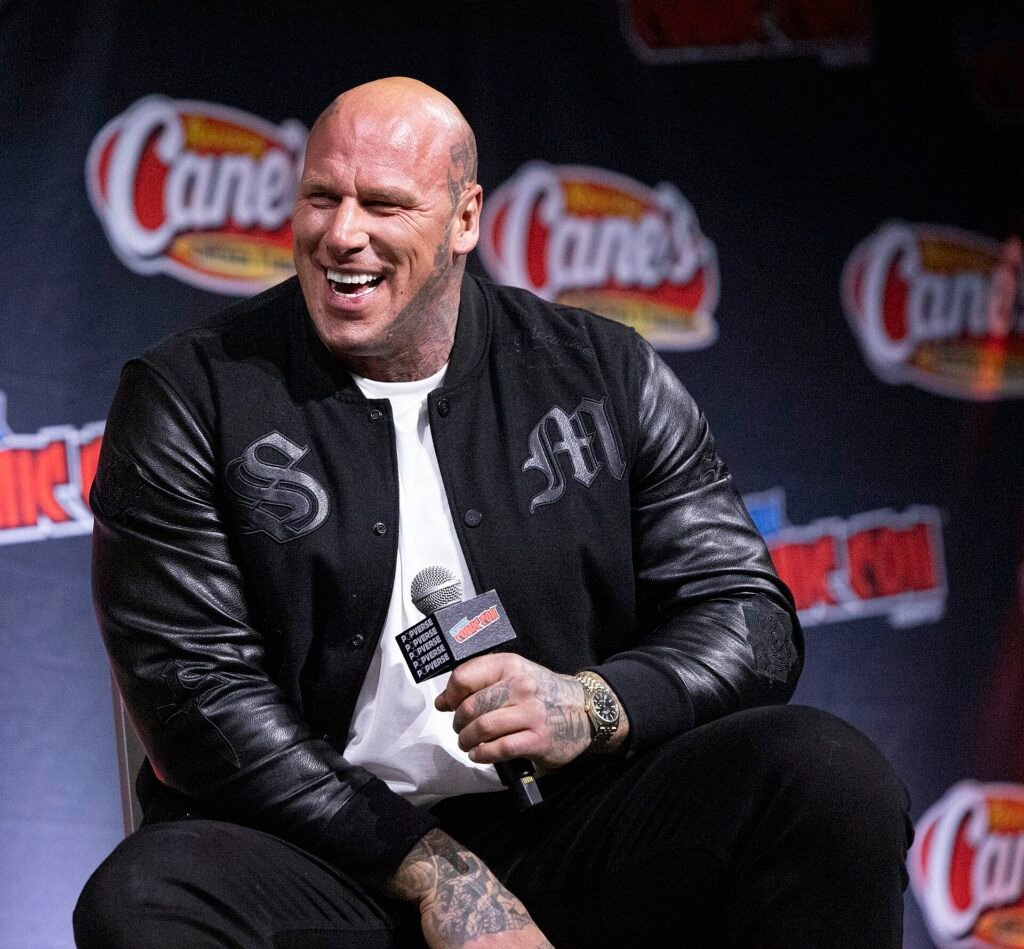
Martyn Ford‘s provides the physical intimidation that fans expected from the introduction of Shao Kahn. The mere presence of Ford on screen is enough to create a feeling of intimidation, which previous versions have failed to do.
Although the performance is purposely more physical and aggressive than emotional, this is actually quite appropriate for the character. Shao Kahn has always been a symbol of domination and conquest and not subtlety. Ford performs this role quite well. The scenes with him have gravitas simply because the character seems menacing from the moment he steps into view.
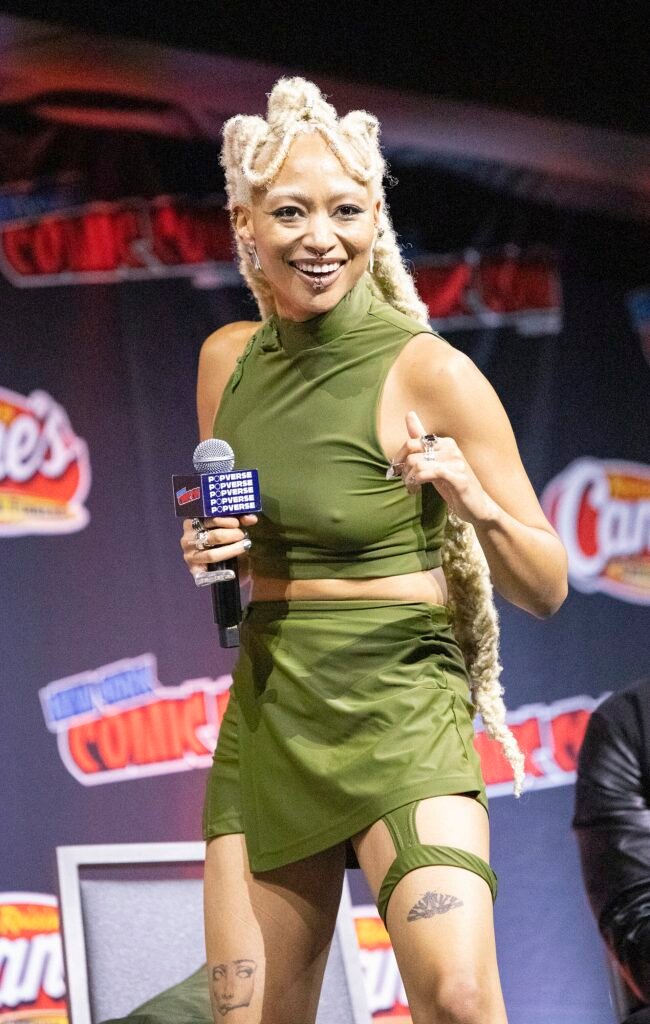
Tati Gabrielle‘s Jade adds elegance and power to the movie. She contributes to making Outworld and Edenia politically and emotionally complex. Gabrielle adds a dangerous elegance to Jade, which suits her perfectly. This is particularly evident in scenes where she has an altercation with Kitana.
Her acting is more suited to subtlety than overacting. This way, Jade feels smart and observant rather than just another competitor at the tournament. Jade also helps create the more fantastical feel of the movie sequel through her noble and disciplined screen presence.
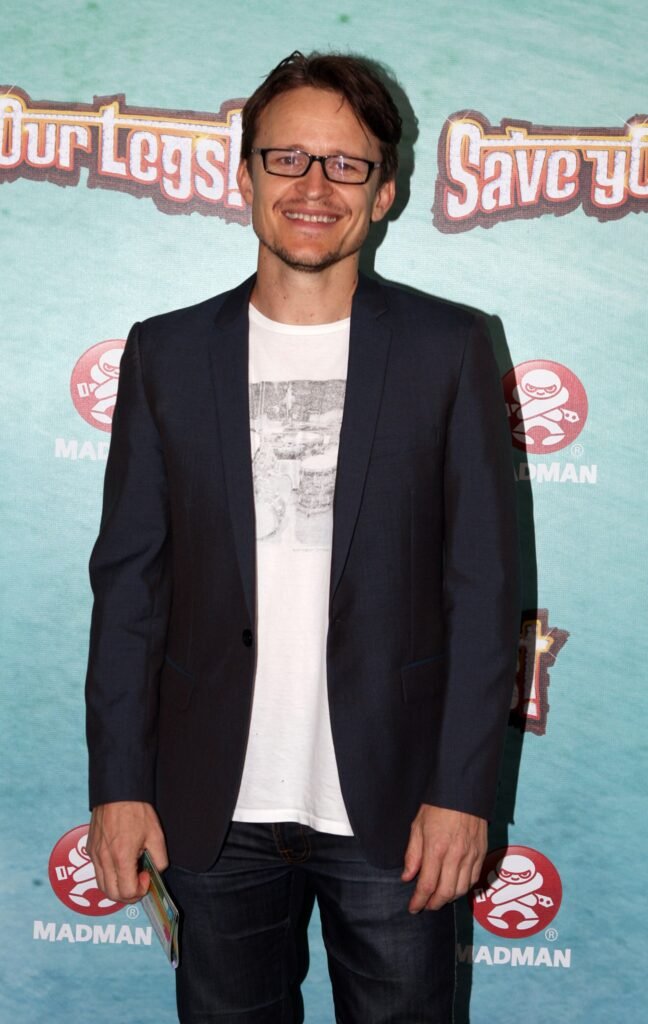
Damon Herriman‘s role of Quan Chi brings a darker side into the movie. Instead of the usual villainy, Herriman portrays the character in a calmly eerie manner. This suits the supernatural nature of the Mortal Kombat story.
It adds to Quan Chi a form of intelligent manipulation that sets him apart from other villains who rely on physical strength, such as Shao Kahn. Despite his limited screen time, Herriman is able to make us believe that Quan Chi is always working out events in the background.
Chin Han once again, he provides one of the most reliable performances in the series as Shang Tsung. His cool demeanor, menacing aura, and on-screen presence give off an air of genuine menace. He does not require any over-the-top theatricality.
Han realizes that the source of Shang Tsung’s strength lies in his manipulative ability and confidence, not physical strength. This movie provides more chances for Han to portray the crafty side of his character. He is still one of the very few actors who successfully blends
Limitations In The Performances
Despite the enhancements in scale, graphics, and confidence, there are times when Mortal Kombat II features some wooden acting. This tends to happen particularly in sequences that involve a lot of exposition. Much of this can be attributed to the writing of the script.
The movie spends much time on explaining the mythological part rather than allowing the characters to act naturally. The dialogue becomes very functional when the actors talk about realms, prophecies, or the rules of the tournament.
Even actors like Jessica McNamee or Mehcad Brooks can sometimes find themselves in such situations. They are nothing but moving from one point to another in a story, which restricts their expression.
What Worked And What Did Not
What worked was the times when the movie truly embraced what Mortal Kombat is about. That would be the fighting, the mythology, and the confrontations between characters. The good fight sequences are those which allowed the choreography to flourish. When the film is crisp and the situation is easy to understand, the movie becomes very effective.
The opening sequences of Johnny Cage, some of the fights in Outworld, and a couple of the tournament battles seem to be when the movie finally gets going. These are the times when everything about it comes together.
The increased world-building is also an aspect which can be considered both good and bad at times but helps the movie on occasion. With the backstory of Kitana, politics of Outworld, and mythological framework, the universe becomes richer. It is not just about the movie from 2021 but when it succeeds, it adds to the world-building of the movies.
What Did Not Work
But the point that the filmmakers have made regarding Scorpion and Sub-Zero is a very valid one. Despite having the best storyline in terms of built-in drama in the whole series, they are still perceived as high-impact supporting characters.
Each time they appear, the focus of the film becomes tighter and more emotionally rooted. This only makes the absence of their presence on-screen even more painful. In truth, it feels as though the movie is withholding one of its strongest narrative strands.
The film attempts to be all of these at the same time. This includes being an origin tale for Johnny Cage, another chapter in the Earthrealm squad saga, and establishing Kitana/Outworld politics. It is also a straight adaptation of the Mortal Kombat tournament lore. Rather than focusing on one solid spine, it divides itself equally among all of them.
For this reason, there are bound to be some characters who remain underdeveloped. The best actors do not get sufficient time to flesh out their characters. Some plot lines may appear to be preparing the audience for what is to come in the other films. It might even be difficult to understand the plot if you have not played the game before.
Overall Verdict
Mortal Kombat II is undoubtedly a marked improvement from its predecessor in terms of grandeur and spectacle. Nevertheless, Mortal Kombat II does not succeed in addressing the franchise’s major narrative issues.
The good thing about Mortal Kombat II is that it provides everything one would expect it to. First, the choreography of fighting scenes has been greatly improved. Second, the world that is portrayed in Mortal Kombat II is more colorful compared to the 2021 movie. Third, the presence of such characters as Johnny Cage, Shao Kahn, Kitana, and Kano adds color to the film. When the film concentrates on action or mythology, it becomes very enjoyable.
However, the flaws cannot be ignored either. The movie is too crowded for its own good. It attempts to incorporate all the elements including Johnny Cage’s character introduction, Kitana’s back story, politics in Outworld, and the rules of the tournament at once. This results in poor timing. It is clear that none of the plots receives sufficient attention. In addition, Scorpion and Sub-Zero, despite being crucial to the story, are not used enough.
In any case, it’s an interesting yet uneven sequel. It is definitely better than the original film when it comes to visuals, confidence, and fan service. There are definitely some good elements to it that will please the audience. Nevertheless, one cannot say that it is a complete and independent film, but rather an entry into a bigger franchise. Fans will find plenty of things to enjoy in this movie, although it does not make full use of its potential.


Pingback: The Further Beckons: Essential Watch Guide to the Insidious Franchise Ahead of Out Of The Further (2026) - Film Misfits