Rocky Movie Review: The Underdog Story That Changed Cinema

Following on from the fascinating backstory provided by I Play Rocky, we felt it was the perfect time to re-watch the original 1976 version. You can check out my review of I Play Rocky here
After learning about Sylvester Stallone‘s fight to get his script made and his insistence to star in the lead role, we wanted to know if our view on this iconic rags-to-riches story had changed.
Although Rocky is considered one of the greatest films in American history, fifty years on from its initial release watching it has felt like an entirely different experience.
Whilst it is still an incredible story about a small-time boxer getting his shot at greatness, it also feels like an homage to the determination of Stallone.
Written by and starring Sylvester Stallone, with direction from John G. Avildsen, Rocky tells the story of Rocky Balboa, a struggling club boxer and debt collector living in Philadelphia.
When undefeated heavyweight champion Apollo Creed (Carl Weathers) decides to take on an unknown local fighter for a shot at the world title, Rocky’s life takes an unexpected turn.
With the help of his grumpy former trainer Mickey Goldmill (Burgess Meredith), Rocky begins training for the fight of his life. In the process he falls in love with the extremely shy Adrian Pennino (Talia Shire).
The film which was made for just over $1 million, became a global hit, grossing over $225 million and winning three Academy Awards including Best Picture.
It kickstarted a franchise which would go on to include five direct sequels and the critically acclaimed Creed trilogy.
However, there is much more to this film than just the boxing, it is a story about self-esteem, perseverance and being given the opportunity to prove yourself.
The Real-Life Underdog Behind Rocky

One major difference in watching Rocky when compared to I Play Rocky is seeing how personal the script truly was to Stallone.
Rocky Balboa is a character that has spent most of his life being neglected, dismissed and belittled. He gets a chance to make his mark but does not necessarily want to become the heavyweight champion. He simply wants to show others that he is not a nobody.
When you consider Stallone’s situation whilst writing the script it adds a whole new level to understanding these themes.
As mentioned throughout I Play Rocky Stallone was a struggling and mostly unknown actor who had been turned down many times by Hollywood.
He refused to sell his script even when offered a large amount of money as he wanted to star in the lead role. He was literally risking his future.
There is a clear link between Rocky and Stallone. Rocky is fighting for his chance to make a name for himself in boxing, whilst Stallone was fighting for his chance to make a name for himself in an industry that did not believe in him.
They are both outsiders who refused to let others limit them. The famous phrase of going the distance becomes the key philosophy behind the making of the film.
Knowing this information means that some of the quieter moments in Rocky are more impactful. His conversations with Adrian, frustration with Mickey and desire to continue training all feel more connected to Stallone’s life.
The script no longer feels like effective sports drama writing, it feels like a personal statement from someone who was desperate to be given a chance.
A Gritty Vision of Philadelphia

The authentic feel of Rocky comes from John G. Avildsen’s direction. It really does give the film a different feel to many sports films made after it, showing the gritty and realistic elements of Philly.
The film really immerses you into the rough neighbourhoods, small apartments and local industries.
This is helped along by the cinematography of James Crabe. The natural lighting, real locations and fairly dull colour scheme help to create this feel of struggle.
The majority of Philly looks cold, dull and uninviting. This mirrors Rocky’s lack of money and the monotonous life he leads. The camera is also often quite tight on the actors.
I could easily understand why the directors chose to use this kind of style prior to watching I Play Rocky.
However, having seen the film in the biopic I truly admire how difficult making this film must have been.
The film makers were on an extremely tight budget and had only around 28 days to complete this film. They simply did not have the equipment, lighting or controlled environment that they would have wanted.
Therefore, the visual style was forced upon them. As they had little time the crew had to make do with what they had.
This means that the film has a very natural feel. It almost appears that the film is a product of an independent film trying to solve seemingly impossible issues with creative solutions.
Another interesting element is the use of Garrett Brown’s new Steadicam. This gives the film energy. Without this kind of camera, the film would not have had the same feel.

The camera moves smoothly around Philly following Rocky. Throughout the film the camera moves around the streets, market places and public areas.
The most well known scene is when Rocky runs up the steps of the Philadelphia Museum of Art. However, this gives the film an extra special feel.
Having watched I Play Rocky these scenes now seem less like cinematic techniques and more like incredible accomplishments for a low budget film.
The Steadicam was still a fairly new invention so the fact that they took full advantage of it is even more incredible.
From the Streets to the Boxing Ring

The lighting used in Rocky is one of the most effective visual choices.
Throughout most of the movie the lighting is very subtle and realistic. Rocky’s world is fairly dull; there are dull apartments, dull streets and dull winter days in Philadelphia.
There are often dark shadows which represent how isolated Rocky is and how restricted his life is. The film does not really show Rocky in a very inviting setting.
However, when Rocky gets to the final boxing match, there is a huge change. The dull streets now become bright as the lights are shining from above.
The boxing ring is lit up very brightly like a stage, making each drop of sweat, bruise and punch visible. Rocky is now in the spotlight and part of the main focus of society.
When you take into consideration the context of the film, it becomes even more interesting. As shown in ‘I Play Rocky’, the filmmakers did not have enough extras to fit in the arena.
However, instead of letting the empty seats spoil the scene, they made most of the crowd dark and focused the light onto the ring.
This turned into an effective visual choice as it created an intense atmosphere around the fight.
This is a brilliant example of how sometimes having less can create a better outcome. The final fight feels very big due to how it has been presented, despite only having a fraction of the money that you would usually expect to see in a big sporting event.
Sylvester Stallone: A Performance That Feels Even More Personal

Sylvester Stallone’s performance is the centre piece of this film, however, having seen I Play Rocky, you really appreciate how personal this role was to Sylvester.
Rocky is not your typical blockbuster hero. He is clumsy, sometimes loses his temper and often lacks confidence.
However, he is a very likeable character due to his inability to clearly express his emotions, his lack of confidence and his errors throughout the film where he tries to figure out what he actually wants from life. His tough exterior hides a vulnerable side.
Knowing what Sylvester was going through when writing and fighting to create this film really helps to understand why he created the film. As a struggling actor, he had been largely turned down by Hollywood and had very little money.
Having recently watched Anthony Ippolito portray the young Stallone in I Play Rocky, I found myself making comparisons throughout the original film.
There were several moments when I genuinely felt as though I was watching Anthony again, rather than Stallone himself.
The similarities in their mannerisms, expressions and delivery made the connection between the two performances surprisingly striking.
Most importantly, knowing that Sylvester had this situation in his life helps to add more emotion to his performance.
Rocky feels frustrated at being ignored, determined to prove himself and desperately wants someone to believe in him, which are all feelings that Sylvester was feeling.
It becomes difficult to separate the fictional boxer’s fight for recognition from the actor’s own battle to get his opportunity in Hollywood. Stallone was not simply playing an underdog; he understood exactly what it felt like to be one.
This is especially clear in the scene where Mickey comes to visit Rocky at his apartment and asks to be his manager.
This scene is brilliantly performed as it shows how much these two men have misunderstood each other over the years.
Mickey, an ageing trainer, finally swallows his pride and admits that he needs Rocky, while Rocky confronts him over years of insults and missed opportunities.
But having watched I Play Rocky, the scene has a much more meaningful context. The biopic explains that the scene was very difficult to film due to the original script not working.
Stallone and director John G. Avildsen were under tremendous pressure to make the scene work as they were running out of time with only 28 days of filming.
Stallone ended up ditching the script entirely and based the scene around his own emotions and experiences with his complicated relationship with his father.
Knowing what Stallone went through behind the scenes has made his anger, shaky voice and evident emotional fatigue seem much more genuine.
We can see that Stallone was using his personal experiences of rejection, frustration and desire for recognition to portray Rocky’s pain.
With this knowledge, when Rocky is talking about his insecurities, struggling to open up to Adrian about his feelings, or not wanting to believe that he will always be a nobody, we can see more of Stallone throughout the performance.
His determination to play as Rocky in real life despite the Studios being against it has given Rocky a genuine journey.
This is why the main message of the film of going the distance works so well. Rocky does not have to beat Apollo Creed to prove himself and neither did Stallone have to become a Hollywood overnight success to show that he deserved the opportunity.
All they had to do was give them a chance to show what they could do. I had a greater appreciation for Stallone’s performance after watching I Play Rocky as I understood how much of himself he put into the role.
Talia Shire as Adrian Pennino
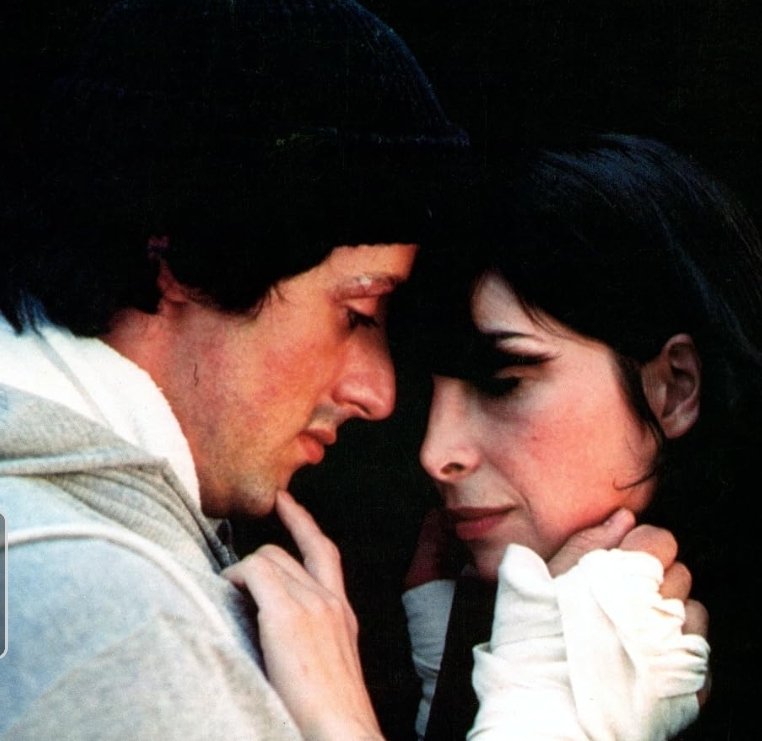
One of the best aspects of the movie is Talia Shire’s portrayal of Adrian. She is a character who starts off very shy and awkward but gradually has lost her confidence in herself due to her situation and controlling brother Paulie. Through her relationship with Rocky she finds someone who truly values her.
Shire has an amazing amount of feeling within her performance. With the use of subtle body language, nervous facial expressions and pauses throughout, you never have to be told about Adrian’s insecurities.
The slow change in her character to someone who can stand up for herself is very touching. Her relationship with Rocky is also based on their mutual understanding of being overlooked.
We can also see a link between the film and the real life of the actress. As Shire was the sister of famed director Francis Ford Coppola, she had to create a sense of self within an industry that would naturally draw attention to her connections.
This means that we are never left with just a boxing movie. The relationship between Rocky and Adrian provides an emotional core to the story. We see some of the most memorable scenes between them in the closing moments.
Carl Weathers as Apollo Creed

Apollo Creed is a highly charismatic character thanks to Carl Weathers. This character was inspired by the confidence and flair of Muhammad Ali.
He’s a champion who knows how to put on a good show and knows boxing should be entertaining. He’s very flamboyant and confident.
Weathers also gives him a fun yet realistic character. He first thinks of Rocky as an opportunity to create a memorable sports spectacle.
However, as the match goes on his attitude starts to change. He has to respect his opponent due to Rocky’s determination and the final match becomes a real fight between two very different men.
After watching Play Rocky, I felt like Weathers was an important part in this film. They needed actors who would really commit to Stallone’s idea despite the uncertainty of the project.
Weathers gives him a strong physical presence and confidence on screen so he appears to really be a heavyweight champion.
He also gives Stallone someone to really fight against. They have great chemistry in the final match.
Apollo is very confident and flamboyant which contrasts with Rocky’s determination. Their performances compliment each other.
Burt Young as Paulie Pennino

Burt Young delivers a brilliantly uncomfortable portrayal of Paulie, Adrian’s brother. He displays a grumpy, low self-esteem and often unlikable personality throughout.
Despite being angry at Rocky due to his jealousy and frustration, Burt Young is able to portray some level of vulnerability making him more than just a villain.
Unlike Rocky and Adrian, Paulie comes from the same working class background but is very different in how he deals with it.
While Rocky feels motivated to fight Apollo, Paulie struggles with the idea that he has missed out on life.
He can often be cruel to Adrian and his jealously makes him hard to feel any sympathy for. However, there is a clear and relatable sadness in his character.
It seems that the conditions in which this film was made help to create such a gritty performance from Young.
The tight settings and cold atmosphere of Philadelphia add to the feeling that these characters are in a world with little comfort or opportunity.
Young makes you feel like Paulie is stuck in his frustrations and creates a much deeper character.
Burgess Meredith as Mickey Goldmill

Perhaps the most memorable character in the film is Burgess Meredith’s Mickey. Mickey is an old, rough-voiced trainer who was once a boxer and ran a local gym for many years.
He sees Rocky’s potential but struggles to find a positive way to show this. Underneath his harsh insults and tough personality he is a scared man who is afraid of being forgotten.
Bill Conti’s Unforgettable Musical Score
Another important element that contributes to the film being a success is the soundtrack, composed by Bill Conti.
This creates a very uplifting and exciting atmosphere due to the dramatic brass, upbeat rhythms and emotional melodies.
It is also very effective during the training scenes as it builds up to the iconic scene where Rocky runs up the steps of the Philadelphia Museum of Art.
This has now become one of the most recognizable scenes in cinema however the music also plays a huge part in it being so memorable.
What Worked for the Original Rocky
One of the best aspects of Rocky is how the film understands that winning is not everything. It was a very clever move to have Rocky lose the fight to Apollo by points.
Instead of following the traditional sports film structure where the underdog wins against the champion, Rocky shows that he has come through the fight.
He has won the respect of his opponent, proven to himself that he belongs in the ring and has gone the distance.
The working class character development is also very well done. The film does take its time to show Rocky’s feelings of loneliness, his relationship with Adrian and his complex relationship with Mickey. This adds real emotion to the boxing match at the end of the movie.
The acting is also very good. Stallone, Shire, Weathers, Young and Meredith all add their own flair to the characters, making them feel like real people. This creates a real sense of authenticity due to the chemistry between the actors.
The ingenuity of the film is amazing. Filming in real locations in Philadelphia along with the natural lighting and Garrett Brown using the Steadicam created a unique look to the film.
Despite the constraints of the film, it has become cinematic history. In many ways the constraints helped make it what it is today.
What Did Not Work for the Original Rocky
Although it suffers from some flaws, it still has many strengths. There are some clear issues with the low budget and rushed filming that caused there to be some continuity errors, inconsistent background noise and technical issues. These issues did not really affect the film but were still obvious.
The arena scenes also demonstrate the sacrifices made during the filming of this film. Whilst being a clever idea to keep the crowd mostly in the dark, due to the lack of extra’s, it makes the championship feel like a less impressive event. The lighting is good but there are times when you cannot see the audience clearly.
The boxing sequences are another part of this film which has not aged very well. The final fight is pretty melodramatic by today’s standards. Both boxers take an incredible amount of punches with little realistic defensive moves.
Whilst the fight is pretty dramatic and shows great commitment from the actors it is not very realistic in terms of professional heavy-weight boxing.
The pacing is inconsistent at times. While the slower moments are intentionally stretched it does give a sense of Rocky’s mundane life.
However, at times the film can feel like it is dragging. Some of the changes in character can feel quite sudden. This is due to some of the emotional moments that happen in a shorter time frame than expected.
These are just small issues though when considered alongside everything the film achieves.
Final Verdict
I have really enjoyed re-watching Rocky after watching I Play Rocky. I had always enjoyed the original as it was one of the best sports dramas ever made, but learning about how it came about has given me a lot more respect for Stallone, Avildsen and the whole crew.
What stands out most is that I can understand now that what seemed like flaws, realistic camera work and creative camera angles were actually incredibly clever solutions to problems.
The Steadicam scenes are even more impressive, the contrast between dark alleyways and bright arena is interesting as there is a clear reason behind it and the intense emotion during the confrontation with Mickey has a whole new meaning.
The acting has improved too. Knowing that Stallone’s life really reflected Rocky’s so much, makes it feel like such a personal story.
At times I did think about Anthony Ippolito’s portrayal in I Play Rocky. At times you feel like you’re truly watching the younger version of Stallone from the biopic.
This is a fascinating link between the two films and made me enjoy re-watching it.
However, there are still a few flaws. The technical issues are not perfect, the pace can be slow at times and some of the boxing can seem quite dramatic.
However, this does not take away from the strong emotion or incredible achievement of creating such a lasting classic with minimal resources.
I Play Rocky has not really changed my views on the original but has helped to strengthen them. I now see Rocky for what it truly is.
Not just an underdog boxer’s story but also an underdog Hollywood win. Stallone was fighting for Rocky, just as Rocky was fighting Apollo.
He was fighting against the odds, going against expectations and had everything to prove. So knowing that both stories have become part of cinematic history makes the original so special.