
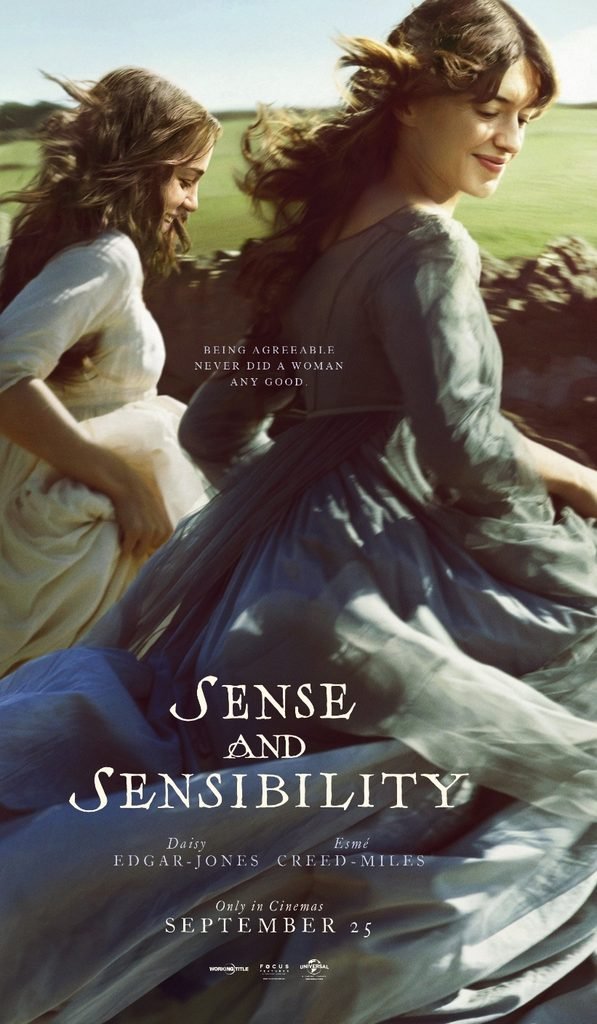
Sense And Sensibility 2026 Review
Introduction
Many adaptations have been made over the years based on Jane Austen’s novels.
Many of these have themselves become timeless classics such as the 1995 film version of Sense and Sensibility starring Emma Thompson and Kate Winslet
Some have taken a fresh contemporary take on her work.
Thus, when yet another version of one of her works comes out such as the new Sense and Sensibility, it is quite normal to ask oneself if we really need one.
This is how I myself felt initially.
Sense and Sensibility novel by Jane Austen has already been adapted into film and television versions multiple times.
The story is known to generation after generation of audience.
Elinor and Marianne Dashwood have already been portrayed in many different interpretations. Their romantic experiences have already been looked into.
Their relationship as sisters has been explored earlier. All this makes for a very difficult undertaking.
Thus, the adaptation from 2026 requires much more than fancy costumes. It requires an inspiration.
Fortunately, the Sense and Sensibility from Georgia Oakley does try to find one.
The adaptation does not simply retell the story written by Jane Austen but instead focuses on the friendship between Elinor and Marianne.
This is just as much a part of the story as the love stories.
As a result, there is a slightly different focus on the emotions that the viewers feel. It also helps present Austen’s characters in the modern emotional context.
This film has been written by the popular author Diana Reid, who has provided a new perspective on the traditional story.
The film clearly reflects Jane Austen’s style and characters. At the same time, it is also more emotionally close to the viewers.
Returning To Austen’s World
The simple plot remains unchanged. Following the death of their father, the life of Elinor and Marianne Dashwood is put in jeopardy.
They lose the security they once had. Their mother and sisters have to adapt to the new situation. Marriage is now associated with financial stability.
Love is now combined with societal requirements. Elinor faces those problems with moderation. Marianne takes a much more passionate approach.
Their characters could not be more different from each other. Elinor considers first and only then acts.
Marianne feels first and thinks only after. This difference is the core of Austen’s story.
It is the key emotion in the movie adaptation as well. The plot has never been about love alone. It has always been about coping with society that limits people’s actions.
It has always been about money. It has always been about reputation. It has always been about family.
It has always been about self-control. Above all, it has always been about two sisters getting to know themselves and each other.
The 2026 movie realizes this quite well.
The Sisterhood Comes First
This adaptation works particularly well because it puts emphasis on Elinor and Marianne. Their dynamic does not serve as mere filler to advance the plot of love interests.
It serves as the emotional center of the entire movie. This is a rather sensible choice. Most adaptations of Austen emphasize romantic relationships between men and women.
However, the relationship between the sisters is just as important. They represent two distinct views on how to experience life.
For Elinor, emotions need to be controlled. For Marianne, emotions need to be let out. Neither sister is right or wrong.
Both perspectives have equal validity. Both perspectives have equal weight in this movie. Their love is sincere.
Their disagreement is sincere as well. They often do not understand each other. They often irritate each other.
However, they would always help each other out of trouble. In this way, their dynamic gives a lot of meaning to their love stories.
If one sister gets hurt, the other one feels it. If one sister changes, the other one needs to react.
Their relationship therefore becomes a story about growing up together. That gives the adaptation a warmer emotional centre.
Elinor Dashwood
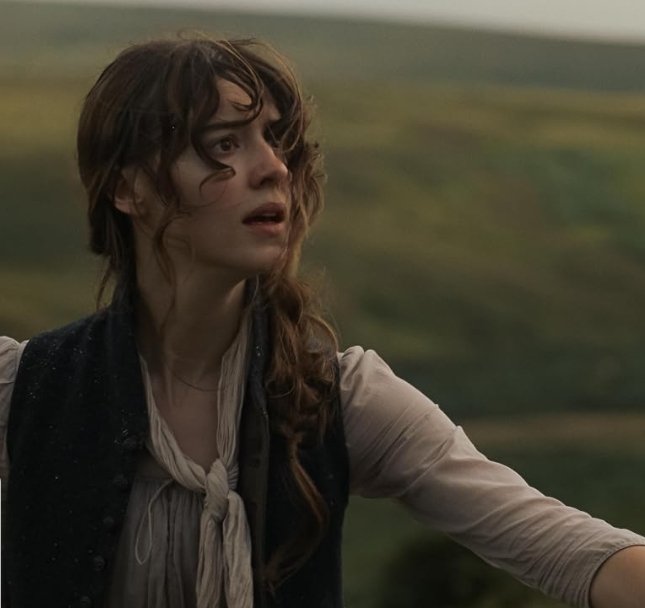
Elinor (Daisy Edgar-Jones) is frequently referred to as the sensible sister. This description may easily paint a picture of Elinor as an emotionally cold person.
However, that is not the case with the film. On the contrary, it demonstrates just how much emotion Elinor actually holds inside.
This does not mean that Elinor lacks emotions. This is a matter of self-protection. Elinor understands the demands of society.
She knows that expressing one’s emotions may lead to unpleasant consequences. Therefore, she learned to master her emotions. This takes its toll on her.
The film is especially powerful in illustrating the gap between Elinor’s words and her emotions. Silence can speak louder than words.
A glance reveals heartbreak. A pause reveals confusion. An appropriate answer hides a great deal of emotion.
This makes Elinor sound very contemporary. She has to negotiate many expectations from her.
She is supposed to be responsible. She is supposed to be supporting her family. She is supposed to behave properly.
And most importantly, she is not supposed to express her feelings. That conflict gives the character considerable depth.
Marianne Dashwood
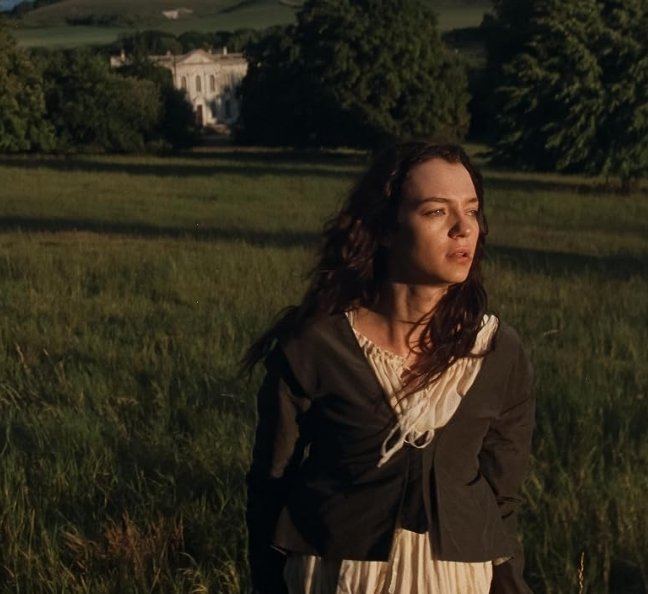
Marianne (Esmé Creed-Miles) provides the obvious contrast. She wears her emotions openly. She falls in love passionately. She speaks honestly.
She cannot keep herself from expressing her feelings. This is both admirable and irritating about her.
Her frankness is refreshing. It can get her into trouble. Marianne does not always consider the repercussions of her actions.
She thinks sincerity is all that should matter. The world is not so forgiving. And that is one of Austen’s most lasting themes.
The movie gives Marianne sympathy without perfection. She is passionate. She is smart. But she is young and naive.
And her mistakes become part of growing up. The dynamics between Marianne and Elinor allow the movie to showcase these differences.
Marianne views Elinor’s reserve as repressed. Elinor sometimes views Marianne’s frankness as reckless.
Both have an element of truth. And this makes their debates more meaningful. They are not just differences between opposing traits.
They are siblings who try to comprehend each other’s survival.
The Visual Style
One of the elements of the film that stands out is its cinematography. Potier Arnaud uses a lush and wild cinematographic style in his film.
The influence of the movie Portrait of a Lady on Fire is clear. This is not to say that the film just imitates the approach used by Céline Sciamma.
On the contrary, it borrows certain visual qualities of the film. Landscapes seem to be important. The nature surrounds the characters.
It seems that it corresponds to their emotions. The nature is not just the pretty background of the picture.
It is integrated into the visual aspect of the film.
In this way, the film differs from other traditional adaptations of Austen’s novels by being more flexible in terms of visuals.
The camera is free to move. It can observe the characters. It can let things happen. This results in the atmosphere of intimacy.
The visuals of the film become important in distinguishing this adaptation from others. This is very crucial.
Since the viewers know the plot of the story, it becomes part of the argument for making a new film.
So, the film must have its own visual style. And this one definitely does.
The Romance Still Matters
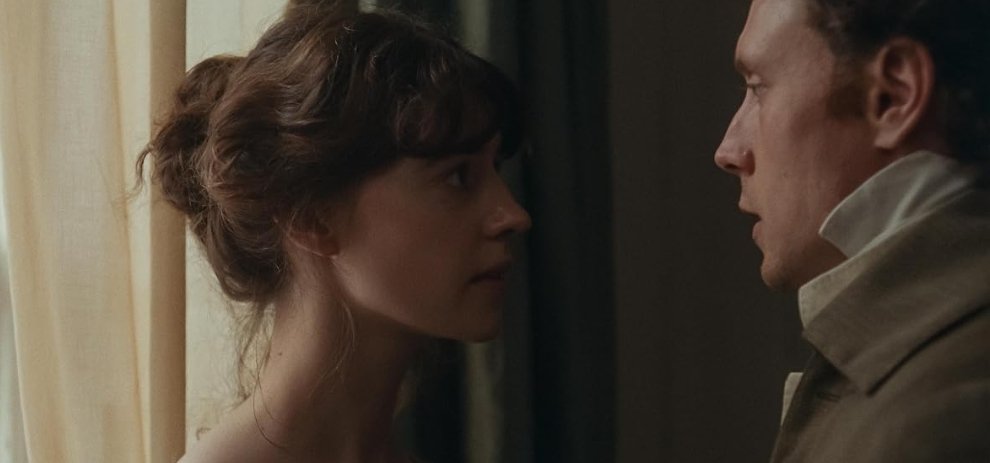
Though the focus of the movie is sisterhood, it still belongs to the genre of a romantic movie.
The romances of the Dashwood sisters with their male counterparts play a big role in the development of the plot.
For example, Edward Ferrars (George MacKay) is vital for the romantic story of Elinor. Marianne’s romance with Willoughby (Frank Dillane) is equally important.
They depict various visions of what love means. The first is based on moderation. The second is based on passions. The difference is connected with their characters.
Also, the movie is able to show the audience different types of heartache. Elinor suffers internally. Marianne suffers openly.
This makes their stories interconnected. Both romances do not exist separately from each other. They influence the relationship of the sisters.
This is another advantage of making them the main heroes of the movie. Romance becomes part of an emotional story.
The Supporting Characters
The supporting characters remain important to the story. They provide the social pressure surrounding Elinor and Marianne.
They also reveal the rules of the society in which the sisters live. The Dashwood family dynamic is particularly important.
The sisters cannot simply make decisions for themselves. Their choices affect everyone around them. For example their younger sister Margret (Bodhi Rae Breathnach) and widowed Mother (Caitríona Balfe)
That adds weight to seemingly personal decisions. Marriage is never entirely personal. Money is never entirely separate from love.
Reputation is always present. Every social interaction carries consequences. This is where Austen’s writing remains remarkably relevant.
The film does not need to modernise those ideas. They still resonate. What changes is how the characters experience them.
It is their half brother (Tom Brooke) who inherits their home. Despite not even living there. This Leads to them having to find new lodgings.
Through the help of relations such as Mrs Jennings (Fiona Shaw)
The Importance Of Money
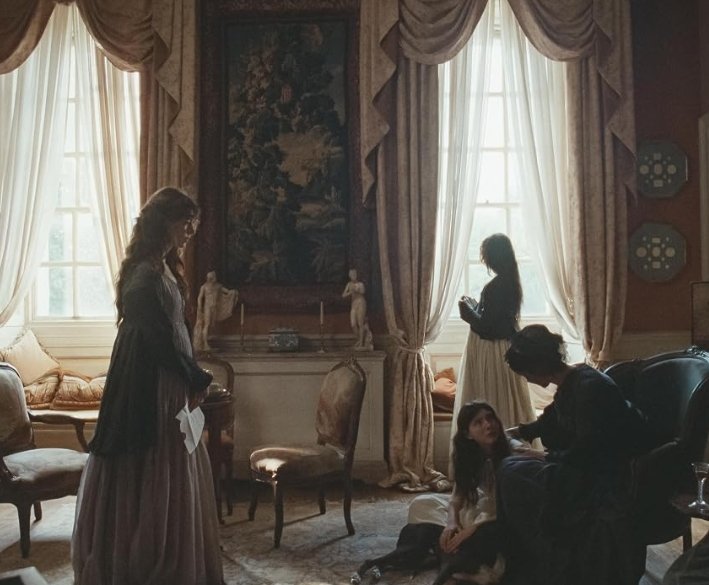
One of the most vital themes in this movie has to be that of financial instability. The Dashwoods are financially insecure, which makes them vulnerable.
This means that marriage becomes quite complex. This also shows the restrictions placed on women. The romance cannot be independent of financial issues.
The movie gets this aspect right. It does not see love as something which exists in an alternate universe.
Money is always there in the backdrop. This gives significance to their romantic decisions.
Elinor cannot simply rely on emotions. Marianne cannot just ignore social conventions. The emotions of both women are within a system.
And that system decides how far they can go. That is why the works of Jane Austen still make rich source material.
Does The Film Feel Modern?
Yes, in some senses. But then again, it is not attempting to make Austen a contemporary romantic comedy.
The period context continues to be significant. The constraints of that period continue to be significant.
The period context continues to be reflected in the language used. What is contemporary about the film is the emotional context.
The film explores emotions more. It is focused on emotions. It is focused on female relationships. It is focused on how females can help each other.
The combination of this makes the film connect with contemporary viewers without being disconnected from the period context.
That seems like the right way to do it. After all, Austen cannot be made contemporary. She should just be interpreted.
Where The Film Could Be Stronger
However, the movie is not without any flaws. The modern style in terms of emotions in some parts becomes slightly too much.
Sometimes the movie looks like trying too hard to prove how relevant it is. Sometimes it looks like the movie tries to create its themes on screen.
It can somewhat lessen the subtlety.
Also, the pace might turn off some viewers who were looking for more speed in a romantic drama. The movie gives itself enough time for its characters.
It gives scenes enough time. It will suit some people but not all. There is another difficulty in adaptation of the novel by Austen.
Everyone knows the plot already. It lessens some suspense. However, the movie tries to engage viewers emotionally instead.
And thankfully, the sisterhood helps it do it.
Is It Worth Another Adaptation?
And this is where I come back to my starting point. Was another adaptation of Sense and Sensibility truly necessary?
Having watched this one, I would say there is certainly an argument in favor of that. But not because previous interpretations of it did not matter.
But not because this one reinvents Jane Austen. No, it offers a different perspective on it. Because the focus on Elinor and Marianne lends it a new life.
Because the cinematography brings its own identity to it. Because the acting makes its characters real.
Because the screenplay recognizes that the essence of Austen’s ideas still resonates today.
All this is sufficient to warrant another take. It is not meant to invalidate all the others. It is just supposed to exist along with them.
This seems to be the correct approach to Austen’s works.
Final Verdict
This is a bold new telling of a story that people are already familiar with. It was a perfectly reasonable reaction.
There have been so many movies made out of Jane Austen’s works. And yet another one could seem unnecessary.
Luckily, there is enough of Georgia Oakley’s unique touch in this adaptation. The most successful element is the emphasis on the two sisters: Elinor and Marianne.
The dynamic between them forms the heart of the movie. Their dissimilarities cause the conflict. Their similarities cause the understanding.
And in the end, their affection for one another matters more than their romances. The movie gains sincerity because of it.
Visually, Sense and Sensibility is also very strong. Thanks to Arnaud Potier’s cinematography, the film has a distinct and beautiful aesthetic.
The connection to Portrait of a Lady on Fire does not define the film entirely but brings some necessary intimacy.
The natural landscapes help the viewer get away from the constraints of Austen’s society. At times, however, the modern take seems a little bit too much.
Some themes are forced. Moreover, the pacing may be troublesome for fans of conventional period romances.
However, these problems do not overshadow the film. What results is a well-made adaptation of Austen.
It recognizes that familiarity does not automatically imply obsolescence. Elinor and Marianne still have much to say.
Their problems with love, family, finances, and social conventions are all too relatable.
Their dynamic also explains why Austen’s characters endure.
Maybe there was no need for another adaptation of Sense and Sensibility.
This movie, though, provides a strong argument as to why it can work.
Unlike most Austen adaptations, it does not retell the author’s story.nIt reinterprets it from an emotional point of view.
The most crucial aspect, however, is the reminder of the underlying family story.
That is what distinguishes this movie from all the others.