
The Odyssey Review: Powerful IMAX Epic
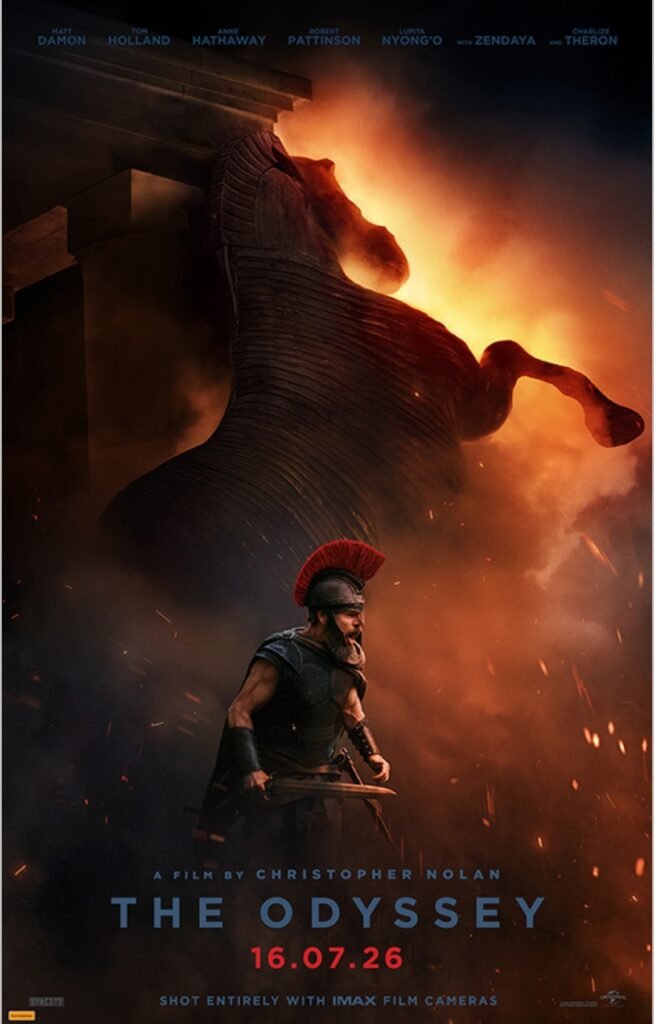
Introduction: Christopher Nolan’s Modern Myth
The Odyssey by Christopher Nolan is an ambitious effort to retell one of the most influential stories through modern cinema. This film is based on the ancient Greek epic poem written by Homer. The Odyssey has been influencing authors and movie makers for thousands of years.
The Odyssey is the story of the famous King of Ithaca named Odysseus trying to find his way back home after the Trojan War. The voyage turns out to be much more than just physical. It is a test of one’s identity, loyalty, perseverance, and survival. The character is faced with many threats and the results of his decisions.
Nolan takes up the project with the same vision that has been characteristic of most of his work. He does not make an adventure fantasy tale but offers the story of Odyssey as a human tale of an injured man looking for home. Here mythology provides the scope while characters bring out the emotional content.
The film received much recognition from the outset because of the massive production scope that was involved. Nolan has developed a reputation for making films that make use of practical filmmaking techniques and large format photography along with effective sound
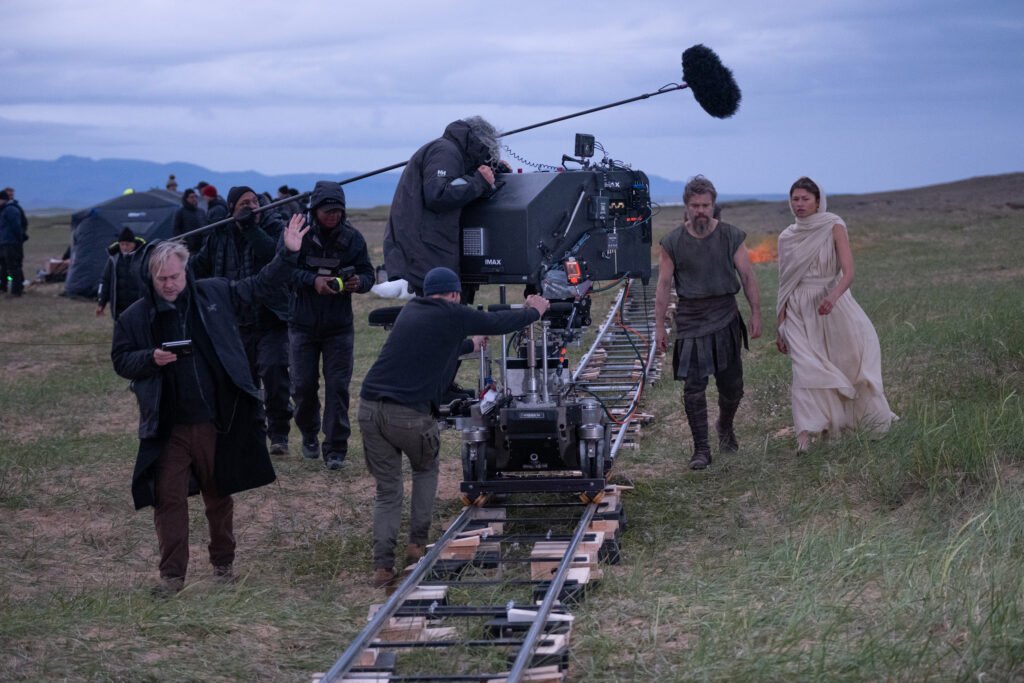
The choice to use IMAX was among the most characteristic elements of the film production. Nolan was not trying to make amazing pictures alone; he was trying to show the audience the immensity and peril of the Odyssey’s adventure. The huge ocean, distant landscapes, and mythical adventures were meant to be watched at the largest screen possible.
Nevertheless, the movie was subject to controversy and discussions before it was released. The choice of actors, historical accuracy, and whether such a huge production was required at all were discussed. These questions became one more part of the bigger discussion related to the problem of adaptation of an old legend into a modern story.
In conclusion, it can be said that the production of The Odyssey is an attempt of Nolan to create something very challenging. It is a work on adaptation of the story which is already legendary.
Nolan’s Vision and the Importance of IMAX
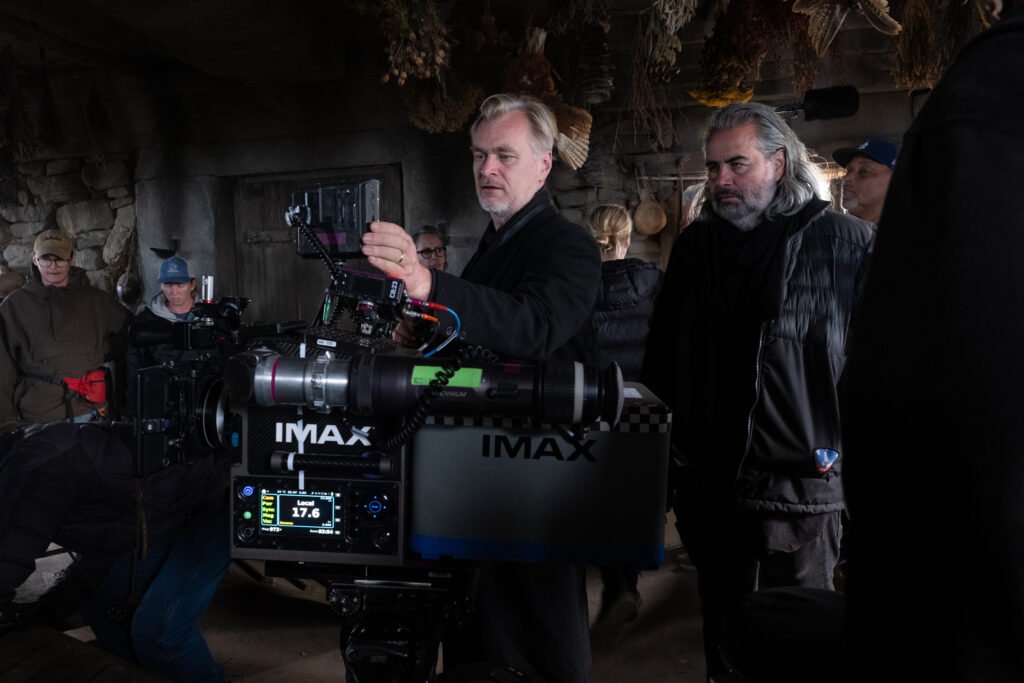
The most important directorial choice made in The Odyssey is Nolan’s focus on shooting films in large format. IMAX is not used here as a purely visual trick. It is used as one of the narrative elements.
In all his previous work, Nolan has proved himself to be a very convinced adherent of the importance of the cinema as a physical phenomenon. This was demonstrated by films such as The Dark Knight, Interstellar, Dunkirk, and Oppenheimer.
This is especially true with regards to The Odyssey. The fact that they have used IMAX technology means that they can get some of the greatest details in the movie. This is because the landscape seems huge.
This is particularly evident when there are scenes where the sea is involved. The ocean is not just a place, but it is a metaphor for uncertainty and loneliness. The size of the body of water emphasizes the emotional disconnect that Odysseus feels from his destination.
The style is also advantageous to scenes of quiet contemplation. Through close-up shots, viewers can get to understand the characters better. Even tiny gestures and emotions can be noticed clearly. This is because in Nolan’s movie, Odysseus is not just a hero.
He is a survivor burdened by the emotions of war. Large scenes are complemented by personal ones to balance the visual grandeur. Technology aids the drama rather than replaces it.
One of the most significant technological innovations that enabled The Odyssey is the new IMAX camera system used exclusively for the film. Historically, the size and noise of the IMAX cameras made it almost impossible to record dialogues when shooting films.
In order to address this problem, Christopher Nolan utilized an acoustic camera housing system called the IMAX “Blimp” or the “Keighley” camera system. The special design of this housing dramatically decreased the noise level of the camera during shooting.
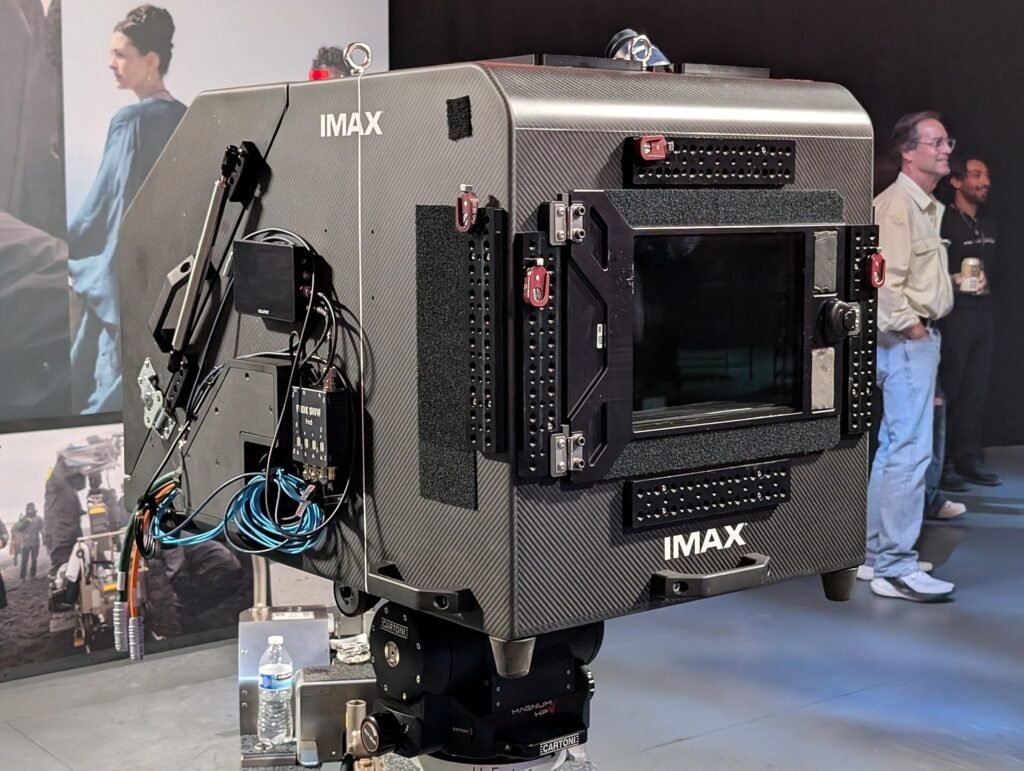
It is easier for the actors to act in the scenes without having their dialogue buried under the sound of the camera. That became very important when making scenes from the movie that are quiet and emotional since any whisper or change in tone can matter.
As a result, The Odyssey becomes the first feature movie made entirely in 65mm IMAX while at the same time shooting real dialogue. Therefore, it is possible to say that the movie becomes both impressive in scale due to IMAX and emotional because of the acting.
Nevertheless, the IMAX decision comes with its criticisms. The true effect can only be realized through the theatrical viewing experience. Viewers who will watch it in select IMAX theaters will feel the most difference.
This raises an interesting discussion. The movie certainly is technically impressive, but people will have to think whether it was worth all those efforts and investments. Innovation is important only when people can appreciate it.
Nevertheless, this criticism does not affect the choice of Nolan to use IMAX for his movie. His approach to filmmaking implies that it should evoke emotions in the audience. In The Odyssey, the size of the picture corresponds to the size of the story.
Hoyte van Hoytema’s Cinematic World
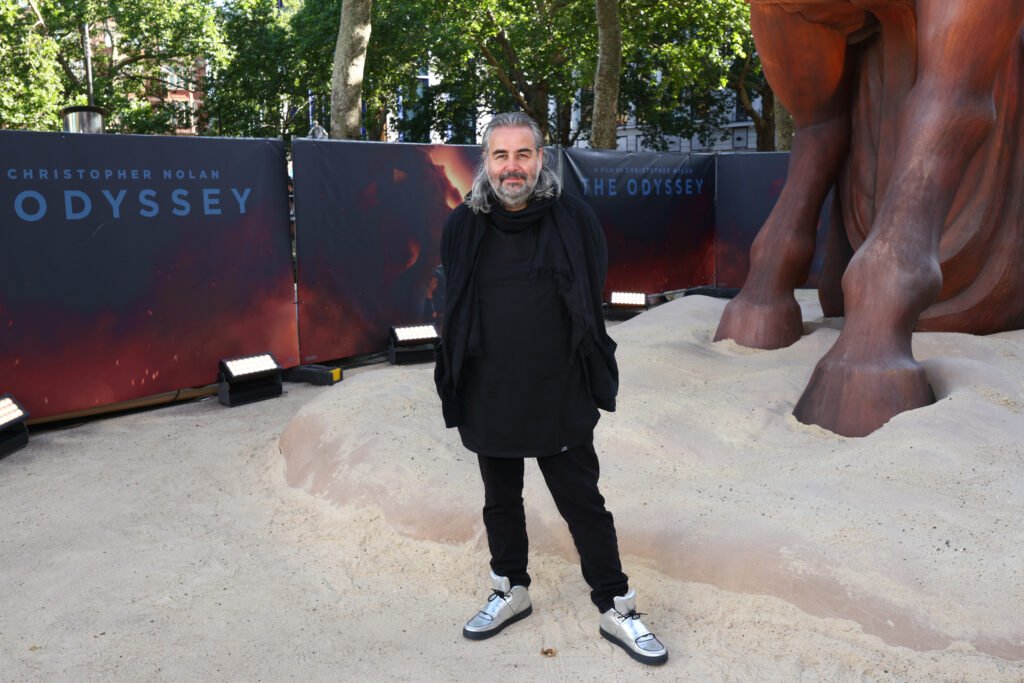
For the success of the visual style used in the film, Hoyte van Hoytema is the key player. Van Hoytema’s partnership with Nolan has created some of the most amazing visuals in modern day films. In “The Odyssey,” Hoytema has made sure to create an environment that looks ancient and believable.
Hoytema is aware that to create an epic film, it is not enough just to show huge surroundings. The landscapes have to mean something.
Throughout the movie, natural settings have an important part. Mountains, coastlines, forests, and seas appear very realistic. Nature seems dangerous because it is realistic.
A lot of visual impressions throughout the film show Odysseus amidst the huge setting. An image of a single person standing against the huge setting highlights the main message of the film. Humanity is strong, but nature is even stronger.
The visual technique fits perfectly into the themes in the poem. Despite Odysseus’ intelligence and determination, he is always up against something out of his control.
The lighting in the film also complements the tone. Van Hoytema does not opt for an artificial fantasy lighting technique. He uses natural sources of light.
Sunlight brings beauty and discovery. Fire brings closeness and risk. Darkness brings confusion and terror.
This method makes the mythology seem more realistic. The audience is not seeing a faraway fairy tale. Instead, they are seeing an unpredictable world.
Furthermore, the cinematography makes sure that the action is not only an affair of the spectacular. In fights and risky situations, the camerawork keeps intact the sense of space, and the viewer knows what the risks are, and where the characters are.
This is a key element for building an emotional link between the viewer and the situation on screen. The biggest accomplishment of Van Hoytema is striking a perfect balance between scale and humanity. It appears as a large-scale production, but it never loses sight of the personal perspective of Odysseus.
Visual Effects, Practical Filmmaking and the Trojan Horse
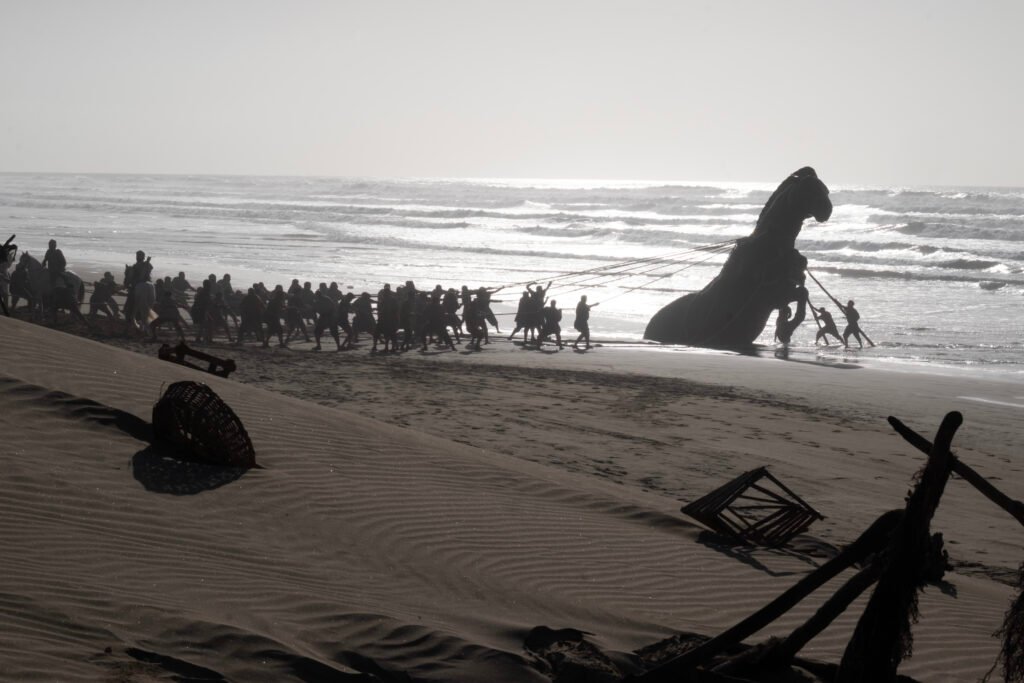
Another well-known aspect of Nolan’s filmmaking style is his use of practical effects as much as possible.
Such a choice adds to the realistic character of the movie. Even in those moments when the plot is based on myths, there is still a feeling that all of it is real.
The Trojan Horse scene is one of the best examples of this approach. It should be noted that the Trojan Horse does not belong to the myth of Homer’s Odyssey but is a separate element of the Trojan War mythology.
This inclusion of this scene helps Nolan set up the context for the journey of Odysseus. It highlights the struggle that Odysseus went through before the audience watches his journey back home.
Inclusion of the practical Trojan Horse raises the tension in the scene. The characters are literally confined in the scene. This makes the audience feel the tension of the scene.
Instead of depending solely on digital special effects, suspense is achieved by way of acting, lighting, and ambiance. The setting contributes to making the myths credible.
This is true throughout the movie. Digital special effects are employed, but in a way that enhances, not detracts from, practical filmmaking.
The mythical elements do require some visual effects, but Nolan ensures that his approach keeps them in touch with reality. This creates a believable fantasy movie.
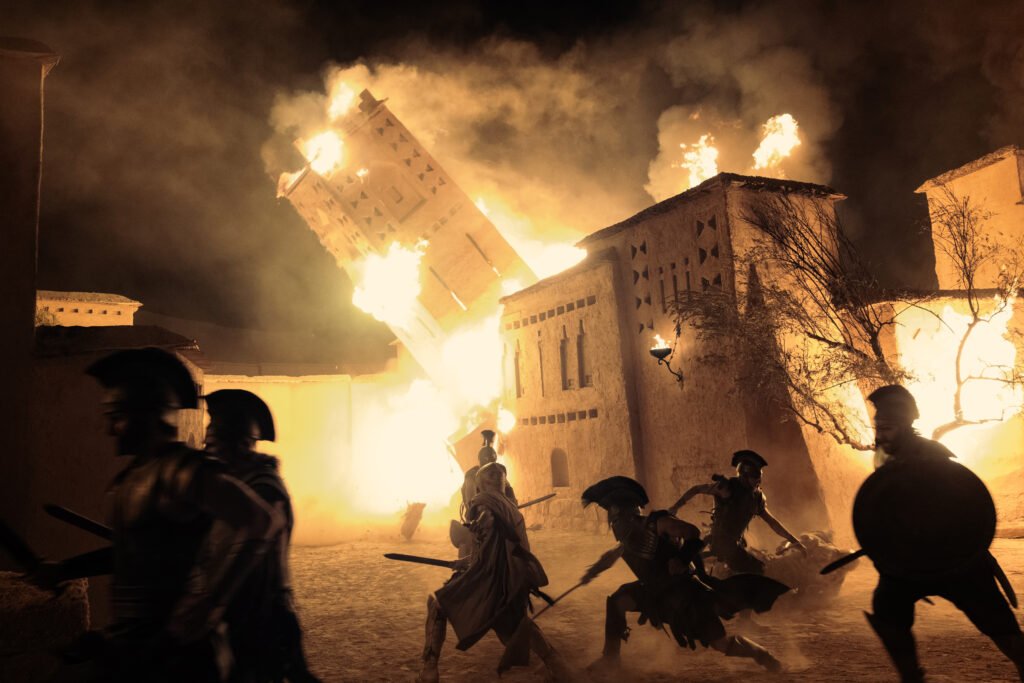
This approach is maintained in the action scenes as well. The battles are well-choreographed and clear to understand. The geography of each shot is known to the audience.
This is important due to the fact that modern action movies can often be overly visual. However, Nolan concentrates on clarity and impact.
Therefore, the action acquires significance as the danger itself is important due to the fact that people understand why the characters fight.
Ludwig Göransson’s Musical Landscape
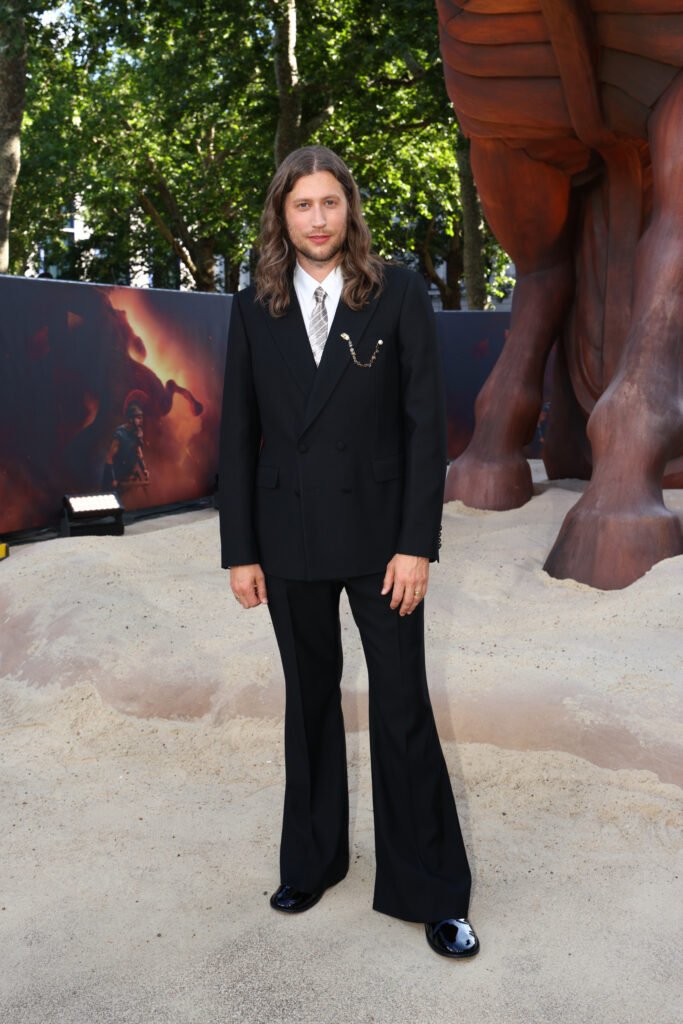
The score by Ludwig Göransson is one other important element of the film’s identity. It blends with Nolan’s visuals to generate the emotional experience of the journey.
His scoring technique blends classical symphonic elements with new sound designs. This is consistent with the film, which merges the ancient narrative with modern filmmaking.
It also adds to the atmosphere needed in order to make the film epic. In major scenes, it expands along with the visuals. It enhances the sensations of peril, discovery, and wonder.
On the other hand, some of the most powerful moments take place in quiet sequences. Music captures the loneliness and doubt of Odysseus.
It reminds the spectators that the hero’s voyage is not simply an exciting adventure.
At the same time, the film does not try to portray its main character as a superhero. The music manages to convey his emotional baggage.
This approach matches the director’s interpretation of Odysseus’ personality. The film focuses on the price one has to pay in order to survive. And Göransson’s soundtrack supports that idea.
Some may think that this soundtrack lacks recognizability typical of adventure soundtracks.
It does not rely on simple heroic themes.
But this restrained approach is appropriate for the film. The soundtrack is meant to enhance the story, not dominate it.
Nolan’s direction, van Hoytema’s cinematography, and Göransson’s soundtrack combine into a cohesive cinematic experience. They complement each other in pursuit of one goal – they make the viewers feel the atmosphere of Odysseus’ voyage.
Themes, Storytelling and Character Development
It was only natural that adapting The Odyssey for today’s viewers would prove to be quite difficult. Indeed, this is one of the most famous poems and it has been analyzed for centuries, so much so that Homer’s work is considered one of the most impactful pieces of Western literature ever written. While Nolan’s version does not follow Homer’s work word-for-word, it pays tribute to its central themes.
All these themes – perseverance, loyalty, identity, temptation, and yearning to get back home – continue to be crucial to the story. Odysseus’ voyage around the Mediterranean is not just a journey in the geographical sense; it is also a journey of self-discovery and of being confronted with the consequences of one’s own actions.
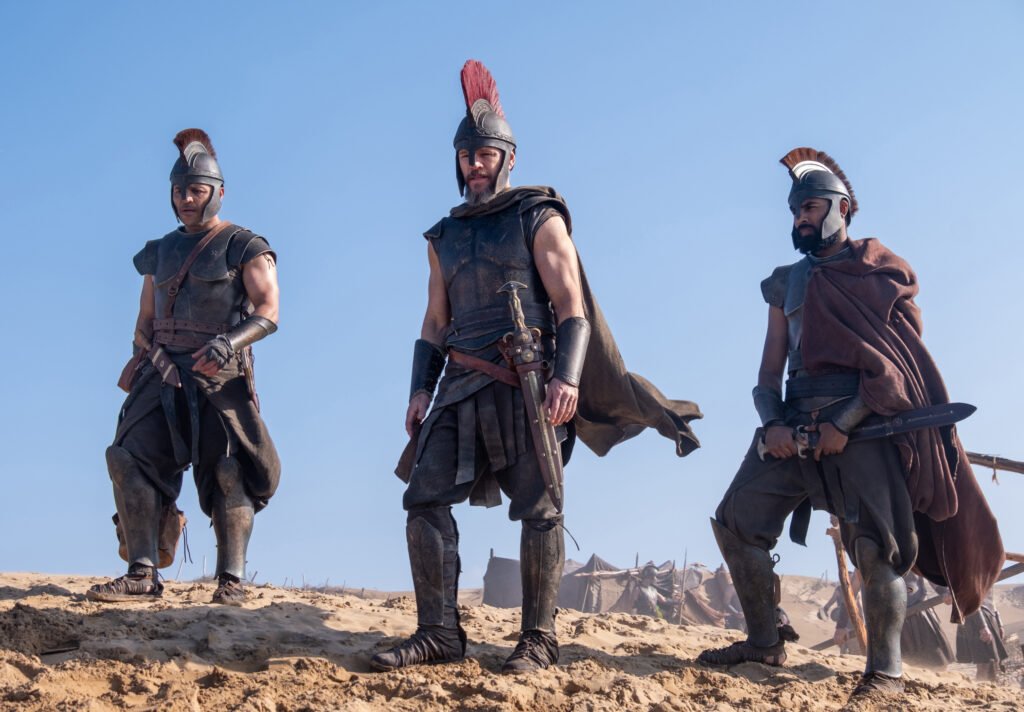
The most interesting addition made by Nolan is the focus on the psychological aspects of the impact of war. In the original epic by Homer, Odysseus is renowned for his wisdom and wit.
In Nolan’s movie, these traits are preserved, however, the mental traumas that have been accumulated after the years spent at the war are also taken into account. In Nolan’s film, Odysseus cannot stop thinking about the choices made at the Trojan War and the sacrifice he had to make to stay alive.
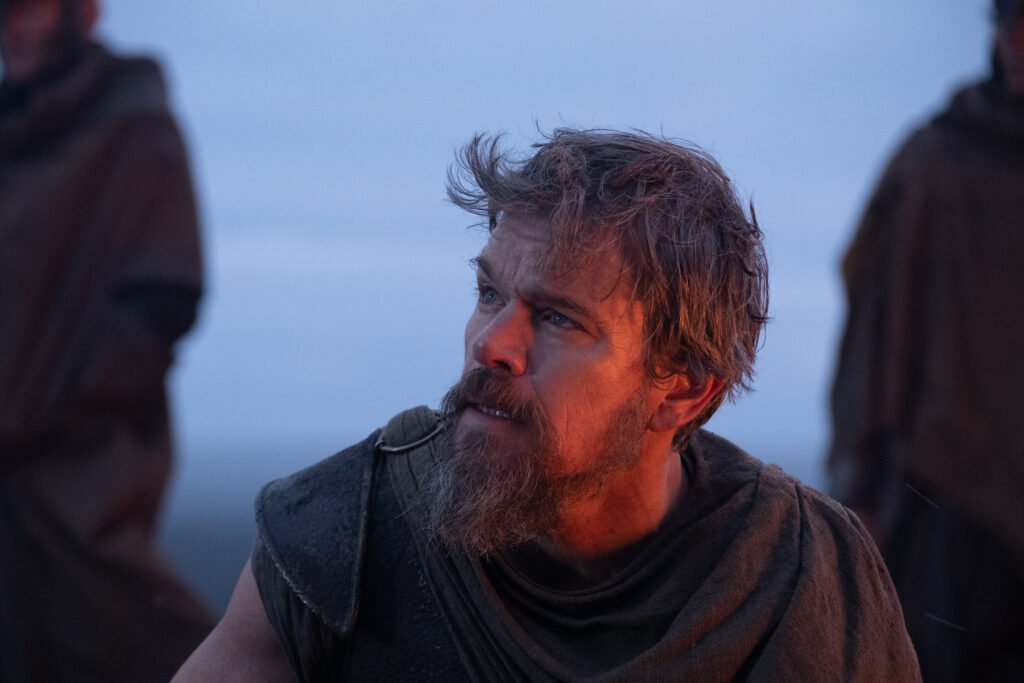
In addition, it develops the emotional significance of Penelope and Telemachus. Penelope is not presented as a passive character waiting for her husband to come back to her.
Rather, she is shown as a competent ruler who guards the land of Ithaca while believing that Odysseus will come back someday. Anne Hathaway‘s Penelope is determined and shows the combination of her strengths and weakness.
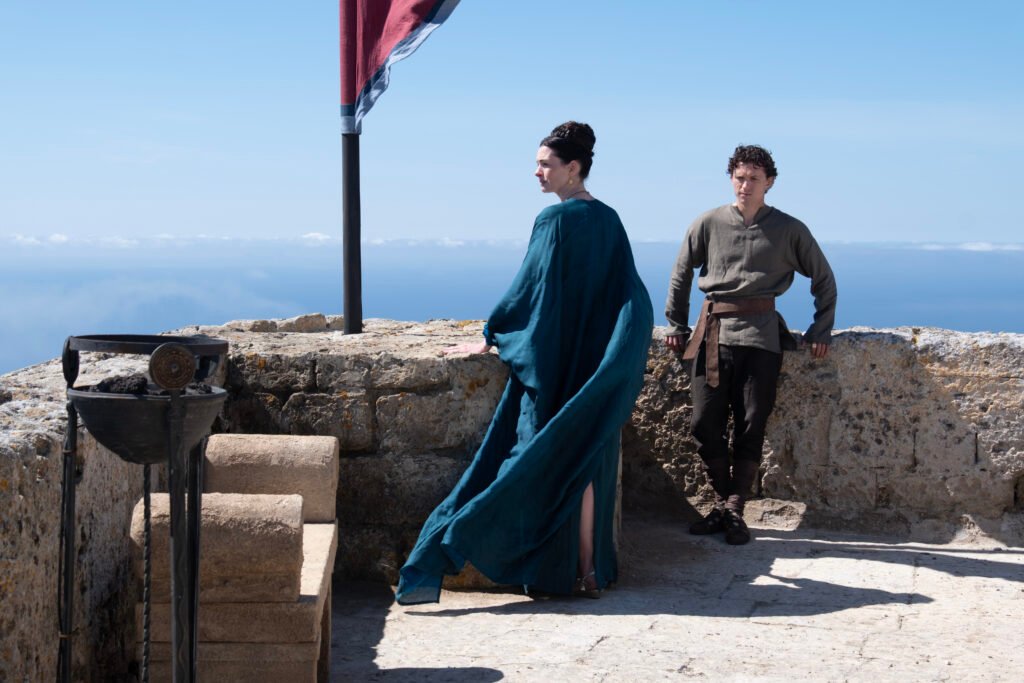
Another significant character arc belongs to Tom Holland‘s Telemachus who evolves into an ambitious and courageous leader ready to fight for his family and kingdom. Similarly to the protagonist, he searches for his identity which is strongly connected with the theme of legacy and responsibility.
In addition, Nolan preserves moral ambiguity which makes Homer’s epic so famous and popular. The main character of the film is a far from perfect hero. Sometimes, his wit helps him survive; however, it always brings troubles and complications.
Moreover, Odysseus’ pride, obstinacy and manipulation of others have their price. All of these features keep Odysseus away from being an action hero.
Finally, the plot of Nolan’s film also has many things in common with his other works since the author chooses to play with chronology. The events of the movie take place in several phases of Odysseus’ journey thanks to numerous flashbacks.
Performances That Bring Mythology to Life
However, the success of the film relies greatly on the performances. Even though the visuals of the movie are quite impressive, it is the ability of the actors to turn mythological characters into believable humans that creates the right emotions for this movie. Christopher Nolan put together a great team, and they deliver.
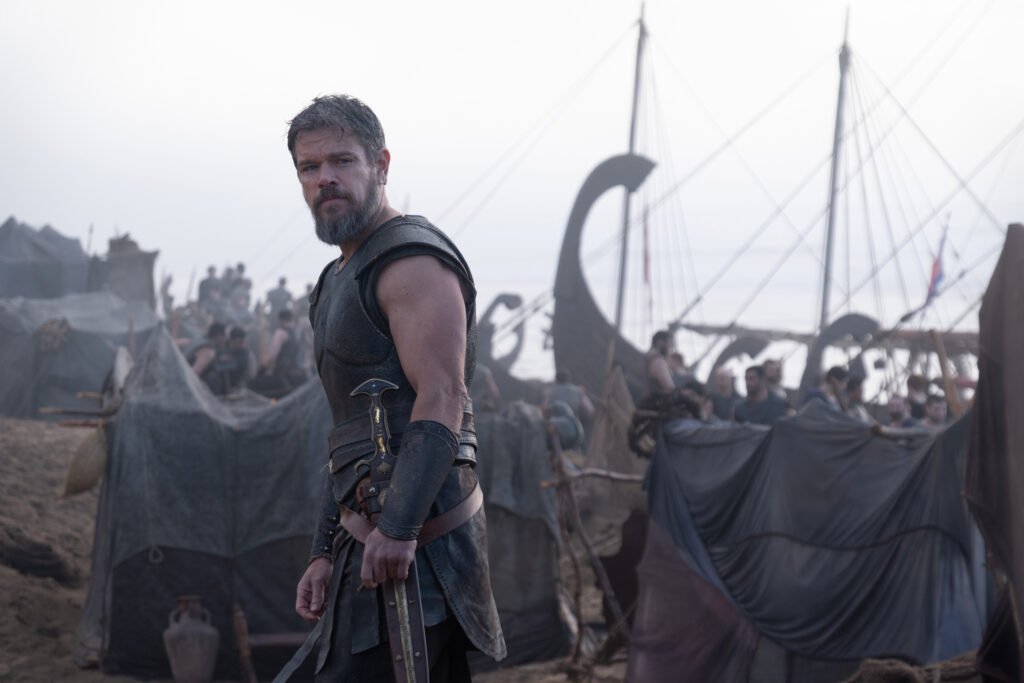
Matt Damon gives arguably the most outstanding performance of his acting career as Odysseus. Instead of making him the unapproachable hero from Greek myths, Damon creates the image of the warrior that suffers from both physical and emotional weariness over the past years. The performance is very low-key; it uses not long speeches but small nuances and silent reflections.
Maybe, the biggest advantage of Damon’s acting in this role is the human side of the character. His Odysseus makes mistakes, doubts himself and experiences the aftereffects of the war emotionally. He is courageous but never fearless, smart but not conceited. Such a take on the character fits well into the idea of Nolan about Greek myths.
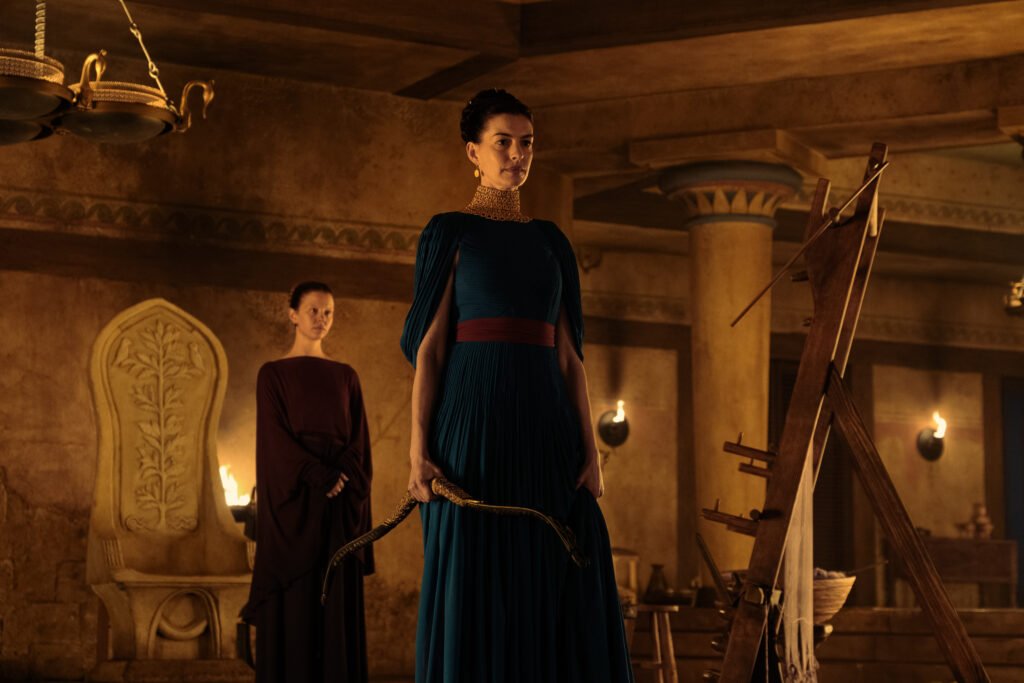
Penelope is equally played well by Anne Hathaway. Hathaway does not make her character a mere epitome of loyalty and patience. Rather, she makes Penelope a strong-willed woman who carries the burden of leadership on her without losing hope. The interaction between Anne and Matt makes the film emotionally moving, especially in its latter parts.
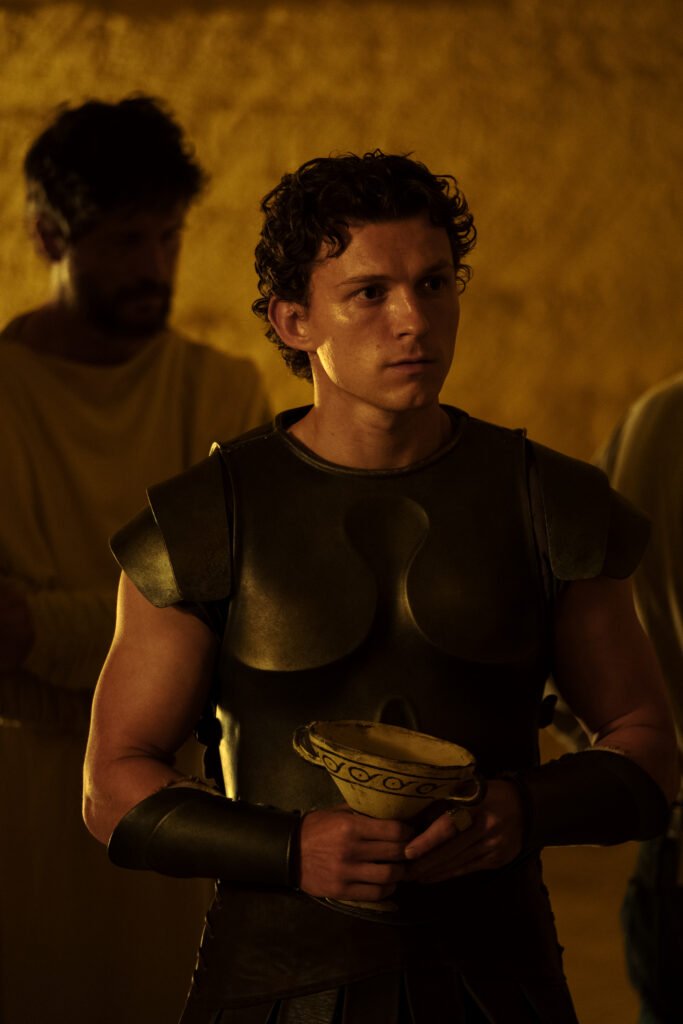
Tom Holland does not disappoint playing Telemachus. He perfectly shows not only confusion but also growing confidence of his character. The later meeting between Holland’s Telemachus and Odysseus becomes one of the most touching scenes due to the fact that Holland perfectly conveys those years of separation.
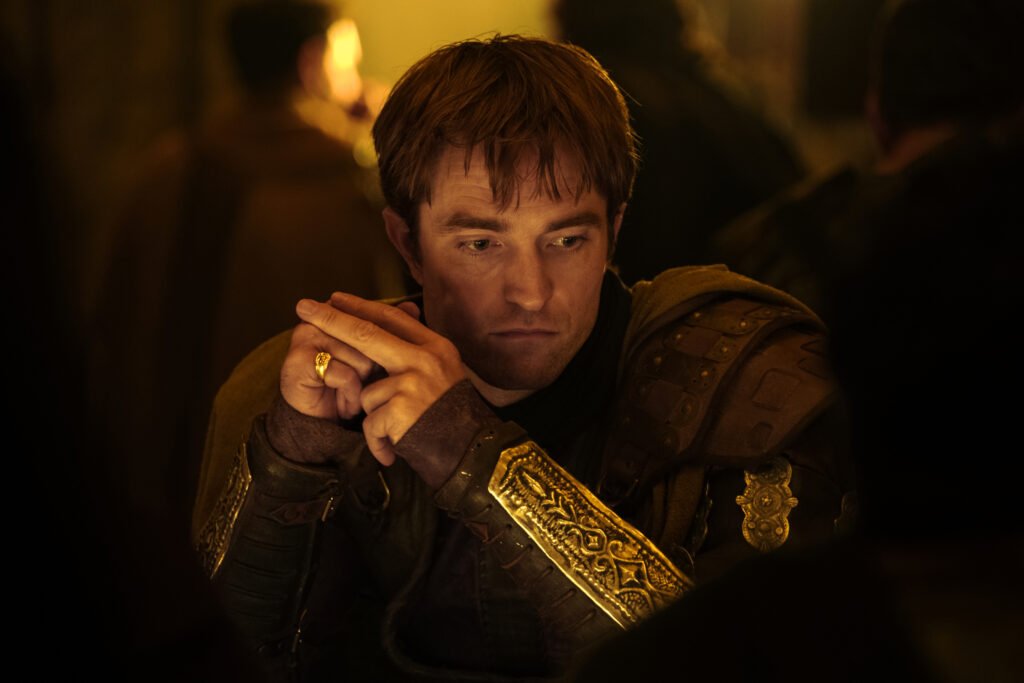
© Universal Pictures 2026
Robert Pattinson gives his signature intensity to the movie. His acting is restrained and calculated, lending another dimension to the ensemble. Although a number of reviewers believe that his role deserved a little more attention, hardly anyone has doubted his talent.
While Lupita Nyong’o, Samantha Morton, Zendaya, Charlize Theron, Elliot Page, Jon Bernthal, Himesh Patel, and Mia Goth have lesser time on screen as compared to the other three characters, all these actors deliver memorable performances.
While Nyong’o offers warmth and presence of character to her acting, Morton delivers an understated performance which is very emotional and powerful.
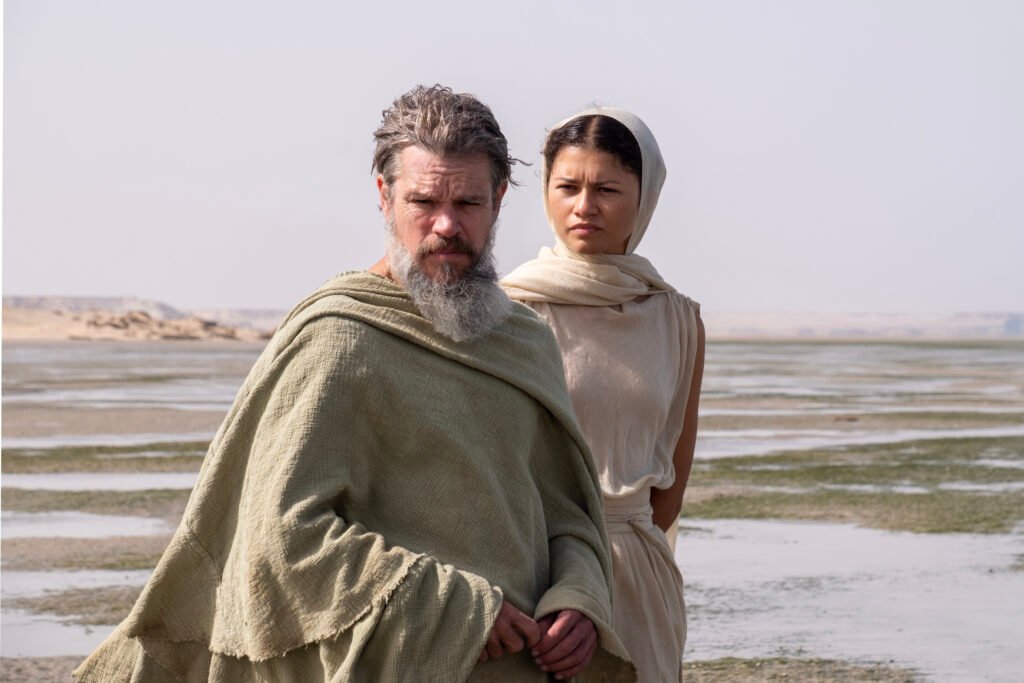
Zendaya manages to balance strength and vulnerability effectively in order to create a memorable character, while Charlize Theron delivers elegant and intense performances when she appears on screen.
Elliot Page also delivers an understated yet memorable performance and manages to fit into the ensemble perfectly, while Jon Bernthal brings with him his usual rough and rugged presence in all his brief appearances, making even his limited scenes feel impactful.
Himesh Patel brings sincerity and intelligence to his performance as Eurylochus; he is very solid and brings a grounded performance which nicely balances out some of the more dramatic elements of the movie.
John Leguizamo brings charisma and personality to his performance, managing to create an impact even without having much screen time, whereas Benny Safdie gives a believable performance that blends well into Nolan’s realistic adaptation of the film.
Mia Goth pops up in the movie too but fails to make the impact that one would expect from her acting in her usual movies. There are quite a few supporting characters in the movie who get brief screen-time but make good use of it.
Pacing, Runtime and Overall Impact
As it lasts for about three hours, there is no doubt that The Odyssey requires a significant amount of time from the viewers. For some people, this duration is justified since there is enough time for character development and maturation.
Yet the pacing won’t be for everyone. Certain segments within the middle section are rather slow-paced, focusing on mood rather than momentum.
Those looking for constant action may find certain parts more slow-paced than expected. Still, some viewers will enjoy having the chance to process the impact of Odysseus’ journey at each step.
Another area where there was a great deal of discussion was regarding the budget for the production of the movie. This was a very expensive movie considering that Nolan had a very big budget to work with. However, it is easy to see how this money was well-spent from watching the film.
It may still be open to question whether this kind of expenditure was worth it. While some may feel that no film adaptation deserves this kind of expense, others may think that this budget was needed to accomplish Nolan’s grand vision. One thing that cannot be questioned, however, is the sheer scale of the production.
Final Verdict
The movie isn’t a flawless translation of Homer’s epic tale, but The Odyssey is undoubtedly an outstanding example of filmmaking. With the help of Christopher Nolan, it is possible to merge technology and narrative to create a film that looks intimate yet epic at the same time.
The use of IMAX in the entire shooting process, along with the stunning visuals by Hoyte van Hoytema and Ludwig Göransson’s score, make this movie visually immersive.
The performances are what give the film its emotional weight and ensure the spectacle does not eclipse the storyline. In the role of Odysseus, Matt Damon brings to the screen a highly human performance, while the secondary roles add to the narrative thanks to their outstanding performances.
It is true that there has been much criticism regarding the pace of the film, its historical credibility and some casting decisions, but these issues are more a sign of how difficult it was to turn one of the greatest works of literature ever written into film than any kind of flaw in the movie making process.
Instead of trying to make yet another retelling of a classical tale, Nolan creates a unique interpretation of the story, honoring the source at the same time adding his own touch, creating additional layers of emotion to a tale that is close to three thousand years old. Odyssey proves that no matter how old the story might be, it can be made interesting thanks to proper directing and performances.

Pingback: 4 Top Rated Movies You Must watch This Friday - Film Misfits